
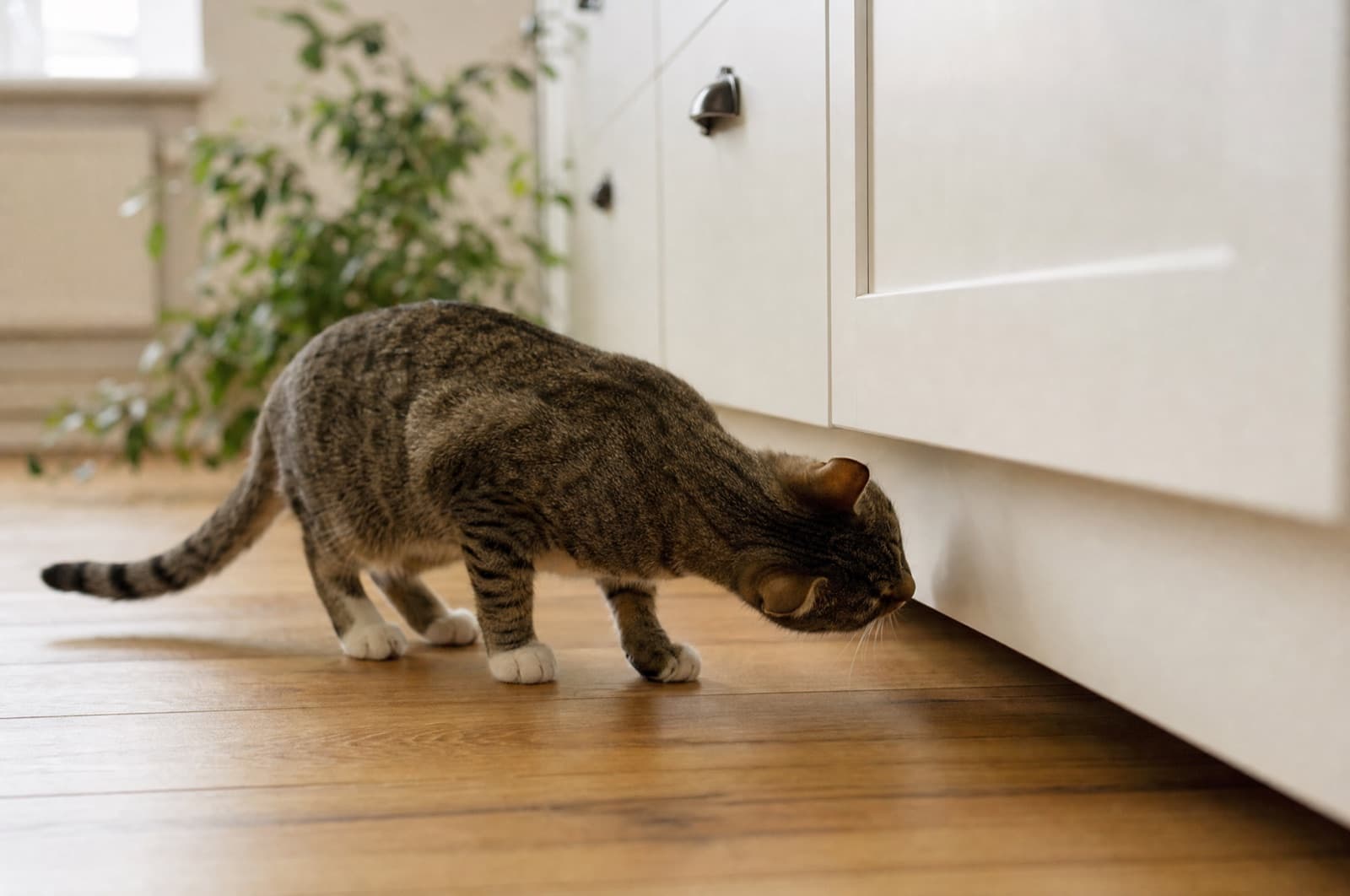
Is Fastrac Blox Rodenticide with Bromethalin Safe for Pets?
At a Glance
- Product: Fastrac Blox Rodenticide with Bromethalin by Bell Laboratories · Bell Laboratories
- Active ingredient: Bromethalin 0.01%
- Re-entry: Ongoing — for the full duration the bait is in service.
- Cat owners: Cats differ — read the cat card below
The short, honest answer
The score rolls up every per-species verdict below, weighted by the honest exposure that matters — a chewed-open tube, not a hidden dab — and is checked against the EPA label and veterinary toxicology.
Not an anticoagulant — a fast-acting nerve toxin with no antidote, which makes prompt action even more critical if a pet is exposed.
Fastrac Blox's own label states it plainly: "Contains the nerve poison Bromethalin. This product is not an anticoagulant type rodenticide." Bromethalin 0.01% (EPA Reg. No. 12455-95) disrupts cellular energy production in nerve tissue, causing cerebral edema, and acts fast. Unlike anticoagulant baits, there is no Vitamin K1 antidote and no clotting-based treatment pathway — prevention of access is effectively the entire safety margin. Cats are especially sensitive to this active. This is never a safe product for any pet to access, directly or through a poisoned rodent.
General information, not veterinary advice. For a suspected exposure, contact your veterinarian or a pet-poison hotline. Verdict checked 2026-07-13 against the EPA label and veterinary toxicology.
It's not one answer — it's one per animal
Cats, birds, and fish routinely differ sharply from dogs. That contrast is the whole point of this scorecard, and no manufacturer page draws it.
- DogsAvoid
- CatsAvoid
- Small mammalsAvoid
- BirdsAvoid
- FishCaution
Fast-acting, palatable bait — no antidote if a dog eats it
The block is single-feed acute and appealing to a dog, and because bromethalin has no antidote, neurologic toxicity can be rapid and severe if access isn't fully prevented.
Merck Veterinary Manual — Bromethalin Poisoning in Animals
Cats are exquisitely sensitive to bromethalin
Veterinary sources specifically flag cats as unusually sensitive to bromethalin's neurotoxic effects, and secondary risk from a poisoned rodent is also possible.
VCA Animal Hospitals — Bromethalin Rodenticide Poisoning in Cats
Target taxon — any exposure is lethal
A pet rat, mouse, hamster, or guinea pig is close enough to the target species that any accessible bait is a direct, undiminished poisoning hazard.
NPIC Rodenticides fact sheet
Labeled extremely toxic to birds
The product label lists extreme toxicity to birds; any bird with access to bait or an affected rodent carcass is at risk.
EPA product label
Keep bait away from water sources
The label lists an aquatic-toxicity caution; the realistic indoor concern is contaminated bait reaching a tank, not direct ingestion by a fish.
EPA product label
What's in it — and what it does to pets
A neurotoxicant, mechanistically distinct from anticoagulant rodenticides — it disrupts cellular energy production (uncoupled oxidative phosphorylation) in nerve tissue, causing cerebral edema. Signs are neurologic, not bleeding-related, and can appear rapidly with a higher exposure or be delayed one to several days with a lower one. There is no antidote; veterinary treatment is supportive care focused on reducing brain swelling, which is why preventing any access is the entire safety margin.
Merck Veterinary Manual — Bromethalin Poisoning in Animals; Pet Poison Helpline
How to use it safely around pets
Because bromethalin has no antidote, safe use here means preventing any access at all — there is no margin for a 'mostly secure' placement.
Use only inside a locked, tamper-resistant station
Secure the block on a rod inside a station a pet cannot open — never leave it loose or exposed.
Place and monitor professionally where possible
Professional placement by a licensed applicator reduces the odds of a placement error in a home with pets.
Collect and dispose of rodent carcasses promptly
Wearing gloves, remove any dead or dying rodents quickly to limit secondary-exposure risk to pets.
Keep pets fully excluded from treated areas
Because there's no antidote, treat any treated area as strictly off-limits to pets for the full duration bait is active.
There is no safe 'dry time' — this active has no antidote, so pets should never have any access to a station using this product.
Ongoing — for the full duration the bait is in service.
If exposure is ever suspected, treat it as an urgent, time-sensitive emergency — bromethalin can act fast.
Rather not manage rodenticide bait around your pets?
Anchor's licensed NH technicians place and monitor rodent control so your pets never have to be near the bait.
Symptoms to watch for
A sign, its urgency, and what to do — never a diagnosis. When in doubt, the emergency panel below is one tap away.
- Serious
Muscle tremors
Neurologic sign — not a bleeding sign
- Serious
Loss of hind-limb use, incoordination, or paralysis
- Serious
Involuntary eye movements
- Emergency
Depression progressing toward coma
- Emergency
Seizures
Seek emergency veterinary care immediately — onset can be within hours of a larger exposure, or delayed 1–4 days with a smaller one
Act now — call a vet or a pet-poison line
Do not induce vomiting unless told to
If your pet ate bait, chewed into a station, or may have eaten an affected rodent, act now — bring the packaging or a photo of the label when you call. This active has no antidote, so time matters. This page is general information, not veterinary advice — for a suspected poisoning, contact your veterinarian or ASPCA Animal Poison Control (888-426-4435) right away.
What each situation calls for
Your pet ate bait or chewed into a station
Call your vet or ASPCA Animal Poison Control immediately — do not wait for symptoms. Because bromethalin has no antidote and can act within hours, early decontamination and supportive care matter more than with a delayed-onset anticoagulant.
Your pet is showing tremors, incoordination, or seizures
This is an emergency. Get your pet to a veterinarian or emergency animal hospital immediately and call ahead if possible so they can prepare — bring the product packaging.
In the next 60 seconds
- Get your pet away from the bait, station, or any dead/dying rodent.
- Do NOT induce vomiting or attempt any home treatment unless a veterinarian or poison expert tells you to.
- Save the packaging — the EPA registration number and 'bromethalin' on the label tell the vet this is a neurotoxicant exposure, not a bleeding one; there is no antidote, so time matters.
- Call your veterinarian or one of the hotlines below immediately, even before symptoms appear.
ASPCA Animal Poison Control
(888) 426-4435
24/7; a consultation fee may apply
Pet Poison Helpline
(855) 764-7661
24/7; a per-incident fee applies
Northern New England Poison Center
(800) 222-1222
24/7 human poison control — for household/child exposure context; call a vet or the pet lines above for pet guidance
Safer pet-friendly alternatives
Honest options that reduce or remove pet-toxicity — no affiliate hype, real caveats included.
Victor Tin Cat live-catch trap
SaferLive-catch, no toxicant
No poison and no lethal mechanism — a genuine alternative to a no-antidote neurotoxicant, and the safest format in this cluster for a home with pets.
Requires daily checks to release captured mice promptly.
Enclosed electronic traps
SaferElectronic, no toxicant
The kill mechanism sits in a recessed chamber sized for a rodent, generally out of reach for typical dogs and cats.
Keep away from very small pets who could fit inside the entrance.
Anticoagulant bait (if a toxicant is unavoidable and cats are not in the home)
SaferVitamin-K-responsive bait
Anticoagulant rodenticides at least have an established antidote pathway (Vitamin K1) if caught early, unlike bromethalin.
Still never 'safe' — carries its own primary/secondary poisoning risk and must be locked in a station.
Professional pet-safe rodent control (Anchor Pest Services)
SaferLicensed professional service
Given bromethalin's no-antidote profile, a licensed applicator can help you weigh a genuinely lower-risk option before resorting to this active.
A service, not a product — ask for a pet-safety-focused plan.
Pet-safe rodent control in New Hampshire
Bromethalin is a neurotoxicant with no antidote, and a poisoned rodent stays hazardous to whatever eats it — in New Hampshire that includes the barred owls, red-tailed hawks, and great horned owls that hunt and scavenge mice and rats across the state. Applying rodenticide for hire here requires an applicator licensed under RSA 430 through the NH Department of Agriculture, Markets & Food. Anchor Pest Services serves Manchester, Nashua, Concord, and the surrounding towns with licensed, pet-conscious rodent control that keeps a no-antidote toxicant well away from your pets.
NH-licensed applicator #782664 (NHDAMF, RSA 430) · NEPMA member · family-owned since 2017.
Service Area Map
Southern New Hampshire
Frequently asked questions
Sources(6)
- [1]Bell Laboratories — Fastrac All-Weather Blox Safety Data Sheet
Active ingredient confirmation (bromethalin 0.01%), EPA Reg. No. 12455-95, 'not an anticoagulant' label statement
manufacturerverified 2026-07-13 - [2]EPA — Pesticide Product Label, Fastrac All-Weather Blox (Reg. No. 12455-95)
Registered label, bird/mammal hazard statements
epa_labelverified 2026-07-13 - [3]Merck Veterinary Manual — Bromethalin Poisoning in Animals
Mechanism, no antidote, clinical signs and onset timeline
veterinaryverified 2026-07-13 - [4]VCA Animal Hospitals — Bromethalin Rodenticide Poisoning in Cats
Feline sensitivity to bromethalin
veterinaryverified 2026-07-13 - [5]Pet Poison Helpline — Bromethalin Is Toxic to Dogs
Onset timeline, lack of antidote, treatment approach
pet_poisonverified 2026-07-13 - [6]ASPCA — Poison Alert: Beware of Bromethalin
Emergency guidance, class-level bromethalin risk
aspcaverified 2026-07-13
Written & reviewed by
VerifiedDaniel Brady
NH-Licensed Pesticide Applicator · License #782664 (NHDAMF, RSA 430)
Daniel Brady is the New Hampshire–licensed applicator behind Anchor Pest Services, a family-owned pest control company serving the Manchester area since 2017.
Last updated 2026-07-13
Pet-Safe Professional Rodent Control
Skip the Poison Guesswork
DIY rodenticide puts the placement, monitoring, and pet-safety burden on you. Anchor Pest Services handles rodent control with licensed, pet-conscious methods across southern and central New Hampshire. Family-owned since 2017, NH license #782664.
- Pet-conscious rodent control planning
- NH-licensed applicators (#782664)
- Free inspection — same-day service across southern NH
NH License #782664 · No obligation · We answer in person
Your next step
- Book a NH pro
Rodent Control
Book now - Book a NH pro
Pest Control Services
Licensed, family-owned pest control across southern NH.
Book now - Next step
Rodent Mites After Mice or Rats Are Removed
Read the answer - What to do next
How to Use Fastrac Blox Rodenticide with Bromethalin by Bell Laboratories
Read the answer - What to do next
How to Use Contrac All-Weather Blox Rodenticide by Bell Laboratories
Read the answer - Also relevant
Chemical Rodent Control: Rodenticides, Risks & the Rules
Read the answer