
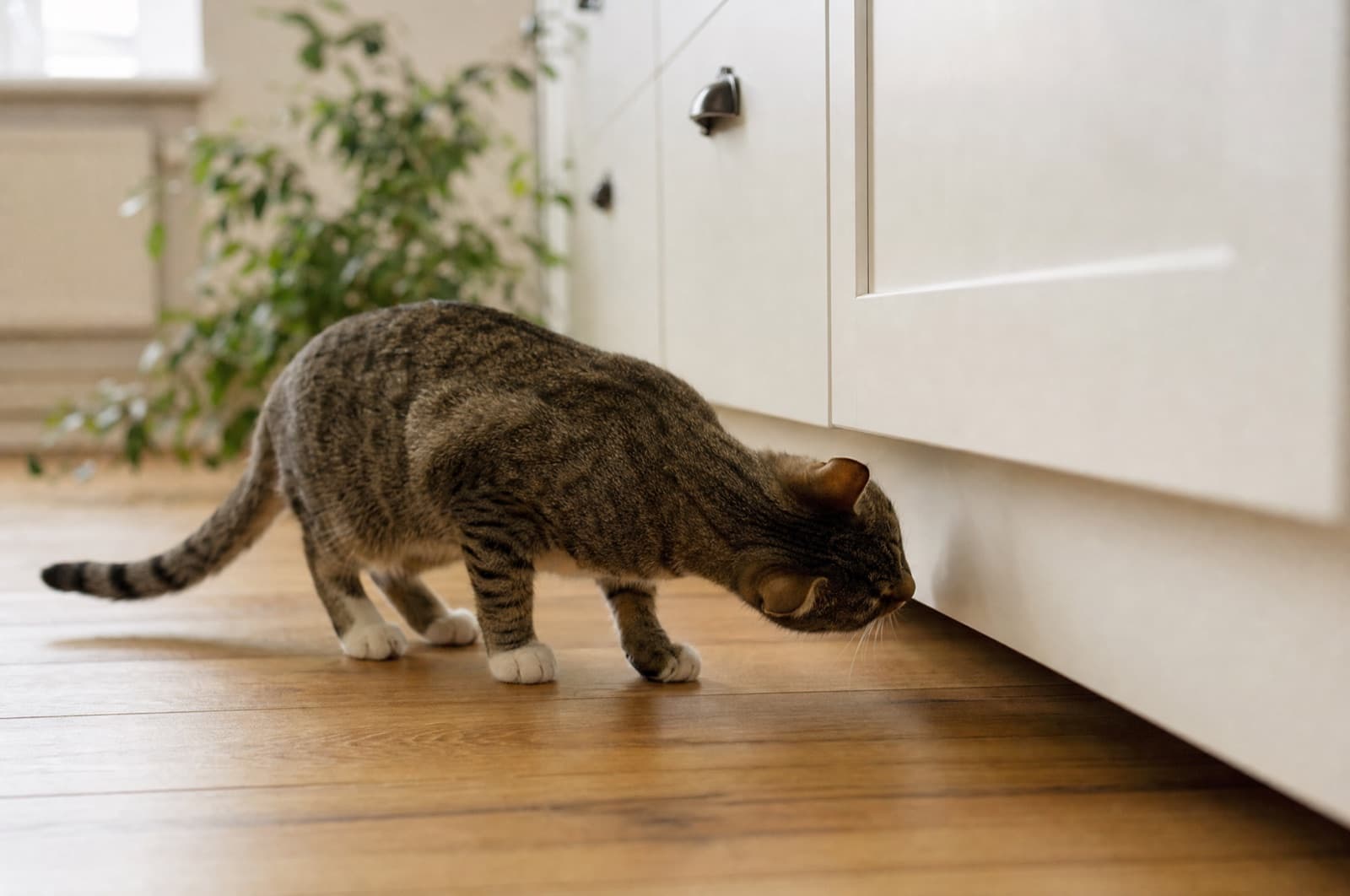
Is the Pro-Control Total Release Fogger by Zoecon Safe for Pets?
At a Glance
- Product: Pro-Control Total Release Fogger by Zoecon · Zoecon
- Active ingredient: Pyrethrins 0.50%, Cyfluthrin 0.10%
- Re-entry: Per the current EPA standard for total-release foggers: vacate at least 2 hours, then ventilate an additional 2 hours (or until no odor remains) — always verify the exact figure on your specific can's label, which is the legal authority.
- Cat owners: Cats differ — read the cat card below
The short, honest answer
The score rolls up every per-species verdict below, weighted by the honest exposure that matters — a chewed-open tube, not a hidden dab — and is checked against the EPA label and veterinary toxicology.
Not pet-safe to have in the room — every pet, including fish and birds, must be fully removed before you trigger it.
The Pro-Control Total Release Fogger is a "bug bomb": trigger it and it releases its entire contents (pyrethrins 0.50% + cyfluthrin 0.10%) as fog that fills and settles across an entire enclosed room, not just cracks and crevices. That whole-air exposure profile is fundamentally more hazardous to pets than a spot spray, so no dog, cat, small mammal, bird, or fish can be anywhere in the structure during or immediately after use. Once the label-specified vacate-and-ventilate period is fully complete and settled residue is cleaned off pet-frequented surfaces, the treated space returns to a low-risk state — but during and right after triggering, this product is not pet-safe under any circumstance.
General information, not veterinary advice. For a suspected exposure, contact your veterinarian or a pet-poison hotline. Verdict checked 2026-07-13 against the EPA label and veterinary toxicology.
It's not one answer — it's one per animal
Cats, birds, and fish routinely differ sharply from dogs. That contrast is the whole point of this scorecard, and no manufacturer page draws it.
- DogsAvoid
- CatsAvoid
- Small mammalsAvoid
- BirdsAvoid
- FishAvoid
Remove from the structure before triggering — not just the room
Inhalation of the fog itself and later grooming or paw contact with settled residue are both hazards. Dogs should be out of the entire structure before the fogger is triggered and kept out through the full vacate-and-ventilate period.
EPA total-release fogger label requirements; Pro-Control Plus product documentation
Especially risky for cats — remove entirely before use
Cats are unusually sensitive to pyrethrins and pyrethroids because they lack efficient glucuronidation, the liver pathway that helps other mammals clear these compounds. A whole-room fogger is one of the highest-exposure formats in this hub for that reason; cats must be out of the structure, not just the treated room.
ASPCA Animal Poison Control; Merck Veterinary Manual
Remove from the home, not just the room
Hamsters, guinea pigs, gerbils, mice, and rabbits have delicate, fast respiratory systems and can be sickened or killed even by residual airborne traces that drift beyond the treated room. Move them and their enclosures out of the home entirely, not just the fogged room.
NPIC pyrethrins fact sheet
Remove from the structure — birds are exquisitely airborne-sensitive
Birds have extremely efficient, sensitive respiratory systems that make them among the most vulnerable pets to any airborne insecticide fog. Remove pet birds from the entire structure before triggering, not just the treated room.
NPIC; veterinary avian-toxicology guidance
Cover or remove the aquarium and turn off the air pump first
Pyrethrins are highly to very highly toxic to fish, per NPIC, and a running air pump would actively draw contaminated air into the tank. Cover or remove aquariums and shut off air pumps before triggering the fogger.
NPIC pyrethrins fact sheet
What's in it — and what it does to pets
A fast-acting botanical insecticide used for knockdown. It overstimulates the nervous system of insects and, at sufficient exposure, can do the same in sensitive pets — cats most of all. NPIC rates pyrethrins as highly to very highly toxic to fish, which is why aquariums need to be covered and air pumps shut off before fogging.
NPIC pyrethrins fact sheet
A Type II pyrethroid added for residual (longer-lasting) kill after the fog settles. Same class-level nervous-system risk as other pyrethroids, and it's part of why settled residue on floors and surfaces remains a pet-contact concern until the room is cleaned and ventilated, not just until the fog itself clears.
EPA total-release fogger label requirements
How to use it safely around pets
This is the hub's highest-exposure-intensity format — a whole-room fogger, not a spot spray. Safe use means a full evacuation protocol, not just "keep pets off the wet spot."
Remove every pet from the structure
Take all pets — dogs, cats, small mammals, and caged birds — completely out of the home before triggering, not just out of the treated room.
Clear food, dishes, and prep surfaces; open interior doors and cabinets
Remove or cover food, pet bowls, and dishes. Open interior doors and cabinets so the fog reaches enclosed spaces, and close outside windows and doors.
Trigger and vacate immediately
Use only one fogger per room as labeled; never use it in a small enclosed space like a closet. Once triggered, leave the structure right away with everyone and every pet.
Vacate, then ventilate, before anyone re-enters
The EPA's standard total-release-fogger label language calls for vacating the premises for at least 2 hours, then ventilating (opening windows/doors) for an additional 2 hours or until no odor is detected before re-entry. Confirm the exact interval on your can's current label and mark it with the enclosed door hang-tag.
No pet may re-enter the treated space until the full vacate-and-ventilate period on the current EPA label is complete and pet-frequented surfaces are wiped down.
Per the current EPA standard for total-release foggers: vacate at least 2 hours, then ventilate an additional 2 hours (or until no odor remains) — always verify the exact figure on your specific can's label, which is the legal authority.
Treat this as longer than any spray's dry time. If in doubt, wait longer and ventilate more before pets return.
Rather not evacuate the house for a fogger?
Anchor's licensed NH technicians use targeted placement instead of whole-room fogging — no pet evacuation required.
Symptoms to watch for
A sign, its urgency, and what to do — never a diagnosis. When in doubt, the emergency panel below is one tap away.
- Moderate
Drooling or hypersalivation
Often the earliest sign in cats
- Moderate
Vomiting
- Serious
Tremors or twitching
- Serious
Hyperexcitability or, alternately, lethargy
- Serious
Incoordination
- Emergency
Difficulty breathing
Seek emergency veterinary care immediately
Act now — call a vet or a pet-poison line
Do not induce vomiting unless told to
If a pet was exposed to this fogger's fog or settled residue, act now — bring the can or a photo of the label when you call. This page is general information, not veterinary advice — for a suspected exposure, contact your veterinarian or ASPCA Animal Poison Control (888-426-4435) right away.
What each situation calls for
A pet was in the structure during or shortly after fogging
Get the pet to fresh air immediately and contact your veterinarian or a pet poison hotline — inhalation alone can cause signs even without direct skin contact.
Your pet contacted settled residue on a treated surface
Wipe the residue off paws or fur with a damp cloth to stop grooming ingestion, then call your vet or a pet poison hotline. Do not induce vomiting unless told to.
Your cat is drooling, twitching, or having trouble breathing after re-entry
Treat as urgent — cats are the most pyrethroid-sensitive common pet. Call your vet or ASPCA Animal Poison Control immediately and bring the fogger can or a photo of its label.
In the next 60 seconds
- Get your pet to fresh air and away from the treated structure right away.
- Gently wipe any settled residue off paws and fur to stop grooming ingestion.
- Do NOT induce vomiting unless a veterinarian or poison expert tells you to.
- Have the product name and EPA registration number (from the can) ready.
- Call your veterinarian or one of the hotlines below.
ASPCA Animal Poison Control
(888) 426-4435
24/7; a consultation fee may apply
Pet Poison Helpline
(855) 764-7661
24/7; a per-incident fee applies
Northern New England Poison Center
(800) 222-1222
24/7 human poison control — for household/child exposure context; call a vet or the pet lines above for pet guidance
Safer pet-friendly alternatives
Honest options that reduce or remove pet-toxicity — no affiliate hype, real caveats included.
Targeted crack-and-crevice or gel baiting
SaferSpot treatment (non-fogger)
Confines the insecticide to cracks, crevices, and voids pests travel instead of filling the entire room's air with fog, sharply cutting whole-body pet exposure.
Still an insecticide — needs pet-aware placement and drying time of its own.
Non-toxic monitoring traps (glue boards)
SaferMechanical / adhesive (no toxicant)
Confirms whether and where an infestation exists with zero airborne or contact toxicity, before deciding whether any chemical treatment is even needed.
Monitors and catches individual insects; doesn't treat an established infestation on its own.
Sanitation and exclusion
SaferNon-chemical
Sealing entry points, fixing moisture issues, and removing food sources reduces the reason pests are indoors at all — zero pet-toxicity.
Slower than a fogger and needs consistency; best paired with targeted treatment.
Professional targeted treatment (Anchor Pest Services)
SaferLicensed professional service
A licensed applicator can almost always solve the underlying pest problem with targeted placement instead of a whole-room fogger, avoiding the highest-exposure format in this entire hub.
A service, not a product — ask specifically about pet-aware, non-fogger treatment.
Pet-safe pest control in New Hampshire
Total-release foggers are marketed as a quick whole-home fix, but they're also the most pet-exposure-intensive product format in this hub — the opposite of the targeted approach a licensed applicator takes. Applying pesticides for hire in New Hampshire requires a commercial applicator certified by the NH Department of Agriculture, Markets & Food (NHDAMF) Division of Pesticide Control under RSA 430, and Anchor Pest Services (License #782664) uses that training to place product precisely across Manchester, Nashua, Concord, and the surrounding towns instead of broadcast fogging.
NH-licensed applicator #782664 (NHDAMF, RSA 430) · NEPMA member · family-owned since 2017.
Service Area Map
Southern New Hampshire
Frequently asked questions
Sources(5)
- [1]EPA — Label Changes and Pictograms for Total Release Foggers
Required remove-pets/cover-aquarium directive, vacate-and-ventilate re-entry standard
epa_labelverified 2026-07-13 - [2]EPA PPLS — Total Release Fogger Label (Reg. No. 2724-634)
Current label re-entry and pet-evacuation directives
epa_labelverified 2026-07-13 - [3]Pro-Control Plus Total Release — Product Documentation
Verified actives (pyrethrins 0.50%, cyfluthrin 0.10%) and vacate/ventilate interval
manufacturerverified 2026-07-13 - [4]NPIC — Pyrethrins and Pyrethroids Fact Sheet
Class-level mode of action, fish toxicity
npicverified 2026-07-13 - [5]VCA Animal Hospitals — Pyrethrin/Pyrethroid Poisoning in Cats
Feline glucuronidation sensitivity, clinical signs
veterinaryverified 2026-07-13
Written & reviewed by
VerifiedDaniel Brady
NH-Licensed Pesticide Applicator · License #782664 (NHDAMF, RSA 430)
Daniel Brady is the New Hampshire–licensed applicator behind Anchor Pest Services, a family-owned pest control company serving the Manchester area since 2017.
Last updated 2026-07-13
Pet-Safe Professional Pest Control
Skip the Fogger — and the Whole-Home Evacuation
A total-release fogger puts the entire evacuation and ventilation burden on you. Anchor Pest Services treats infestations with targeted, pet-aware methods across southern and central New Hampshire. Family-owned since 2017, NH license #782664.
- Pet-conscious targeted treatment
- NH-licensed applicators (#782664)
- Free inspection — same-day service across southern NH
NH License #782664 · No obligation · We answer in person
Your next step
- Book a NH pro
Pest Control Services
Licensed, family-owned pest control across southern NH.
Book now - What to do next
How to Use the Pro-Control Total Release Fogger by Zoecon
Read the answer - What to do next
How to Use Zenprox EC Insecticide by Zoecon
Read the answer - Also relevant
Chemical Control for Roaches, Silverfish, Crickets & Termites
Read the answer - Also relevant
Mechanical Control for Roaches, Crickets & Everyday Pests
Read the answer - Related guide
Is Zenprox EC Insecticide by Zoecon Safe for Pets?
Read the answer