
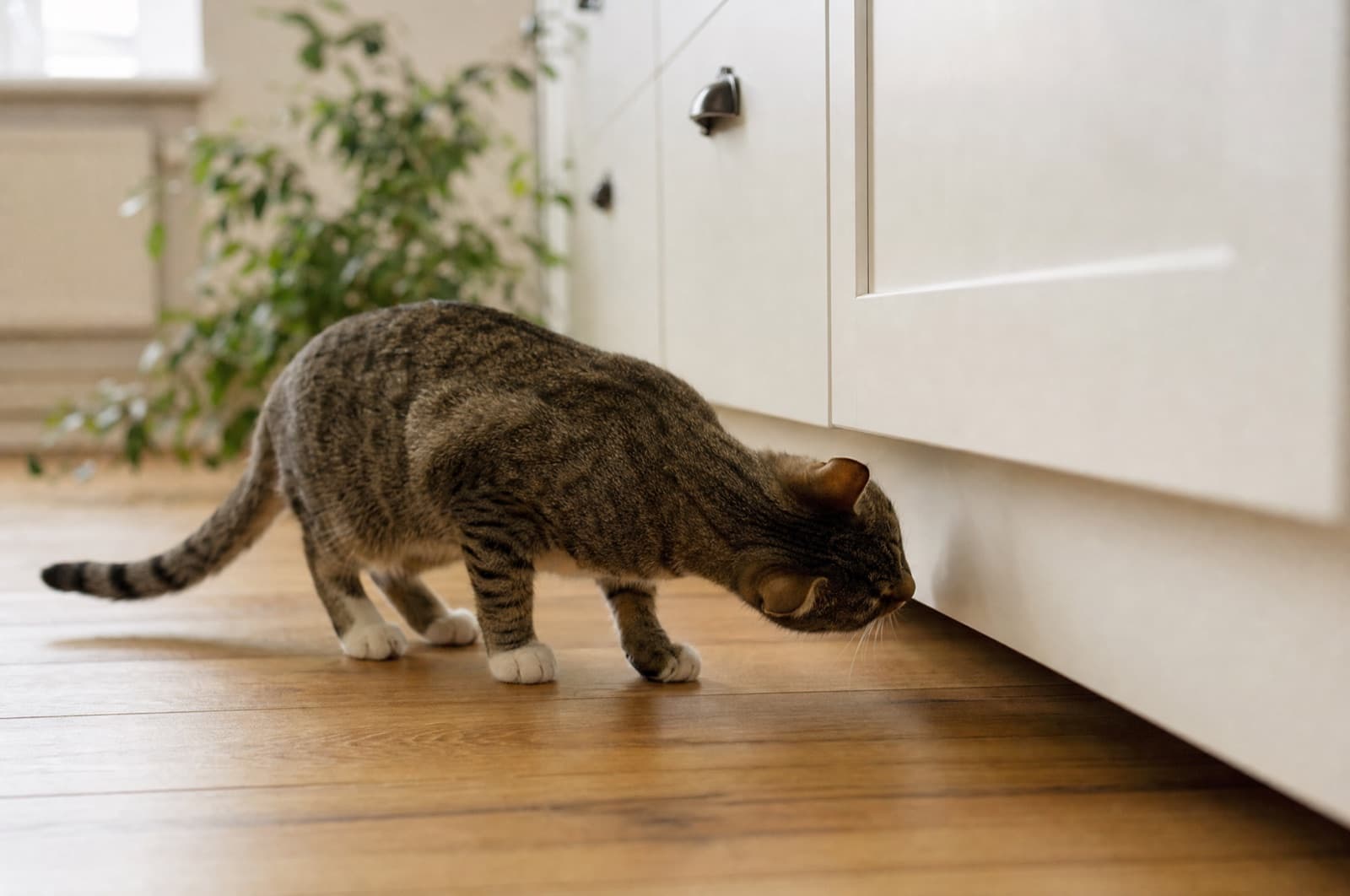
Is the Victor Electronic Mouse Trap Safe for Pets?
At a Glance
- Product: Victor Electronic Mouse Trap · Victor
- Active ingredient: No chemical toxicant
- Re-entry: Not applicable.
- Cat owners: Cats differ — read the cat card below
The short, honest answer
The score rolls up every per-species verdict below, weighted by the honest exposure that matters — a chewed-open tube, not a hidden dab — and is checked against the EPA label and veterinary toxicology.
No poison, and the shock chamber is enclosed — the main risk is a very small pet reaching inside.
The Victor Electronic Mouse Trap has no chemical toxicant at all; it kills with a high-voltage shock delivered inside a fully enclosed tunnel-style chamber, with a Smart Circuit that shuts off after each use. The enclosure is genuinely protective — a typical dog's or cat's nose or paw can't reach the plates — which makes this one of the lower-risk mechanical formats in this cluster. The real exception is a pet close to mouse-size: a small pet rodent could physically enter the chamber and be shocked, so keep it away from anything that size.
General information, not veterinary advice. For a suspected exposure, contact your veterinarian or a pet-poison hotline. Verdict checked 2026-07-13 against the EPA label and veterinary toxicology.
It's not one answer — it's one per animal
Cats, birds, and fish routinely differ sharply from dogs. That contrast is the whole point of this scorecard, and no manufacturer page draws it.
- DogsCaution
- CatsCaution
- Small mammalsAvoid
- BirdsSafe
- FishSafe
Enclosed chamber blocks typical paw or nose access
No chemical toxicant is present, and the shock plates sit inside a recessed tunnel a normal-sized dog's nose or paw can't reach. Keep it away from very small or toy-breed dogs and puppies as a standing precaution.
Victor manufacturer product listing; retailer product warnings
Chamber is generally too small and deep for a cat to reach the plates
There's no poison here, and the enclosed design keeps the electrified plates out of reach for a typical cat. Supervise unusually small or persistent cats around it out of general caution.
Victor manufacturer product listing
A pet mouse or small rodent is exactly the target size
The chamber is purpose-built to admit an animal the size of a house mouse. A loose pet mouse, hamster, or similarly sized small mammal could enter and be shocked, so this is the one species where the enclosed design offers no real protection.
Victor manufacturer product listing
No realistic indoor interaction
There's no chemical component and no plausible way a pet bird would access or enter the trap's chamber.
General mechanical-trap safety guidance
No exposure route
There's no chemical toxicant and no interaction pathway for an aquarium fish.
General mechanical-trap safety guidance
What's in it — and what it does to pets
This is an electronic kill trap with no chemical component — the mechanism is a high-voltage shock delivered inside an enclosed chamber, with a Smart Circuit that powers down after each use. The pet-safety concern is physical access, not toxicology: a typical dog or cat cannot reach the internal plates, but a very small pet close to mouse-size physically could.
Victor manufacturer product listing; retailer product warnings
How to use it safely around pets
Because there's no chemical involved, safe use is about handling the unit powered-off and keeping very small pets away from the chamber entrance — not drying time or ventilation.
Power off before handling or baiting
Always switch the unit off (and consider removing batteries) before opening it to bait or check it, to avoid any accidental shock to yourself or a pet nosing in at the wrong moment.
Bait deep in the chamber with a tool
Place bait deep inside using a tool rather than your fingers, both for your own safety and to avoid transferring scent that could draw a curious pet closer to the entrance.
Keep it away from very small pets
Site the unit out of reach of any pet close to mouse-size — a small pet rodent is exactly the animal this chamber is designed to admit.
Site it where curious pets won't tamper with it
While the exterior housing itself is safe to touch, place the unit somewhere pets won't repeatedly paw at, chew, or knock it around.
No drying or off-gassing wait applies — there's no chemical in this trap, and the exterior housing is safe to touch once it's set and powered on.
Not applicable.
The only ongoing precaution is keeping very small pets away from the chamber entrance.
Want a professional to choose the right trap for your pets?
Anchor's licensed NH technicians select and place rodent control with pet-aware siting.
Symptoms to watch for
A sign, its urgency, and what to do — never a diagnosis. When in doubt, the emergency panel below is one tap away.
- Mild
Not applicable to typical dogs and cats — chamber access is physically blocked
Listed for completeness; realistic risk is limited to very small pets
- Serious
Yelping, distress, or a jump reaction if a small pet contacts the chamber
- Serious
Visible injury or burn at a contact point
Warrants immediate veterinary attention
- Emergency
Lethargy or collapse after suspected shock exposure
- Serious
Reluctance to move or vocalizing pain after contact
- Mild
No signs at all in the vast majority of dog/cat households
Reflects the enclosed, protective chamber design for larger pets
Act now — call a vet or a pet-poison line
Do not induce vomiting unless told to
This trap has no chemical toxicant, so there's no poisoning scenario — if you suspect a pet contacted the electrified chamber, power the unit off and check for injury right away. This page is general information, not veterinary advice — if your pet is injured or you suspect exposure, contact your veterinarian or ASPCA Animal Poison Control (888-426-4435) right away.
What each situation calls for
A small pet may have entered the trap's chamber
Power off the unit immediately before touching it or your pet, then check for any sign of injury. This is a physical/electrical concern, not a poisoning — call your veterinarian promptly if you suspect contact.
Your pet is showing distress, injury, or lethargy after possible contact with the unit
Treat as an urgent veterinary matter. Bring the trap or a photo of it with you so your vet understands the type of exposure.
In the next 60 seconds
- Power off the unit immediately, ideally without direct contact with your pet or the trap.
- Check your pet for visible injury, burns, or signs of shock.
- Keep your pet calm and limit movement if they seem injured.
- Call your veterinarian promptly for any suspected electrical contact.
- Bring the trap or a photo of it to help your vet understand the exposure.
ASPCA Animal Poison Control
(888) 426-4435
24/7; a consultation fee may apply — for suspected ingestion of bait or trap components, not for electrical injury
Pet Poison Helpline
(855) 764-7661
24/7; a per-incident fee applies
Northern New England Poison Center
(800) 222-1222
24/7 human poison control — for household/child exposure context; call your vet directly for any pet electrical-contact concern
Safer pet-friendly alternatives
Honest options that reduce or remove pet-toxicity — no affiliate hype, real caveats included.
Victor Tin Cat Live Mouse Trap
SaferLive-catch, no toxicant, no shock
No electrical mechanism at all — mice are simply enclosed until released, making this the safest option if you have a very small pet rodent in the household.
Requires checking and releasing captured mice promptly for animal welfare.
Covered snap-trap station
SaferMechanical, tamper-resistant housing
An alternative enclosed option with no batteries or electrical component to consider.
Still a lethal mechanism for the target rodent; keep pets away regardless of format.
This product, sited away from small pets
SaferEnclosed electronic kill trap
Already one of the lower-risk formats for dogs and cats specifically, since the shock chamber is genuinely hard for them to access.
Not appropriate for households with a loose pet mouse, hamster, or similarly small rodent.
Professional rodent control (Anchor Pest Services)
SaferLicensed professional service
A licensed technician can select and place the right trap format for your specific pet household.
A service, not a product — ask about pet-safe trap selection for small-pet households.
Pet-safe mouse control in New Hampshire
Enclosed electronic traps are a solid chemical-free option for New Hampshire homes with dogs and cats, since the kill mechanism sits inside a chamber that's genuinely hard for them to reach — useful as NH's cold winters drive mice indoors from October through March. Homeowners can use these devices freely, but pest control performed for hire in New Hampshire must be done by an applicator licensed under RSA 430 by the NH Department of Agriculture, Markets & Food. Anchor Pest Services (#782664) provides pet-conscious rodent control across Manchester, Nashua, Concord, and surrounding towns.
NH-licensed applicator #782664 (NHDAMF, RSA 430) · NEPMA member · family-owned since 2017.
Service Area Map
Southern New Hampshire
Frequently asked questions
Sources(3)
- [1]Grange Co-op — Victor Electronic Rat Trap Product Listing
Enclosed kill chamber protects users and pets from direct contact
manufacturerverified 2026-07-13 - [2]Amazon — Victor M241 Electronic Mouse Trap Listing
Smart Circuit shutoff, bait-deep-in-chamber instructions
manufacturerverified 2026-07-13 - [3]Victor Pest — Electronic Rat & Mouse Traps
Enclosed chamber design and indoor-use guidance
manufacturerverified 2026-07-13
Written & reviewed by
VerifiedDaniel Brady
NH-Licensed Pesticide Applicator · License #782664 (NHDAMF, RSA 430)
Daniel Brady is the New Hampshire–licensed applicator behind Anchor Pest Services, a family-owned pest control company serving the Manchester area since 2017.
Last updated 2026-07-13
Pet-Safe Professional Pest Control
Mouse Control That Fits Your Household
The right trap format depends on which pets share your home. Anchor Pest Services handles rodent control with pet-aware methods across southern and central New Hampshire. Family-owned since 2017, NH license #782664.
- Pet-conscious trap selection & placement
- NH-licensed applicators (#782664)
- Free inspection — same-day service across southern NH
NH License #782664 · No obligation · We answer in person
Your next step
- Book a NH pro
Rodent Control
Book now - Book a NH pro
Pest Control Services
Licensed, family-owned pest control across southern NH.
Book now - Next step
Do rodents nest in walls during autumn?
Read the answer - Also relevant
Mechanical Rodent Control: Snap Traps + Exclusion That Works
Read the answer - Also relevant
House Mouse in New Hampshire — ID, Signs & Control
Read the answer - Related guide
Is the Rat Zapper Electronic Rat Trap by Victor Safe for Pets?
Read the answer