
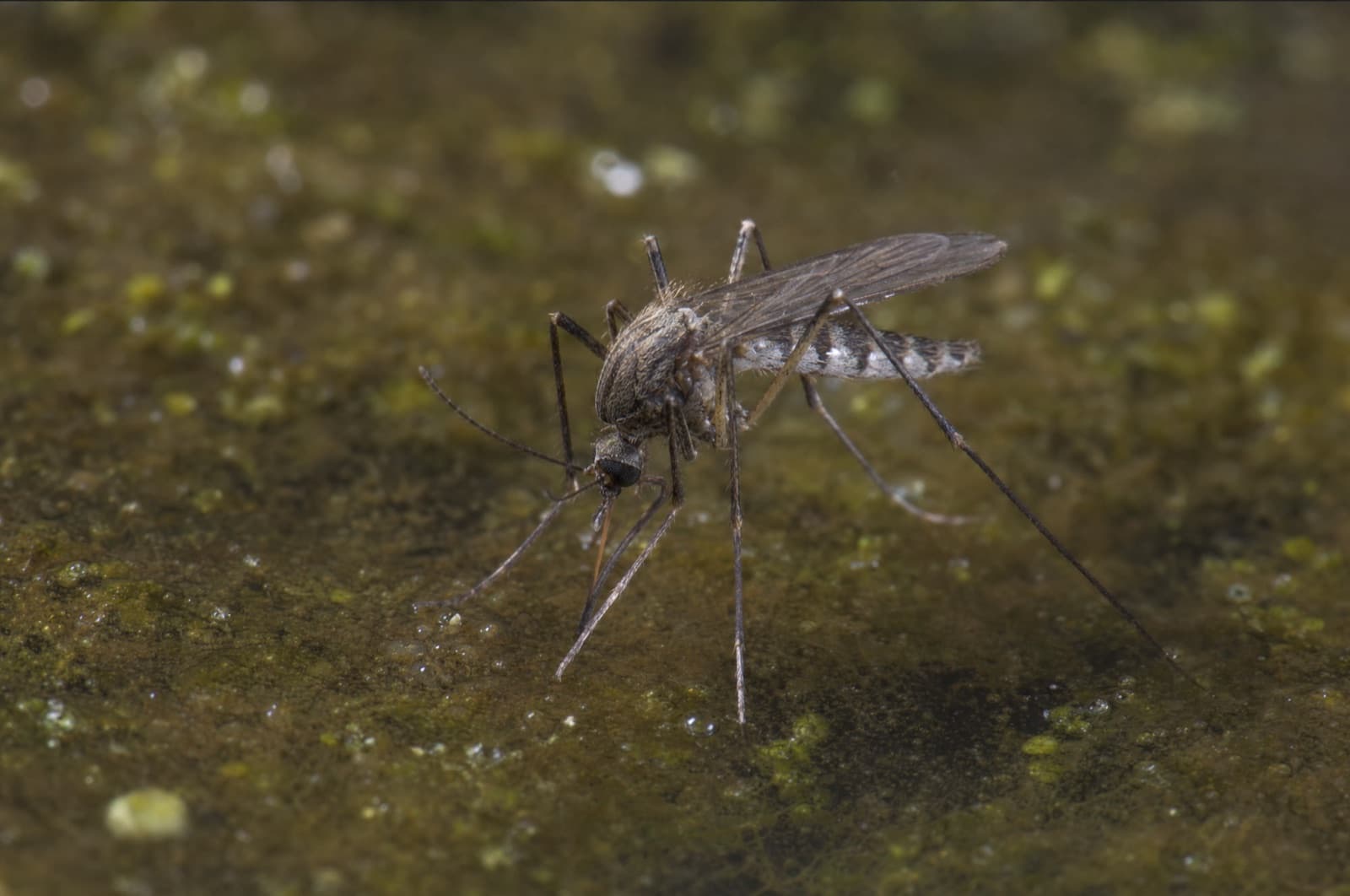
Mosquito — Quick ID for New Hampshire Homeowners
Mosquitoes are slender, long-legged flies with a needle-like proboscis — only females bite. They breed in any standing water and are active at dawn and dusk. New Hampshire carries real disease risk from Eastern Equine Encephalitis (EEE) — including a 2024 NH outbreak — and West Nile Virus. This is the fast identifier; for breeding control, repellents, and disease detail, see the full Mosquito FAQ.
- Size
- 3–9 mm
- slender; Culicidae family
- Bite
- Females only
- males feed on nectar only
- Breeding
- Standing water
- even bottle caps hold enough water
- NH disease risk
- EEE and West Nile Virus
- both active in NH; EEE outbreak confirmed 2024
Is it a mosquito?
Mosquitoes are among the most common biting insects in New Hampshire, active from late May through the first hard frost. The slender body, long dangling legs, and high-pitched whine in flight are usually enough for a confident ID — but NH's mix of species, some carrying real disease risk from EEE and West Nile Virus, makes verification worthwhile.
This page is a fast identifier. For the complete picture — breeding source elimination, disease risk detail, repellent guidance, and seasonal treatment options — read the full Mosquito FAQ guide linked above.
Quick mosquito ID
A few features separate mosquitoes from the harmless look-alikes that share the same yards and twilight hours.
Mosquito
- Scientific name
- Culicidae (NH genera: Aedes, Culex, Anopheles)
- Family
- Culicidae
- Size
- 3–9 mm
- Coloration
- Gray-brown to black; some species have banded legs or white markings
- Habitat
- Breeding in standing water — gutters, buckets, birdbaths, old tires, woodland pools, marsh edges, low-lying yard areas
- Active season
- Late spring through first hard frost; peak biting at dawn and dusk
- Diet
- Females require a blood meal for egg development; both sexes feed on nectar
- Reproduction
- Females lay eggs on or near standing water; larvae (wigglers) develop in water
- Lifespan
- Adults 2–4 weeks; cycle from egg to adult in as little as 8–10 days in warm weather
Multiple species active throughout New Hampshire from late spring through the first hard frost. Active season in Manchester roughly late May through October.
The tells — key ID features
- Slender body with long delicate legs and a single pair of narrow, scaled wings.
- Elongated, needle-like piercing proboscis — only females bite; males feed on nectar.
- Audible high-pitched whine in flight; peak biting activity at dawn and dusk.
- Larvae ('wigglers') wriggle just below the surface of standing water — any container holds a potential breeding site.
Crane fly (daddy longlegs)
How to tell — Crane flies are far larger (up to 25 mm), do not bite, and have a dangling flight pattern; they are harmless adult flies. Often mistaken for a 'giant mosquito.'
Midge / fungus gnat
How to tell — Non-biting midges resemble mosquitoes in size and shape but lack the piercing proboscis and do not bite; they are typically found swarming near lights or water, not seeking a host.
Signs of a problem
Two signs — bites and wigglers — confirm mosquito activity.
Itchy raised welts after spending time outdoors at dusk or dawn
What it means — Biting female mosquitoes are active in the area — a breeding site is within typical flight range (up to a mile, but often much closer).
Wriggling larvae ('wigglers') visible just below the surface of still water in a bucket, gutter, birdbath, or tire
What it means — An active mosquito breeding site on your property — larvae become biting adults in 8–10 days.
Mosquito control in New Hampshire
Mosquitoes breed on your property and within flight range. Eliminating standing water is the first step, but professional yard treatments significantly reduce biting pressure during NH's EEE and West Nile season. The full Mosquito FAQ covers breeding source elimination, repellent guidance, and disease risk in detail.
When to call a pro
- Bites are disrupting outdoor activities despite eliminating obvious standing water.
- Standing water sources on the property cannot be removed (a pond, wetland edge, low spots).
- You want a seasonal yard treatment program during NH's EEE and West Nile Virus season.
Not sure it's a mosquito?
A licensed NH technician can confirm the species and tell you honestly whether it's a DIY fix or a job for a pro — free inspection, same-day service across Southern New Hampshire.
Frequently asked questions
Sources(3)
- [1]NH DHHS — Mosquito-Borne Disease Surveillance
EEE and West Nile Virus NH disease risk, 2024 EEE case
govverified 2026-06-30 - [2]
- [3]
Written & reviewed by
VerifiedDaniel Brady
NH-Licensed Pesticide Applicator · License #782664 (NHDAMF, RSA 430)
Daniel Brady is the New Hampshire–licensed applicator behind Anchor Pest Services, a family-owned pest control company serving the Manchester area since 2017.
Last updated 2026-06-30

New Hampshire pest control
Dealing with mosquitos in your home?
Anchor Pest Services identifies and handles mosquito problems across southern and central New Hampshire. Family-owned since 2017, NH license #782664.
- NH-licensed applicators (#782664)
- Same-day service · free inspection
- Family-owned since 2017
Your next step
- What to do next
When Is Mosquito Season in NH? Timing & Risk Guide
Read the answer - What to do next
How to Get Rid of Mosquitoes
Read the answer - Also relevant
When Does Mosquito Season Start in New Hampshire?
Read the answer - Also relevant
How to Find a Mosquito in Your Room
Read the answer - Also relevant
How Often Should You Treat Your Yard for Mosquitoes?
Read the answer