
How to Safely Remove a Tick From a Cat at Home
The removal technique is yours to do — but which product goes on your cat afterward, if any, is strictly a veterinarian's call.
You can do this. The mechanics are the same as removing a tick from a dog; the part that genuinely needs a vet is picking any preventive product, and a tick in a truly awkward spot on an uncooperative cat.
At a glance
- Whose desk: Your hands
- Urgency: Routine monitoring
- The rest lives at: Ticks & fleas FAQ
Whose job is this, really?
Pet-parasite questions belong to three genuinely different owners. Here's the desk that actually owns this one — even when the honest answer is 'not us.'
The removal technique is yours to do — but which product goes on your cat afterward, if any, is strictly a veterinarian's call.
You can do this. The mechanics are the same as removing a tick from a dog; the part that genuinely needs a vet is picking any preventive product, and a tick in a truly awkward spot on an uncooperative cat.
What this means for your pet — and when to act
Health-conservative by construction: when in doubt, this escalates. Read the trigger for what moves you up a band.
Watch the bite site after removal — no emergency in a routine bite
A single attached tick removed promptly and cleanly is a routine home-care event; the monitoring dimension is the same as for dogs — a possible local reaction or, less commonly, a delayed illness sign.
The bite site becomes swollen, red, and painful rather than a small firm bump, or your cat develops lethargy, poor appetite, or fever in the days-to-weeks afterward — call your veterinarian.
Route to your veterinarian — not Anchor, not a web page.
The safe technique, step by step
Cats are more easily startled than dogs, so plan for gentle restraint and a helper before you start.
Enlist a helper to gently hold the cat — front limbs and shoulders supported, hindquarters held against the helper's body — and wrap in a towel if needed for extra calm.
A relaxed, secure hold matters more with cats than with most dogs.
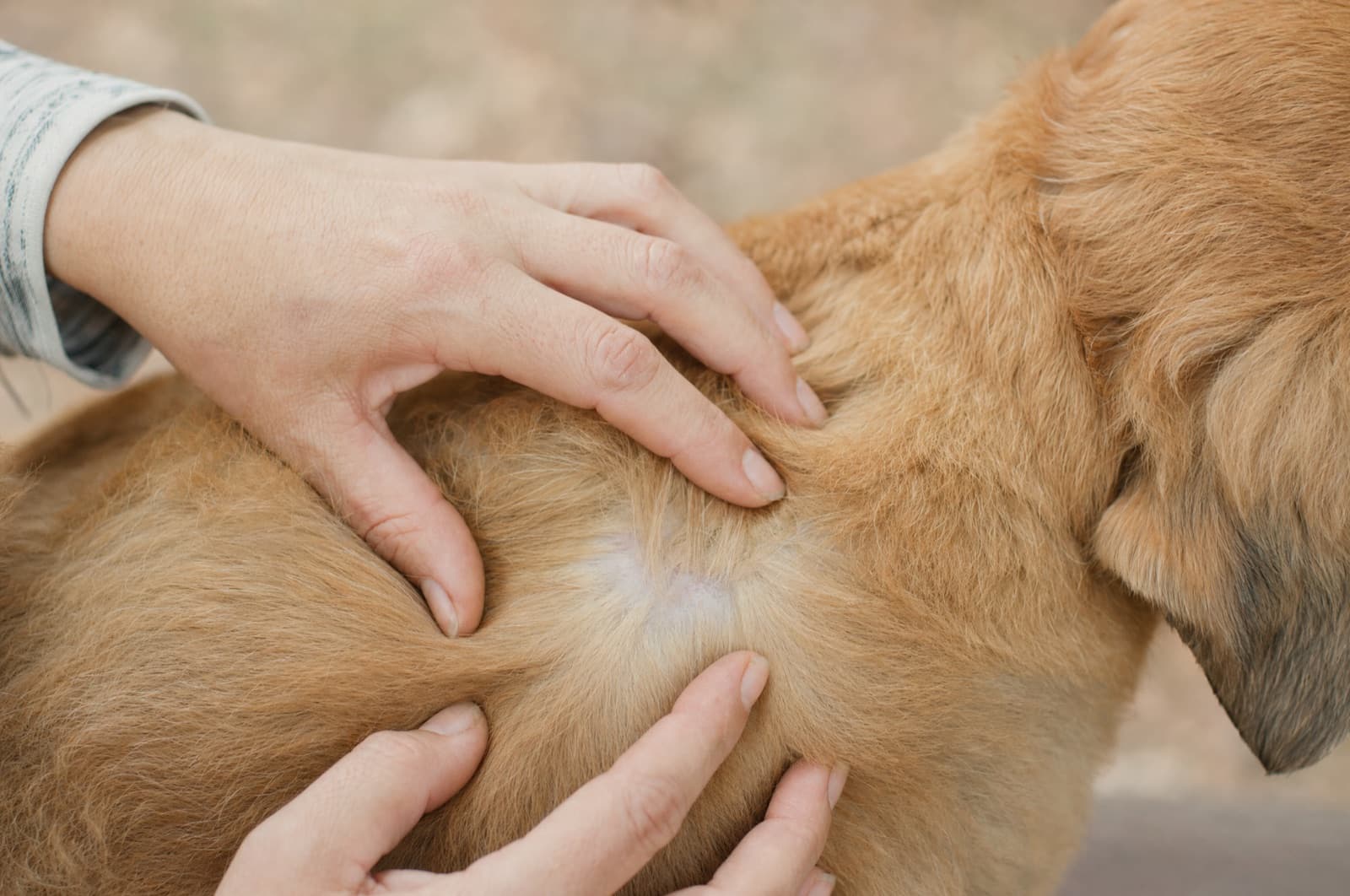
Distract with treats or a calm voice while you work, and part the fur to confirm it's a tick and not a skin tag.
Look for legs near the skin to be sure.
With clean, fine-tipped tweezers or a tick-removal tool, grasp the tick as close to the skin as possible and pull upward with steady, even pressure.
No twisting, no squeezing the tick's body.
Drop the tick into alcohol or a sealed container; clean the bite site with a cat-safe antiseptic or soap and water, then wash your hands.
If mouthparts stay behind and won't lift out easily, leave them alone and let the skin heal.
Treat it like a splinter — digging at it causes more harm than the fragment.
- Never apply a dog tick-and-flea product, or any permethrin/pyrethroid product, to a cat — CDC and veterinary sources note cats cannot metabolize permethrin the way dogs can, and exposure can be fatal.
- Do not use nail polish, petroleum jelly, or a hot match to try to make the tick let go.
- Do not attempt removal near the eye, deep in the ear canal, or in the mouth, or if the cat won't hold still — see a veterinarian instead.
This hub owns pet-specific prevention
The general biology, the mosquito Q&A, the pet-product safety — those live in siblings that already earn them. Here's exactly where.
Product and preventive choice for cats is a veterinarian's decision, not something to shop for on your own — see /is-pest-control-safe-for-pets for pet-product safety and our ticks & fleas FAQ for general biology.
How this calibrates for NH
Outdoor and indoor-outdoor cats in New Hampshire face the same blacklegged and dog-tick exposure as dogs do. Because cats groom themselves and each other, even indirect permethrin exposure — say, from a recently treated housemate dog — can be dangerous; keep a treated dog separated from cats until fully dry.
NH-licensed applicator #782664 (NHDAMF, RSA 430) · NEPMA member · family-owned since 2017.
Frequently asked
Sources(3)
- [1]CDC
Cats are extremely sensitive to insecticides/acaricides — vet consultation required
- [2]International Cat Care
Ticks and tick removal — restraint and technique for cats
- [3]International Cat Care
Permethrin poisoning in cats
Written & reviewed by
VerifiedDaniel Brady
NH-Licensed Pesticide Applicator · License #782664 (NHDAMF, RSA 430)
Daniel Brady is the New Hampshire–licensed applicator behind Anchor Pest Services, a family-owned pest control company serving the Manchester area since 2017.
Your next step
- pet-parasite-prevention
How to safely remove a tick from a dog at home
Read the answer - pet-parasite-prevention
Tick near your pet's eye, ear, or mouth: safe removal
Read the answer - pet-parasite-prevention
How to protect outdoor cats from ticks and mosquitoes
Read the answer - is-pest-control-safe-for-pets
Is pest control safe for pets?
Read the answer
Anchor Pest Services
Have a different pest question?
This one may be your vet's call, not a spray — but if you're facing something that is a pest job, we serve Southern New Hampshire with a free inspection and same-day service.
- NH-licensed applicator
- Same-day service
- Pet & family-conscious
NH License #782664 · No obligation · We answer in person