
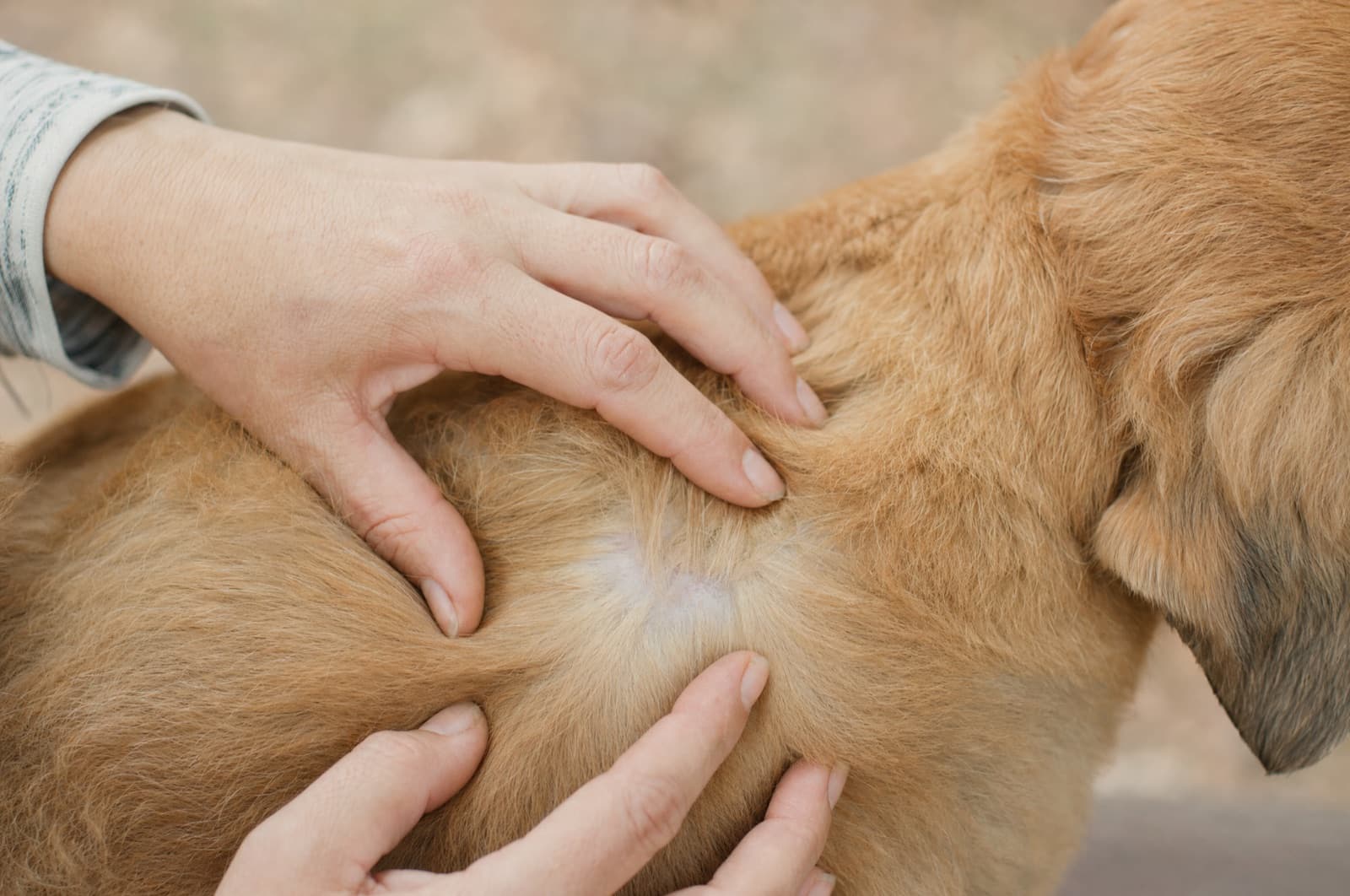
Tick Near Your Pet's Eye, Ear, or Mouth: Safe Removal Steps
This one has a real line in it: an easily accessible tick near the eye or ear is yours to remove carefully, but one on the eyelid margin, deep in the ear canal, or in the mouth is honestly a veterinarian's job, not a DIY attempt.
Don't force this one. The delicate location is exactly what makes a low threshold to call your vet the right, non-alarmist choice here — this isn't about the bite being more dangerous, it's about the removal itself carrying real injury risk in these spots.
At a glance
- Whose desk: Your hands
- Urgency: Call your vet soon
- The rest lives at: Ticks & fleas FAQ
Whose job is this, really?
Pet-parasite questions belong to three genuinely different owners. Here's the desk that actually owns this one — even when the honest answer is 'not us.'
This one has a real line in it: an easily accessible tick near the eye or ear is yours to remove carefully, but one on the eyelid margin, deep in the ear canal, or in the mouth is honestly a veterinarian's job, not a DIY attempt.
Don't force this one. The delicate location is exactly what makes a low threshold to call your vet the right, non-alarmist choice here — this isn't about the bite being more dangerous, it's about the removal itself carrying real injury risk in these spots.
What this means for your pet — and when to act
Health-conservative by construction: when in doubt, this escalates. Read the trigger for what moves you up a band.
Attempt only an easy, accessible tick — otherwise call your vet promptly
DIY removal near the eye, inside the ear canal, or in the mouth carries genuine injury risk to delicate tissue, distinct from the removal-technique risk anywhere else on the body — this warrants a same-day or next-day veterinary call rather than a home attempt when the tick isn't easily and safely reachable.
The tick is on the eyelid margin or touching the eyeball, deep inside the ear canal, inside the mouth, or your pet won't hold still enough for a careful, gentle attempt — stop and go to a veterinarian.
Route to your veterinarian — not Anchor, not a web page.
The safe technique, step by step
The safe approach here depends entirely on exactly where the tick is and whether your pet will stay calm.
First, assess location and accessibility: is the tick on the outer ear flap, the cheek, or skin near — but not on — the eye, and is your pet calm?
This determines whether a careful home attempt is appropriate at all.
If yes, use fine-tipped tweezers or a tick-removal tool and the standard grasp-close-to-the-skin, steady-upward-pull technique, taking extra care not to touch the eye or push into the ear canal.
Go slowly; stop if your pet becomes distressed.
If the tick is on the eyelid margin or eyeball area, deep in the ear canal, or inside the mouth — or if your pet struggles — stop immediately.
These locations carry real injury risk if attempted without proper tools or restraint.
Call your veterinarian, who can remove it safely, sometimes with mild sedation, and check the area for any injury at the same time.
- Do not attempt removal on or near the eyeball itself under any circumstances.
- Do not push instruments into the ear canal trying to reach a tick you can't clearly see.
- Do not use nail polish, petroleum jelly, or a hot match anywhere on the body, including these sensitive areas.
This hub owns pet-specific prevention
The general biology, the mosquito Q&A, the pet-product safety — those live in siblings that already earn them. Here's exactly where.
General tick prevention lives in our ticks & fleas FAQ. A tick on the eyelid margin, deep ear canal, or mouth — or an uncooperative pet — is a veterinarian's job to remove safely; this page's honest answer for those cases is 'see your vet,' not a DIY workaround.
How this calibrates for NH
Ticks commonly attach around New Hampshire dogs' and cats' ears and eyes because the thin fur and warmth there make good attachment spots, so this scenario is common during the state's long tick season rather than a rare edge case.
NH-licensed applicator #782664 (NHDAMF, RSA 430) · NEPMA member · family-owned since 2017.
Frequently asked
Sources(3)
- [1]CDC
Preventing Ticks on Pets — hot-spot diagram including ears and eyelids
- [2]Merck Veterinary Manual
Tick removal technique and limits
- [3]International Cat Care
Ticks and tick removal guidance
Written & reviewed by
VerifiedDaniel Brady
NH-Licensed Pesticide Applicator · License #782664 (NHDAMF, RSA 430)
Daniel Brady is the New Hampshire–licensed applicator behind Anchor Pest Services, a family-owned pest control company serving the Manchester area since 2017.
Your next step
Anchor Pest Services
Have a different pest question?
This one may be your vet's call, not a spray — but if you're facing something that is a pest job, we serve Southern New Hampshire with a free inspection and same-day service.
- NH-licensed applicator
- Same-day service
- Pet & family-conscious
NH License #782664 · No obligation · We answer in person