
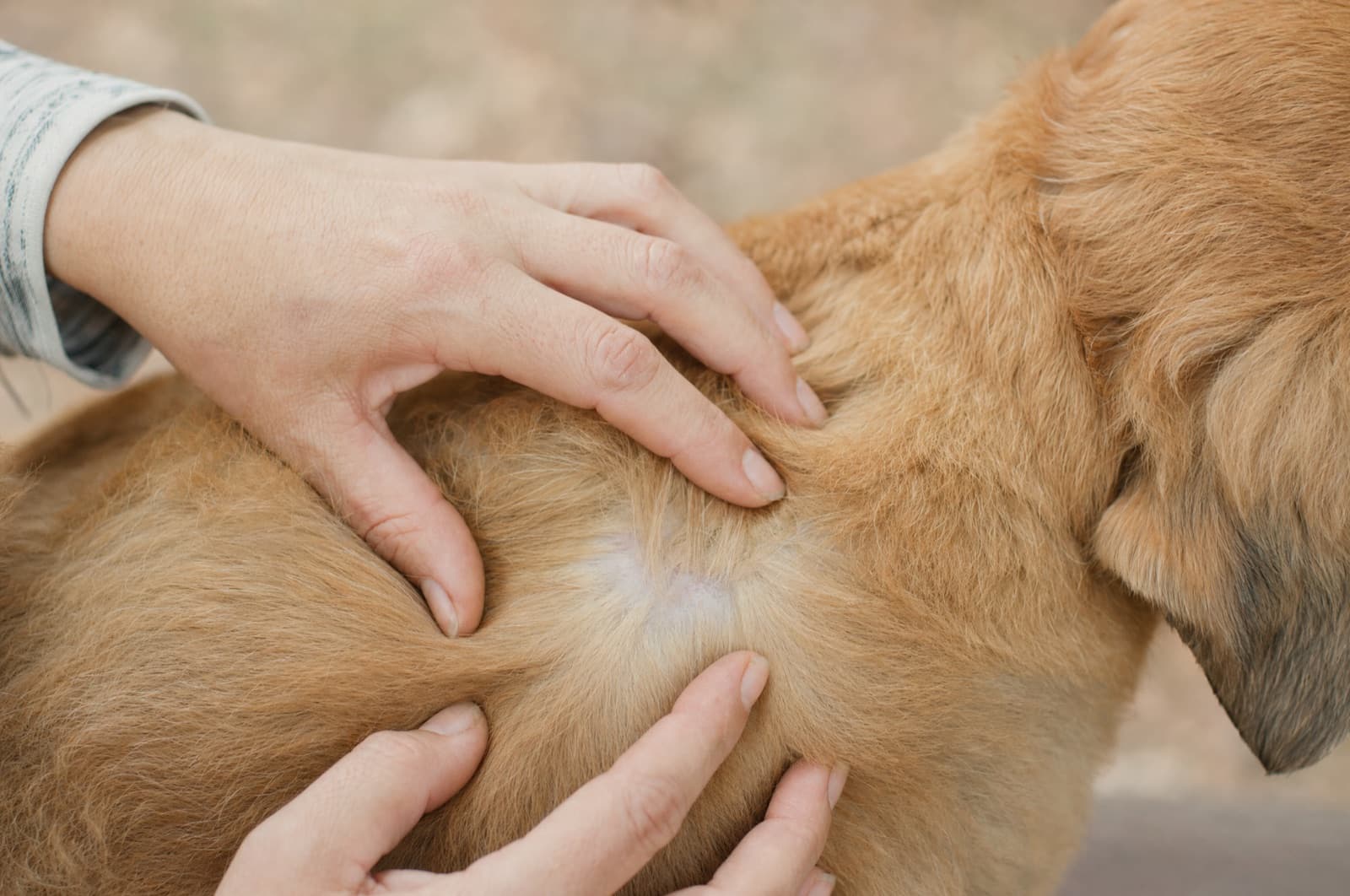
Tick Head Broke Off During Removal: What to Do Next for Pets
This is still yours to handle — a retained mouthpart is a minor aftercare situation, not a reason for a vet visit on its own.
Take a breath. CDC and veterinary sources agree this resolves on its own like a splinter; the mistake to avoid is digging at it, not leaving it be.
At a glance
- Whose desk: Your hands
- Urgency: Routine monitoring
- The rest lives at: Ticks & fleas FAQ
Whose job is this, really?
Pet-parasite questions belong to three genuinely different owners. Here's the desk that actually owns this one — even when the honest answer is 'not us.'
This is still yours to handle — a retained mouthpart is a minor aftercare situation, not a reason for a vet visit on its own.
Take a breath. CDC and veterinary sources agree this resolves on its own like a splinter; the mistake to avoid is digging at it, not leaving it be.
What this means for your pet — and when to act
Health-conservative by construction: when in doubt, this escalates. Read the trigger for what moves you up a band.
Leave it and watch — not an emergency
A retained tick mouthpart is a minor local matter; CDC and the Merck Veterinary Manual both note that the chance of infection from a retained fragment is minor compared with the risk of leaving the whole tick attached longer to try to get it out.
The site becomes spreading, red, swollen, warm, or develops pus over the following days — call your veterinarian.
Route to your veterinarian — not Anchor, not a web page.
What to check — and what it means
Over the following days, distinguish a normal healing fragment from an infected site:
A small dark speck at the skin surface that stays roughly the same size
Means: Normal — the fragment is working its way out; keep cleaning gently and let it be.
Spreading redness, pus, or swelling around the site
Means: Possible local infection — call your vet.
A painful lump that grows larger over several days
Means: Worth a veterinary look rather than continued home observation.
The safe technique, step by step
If mouthparts break off during removal, the right move is usually to do less, not more.
Try once, gently, to lift the fragment out with clean fine-tipped tweezers if it's sitting right at the surface.
Don't force it or make repeated attempts.
If it doesn't come easily, stop and leave it alone.
CDC and Merck Veterinary Manual: the risk of local infection from a retained mouthpart is minor compared with the risk of a pathogen transmission from leaving a whole tick attached longer.
Clean the site with rubbing alcohol or soap and water.
Let the skin heal naturally — the body typically works the fragment out over the following days, similar to a splinter.
Check the site periodically over the next several days for signs of local infection rather than trying to remove the fragment again.
Spreading redness, pus, swelling, or a worsening painful lump are what to watch for, not the fragment's mere presence.
- Do not dig at the fragment with a needle, tweezers, or your fingernail — this causes more irritation and infection risk than leaving it alone.
- Do not squeeze or gouge the area trying to force it out.
- Do not use nail polish, petroleum jelly, or heat on the site — these methods are not appropriate for a retained fragment and are contraindicated for tick removal generally.
This hub owns pet-specific prevention
The general biology, the mosquito Q&A, the pet-product safety — those live in siblings that already earn them. Here's exactly where.
General tick removal and biology live in our ticks & fleas FAQ. A worsening or infected site is a veterinarian's call.
How this calibrates for NH
This guidance is standard nationally with no New Hampshire-specific deviation — the same CDC and veterinary-manual reasoning about retained mouthparts applies to NH pets as anywhere else.
NH-licensed applicator #782664 (NHDAMF, RSA 430) · NEPMA member · family-owned since 2017.
Frequently asked
Sources(3)
- [1]CDC
After a Tick Bite — retained mouthpart guidance
- [2]Merck Veterinary Manual
Tick removal — retained mouthpart minor local risk
- [3]UNH Cooperative Extension
Folk-method caution and removal technique
Written & reviewed by
VerifiedDaniel Brady
NH-Licensed Pesticide Applicator · License #782664 (NHDAMF, RSA 430)
Daniel Brady is the New Hampshire–licensed applicator behind Anchor Pest Services, a family-owned pest control company serving the Manchester area since 2017.
Your next step
Anchor Pest Services
Have a different pest question?
This one may be your vet's call, not a spray — but if you're facing something that is a pest job, we serve Southern New Hampshire with a free inspection and same-day service.
- NH-licensed applicator
- Same-day service
- Pet & family-conscious
NH License #782664 · No obligation · We answer in person