
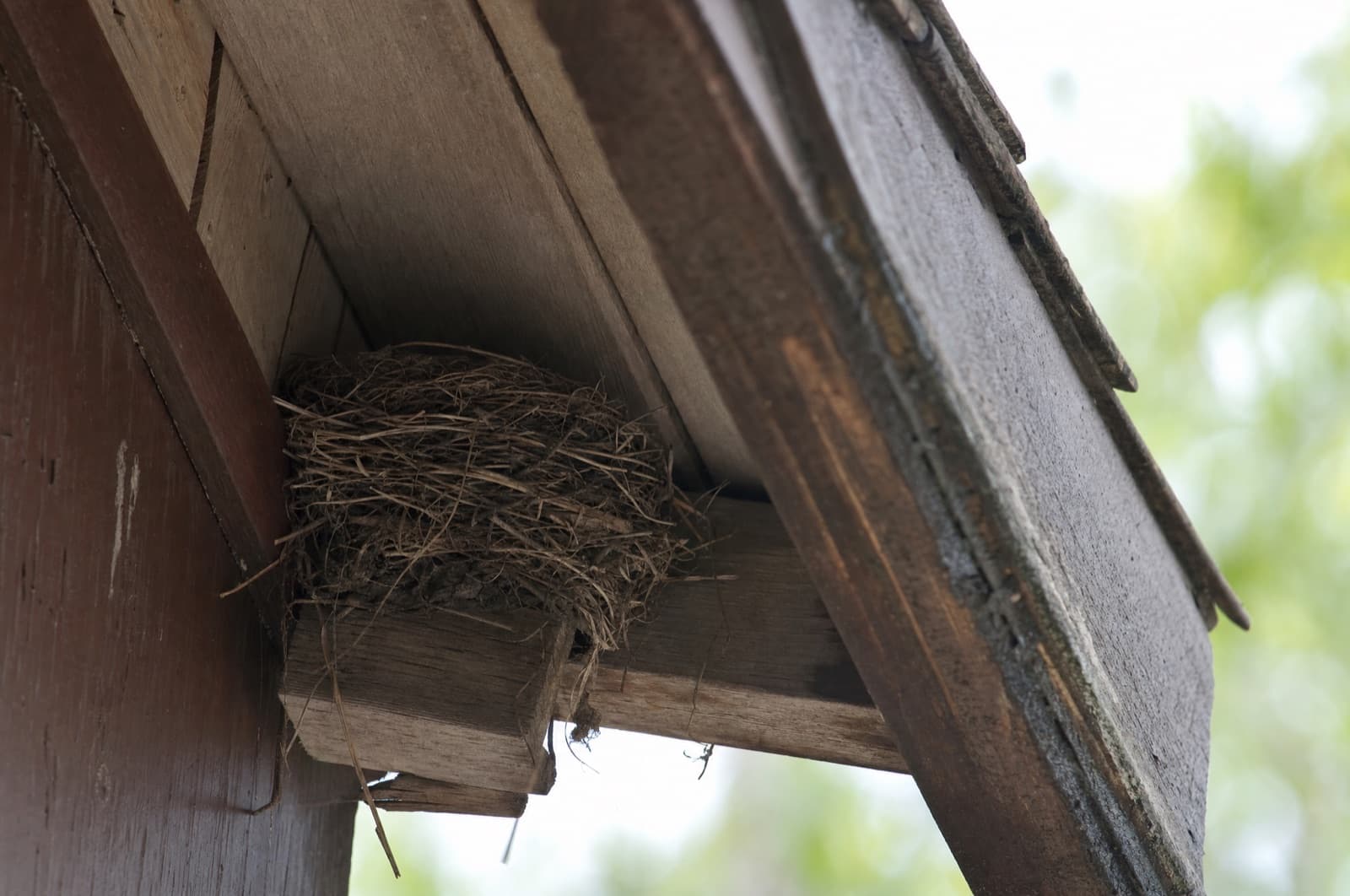
How to Prevent Bird Mites in an Attic After a Nest Is Removed
Bird mites lingering in an attic after a nest is removed cannot persist on their own — they may bite while searching for a blood meal, but they cannot reproduce on human blood and die off within a few weeks without the bird.
Good news: the hard part is already done. Once the nest is out and entry points are sealed, this resolves itself on a predictable timeline without ongoing pest treatment.
At a glance
- What it is: Follows a host
- The driver: The abandoned bird nest — now removed
- Who fixes it: No action needed
Bird mites lingering in an attic after a nest is removed cannot persist on their own — they may bite while searching for a blood meal, but they cannot reproduce on human blood and die off within a few weeks without the bird.
Good news: the hard part is already done. Once the nest is out and entry points are sealed, this resolves itself on a predictable timeline without ongoing pest treatment.
Pull the right lever, not the sprayer
The organism is downstream of one condition. Remove that condition and it has no foothold — which is why prevention here is rarely a pesticide.
The driver
The abandoned bird nest — now removed
Bird mites live on and around a nesting bird and scatter into the surrounding space when the nest is abandoned or the birds fledge, sometimes biting humans in the process, but Extension and public-health sources are explicit that these mites cannot successfully survive or reproduce without their natural host and die out within roughly two to three weeks once it's gone.
Source:Los Angeles County Public Health— Rat and Bird Mites
This isn't a spray-the-bug problem
Nest removal is what actually ends this — a miticide applied without removing the nest and nesting debris only delays the same die-off that happens on its own, and spraying an attic for mites that are already headed toward dying out adds chemical exposure without meaningfully speeding up the timeline.
The right tool instead: Remove the nest and nesting debris, clean the affected area, seal entry points so birds can't renest, and let the short die-off window run its course; a brief targeted treatment is only worth considering if biting continues well past that window.
4 levers, honestly ranked
Sorted by what actually moves the driver — primary first, theatre last. Effort is graded so you know what's a five-minute fix and what's a real project.
- Primary — moves the driverHire a pro
Remove the nest and all nesting debris
The nest itself, along with feathers, droppings, and nesting material, is what mites were living in and around — leaving any of it behind gives stragglers somewhere to persist longer than they otherwise would. Remove and dispose of the material completely, and vacuum or clean the immediate area where it sat.
- Primary — moves the driverHire a pro
Seal attic and eave entry points to prevent renesting
The mite problem restarts the moment birds find their way back in and build a new nest, so closing off the gaps, vents, and eave openings birds used the first time is what makes the fix permanent rather than temporary. This is exclusion work, not a treatment for the mites themselves.
- Primary — moves the driverQuick DIY
Let the short die-off window run its course
Once the nest is gone, any mites left in the attic have nothing to feed on and no way to reproduce; public-health sources put their survival at roughly two to three weeks without the host bird. No treatment is needed during this window in the great majority of cases — it is genuinely a wait, not an action.
- OptionalHire a pro
Consider a brief targeted treatment only if biting continues past the window
If bites are still occurring well beyond the expected two-to-three-week die-off, that's the point to involve a pest professional for a narrowly targeted treatment — and to double-check that a second nest or roosting site isn't still active nearby, since the more common explanation for mites persisting is an unaddressed host, not treatment failure.
Whose job is this, really?
Who actually fixes it
No action needed
With the nest already removed and entry points sealed, the mites left behind cannot persist without their host and die off on their own within a few weeks — there is no additional mite-specific action required.
Biting continues past roughly two to three weeks after the nest was removed — that points to a pest professional for a brief targeted treatment and a check for a second, still-active nest nearby, rather than a longer wait.
How this calibrates for NH
Late spring and early summer are the peak season in New Hampshire for this scenario, as fledglings leave nests built by house sparrows, starlings, and similar birds in eaves, soffits, and attic vents, and starving mites disperse in search of a blood meal before dying off.
NH-licensed applicator #782664 (NHDAMF, RSA 430) · NEPMA member · family-owned since 2017.
Frequently asked
Sources(3)
- [1]Los Angeles County Public Health
Rat and Bird Mites
- [2]Penn State Ask Extension
Bird mite infestation guidance
- [3]University of Minnesota Extension
Bird mites
Written & reviewed by
VerifiedDaniel Brady
NH-Licensed Pesticide Applicator · License #782664 (NHDAMF, RSA 430)
Daniel Brady is the New Hampshire–licensed applicator behind Anchor Pest Services, a family-owned pest control company serving the Manchester area since 2017.
Anchor Pest Services
Have a different pest question?
This one may not be a pesticide job — but if you're facing something that is, we serve Southern New Hampshire with a free inspection and same-day service.
- NH-licensed applicator
- Same-day service
- Pet & family-conscious
NH License #782664 · No obligation · We answer in person