
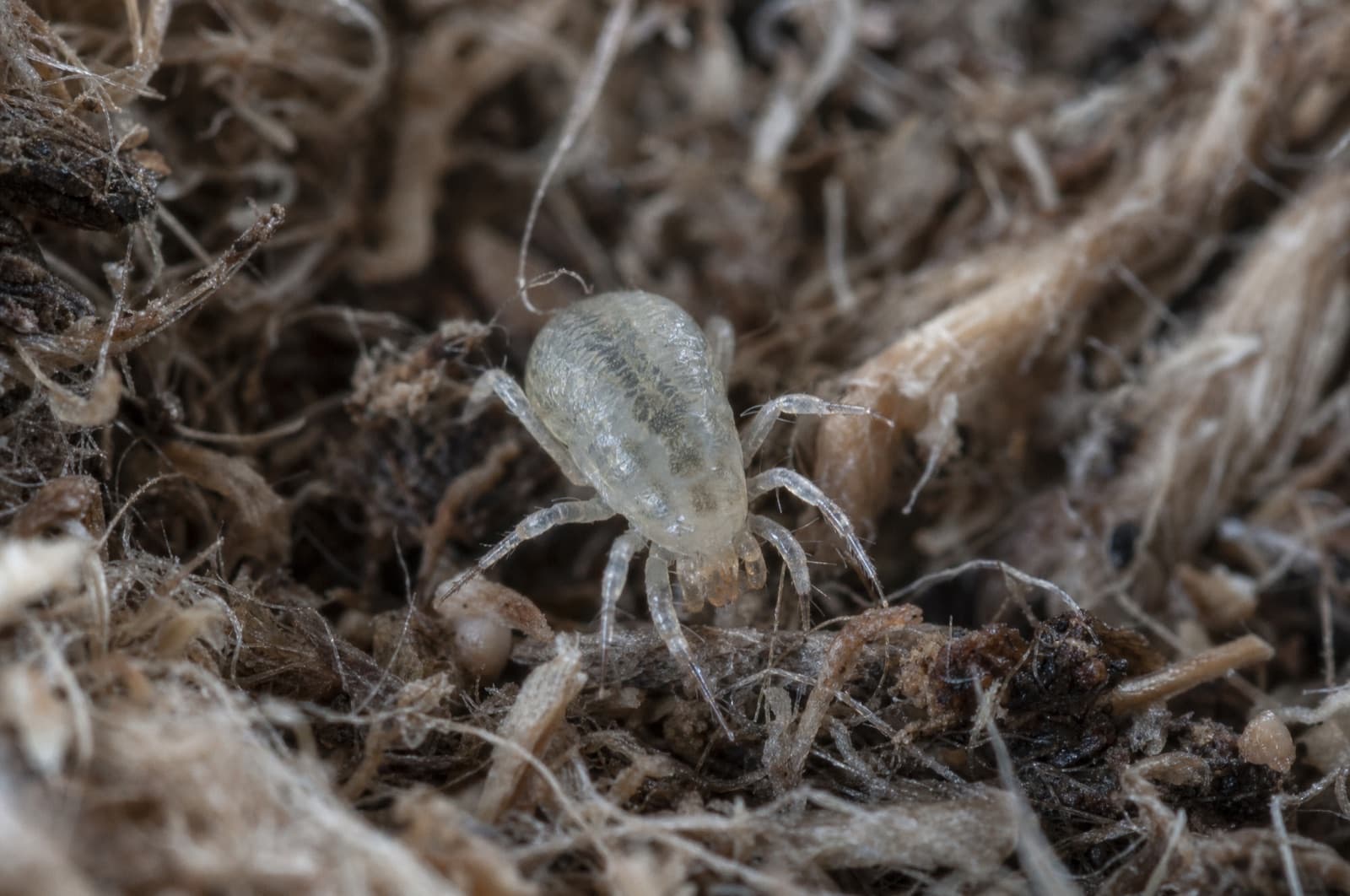
Bird Mites in New Hampshire: Bites Mean a Nest Nearby
Also called Northern fowl mite · Avian mite
Bird mites (Ornithonyssus sylviarum / Dermanyssus spp.) are parasites that live on birds and their nests — when a nest is abandoned after fledging, the mites swarm into the home seeking a new host. They cannot reproduce on human blood, so they can never establish a true infestation on people. The lasting fix is locating and removing the abandoned nest source; once it is gone, the mites die off on their own.
- Size
- 0.3–1 mm (pepper-fleck specks)
- reddish when fed; pmc.ncbi.nlm.nih.gov/articles/PMC8456244/
- What bites mean
- An abandoned bird nest nearby
- extension.umn.edu/insect-relatives/bird-mites
- Breed on humans?
- No — can't reproduce on human blood
- extension.umn.edu/insect-relatives/bird-mites
- Disease to people
- Not a known vector
- extension.umn.edu/insect-relatives/bird-mites
- Off-host survival
- Weeks to ~5 months
- pmc.ncbi.nlm.nih.gov/articles/PMC8456244/
The mite that tells you there's a bird nest in your building
Bird mites (primarily Ornithonyssus sylviarum, the northern fowl mite, and Dermanyssus spp.) are tiny arachnid parasites that spend their lives on birds and in active nests. They are not a household pest in the conventional sense — they cannot breed on human blood, and they have no interest in living on people. But when the birds that hosted them fledge and leave, the mites swarm into adjacent living spaces looking for a new blood source. Those sudden, unexplained bites near a vent or window are not random: they are a decoder telling you there is an abandoned bird nest somewhere very close to that spot.
In New Hampshire, the culprit nests are most often built by house sparrows, European starlings, and pigeons — all non-native species that favor the eaves, soffits, attic vents, porch-light fixtures, and dryer exhaust vents of older NH homes and buildings. Mite activity peaks in late spring through early summer when fledging is underway and nests go quiet. The good news is that bird mites are not a known disease vector to people and cannot sustain themselves on human blood, so the population dies off once the nest source is found and removed. Bites are irritating, not dangerous.
How to identify bird mites
Bird mites are most easily distinguished by context — they appear near windows, vents, and ceilings in late spring or summer, coinciding exactly with when nearby birds fledge. Under magnification they are eight-legged arachnids, but at practical scale they are nearly invisible specks that move. They appear reddish or rust-colored after a blood meal and pale or translucent when unfed, which separates them visually from the brick-red (plant-feeding, non-biting) clover mite. Unlike scabies, bird mites do not burrow into skin; unlike dust mites, they are faintly visible if you look closely on a white surface near a vent.
Bird mite
- Scientific name
- Ornithonyssus sylviarum (and Dermanyssus spp.)
- Family
- Macronyssidae / Dermanyssidae
- Size
- 0.3–1 mm
- Coloration
- Translucent to pale gray; reddish when engorged with blood
- Habitat
- Bird nests (primary); then nearby living spaces when nests are abandoned
- Active season
- Late spring through summer, peaking at fledging time
- Diet
- Bird blood (humans are accidental hosts)
- Reproduction
- On birds and in nests; cannot reproduce on human blood
- Lifespan
- Short-lived; survives off-host weeks to ~5 months
Cosmopolitan; present wherever birds nest
The tells — key ID features
- Nearly invisible specks (~pepper-fleck size) near windows, vents, and ceilings — the first thing most people notice
- Bites appear in clusters after a nearby bird nest goes quiet at fledging
- Appear reddish or rust-colored after feeding; pale/translucent when unfed
- Associated with eaves, soffits, attic vents, porch-light fixtures, and dryer exhaust vents
Size, to scale
0.3–1 mm
Specks of pepper or moving dust on a windowsill
Scabies mite
How to tell — Scabies burrows into skin and causes intense itching at night with visible burrow tracks; bird mites do not burrow and the source is an outdoor/attic nest, not the person.
Clover mite
How to tell — Clover mites are red plant-feeders that swarm sunny foundations in spring/fall — they do not bite, unlike bird mites.
Dust mite
How to tell — Dust mites are microscopic (invisible), live in bedding/HVAC dust, and do not bite — they are an allergen source only.
Signs of a problem
The key insight: bird mite bites are a decoder, not just a nuisance. Each sign below maps to a likely nest source.
Sudden itchy bites + tiny moving specks near a window, vent, or light fixture
What it means — A bird nest in the eaves, soffit, or attic above that spot has been abandoned and mites are seeking a new host.
Mites crawling from a porch-light fixture or attic vent
What it means — A sparrow or starling nest is directly above, recently abandoned after fledging.
Specks on a windowsill below an attic or soffit
What it means — Mites descending from a nest in the attic or soffit directly above.
Bites concentrated on people sleeping or working near an exterior wall
What it means — A nest is likely in the wall void, eave, or attached structure above that area.
Specks appearing in late spring through early summer near the roofline
What it means — Peak fledging season — nests on NH homes are most likely to be abandoned and release mites at this time.
The real risks, calibrated
Bird mites are not a serious health threat, but they cause real discomfort and the underlying nest source can harbor other concerns.
Itchy papular dermatitis (bites)
Low riskOnset: Soon after a nearby nest is abandoned
Irritating, itchy bite reactions on the skin — not a known disease vector to humans. Self-limiting once the nest source is removed. Persistent skin reactions warrant a doctor visit.
Hidden structural nesting (secondary concern)
Low riskOnset: Over time
Bird nests in soffits, attic vents, and wall voids can accumulate droppings and nesting material that attract other pests or block ventilation. The mites are a symptom of the underlying nest problem.
DIY — what works, what backfires
Bird mite control is about finding and removing the nest source — not spraying yourself or the walls.
What actually works
- Locate the abandoned nest: check eaves, soffits, attic vents, porch-light fixtures, and dryer/exhaust vents for a recently vacated nest.
- Remove the abandoned nest once you confirm no eggs or young are present (protected songbirds cannot be disturbed while active).
- Vacuum mites from affected surfaces; immediately seal and discard or freeze the vacuum bag to prevent escape.
- Wipe affected windowsills and surfaces with a damp cloth; launder affected bedding or clothing.
What backfires
- Do not disturb an active nest with eggs or young — many songbird species are federally protected and nests with active young cannot legally be removed.
- Do not rely on indoor insecticide sprays alone — without removing the nest source, mites will keep emerging.
- Do not scratch or treat bites with folk remedies; if skin reactions persist or worsen, see a doctor.
Bird mites in New Hampshire homes
Across Manchester, Nashua, and Concord, older housing stock with unscreened attic vents, open soffits, and porch-light fixtures creates ideal nesting habitat for house sparrows, starlings, and pigeons. When those nests are abandoned at fledging — typically late May through July — bird mites pour into the building seeking a new host. The problem is almost always concentrated near the exterior wall or ceiling directly below the abandoned nest, giving homeowners a strong visual clue about where to start the inspection.
Peak season
Late spring through summer, peaking at fledging
You might actually have
- Chicken mite (Dermanyssus gallinae — poultry/pigeon roosts)
- Clover mite (harmless red dots, no bites)
- Dust mite (invisible allergen, does not bite)
We serve these communities
- NH-licensed applicator · #782664
- Same-day service
- Family-owned since 2017
Service Area Map
Southern New Hampshire
When to call a pro for bird mites
If you can't locate or safely access the nest, or if mites persist after your cleanup, Anchor's General Pest Control team can identify the nest source, treat the affected areas, and advise on bird exclusion to prevent recurrence.
When to call a pro
- You have unexplained itchy bites plus moving specks near vents or windows and can't locate the nest source.
- The nest is in an inaccessible area (inside a wall void, deep in an attic) where removal requires professional access.
- Mites persist more than a few days after you removed the nest — the source may not have been fully eliminated.
Screen attic and exhaust vents
Install hardware-cloth or fine-mesh screens over attic vents, dryer vents, and soffit openings to prevent birds from nesting inside.
Remove old nests after fledging
Once young birds have left for the season (late summer), remove old nests from eaves and fixtures so they can't be reused — and so mites have no harborage.
Exclude pest birds from ledges
Bird netting, spikes, or slope strips on ledges and eaves prevent house sparrows, starlings, and pigeons from establishing new nests on your building.
Not sure it's a bird mite?
A licensed NH technician can confirm the species and tell you honestly whether it's a DIY fix or a job for a pro — free inspection, same-day service across Southern New Hampshire.
Frequently asked questions
Sources(6)
- [1]University of Minnesota Extension — Bird Mites
cannot reproduce on human blood; bites = nest source; not a disease vector
extensionverified 2026-06-30 - [2]PMC — Mites and Human Skin (PMC8456244)
size 0.3–1 mm; off-host survival weeks to ~5 months
medicalverified 2026-06-30 - [3]MDEdge Dermatology — Bird Mite Dermatitis
clinical presentation; case reports of porch-light/nest source
medicalverified 2026-06-30 - [4]Colorado State University Extension — Bird Mites (BirdMites PDF)
nest-source connection; species identification
extensionverified 2026-06-30 - [5]
- [6]
Written & reviewed by
VerifiedDaniel Brady
NH-Licensed Pesticide Applicator · License #782664 (NHDAMF, RSA 430)
Daniel Brady is the New Hampshire–licensed applicator behind Anchor Pest Services, a family-owned pest control company serving the Manchester area since 2017.
Last updated 2026-06-30

New Hampshire pest control
Dealing with bird mites in your home?
Anchor Pest Services identifies and handles bird mite problems across southern and central New Hampshire. Family-owned since 2017, NH license #782664.
- NH-licensed applicators (#782664)
- Same-day service · free inspection
- Family-owned since 2017
Your next step
- What to do next
How to Get Rid of Bird Mites
Read the answer - What to do next
Natural Mite & Tick Control: The Honest, No-Instant-Cure Guide
Read the answer - What to do next
Do Mites Die in the Winter? NH Mite Activity Guide
Read the answer - What to do next
What Attracts Chicken Mites to Your House?
Read the answer - Related guide
Chicken Mites in NH: Night Bites Mean a Bird Roost
Read the answer