
How to Prevent Termites Around Exterior Door Frames and Thresholds
Exterior door frames and thresholds near grade combine low wood clearance, splash moisture, and cellulose in one spot — a classic entry point that Extension guidance names for both termites and carpenter ants.
Genuinely worth the clearance and water-management fix. In New Hampshire, damp thresholds more often turn out to be carpenter ants or plain rot, but the correction is the same either way.
At a glance
- What it is: Real termite risk
- The driver: Frame wood close to grade, kept wet at the threshold
- Who fixes it: You can handle this
Exterior door frames and thresholds near grade combine low wood clearance, splash moisture, and cellulose in one spot — a classic entry point that Extension guidance names for both termites and carpenter ants.
Genuinely worth the clearance and water-management fix. In New Hampshire, damp thresholds more often turn out to be carpenter ants or plain rot, but the correction is the same either way.
Pull the right lever, not the sprayer
The organism is downstream of one condition. Remove that condition and it has no foothold — which is why prevention here is rarely a pesticide.
The driver
Frame wood close to grade, kept wet at the threshold
Door and window frames within roughly six inches of grade give termites easy, hidden access, and Extension guidance specifically recommends keeping such wood at least six inches above the soil. Splash moisture at a low threshold compounds the risk by keeping that close-to-grade wood consistently damp as well.
Source:University of Kentucky Entomology— ENTFACT-605: Protecting Your Home Against Termites (Potter)
2 levers, honestly ranked
Sorted by what actually moves the driver — primary first, theatre last. Effort is graded so you know what's a five-minute fix and what's a real project.
- Primary — moves the driverWeekend project
Maintain clearance and shed water at the threshold
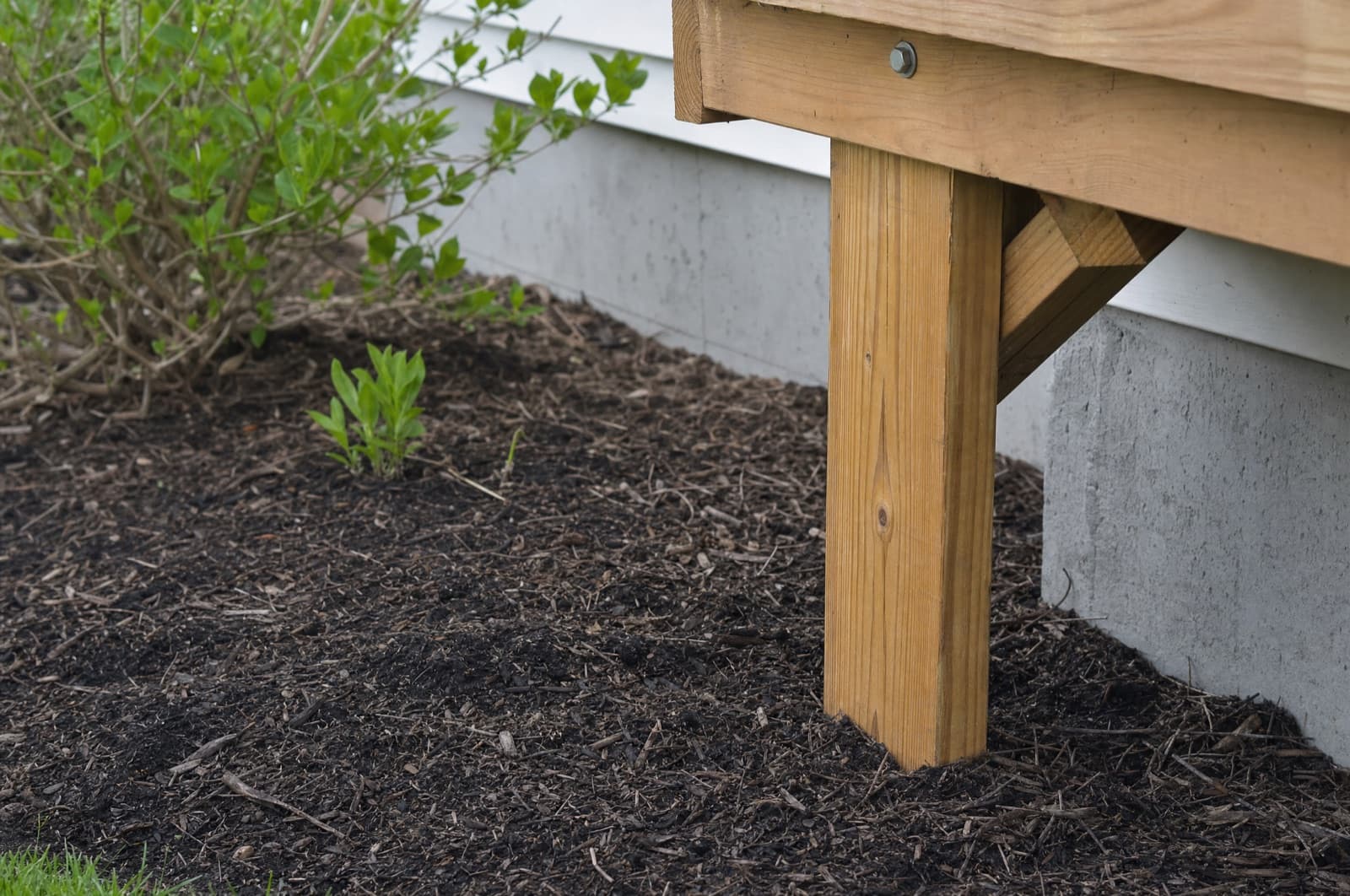
Keep frame and sill wood at least six inches above the soil where the design allows, make sure threshold flashing and caulking direct water outward and away rather than pooling at the base, and keep mulch or soil pulled back from the frame. Dry, elevated frame wood denies termites the moist, ground-adjacent target they exploit and also prevents the rot that carpenter ants are drawn to in New Hampshire, so this single fix addresses both of the state's most likely outcomes at a damp threshold. Repaint or reseal weathered frame wood periodically so it keeps shedding water.
- SupportingQuick DIY
Seal gaps and keep the base inspectable
Caulk gaps where the frame meets masonry or siding, and keep the threshold area clear of mulch and dense planting so any mud tube climbing toward the frame stays visible.
Whose job is this, really?
Who actually fixes it
You can handle this
Caulking, clearing soil back from a frame, and touching up paint or sealant are homeowner-level maintenance tasks. A carpenter is the right call if a threshold needs to be reset or rebuilt to restore clearance.
You find mud tubes at the threshold, soft or spongy frame wood, or a door that suddenly starts sticking — the last can indicate hidden structural damage worth a professional look.
How this calibrates for NH
UNH Extension specifically lists door and window frames among classic structural-pest sites in New Hampshire, though damp thresholds here more often turn out to host carpenter ants or ordinary decay than termites — the clearance-and-drainage fix serves all three equally well.
NH-licensed applicator #782664 (NHDAMF, RSA 430) · NEPMA member · family-owned since 2017.
Frequently asked
Sources(2)
- [1]University of Kentucky Entomology
ENTFACT-605: Protecting Your Home Against Termites (Potter)
- [2]UNH Cooperative Extension
Carpenter Ants fact sheet (A.T. Eaton) — NH structural-pest context
Written & reviewed by
VerifiedDaniel Brady
NH-Licensed Pesticide Applicator · License #782664 (NHDAMF, RSA 430)
Daniel Brady is the New Hampshire–licensed applicator behind Anchor Pest Services, a family-owned pest control company serving the Manchester area since 2017.
Your next step
- termite-mite-prevention-guides
Preventing termites around electrical conduit and cable entry points
Read the answer - termite-mite-prevention-guides
Preventing termites around window sills and exterior trim boards
Read the answer - faq-pest-damage-and-risks
Why do termites target wooden structures?
Read the answer
Anchor Pest Services
Have a different pest question?
This one may not be a pesticide job — but if you're facing something that is, we serve Southern New Hampshire with a free inspection and same-day service.
- NH-licensed applicator
- Same-day service
- Pet & family-conscious
NH License #782664 · No obligation · We answer in person