
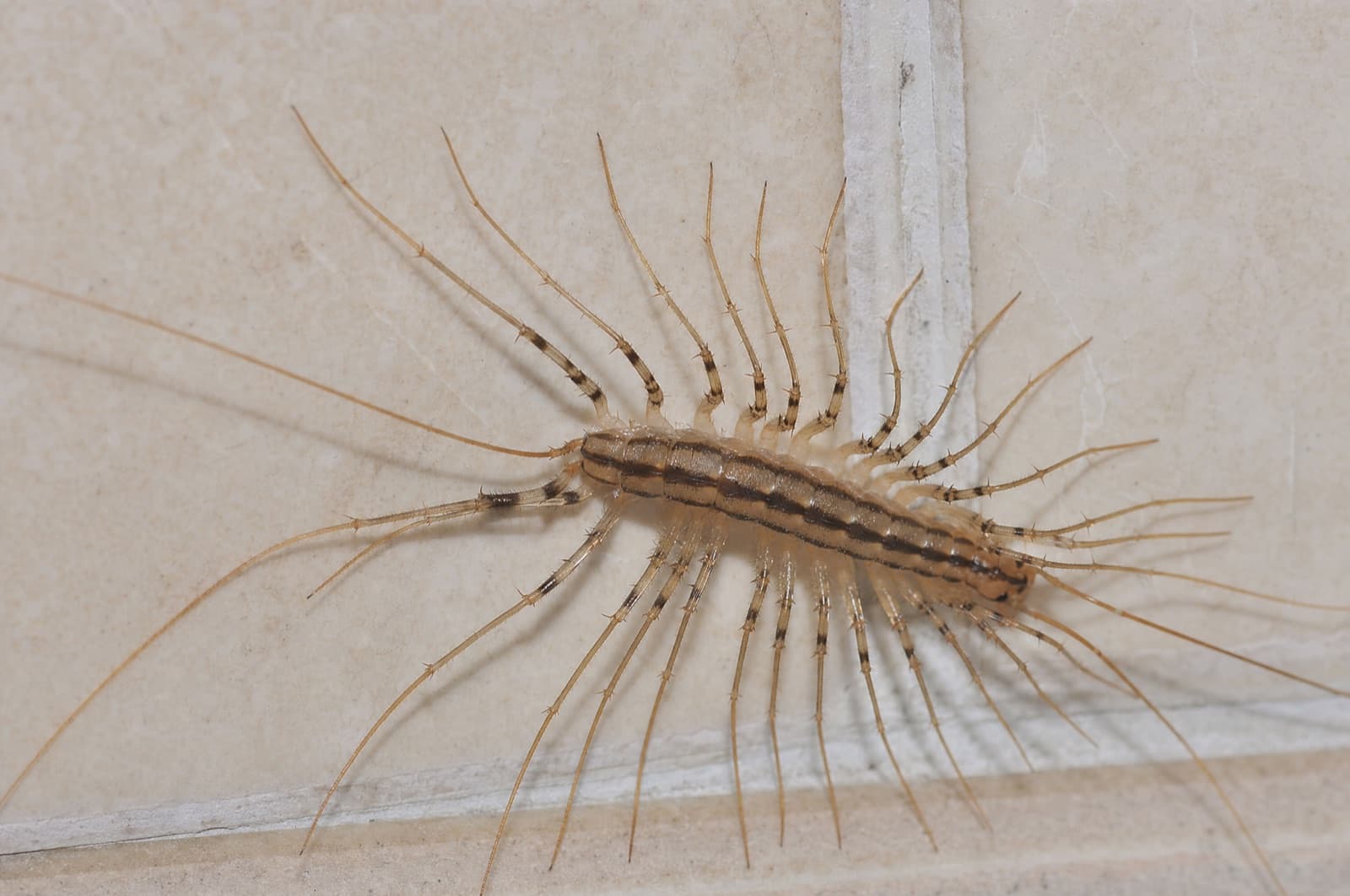
How to Get Rid of House Centipedes
At a glance
- Difficulty: Beginner
- Time: A weekend to dehumidify and seal gaps, if you choose to act at all
- Cost: Low — a dehumidifier, caulk, and optionally a jar for capture-and-release
- Success: High for reducing numbers via moisture control and prey reduction; many homeowners simply choose to coexist
Can you DIY House Centipede?
The verdict on House Centipede DIY
An easy DIY — and honestly, you may not need to do it at all.
The house centipede (Scutigera coleoptrata) looks alarming — fast-moving, many-legged, and startling when it darts across a bathroom floor — but it's a beneficial predator that hunts other household pests: cockroaches, silverfish, spiders, carpet beetles, and more. Bites to humans are extremely rare, minor, and comparable to a mild bee sting; per University of Georgia Extension, essentially no one is known to have been bitten by one under normal circumstances. Its appearance drives far more fear than its actual risk justifies. If you'd rather not share the house with one, dehumidifying and sealing entry points removes the moisture it needs and, just as usefully, removes the prey pests that drew it in.
The 5 DIY methods — honestly graded
Every approach graded for this species, in IPM order — prevention first, chemistry late. Pick a method to see how it works, the steps, and what it actually takes.
Prevention / Exclusion
Works wellMoisture control and sealing entry points reduce numbers if you'd rather not have them around — and also address the prey pests they're hunting.
House centipedes need moisture and thrive wherever their prey — other small household pests — is abundant. Dehumidifying damp areas and sealing entry points removes both the habitat and, often, the underlying pest population that drew them in.
Best for: Reducing numbers long-term if you'd rather not share space with them
Dehumidify damp areas
Run a dehumidifier in basements and bathrooms, and fix any leaks that keep those areas consistently damp.
TipBecause centipedes hunt other damp-loving pests like silverfish, drying out an area often reduces both at once.Seal cracks and gaps
Caulk foundation cracks, gaps around pipes, and other entry points to reduce both centipedes and the smaller pests they prey on.
Tools & materials
Why DIY falls short here
Not scare tactics — the specific, proportionate reasons a home attempt can stall for this species.
Treating the predator, not the prey
Killing centipedes without addressing whatever pest population (silverfish, spiders, carpet beetles) is feeding them leaves the actual food source in place, so new centipedes will keep showing up to hunt it.
Moisture left unaddressed
Both centipedes and the pests they hunt depend on damp harborage, so skipping dehumidification means the underlying conditions supporting the whole food chain remain.
Overreacting to a harmless, beneficial species
Because centipedes look startling, homeowners often reach for chemical treatment on a species that poses essentially no real risk and is actively reducing other pest populations for free.
How risky is it, really?
An honest read — most nuisance species are genuinely low risk, and we say so.
House centipedes are harmless and beneficial. Bites to people are extremely rare, minor, and comparable to a mild bee sting when they occur at all. Their real value is as a free, ongoing predator of other household pests — a high number of centipedes is a flag that another pest population is present, not a danger in itself.
- Bite from handling or contactRare
Minor and comparable to a mild bee sting; essentially no one is known to have been bitten under normal circumstances
University of Georgia Cooperative Extension
- Disease transmission to people or petsRare
Not documented — house centipedes pose no direct disease risk
Iowa State University Extension
- Elevated numbers indicating another pest population nearbyOccasional
Many centipedes usually means an underlying food source — cockroaches, silverfish, spiders — worth investigating rather than fearing
Iowa State University Extension
Underlying Pest Problem Behind the Centipedes?
High centipede numbers often mean another pest is present. Anchor Pest Services offers a full assessment across southern and central New Hampshire. Family-owned since 2017, NH license #782664.
Call a pro when…
- Consistently high numbers suggest an underlying pest infestation you can't pinpoint
- You want a professional assessment of what prey population is supporting them
- Persistent dampness you can't resolve yourself
General Pest Control
You rarely need a pro specifically for house centipedes — this is a beneficial species, and DIY moisture control handles most preferences. It's worth a call if what's actually drawing them is a larger underlying pest problem you can't identify or control yourself.
Keep them out
- Dehumidify basements and bathrooms
- Seal foundation cracks and gaps around pipes
- Address any underlying pest population they may be hunting
House centipedes in New Hampshire
New Hampshire's humid summers and older homes with damp basements and crawl spaces provide steady house centipede habitat much of the year, often alongside the same moisture-loving pests — silverfish, spiders, carpet beetle larvae — that make up their diet. Sightings tend to increase in late summer and fall as centipedes seek stable indoor humidity, similar to other moisture-driven household invaders in this cluster.
Peak season
Late summer through fall; year-round in consistently damp basements
First-frost anchor
Manchester first hard frost ~Oct 19 (50%) / Oct 29 (80%), NOAA 1991–2020
Frequently asked
Sources & further reading(2)
- [1]University of Georgia Cooperative Extension — House Centipedes Are Allies in Home Pest Control
Beneficial predator role, bite rarity and severity, myth-correction
extensionverified 2026-07-13 - [2]Iowa State University Extension — House Centipede
Biology, harmlessness, indicator-of-other-pests role
extensionverified 2026-07-13
Written & reviewed by
VerifiedDaniel Brady
NH-Licensed Pesticide Applicator · License #782664 (NHDAMF, RSA 430)
Daniel Brady is the New Hampshire–licensed applicator behind Anchor Pest Services, a family-owned pest control company serving the Manchester area since 2017.
Last updated July 2026
Other species you can tackle
Same category — the dot shows each one's DIY verdict at a glance (green = friendly, amber = doable with care, red = call a pro).
Professional Pest Control
Underlying Pest Problem Behind the Centipedes?
High centipede numbers often mean another pest is present. Anchor Pest Services offers a full assessment across southern and central New Hampshire. Family-owned since 2017, NH license #782664.
- Root-cause pest assessment
- NH-licensed applicators (#782664)
- Free inspection — same-day service across southern NH
NH License #782664 · No obligation · We answer in person