
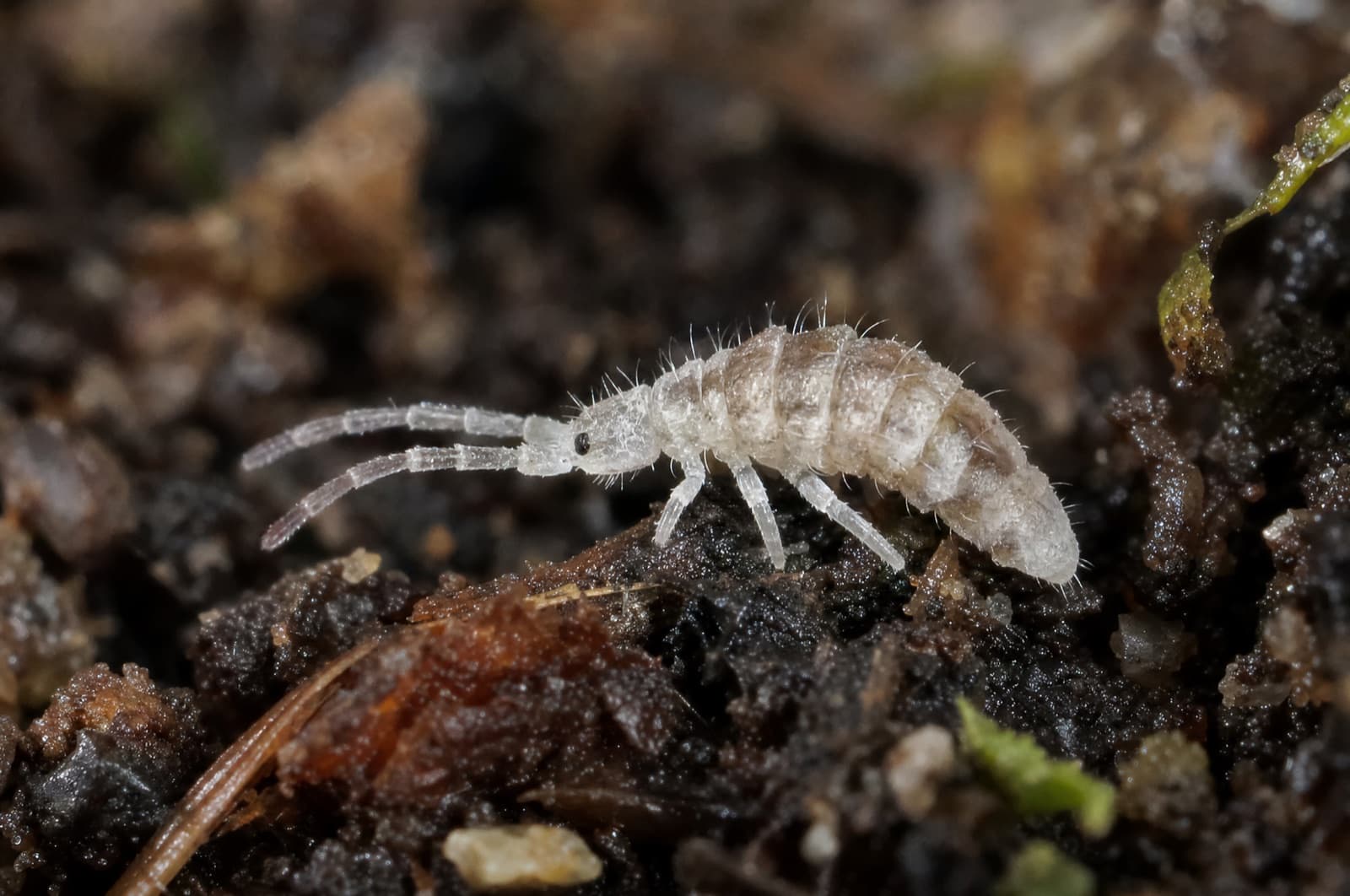
How to Get Rid of Springtails
At a glance
- Difficulty: Beginner
- Time: Days to see results once the moisture source is addressed
- Cost: Low — a dehumidifier or simply a change in watering habits
- Success: Very high once the specific moisture source is identified and dried out
Can you DIY Springtail?
The verdict on Springtail DIY
About the easiest DIY in this hub — dry out the source and they're gone within days.
Springtails (order Collembola) are tiny, harmless, wingless jumpers with an absolute dependency on moisture — they breathe through their skin and dehydrate quickly, so an indoor population is really a moisture symptom, most often overwatered houseplant soil or a damp basement or bathroom. They don't bite, sting, spread disease, or damage furnishings. Once you identify and dry out the moisture source, the population crashes fast, usually within days rather than weeks, making this one of the most straightforward fixes in the entire household-occasional cluster.
The 5 DIY methods — honestly graded
Every approach graded for this species, in IPM order — prevention first, chemistry late. Pick a method to see how it works, the steps, and what it actually takes.
Prevention / Exclusion
Works wellFixing the moisture source is close to a complete fix for this species — nothing else is really needed.
Springtails have an absolute dependency on high humidity or standing moisture to survive. Removing that moisture removes their habitat entirely, rather than requiring ongoing pest control effort.
Best for: The complete, durable fix for nearly every springtail case
Fix houseplant overwatering
Let soil dry out between waterings and empty any water that collects in saucers — overwatered potting soil is the most common indoor source.
TipOld, peaty potting mix retains moisture longer and can keep reseeding populations even after you cut back watering.Dehumidify and repair leaks
Run a dehumidifier in basements and bathrooms, repair any leaks, and improve ventilation in consistently damp rooms.
Seal entry cracks
Caulk entry cracks near damp areas, though this is a secondary step behind actually fixing the moisture.
Tools & materials
Why DIY falls short here
Not scare tactics — the specific, proportionate reasons a home attempt can stall for this species.
Spraying instead of drying
Insecticides fail while the damp source persists, since springtails are entirely dependent on moisture to survive — treating the symptom instead of the cause just wastes a product that isn't recommended for this pest anyway.
Overwatering habit left unbroken
Continuing to water houseplants on a fixed schedule rather than letting soil dry between waterings keeps the soil perpetually moist, so springtails simply return even after an initial dry-out.
Old, peaty potting mix retains moisture
Potting soil that's compacted or heavy in peat holds water longer than fresh, well-draining mix, so watering habits alone sometimes aren't enough — repotting with fresher, better-draining soil can be the missing step.
How risky is it, really?
An honest read — most nuisance species are genuinely low risk, and we say so.
Springtails are harmless — no bite, sting, disease, or property damage of any kind. They're purely a nuisance and, more usefully, a moisture indicator: their presence tells you where your home or houseplants have excess dampness worth addressing for reasons unrelated to the springtails themselves.
- Bite, sting, or disease transmissionRare
Not documented — springtails pose no direct health risk to people or pets
UC IPM
- Property or furnishing damageRare
Springtails don't damage furnishings, wood, or structural materials
University of Minnesota Extension
- Indicator of excess moisture (overwatered plants, damp rooms)Common
A useful, practical flag for plant health and home moisture management, not a risk from the springtail itself
University of Minnesota Extension
Still Seeing Springtails After Drying Things Out?
A hidden moisture source can be hard to track down on your own. Anchor Pest Services offers a full moisture assessment across southern and central New Hampshire. Family-owned since 2017, NH license #782664.
Call a pro when…
- Springtails persist for weeks despite consistent moisture correction
- You suspect a hidden leak or grading issue you can't locate
- You want a full moisture assessment for a recurring, unexplained damp area
General Pest Control
You essentially never need a pro for springtails — this is the most DIY-friendly species in the cluster, solved in days by drying out the moisture source. A pro is only worth considering if you can't locate a persistent, hidden moisture problem yourself.
Keep them out
- Let houseplant soil dry between waterings and empty saucers
- Dehumidify basements and bathrooms
- Repair leaks and improve ventilation in damp rooms
Springtails in New Hampshire
New Hampshire's humid summers and the tendency to overwater houseplants during the long indoor heating season both create the moisture springtails need. Sightings are most common in damp basements and around overwatered plants year-round, without a strong seasonal entry pattern tied to frost the way fall invaders have — this is a moisture problem you can encounter any time of year.
Peak season
Year-round, tied to moisture rather than season
First-frost anchor
Manchester first hard frost ~Oct 19 (50%) / Oct 29 (80%), NOAA 1991–2020
Make sure it's a Springtail
Two quick detours worth taking — confirm the ID, then learn what drew it in so it doesn't come back.
Frequently asked
Sources & further reading(2)
- [1]University of Minnesota Extension — Springtails
Moisture dependency, harmless status, no-pesticide-needed guidance
extensionverified 2026-07-13 - [2]UC Statewide IPM Program — Springtails (Pest Note 74136)
Biology, moisture-based control, no pesticide recommended for indoor management
extensionverified 2026-07-13
Written & reviewed by
VerifiedDaniel Brady
NH-Licensed Pesticide Applicator · License #782664 (NHDAMF, RSA 430)
Daniel Brady is the New Hampshire–licensed applicator behind Anchor Pest Services, a family-owned pest control company serving the Manchester area since 2017.
Last updated July 2026
Other species you can tackle
Same category — the dot shows each one's DIY verdict at a glance (green = friendly, amber = doable with care, red = call a pro).
Professional Pest Control
Still Seeing Springtails After Drying Things Out?
A hidden moisture source can be hard to track down on your own. Anchor Pest Services offers a full moisture assessment across southern and central New Hampshire. Family-owned since 2017, NH license #782664.
- Moisture-source diagnosis
- NH-licensed applicators (#782664)
- Free inspection — same-day service across southern NH
NH License #782664 · No obligation · We answer in person