
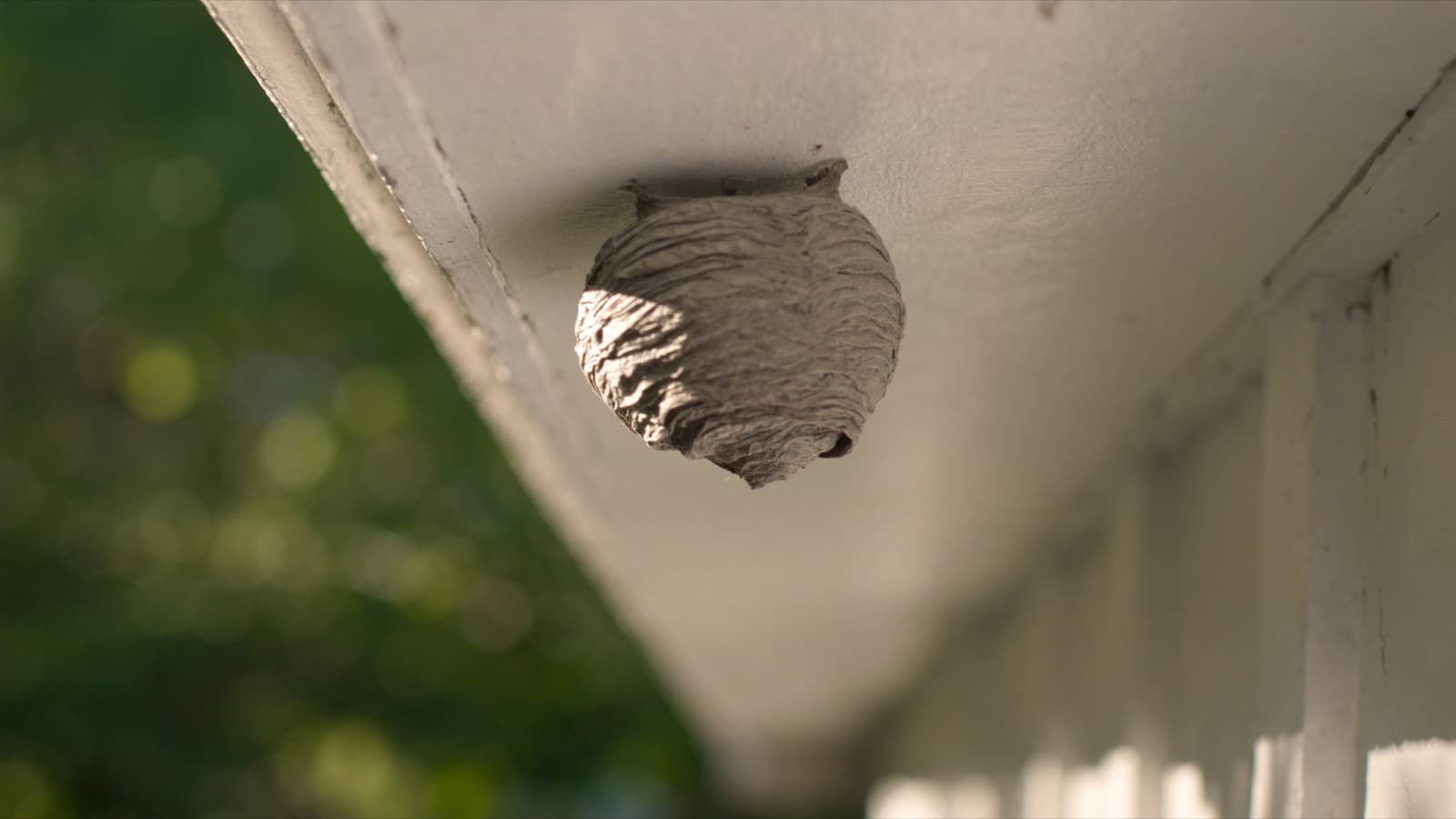
Are Baiting Strategies More Effective Than Sprays for Yellowjackets?
At a Glance
- The call: Baiting thins out foraging workers over an area. Treating a located nest directly is what actually ends a colony — and the standard bait lure is tuned to a western yellowjacket, not the eastern yellowjacket that's common in New Hampshire.
The short of it
Baiting thins out foraging workers over an area. Treating a located nest directly is what actually ends a colony — and the standard bait lure is tuned to a western yellowjacket, not the eastern yellowjacket that's common in New Hampshire.
The remedy, graded honestly
A useless remedy is harmless — this is a fact-check, not a safety warning.
Lure baiting/trapping compared with direct spray or dust treatment of a yellowjacket nest
These aren't competing methods for the same job. Lure traps work on foraging chemistry: the common commercial lure, heptyl butyrate, attracts the western yellowjacket well, but NC State Extension — writing about North Carolina — is direct that it "works well for that species but not for our two most prevalent species, the eastern yellowjacket and southern yellowjacket." The takeaway that carries to New Hampshire is the mismatch itself, not that species pairing: the lure is tuned to a western wasp, while Cornell IPM identifies the eastern yellowjacket (Vespula maculifrons) as the common ground-nesting yellowjacket across the Northeast, alongside the German yellowjacket — neither of which is what heptyl butyrate was built to catch. Poison baiting, where a worker carries insecticide back to the colony, can knock down a nest with less direct contact, but Oregon State University Extension's EM 9211 notes success is variable, and only one specific bait formulation is legally approved for that use in most cases. Direct treatment aimed at a located nest, by contrast, targets the colony itself rather than intercepting individual foragers. The honest comparison isn't which one wins — baiting suppresses foraging activity over an area, and only direct nest treatment ends a specific colony.
Fewer wasps show up around a trap, so it looks like the population is shrinking. In practice, a healthy colony produces new foragers faster than a home trap array removes them, so the trap is redirecting activity, not eliminating the source.
If the nest can be found and safely reached, direct treatment aimed at that nest is the only approach that ends the colony — /top-diy-methods walks through what's realistic species by species. If the nest can't be found, lure traps placed well away from where people gather can meaningfully cut nuisance foraging even though they won't finish the colony. For a nest you can't locate, or one that's clearly large or concealed, that's a professional job.
Harmless, not dangerous — this is a “doesn’t work,” not a safety warning. The danger call is the router’s job, not this one’s.
The full picture
Two different jobs, not a contest
Baiting and trapping are population-suppression tools — they pull foraging workers out of circulation over an area. Spraying or dusting a nest you've actually located is a colony-elimination tool — it treats the source. Comparing them head-to-head as if one simply beats the other misses that they answer different questions: "how do I cut down the number of wasps around my yard" versus "how do I end this specific nest."
Why the standard bait lure underperforms in New Hampshire
The lure most commercial traps use, heptyl butyrate, was developed against the western yellowjacket. NC State Extension notes it works well for that western species but not for the eastern and southern yellowjackets prevalent in North Carolina — and the same core problem applies further north for a slightly different reason: Cornell IPM identifies the eastern yellowjacket (Vespula maculifrons), along with the German yellowjacket, as the common ground-nesting yellowjackets of the Northeast, and neither is the western wasp the lure was tuned to catch. UNH Cooperative Extension is blunt about that regional mismatch, cautioning against relying on yellowjacket traps for northeastern U.S. species. That doesn't make trapping useless — it makes it a weaker tool here than the marketing on the package implies.
When each approach actually makes sense
If you know where the nest is and it's a species and situation the router on /top-diy-methods rates as workable, direct treatment is the move. If you don't know where the nest is, or you just want fewer yellowjackets bothering people in a yard or patio, traps placed at a distance from where people gather can help without pretending to solve the underlying colony. A nest you can't locate, or one that's clearly large, underground, or in a wall, is a call to a professional rather than a baiting experiment.
The honest line — Baiting thins out foraging workers over an area. Treating a located nest directly is what actually ends a colony — and the standard bait lure is tuned to a western yellowjacket, not the eastern yellowjacket that's common in New Hampshire.
Key takeaways
- Baiting/trapping reduces foraging activity over an area; it does not eliminate a colony.
- Direct treatment of a located nest is the only approach in this comparison that actually ends the colony.
- The standard commercial trap lure is tuned to a western species and underperforms against the eastern yellowjacket (Vespula maculifrons), the common ground-nesting yellowjacket in New Hampshire and the wider Northeast.
- Poison baiting can help but has variable, inconsistent success and legal restrictions on which products qualify.
- Neither approach replaces professional treatment for a large, underground, or concealed colony.
Where to go next
Identification, sting treatment, per-species DIY viability, and nest-reuse facts each live on the hub that owns them. We route, we don't rebuild.
DIY viability by species
The router's source of truth — which nests are DIY-able.
Go thereIdentify the species
Tell the wasps, hornets, and lookalikes apart.
Go thereSting & allergy treatment
What to do about a sting or a reaction.
Go thereNest reuse & winter
The colony dies at frost; the nest is never reused.
Go there
Not sure where the nest actually is?
Traps and bait only go so far without a located nest. Anchor can find it and treat it directly.
Frequently asked questions
Sources(5)
- [1]NC State Extension — Yellowjackets in the Landscape
Heptyl butyrate lure effective against western yellowjacket but not eastern/southern species
extensionverified 2026-07-17 - [2]Oregon State University Extension EM 9211 — Protecting Honey Bees from Yellowjacket Wasps
Poison-bait success variable; legal restriction on approved bait products
extensionverified 2026-07-17 - [3]UNH Cooperative Extension — Controlling Wasps, Bees and Hornets Around Your Home
Caution against relying on yellowjacket traps for northeastern U.S. species
extensionverified 2026-07-17 - [4]UC Statewide IPM Program — Yellowjackets and Other Social Wasps
Trap placement away from gathering areas; sanitation as the primary control measure
extensionverified 2026-07-17 - [5]Cornell IPM — Yellowjackets and baldfaced hornets
Eastern yellowjacket (Vespula maculifrons) as the common Northeast/NH ground-nesting species
extensionverified 2026-07-17
Written & reviewed by
VerifiedDaniel Brady
NH-Licensed Pesticide Applicator · License #782664 (NHDAMF, RSA 430)
Daniel Brady is the New Hampshire–licensed applicator behind Anchor Pest Services, a family-owned pest control company serving the Manchester area since 2017.
Last updated 2026-07-17
Before you buy a trap
Know what a trap can and can't do
If the nest is large, concealed, or you just can't find it, a licensed technician can locate and treat it directly instead of guessing with bait.
- Family-owned since 2017
- NH License #782664, category F1 (RSA 430, NHDAMF)
- Member, NEPMA