
Can Wasp Stings Become Life-Threatening If I Attempt to Remove a Nest?
At a Glance
- The call: Yes, through two different mechanisms — a sudden allergic reaction, or the toxic load of many stings at once. If you're mid-attempt, stop reading and move away first.
- If it goes wrong: stop, retreat, then use the call-now list
If you are mid-incident, start here
Yes, through two different mechanisms — a sudden allergic reaction, or the toxic load of many stings at once. If you're mid-attempt, stop reading and move away first.
Northern New England Poison Center
1-800-222-1222- Stop what you're doing and move away from the nest immediately — walk in a straight line, don't swat or wave your arms.
- Get indoors or into a closed vehicle as soon as you can. A disturbed colony defends the area right around its nest and will keep after anyone still nearby.
- Once you're safe, check yourself and anyone with you for stings and watch closely for the next 30-60 minutes.
- For sting-site care itself, see our /yellowjackets guide — this page's job is getting you out of danger, not treating the sting.
- Trouble breathing, or swelling of the lips, tongue, throat, or face — call 911.
- Hives or swelling spreading anywhere beyond the sting sites themselves — call 911.
- Dizziness, fainting, a weak or racing pulse, or vomiting after a sting — call 911.
- More than roughly ten stings in one incident, even if you feel fine right now — get evaluated; the toxic load from that many stings is a real risk on its own, separate from allergy.
We cannot tell from a description online whether a reaction is turning into anaphylaxis. Any systemic symptom — breathing, swelling away from the sting site, fainting — is a call to 911, not a wait-and-see, and we never suggest a dose of anything.
Sting treatment lives on Yellowjackets GuideThe full picture
Why a removal attempt specifically raises the stakes
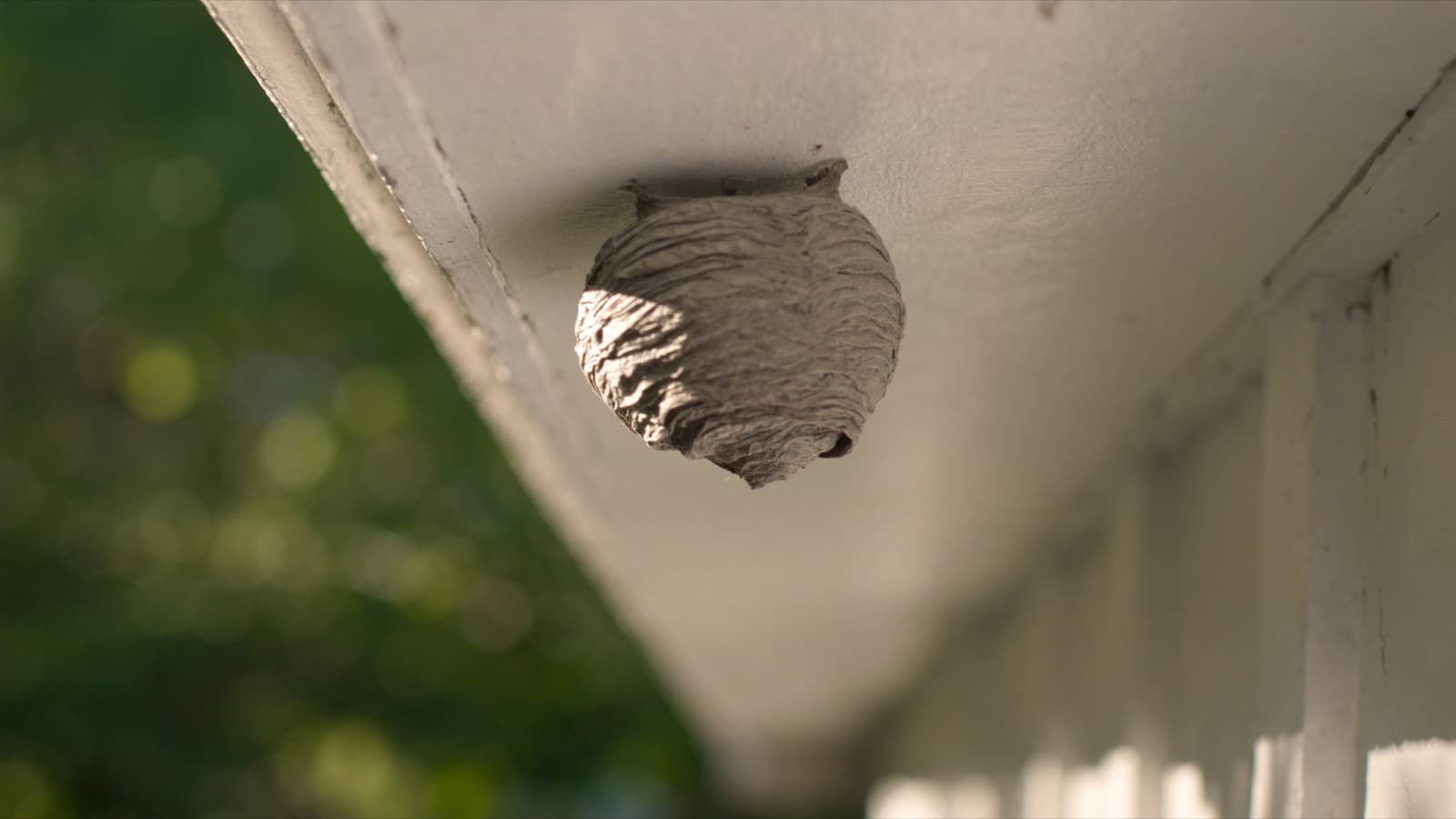
A nest that's being sprayed or knocked down is a nest whose colony is actively defending itself, and social wasps recruit nestmates to attack as a group rather than responding one at a time. That's the mechanism behind the sting counts that show up in the clinical literature: a multicenter study of over a thousand hospitalized wasp-sting patients found in-hospital mortality was several times higher once a person had been stung more than ten times in one incident, mostly from toxic organ injury, not allergy (Xie et al. 2013, PLOS ONE). CDC data puts the average U.S. death toll from hornet, wasp, and bee stings at about 72 people a year. A botched removal is exactly the scenario that produces a high sting count in a short window.
The two ways this turns dangerous
First: anaphylaxis, a fast-moving allergic reaction that can occur on a sting from someone with no prior reaction history at all — that is precisely why we never try to reassure anyone out of an emergency based on their past experience. Second: toxic load, where the venom volume from many stings at once causes real physiological harm on its own, independent of any allergy. Both are reasons this hub routes yellowjacket, hornet, and unidentified defended nests to a professional rather than a spray can — see our /top-diy-methods hub and this hub's other removal-safety pages for that call, nest by nest.
What matters right now, not what caused it
If you're reading this mid-incident, the cause doesn't matter yet — the next sixty seconds do. Get distance, get indoors, and only then start thinking about whether what happened needs medical attention. We don't talk anyone through continuing a removal in progress; that decision belongs to a calmer moment and a different page.
The honest line — Yes, through two different mechanisms — a sudden allergic reaction, or the toxic load of many stings at once. If you're mid-attempt, stop reading and move away first.
Key takeaways
- Yes — via anaphylaxis (possible on a first sting, no history required) or via toxic load from many stings at once.
- More than about ten stings in one incident warrants medical evaluation even if you feel okay.
- Move away first, decide on care second — this page is about the next sixty seconds, not a diagnosis.
- Sting-site treatment and allergic-reaction depth live on our /yellowjackets hub.
Where to go next
Identification, sting treatment, per-species DIY viability, and nest-reuse facts each live on the hub that owns them. We route, we don't rebuild.
DIY viability by species
The router's source of truth — which nests are DIY-able.
Go thereIdentify the species
Tell the wasps, hornets, and lookalikes apart.
Go thereSting & allergy treatment
What to do about a sting or a reaction.
Go thereNest reuse & winter
The colony dies at frost; the nest is never reused.
Go there
Once you're safe, the nest is still there
If what just happened tells you this nest is a defended colony rather than a solitary insect, a licensed technician can finish the job without another round of stings.
Frequently asked questions
Sources(3)
- [1]Xie et al. 2013, PLOS ONE — Clinical Features of Severe Wasp Sting Patientsacademicverified 2026-07-17
- [2]CDC MMWR QuickStats — Deaths from Hornet, Wasp, and Bee Stingsgovverified 2026-07-17
- [3]PMC/NIH — Fatal Anaphylaxis Reviewacademicverified 2026-07-17
Written & reviewed by
VerifiedDaniel Brady
NH-Licensed Pesticide Applicator · License #782664 (NHDAMF, RSA 430)
Daniel Brady is the New Hampshire–licensed applicator behind Anchor Pest Services, a family-owned pest control company serving the Manchester area since 2017.
Last updated 2026-07-17

After the emergency
When you're ready to deal with the nest itself
A bad sting count during an attempt is usually a sign the nest was never a DIY case to begin with. Talk to a licensed technician before trying again.
- Family-owned since 2017
- NH License #782664, category F1 (RSA 430, NHDAMF)
- Member, NEPMA
Your next step
- What to do next
Mechanical Wasp Control: When Removal Is Safe (and When It Isn't)
Read the answer - What to do next
Chemical Wasp & Hornet Control: Aerosols, Timing & Allergy Safety
Read the answer - What to do next
Natural Stinging Insect Control: When It's Safe (and When It Isn't)
Read the answer - Also relevant
Do Wasps Die After Stinging? Why Wasps Sting Again (Unlike Bees)
Read the answer - Related guide
Are Yellow Jackets Dangerous? Risk Assessment for NH Adults, Kids & Pets
Read the answer