
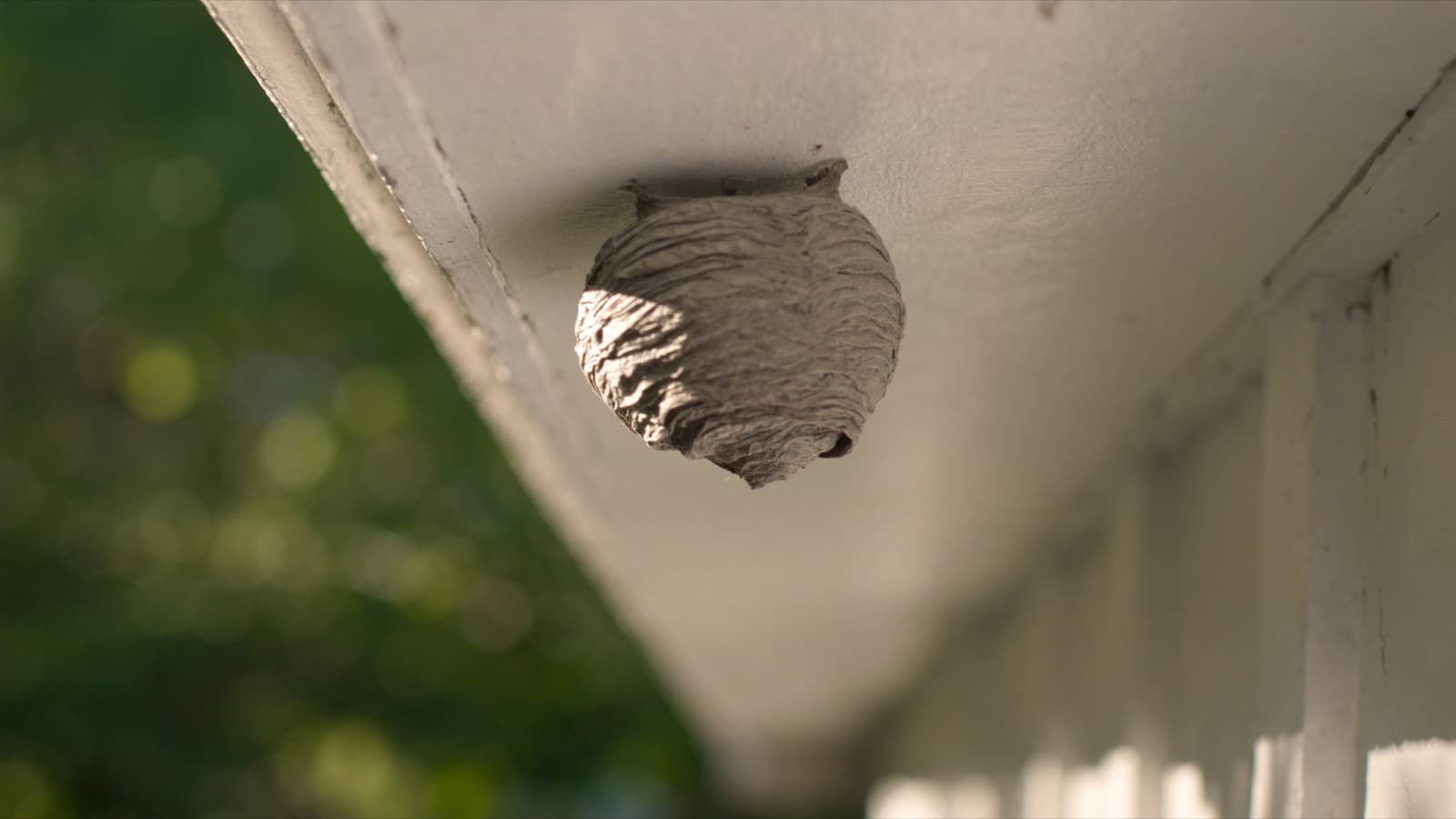
Do Fake Wasp Nests Really Deter New Nesting?
At a Glance
- The call: The idea behind a fake nest has a real behavioral basis for one type of wasp. No controlled study shows a decoy actually works, and ground-nesting yellowjackets don't respond to it at all.
The short of it
The idea behind a fake nest has a real behavioral basis for one type of wasp. No controlled study shows a decoy actually works, and ground-nesting yellowjackets don't respond to it at all.
The remedy, graded honestly
A useless remedy is harmless — this is a fact-check, not a safety warning.
Hanging a fake or decoy wasp nest to deter new nesting
The premise behind this remedy — that social wasps avoid nesting near an existing colony — has a genuine behavioral basis specifically for paper wasps, which do show real territoriality toward rival colonies. But we could not find controlled, replicated field research showing that a decoy actually exploits that behavior reliably; the evidence in favor is essentially anecdotal. The gap matters more for one major group: ground-nesting yellowjackets, which build concealed nests and don't orient toward hanging aerial nests the way paper wasps might, are simply unaffected by a decoy regardless of whether the underlying idea has any merit for paper wasps.
Wasps genuinely do avoid nesting immediately next to an active rival colony in some cases, so the underlying logic sounds plausible, and a homeowner who hangs a decoy and doesn't get a nest that season attributes the absence to the decoy rather than to the many other reasons a nest might not form in a given spot.
For actual prevention with more support behind it: seal cracks and gaps in siding, eaves, and soffits in early spring before queens start scouting, and keep surfaces like painted eaves less appealing for paper wasps to attach a nest to. None of that has anything to do with a decoy — it removes the physical opportunity to build, rather than trying to bluff a wasp into thinking one already exists.
Harmless, not dangerous — this is a “doesn’t work,” not a safety warning. The danger call is the router’s job, not this one’s.
The full picture
The real behavior behind the claim
Paper wasps do show territorial avoidance of established rival nests in some circumstances, which is where this remedy's logic comes from. That's a real, if narrow, starting point — it's not invented out of nothing. The problem is the leap from "this behavior exists" to "a plastic or paper decoy reliably triggers it," which is where the controlled evidence runs out.
What we could, and couldn't, source
We looked for replicated field studies testing decoy nests against actual wasp nesting rates and did not find one. What exists instead is anecdotal reporting — homeowners and some pest-control commentary describing decoys working, without a controlled comparison against sites with no decoy. Reported observations elsewhere note wasps building directly on top of old nests of other species, which cuts against the idea that the mere sight of an existing structure is a reliable deterrent.
Why it's specifically useless against yellowjackets
Yellowjackets are ground or wall-void nesters that build concealed colonies rather than the open, aerial paper combs that paper wasps make. A hanging decoy nest has nothing to interact with for a yellowjacket scouting a hole in the ground or a gap in siding — there's no aerial rival nest cue for that species to notice in the first place. If yellowjackets are the actual concern, a decoy has no plausible mechanism at all.
The honest line — The idea behind a fake nest has a real behavioral basis for one type of wasp. No controlled study shows a decoy actually works, and ground-nesting yellowjackets don't respond to it at all.
Key takeaways
- The territorial idea behind fake nests has some real basis for paper wasps specifically, not wasps generally.
- No controlled, replicated study shows fake nests reliably reduce new nesting — the supporting evidence is anecdotal.
- Wasps have been observed building directly on old nests, which undercuts the core assumption.
- Ground-nesting yellowjackets don't respond to aerial decoys at all — the remedy has no mechanism for that species group.
- Sealing entry points and reducing attractive nesting surfaces has more support as an actual prevention step.
Where to go next
Identification, sting treatment, per-species DIY viability, and nest-reuse facts each live on the hub that owns them. We route, we don't rebuild.
DIY viability by species
The router's source of truth — which nests are DIY-able.
Go thereIdentify the species
Tell the wasps, hornets, and lookalikes apart.
Go thereSting & allergy treatment
What to do about a sting or a reaction.
Go thereNest reuse & winter
The colony dies at frost; the nest is never reused.
Go there
Decoy didn't stop a nest from forming?
If a nest has already started despite a decoy, Anchor can identify the species and the right next step.
Frequently asked questions
Sources(2)
- [1]UNH Cooperative Extension — Controlling Wasps, Bees and Hornets Around Your Home
Sealing entry points and reducing attractive nesting surfaces as prevention with actual support
extensionverified 2026-07-17 - [2]University of Maryland Extension — Social Wasps: Yellowjackets, Hornets and Paper Wasps
Nesting-site differences between paper wasps (aerial, exposed) and yellowjackets (ground/cavity)
extensionverified 2026-07-17
Written & reviewed by
VerifiedDaniel Brady
NH-Licensed Pesticide Applicator · License #782664 (NHDAMF, RSA 430)
Daniel Brady is the New Hampshire–licensed applicator behind Anchor Pest Services, a family-owned pest control company serving the Manchester area since 2017.
Last updated 2026-07-17

Prevention that's actually evidenced
Seal the opportunity, not just the sight line
If wasps keep scouting the same spots despite a decoy, a licensed technician can identify the entry points actually worth sealing.
- Family-owned since 2017
- NH License #782664, category F1 (RSA 430, NHDAMF)
- Member, NEPMA