
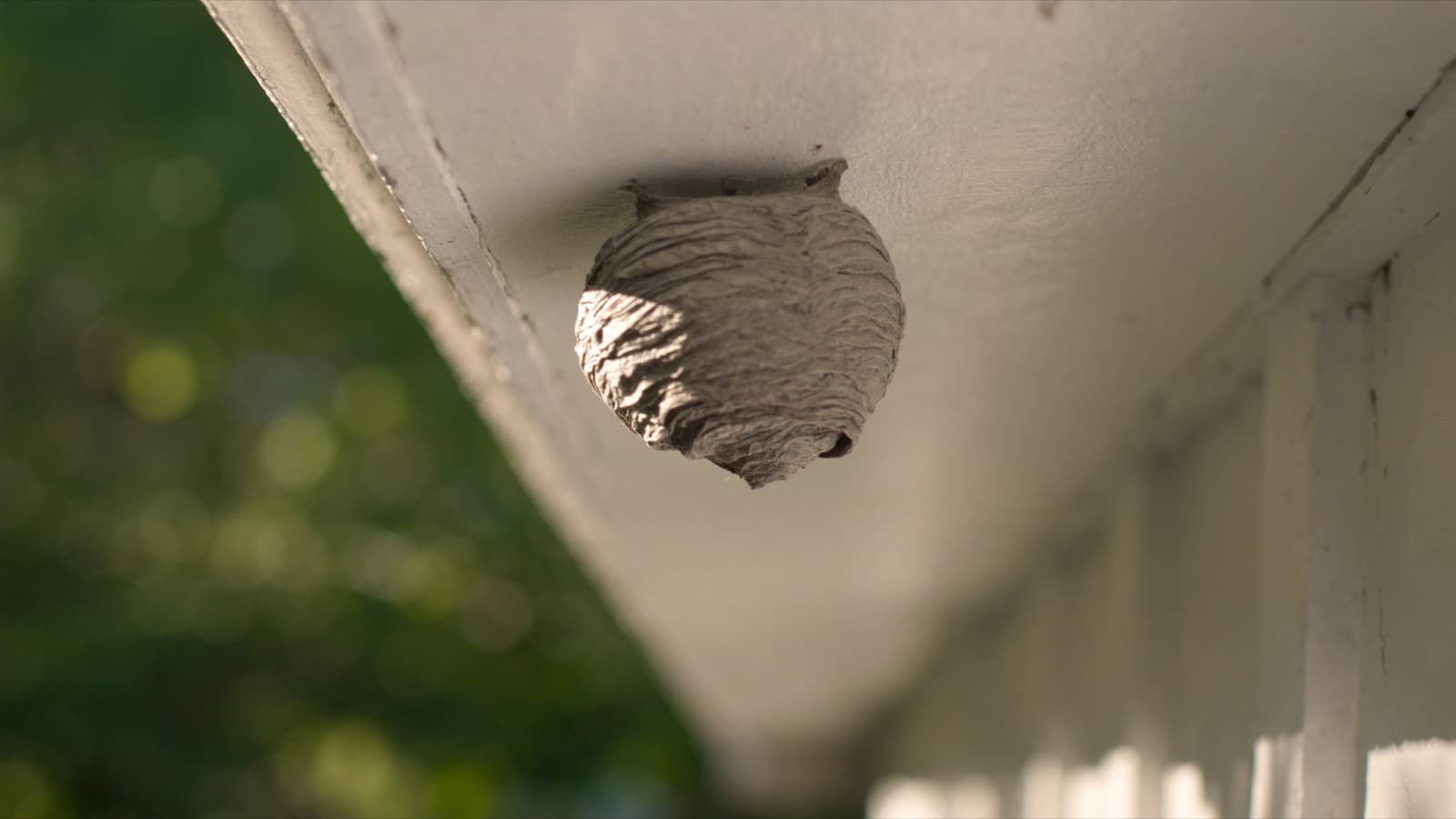
How Can I Detect a Hidden Wasp or Yellowjacket Nest on My Property?
At a Glance
- The call: The most reliable way to find a hidden nest without disturbing it is watching for steady, two-way flight traffic converging on a single spot during a warm afternoon.
The short of it
The most reliable way to find a hidden nest without disturbing it is watching for steady, two-way flight traffic converging on a single spot during a warm afternoon.
The full picture
The pattern that matters most
Individual wasps foraging across a yard are normal and don't indicate a nearby nest. What does indicate one is repeated, two-way traffic — wasps consistently arriving and departing from the same specific point, whether that's a small ground hole, a gap around a foundation vent, or a crack in siding. Extension sources note this pattern is most visible during warm afternoons, when foraging activity peaks, and it's often the first sign homeowners notice before they've seen any part of the nest itself. In southern New Hampshire this traffic is heaviest and easiest to read from late summer into early fall — August and September, when colonies are largest — right up until the first sustained hard freeze, which around Manchester (USDA zone 5b–6a) averages the second half of October, ends the colony's activity for the year.
Other signs worth checking for
A faint buzzing or scratching sound from inside a wall or ceiling cavity can indicate an active nest even before any wasps are visibly entering or leaving from that exact spot. A noticeable, repeated concentration of foraging wasps around one area of a yard — more than the occasional single wasp passing through — is also a meaningful signal, especially if it's consistent across several days rather than a one-time observation.
A more deliberate tracking method
Extension guidance describes lightly dusting foraging wasps with flour at a food or water source, then visually following the dusted wasps back to wherever they disappear, which is usually the nest entrance. This works from a safe distance and doesn't require getting close to the nest itself. Once a suspected entrance is identified, confirming the species and deciding what to do next is a separate step — /wasp-species for identification, /top-diy-methods for what's realistic to do about it.
The honest line — The most reliable way to find a hidden nest without disturbing it is watching for steady, two-way flight traffic converging on a single spot during a warm afternoon.
Key takeaways
- Steady, two-way traffic converging on one specific point is the clearest sign of a hidden nest.
- This pattern is most visible during warm afternoons when foraging activity peaks.
- Buzzing or scratching sounds from inside a wall can indicate a nest before it's visibly detected outside.
- Dusting foragers with flour and tracking their flight path is a documented, non-disturbing detection technique.
- Confirming species and deciding on removal are separate next steps, covered by /wasp-species and /top-diy-methods.
Where to go next
Identification, sting treatment, per-species DIY viability, and nest-reuse facts each live on the hub that owns them. We route, we don't rebuild.
DIY viability by species
The router's source of truth — which nests are DIY-able.
Go thereIdentify the species
Tell the wasps, hornets, and lookalikes apart.
Go thereSting & allergy treatment
What to do about a sting or a reaction.
Go thereNest reuse & winter
The colony dies at frost; the nest is never reused.
Go there
Spotted the traffic pattern but not the nest itself?
Anchor can confirm the entrance, the species, and the right next step without you needing to get close.
Frequently asked questions
Sources(2)
- [1]Ohio State University Extension — Wasp and Bee Control
Flour-dusting technique for tracking foraging wasps back to a nest entrance
extensionverified 2026-07-17 - [2]UNH Cooperative Extension — Controlling Wasps, Bees and Hornets Around Your Home
Foraging activity patterns and warm-afternoon peak activity for nest detection
extensionverified 2026-07-17
Written & reviewed by
VerifiedDaniel Brady
NH-Licensed Pesticide Applicator · License #782664 (NHDAMF, RSA 430)
Daniel Brady is the New Hampshire–licensed applicator behind Anchor Pest Services, a family-owned pest control company serving the Manchester area since 2017.
Last updated 2026-07-17
Found the sign, not the nest?
Let a professional confirm what you're seeing
A licensed technician can locate a suspected nest safely and tell you honestly what it means for your property.
- Family-owned since 2017
- NH License #782664, category F1 (RSA 430, NHDAMF)
- Member, NEPMA