
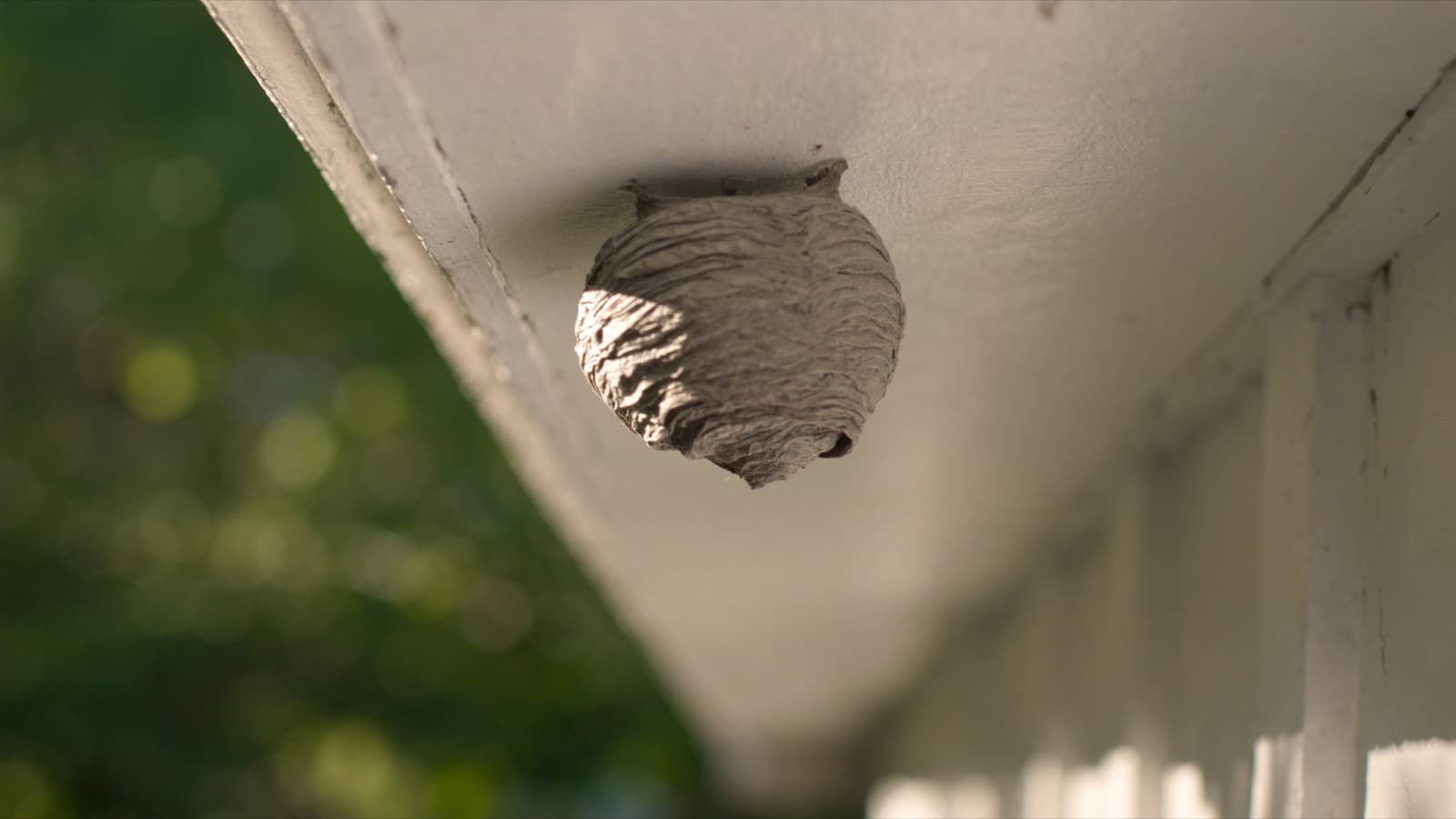
How Can I Keep Wasps and Hornets Away From Fruit Trees and Gardens?
At a Glance
- The call: Removing ripe and fallen fruit promptly is the highest-leverage, evidenced step. Living "repellent plants" haven't been shown to work and shouldn't be the plan.
The short of it
Removing ripe and fallen fruit promptly is the highest-leverage, evidenced step. Living "repellent plants" haven't been shown to work and shouldn't be the plan.
The full picture
What actually reduces wasp activity around fruit and gardens
Ripe and fallen fruit is one of the strongest late-season attractants for foraging wasps and yellowjackets, since it's an easy, concentrated sugar source right when natural food elsewhere is starting to run low. In southern New Hampshire (Manchester sits in USDA hardiness zone 5b–6a) that pressure peaks across August and September, when colonies are at their largest and orchard fruit is dropping heavily, and it doesn't ease until the sustained cold after the average first hard freeze — around October 19 by National Weather Service climate normals. Extension guidance treats prompt harvesting and regularly clearing windfall from the ground as the primary, evidenced control step — not a spray, not a plant, just removing the thing that's drawing them in.
Why living "repellent plants" aren't the fix people hope for
The popular idea that planting marigold, citronella, eucalyptus, or similar species around a garden keeps wasps away traces back mostly to garden and pest-company content, not entomology research. Peer-reviewed studies do show real repellency from the concentrated essential-oil compounds in some of these plants, but a living, intact plant releases those compounds at far lower concentrations than a dispenser or spray — nobody has shown that's enough to measurably change wasp behavior in an open garden. It's not harmful to plant them, but don't count on it as pest control.
Putting it together for a fruit tree or garden bed
Harvest and clear windfall fruit consistently through the season rather than letting it accumulate, and treat any scent-based approach as a minor supplement, not the core plan, if you want to add one. Neither of these steps addresses an actual nest if one's nearby — for that, /wasp-species can help confirm what's there, and /top-diy-methods covers what's realistic to do about it by species.
The honest line — Removing ripe and fallen fruit promptly is the highest-leverage, evidenced step. Living "repellent plants" haven't been shown to work and shouldn't be the plan.
Key takeaways
- Harvesting ripe fruit and clearing windfall is the primary, evidenced step for reducing wasps around trees and gardens.
- Fallen fruit is a strong late-season attractant precisely when natural food sources elsewhere are scarce.
- Living "repellent plants" are not supported by controlled evidence as a wasp-control method.
- The repellent compounds in some of those plants are peer-reviewed at concentrated dose, not at the concentration a living plant emits.
- Fruit and garden management doesn't address an actual nest — that's a separate question covered elsewhere on this hub.
Where to go next
Identification, sting treatment, per-species DIY viability, and nest-reuse facts each live on the hub that owns them. We route, we don't rebuild.
DIY viability by species
The router's source of truth — which nests are DIY-able.
Go thereIdentify the species
Tell the wasps, hornets, and lookalikes apart.
Go thereSting & allergy treatment
What to do about a sting or a reaction.
Go thereNest reuse & winter
The colony dies at frost; the nest is never reused.
Go there
Managing the fruit but still seeing constant activity?
That can point to a nest nearby rather than just foraging. Anchor can check.
Frequently asked questions
Sources(2)
- [1]NC State Extension — Yellowjackets in the Landscape
Ripe and fallen fruit as a primary attractant; sanitation as the core control measure
extensionverified 2026-07-17 - [2]Zhang, Schneidmiller & Hoover (2013), Pest Management Science — Essential Oils and Their Compositions as Spatial Repellents for Pestiferous Social Wasps
Concentrated essential-oil repellency vs. unproven living-plant repellent claims
academicverified 2026-07-17
Written & reviewed by
VerifiedDaniel Brady
NH-Licensed Pesticide Applicator · License #782664 (NHDAMF, RSA 430)
Daniel Brady is the New Hampshire–licensed applicator behind Anchor Pest Services, a family-owned pest control company serving the Manchester area since 2017.
Last updated 2026-07-17
Beyond fruit and garden management
If sanitation isn't enough, there may be a nest close by
A licensed technician can check for an active nest if wasp activity around fruit trees or gardens persists.
- Family-owned since 2017
- NH License #782664, category F1 (RSA 430, NHDAMF)
- Member, NEPMA