
How Can I Keep Wasps Away From Outdoor Picnic Setups?
At a Glance
- The call: Covering food and drinks and sealing garbage does most of the work. Traps help only when placed well away from the table, not near it.
The short of it
Covering food and drinks and sealing garbage does most of the work. Traps help only when placed well away from the table, not near it.
The full picture
Sanitation does most of the work
Keeping food and sweet drinks covered, using lidded cups instead of open cans, and cleaning up spills and scraps promptly removes the cue that draws foraging wasps in the first place. Extension sources are consistent that this is the highest-leverage step for an outdoor gathering, well ahead of any spray or scent-based product, because late-summer wasps are actively scavenging for exactly the sugar and protein a picnic offers. In southern New Hampshire (Manchester, USDA hardiness zone 5b–6a) that scavenging pressure peaks across August and September, when colonies are largest, and holds until the sustained cold following the average first hard freeze — around October 19 by National Weather Service climate normals — so a late-August cookout is precisely when covering food earns its keep.
Why open cans are a specific hazard, not just a nuisance
Wasps are drawn to the concentrated sweetness inside an open can and will crawl in, which creates a real risk of a sting to the lips or inside the mouth if someone drinks from it without noticing. Extension guidance specifically calls out covered cups or straws over open cans for this reason, separate from the general food-management advice.
If traps are part of the plan, placement is the whole game
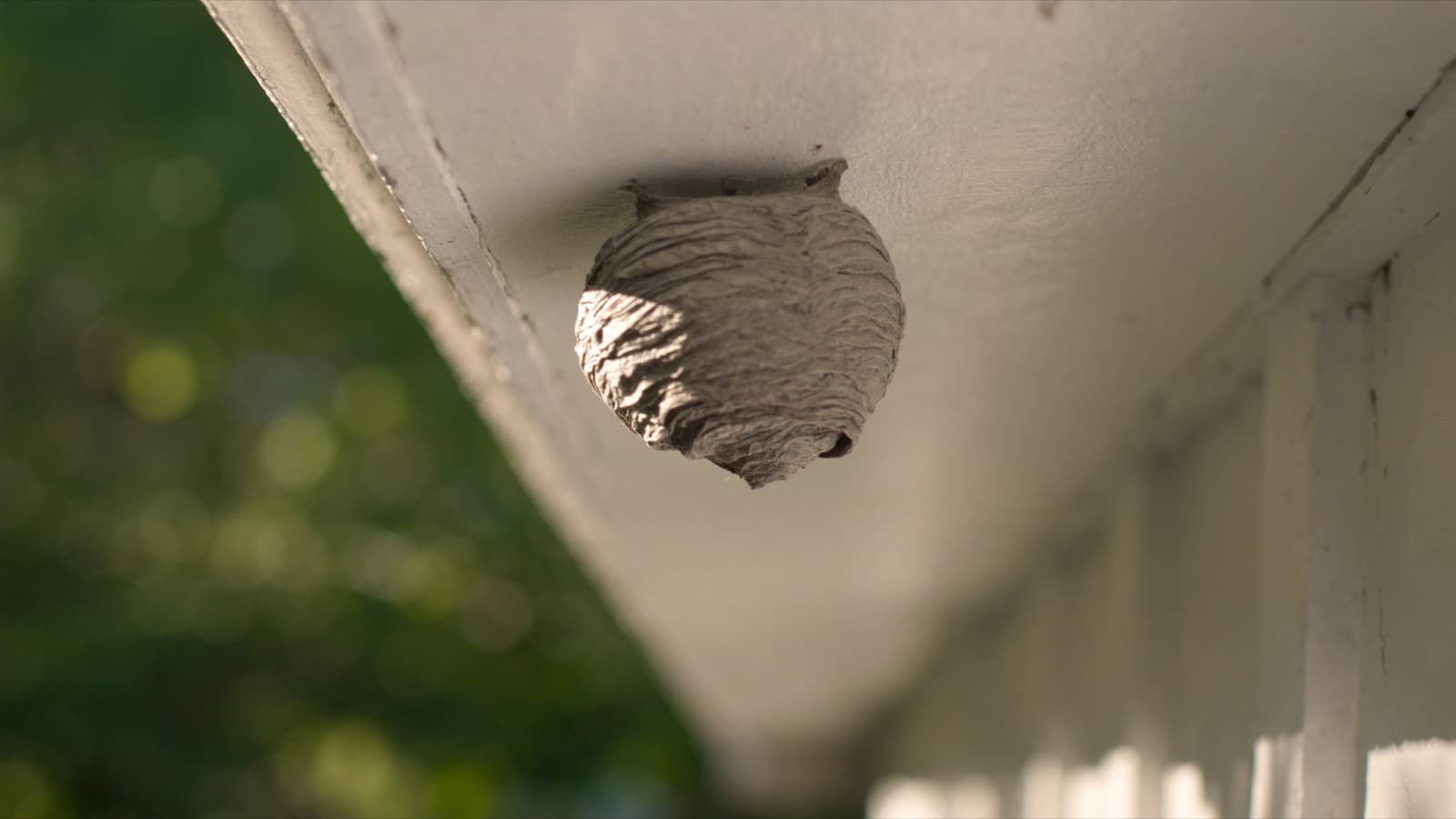
A lure trap placed well away from the gathering — extension research cites a study that meaningfully reduced yellowjacket presence by ringing a picnic area with traps roughly 200 feet out — intercepts foragers before they arrive. A trap set near the table does the opposite, pulling more wasps toward the people it's meant to protect. If wasps keep showing up despite good sanitation and trap placement, that can point to an active nest nearby rather than just general foraging, which is a different question covered elsewhere on this hub.
The honest line — Covering food and drinks and sealing garbage does most of the work. Traps help only when placed well away from the table, not near it.
Key takeaways
- Covering food and sweet drinks and sealing garbage removes the main draw for foraging wasps.
- Open cans are a specific hazard — wasps crawl inside them, risking a sting to the mouth or lips.
- Lure traps help only when placed well away from the eating area, not near the table.
- This is a genuinely DIY-friendly, zero-nest-contact situation with no professional treatment required.
- Persistent activity despite good sanitation can indicate a nearby nest rather than just foraging.
Where to go next
Identification, sting treatment, per-species DIY viability, and nest-reuse facts each live on the hub that owns them. We route, we don't rebuild.
DIY viability by species
The router's source of truth — which nests are DIY-able.
Go thereIdentify the species
Tell the wasps, hornets, and lookalikes apart.
Go thereSting & allergy treatment
What to do about a sting or a reaction.
Go thereNest reuse & winter
The colony dies at frost; the nest is never reused.
Go there
Wasps at every outdoor gathering despite good sanitation?
There may be a nest nearby. Anchor can find out and treat it if there is.
Frequently asked questions
Sources(2)
- [1]UC Statewide IPM Program — Yellowjackets and Other Social Wasps
Sanitation, covered food and drinks, and trap placement guidance for outdoor gatherings
extensionverified 2026-07-17 - [2]Oregon State University Extension EM 9211 — Protecting Honey Bees from Yellowjacket Wasps
Picnic-pavilion study: distant trap perimeter reduced yellowjacket presence
extensionverified 2026-07-17
Written & reviewed by
VerifiedDaniel Brady
NH-Licensed Pesticide Applicator · License #782664 (NHDAMF, RSA 430)
Daniel Brady is the New Hampshire–licensed applicator behind Anchor Pest Services, a family-owned pest control company serving the Manchester area since 2017.
Last updated 2026-07-17
When it's more than a picnic problem
Persistent activity can mean a nearby nest
A licensed technician can check for an active nest if wasps keep showing up despite covered food and distant traps.
- Family-owned since 2017
- NH License #782664, category F1 (RSA 430, NHDAMF)
- Member, NEPMA