
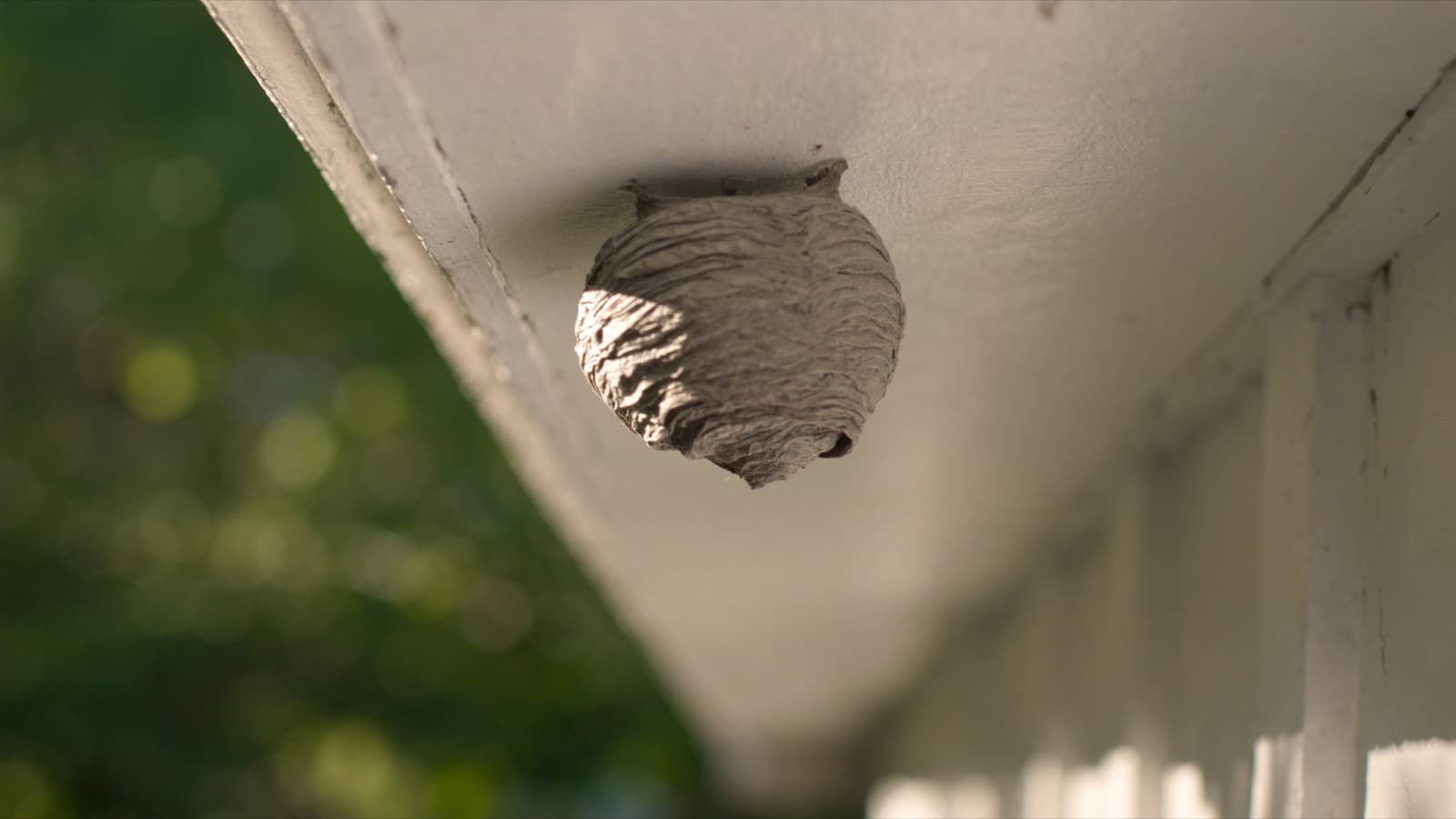
What Are the Signs of an Underground Yellowjacket Nest?
At a Glance
- The call: Wasps flying low, side-to-side patterns near a small ground opening is the clearest sign — and lawn vibration from mowing or trimming can trigger a defensive swarm with no warning.
The short of it
Wasps flying low, side-to-side patterns near a small ground opening is the clearest sign — and lawn vibration from mowing or trimming can trigger a defensive swarm with no warning.
The full picture
The visual sign to look for
Yellowjacket ground nests typically have one small entrance hole, sometimes reusing an old rodent burrow, with wasps performing a characteristic side-to-side orientation flight near the opening before departing or upon returning — a behavior that helps them relocate the entrance visually. In New Hampshire, the species behind most of these lawn nests is the eastern yellowjacket (Vespula maculifrons), which Cornell IPM describes as common across the Northeast and a predominantly subterranean nester, with colonies that can build into the thousands of workers by late summer. This is different from the more random flight pattern of foraging wasps passing through an area, and noticing the pattern at one consistent spot is a stronger signal than seeing individual wasps in a yard generally.
The hazard that has nothing to do with seeing the nest at all
Underground colonies respond to ground vibration, not just direct contact. Alabama Cooperative Extension specifically notes that yellowjacket swarms can be provoked by vibrations like mowing a lawn, which means a nest can go completely unnoticed until a routine yard task triggers a sudden, coordinated defensive response with essentially no advance warning. This is one of the reasons underground nests are treated cautiously even when there's no visible sign of one — the risk isn't only about what you can see.
What to do if you spot the pattern
Mark the area and keep activity away from it rather than approaching to confirm species by sight — /wasp-species covers identification from a safe distance if needed. Extension guidance treats direct treatment of a confirmed ground nest as something best done after dark when the colony is least active, and /top-diy-methods covers what's realistic to attempt yourself versus when a professional is the better call for a given situation.
The honest line — Wasps flying low, side-to-side patterns near a small ground opening is the clearest sign — and lawn vibration from mowing or trimming can trigger a defensive swarm with no warning.
Key takeaways
- A distinctive side-to-side orientation flight near a small ground hole is the clearest visual sign of an underground nest.
- The entrance is often an old rodent burrow or a small natural gap that's easy to overlook until activity increases.
- Ground vibration from mowing or trimming can provoke a sudden defensive swarm with no visible warning beforehand.
- Unexplained aggressive activity near an otherwise ordinary patch of lawn is itself worth treating as a warning sign.
- Confirmed ground nests are best approached, if at all, after dark when colony activity is lowest.
Where to go next
Identification, sting treatment, per-species DIY viability, and nest-reuse facts each live on the hub that owns them. We route, we don't rebuild.
DIY viability by species
The router's source of truth — which nests are DIY-able.
Go thereIdentify the species
Tell the wasps, hornets, and lookalikes apart.
Go thereSting & allergy treatment
What to do about a sting or a reaction.
Go thereNest reuse & winter
The colony dies at frost; the nest is never reused.
Go there
Found a suspicious hole in the lawn?
Before you mow near it again, Anchor can confirm whether it's an active underground nest.
Frequently asked questions
Sources(3)
- [1]Alabama Cooperative Extension System — Lookout for Yellow Jackets: Outdoor Stinging Insects
Ground vibration from mowing can provoke underground colony swarms
extensionverified 2026-07-17 - [2]UNH Cooperative Extension — Controlling Wasps, Bees and Hornets Around Your Home
Ground-nest entrance identification and safe-timing treatment guidance
extensionverified 2026-07-17 - [3]Cornell IPM — Yellowjackets and baldfaced hornets
Eastern yellowjacket (Vespula maculifrons) common in the Northeast; predominantly subterranean nesting; colonies reaching into the thousands of workers
extensionverified 2026-07-17
Written & reviewed by
VerifiedDaniel Brady
NH-Licensed Pesticide Applicator · License #782664 (NHDAMF, RSA 430)
Daniel Brady is the New Hampshire–licensed applicator behind Anchor Pest Services, a family-owned pest control company serving the Manchester area since 2017.
Last updated 2026-07-17
Before the mower finds it for you
Confirm it before it becomes a surprise
A licensed technician can identify and safely address a suspected ground nest before yard work triggers it.
- Family-owned since 2017
- NH License #782664, category F1 (RSA 430, NHDAMF)
- Member, NEPMA