
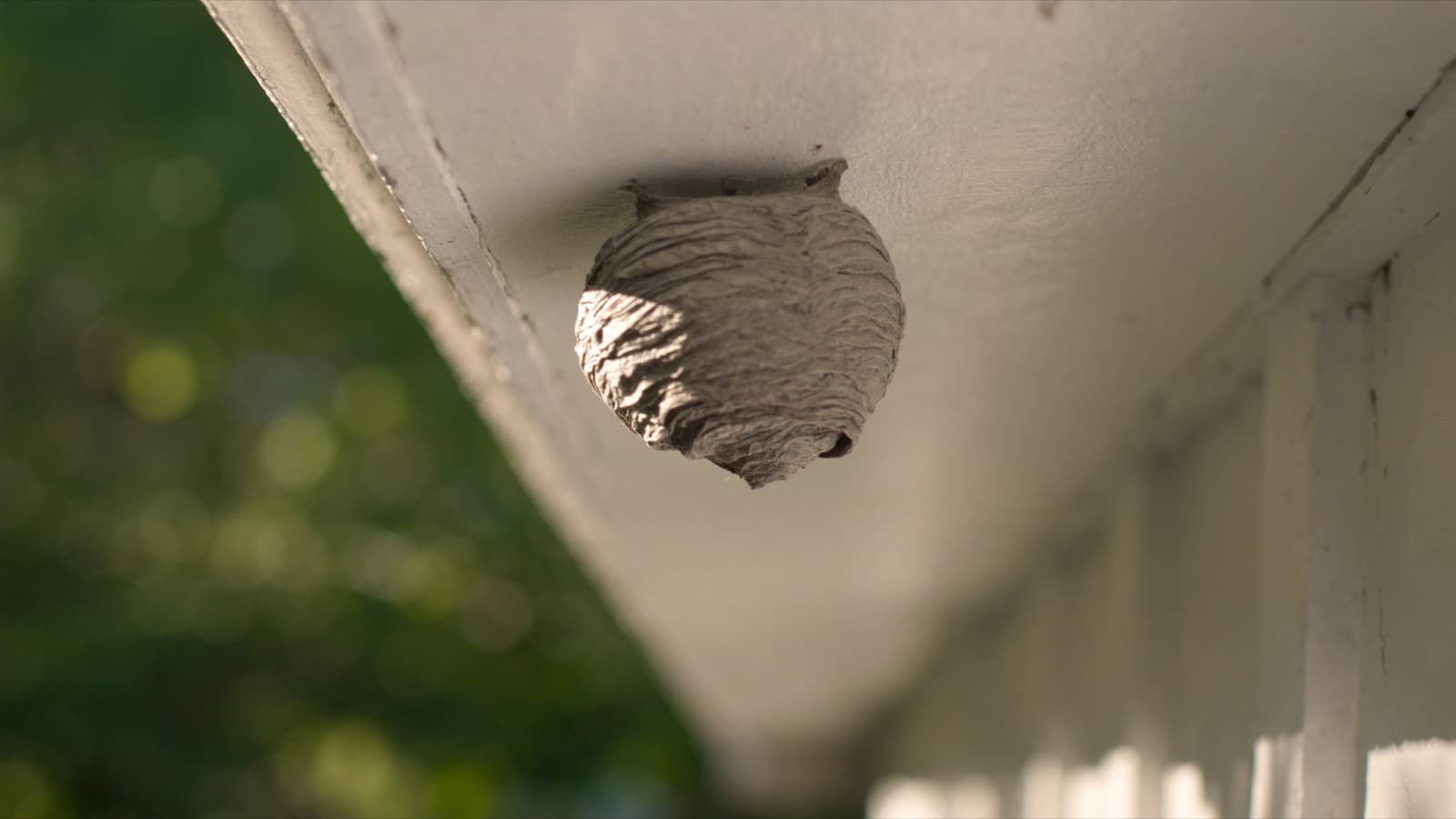
What Immediate Actions Should I Take After Getting Stung During Nest Removal?
At a Glance
- The call: Move away from the nest before you do anything else. The stinging risk isn't over just because one sting already happened.
- If it goes wrong: stop, retreat, then use the call-now list
If you are mid-incident, start here
Move away from the nest before you do anything else. The stinging risk isn't over just because one sting already happened.
Northern New England Poison Center
1-800-222-1222- Retreat from the nest area right away, in a straight line, without swatting.
- Get indoors or into a closed vehicle before doing anything else, including checking the sting.
- Once safely clear, check for additional stings and note roughly how many.
- Stay with anyone else who was stung and watch them for the next 30-60 minutes; do not leave a stung person alone.
- Trouble breathing, or swelling of the lips, tongue, throat, or face — call 911.
- Hives or swelling spreading anywhere beyond the sting sites themselves — call 911.
- Dizziness, fainting, a weak or racing pulse, or vomiting after a sting — call 911.
- More than roughly ten stings in one incident, even if you feel fine right now — get evaluated; the toxic load from that many stings is a real risk on its own, separate from allergy.
We cannot tell from a description online whether a reaction is turning into anaphylaxis. Any systemic symptom — breathing, swelling away from the sting site, fainting — is a call to 911, not a wait-and-see, and we never suggest a dose of anything.
Sting treatment lives on Yellowjackets GuideThe full picture
Why leaving comes before anything else
A nest disturbed by a removal attempt is an actively defending colony, and staying nearby to deal with a fresh sting — checking the site, discussing what happened — keeps you in range for more. CDC-NIOSH guidance on stinging-insect incidents is direct: get away from the area first. That's the entire first move, before anything else on this page.
What to actually watch for once you're clear
Ordinary reactions are local: pain, redness, and swelling right at the sting site, usually resolving over a day or two. A reaction becomes an emergency when it stops being local — trouble breathing, swelling of the face or throat, hives or swelling spreading well beyond the sting itself, dizziness, or a racing or weak pulse. Any of those is a 911 call. Multiple stings deserve attention on their own: a large clinical study found in-hospital death was several times more likely once someone had been stung more than ten times in one incident, independent of allergy — so a high sting count is worth medical evaluation even without those other symptoms.
Where the deeper guidance lives
Sting-site treatment and how to judge and respond to an allergic reaction in real depth are covered on our /yellowjackets hub — this page is deliberately the next-sixty-seconds version, not the full reference. If you're unsure whether what you're seeing is serious, treat it as serious and call, rather than searching for reassurance.
The honest line — Move away from the nest before you do anything else. The stinging risk isn't over just because one sting already happened.
Key takeaways
- Move away from the nest area first — the defensive response doesn't end after one sting.
- Check for additional stings only once you are genuinely clear of the area.
- More than about ten stings in one incident warrants medical evaluation on its own.
- Full sting-treatment and allergic-reaction guidance is on /yellowjackets.
Where to go next
Identification, sting treatment, per-species DIY viability, and nest-reuse facts each live on the hub that owns them. We route, we don't rebuild.
DIY viability by species
The router's source of truth — which nests are DIY-able.
Go thereIdentify the species
Tell the wasps, hornets, and lookalikes apart.
Go thereSting & allergy treatment
What to do about a sting or a reaction.
Go thereNest reuse & winter
The colony dies at frost; the nest is never reused.
Go there
If this happened mid-removal
A sting during an attempt is often a sign the nest is a defended colony, not a solitary insect. A licensed technician can finish it without another round of stings.
Frequently asked questions
Sources(3)
- [1]CDC/NIOSH — Stinging Insect Safetygovverified 2026-07-17
- [2]Xie et al. 2013, PLOS ONE — Clinical Features of Severe Wasp Sting Patientsacademicverified 2026-07-17
- [3]MedlinePlus (NIH) — Insect Stingsgovverified 2026-07-17
Written & reviewed by
VerifiedDaniel Brady
NH-Licensed Pesticide Applicator · License #782664 (NHDAMF, RSA 430)
Daniel Brady is the New Hampshire–licensed applicator behind Anchor Pest Services, a family-owned pest control company serving the Manchester area since 2017.
Last updated 2026-07-17
After the emergency
Let us take the next attempt off your hands
If one sting turned into more, that's real information about what's actually in the nest.
- Family-owned since 2017
- NH License #782664, category F1 (RSA 430, NHDAMF)
- Member, NEPMA