
What Is the Difference Between a Wasp, a Yellowjacket, and a Hornet?
At a Glance
- The call: Yellowjacket and hornet are both types of social wasp — the label matters here only because it predicts where the nest is and whether it's a DIY-able job.
The short of it
Yellowjacket and hornet are both types of social wasp — the label matters here only because it predicts where the nest is and whether it's a DIY-able job.
The full picture
Where each one fits in the family tree
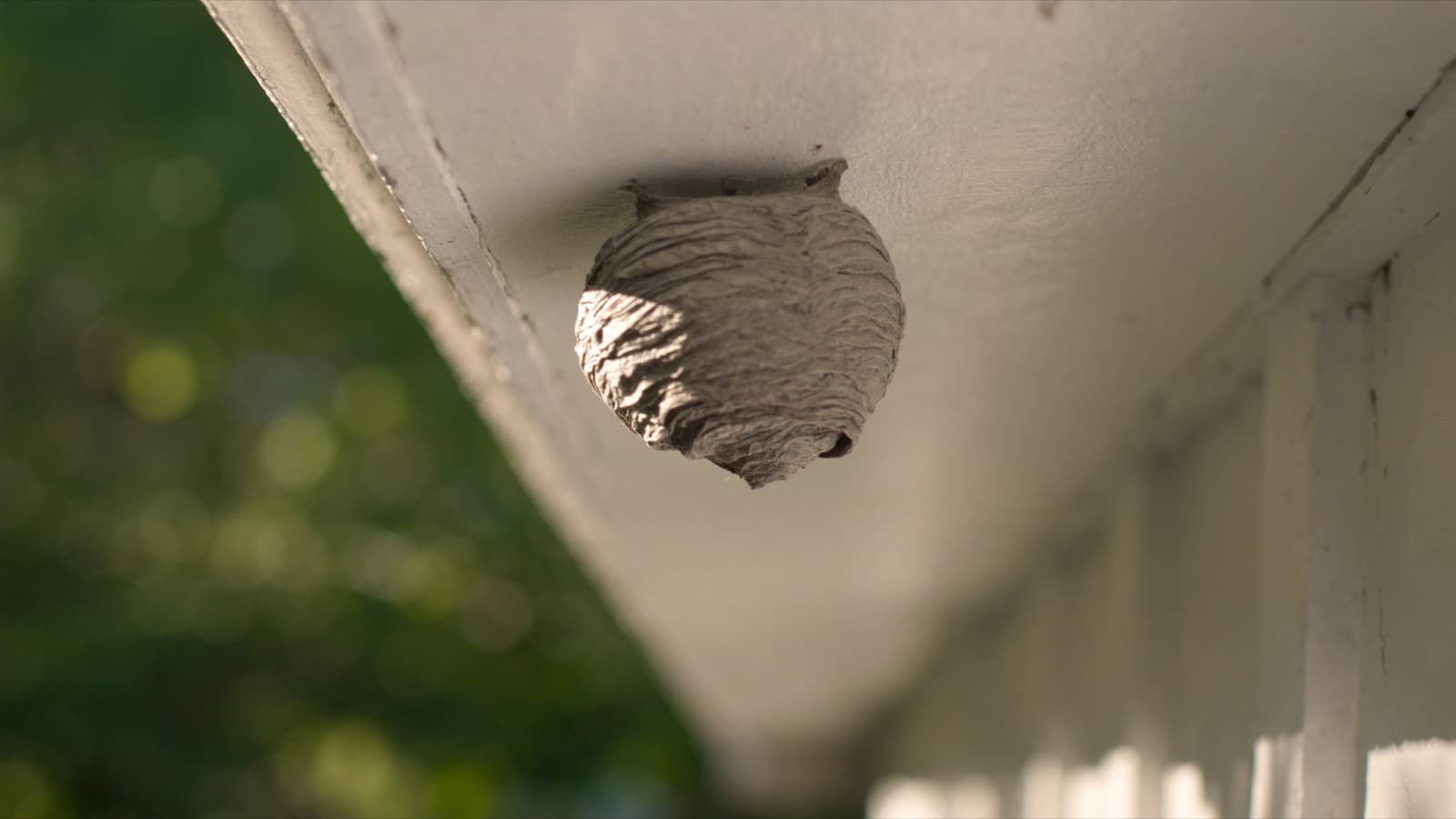
All hornets and yellowjackets are wasps; not all wasps are hornets or yellowjackets. "Wasp" covers a very large group, including solitary species like mud daubers that don't defend a colony at all, and social species that live in colonies with workers and a queen. Yellowjackets (genus Vespula and Dolichovespula) and true hornets, including the introduced European hornet, are specific branches of that social-wasp group, alongside paper wasps, which build the open, umbrella-shaped combs seen under eaves and porches.
Why the label predicts the removal situation before you even see the nest
Yellowjackets favor underground cavities — often an old rodent burrow — or gaps inside walls and structures, which makes them harder to detect and treat than an exposed nest. Bald-faced hornets build large, enclosed aerial paper nests, often high up in a tree or on a structure, visible but not always reachable safely. The European hornet nests in hollow trees or wall voids and is unusual among this group for staying active after dark. Each of those patterns feeds directly into the species-by-species DIY viability that /top-diy-methods publishes — yellowjacket, bald-faced hornet, and European hornet nests are all rated as a professional job there, while paper wasp and mud dauber nests are rated as workable with the right care.
Where to go for the rest
This page exists to explain why the label matters for the decision, not to teach full visual identification — that depth, including how to tell each one apart by sight, lives on /wasp-species and /yellowjackets. If you already know which one you're dealing with, /top-diy-methods is the next stop for what that means for removal.
The honest line — Yellowjacket and hornet are both types of social wasp — the label matters here only because it predicts where the nest is and whether it's a DIY-able job.
Key takeaways
- Yellowjacket and hornet are both categories of social wasp, not separate insect families.
- Yellowjackets typically nest underground or inside wall and cavity voids.
- Bald-faced hornets build large, enclosed aerial paper nests, often high off the ground.
- The European hornet nests in hollow trees or wall voids and stays active at night, unlike most other species here.
- The label predicts DIY viability: yellowjacket, bald-faced hornet, and European hornet nests are all professional jobs on /top-diy-methods; paper wasp and mud dauber nests are not.
Where to go next
Identification, sting treatment, per-species DIY viability, and nest-reuse facts each live on the hub that owns them. We route, we don't rebuild.
DIY viability by species
The router's source of truth — which nests are DIY-able.
Go thereIdentify the species
Tell the wasps, hornets, and lookalikes apart.
Go thereSting & allergy treatment
What to do about a sting or a reaction.
Go thereNest reuse & winter
The colony dies at frost; the nest is never reused.
Go there
Know which one is on your property?
Once you know the species, Anchor can tell you honestly whether it's a DIY job or a professional one.
Frequently asked questions
Sources(2)
- [1]UNH Cooperative Extension — Controlling Wasps, Bees and Hornets Around Your Home
Nesting-site differences between yellowjackets, bald-faced hornets, and European hornets
extensionverified 2026-07-17 - [2]University of Maryland Extension — Social Wasps: Yellowjackets, Hornets and Paper Wasps
Classification of yellowjackets and hornets as social wasps within the broader wasp group
extensionverified 2026-07-17
Written & reviewed by
VerifiedDaniel Brady
NH-Licensed Pesticide Applicator · License #782664 (NHDAMF, RSA 430)
Daniel Brady is the New Hampshire–licensed applicator behind Anchor Pest Services, a family-owned pest control company serving the Manchester area since 2017.
Last updated 2026-07-17
The label changes the plan
Confirm the species before you decide anything
A licensed technician can confirm exactly what's nesting and what that means for removal.
- Family-owned since 2017
- NH License #782664, category F1 (RSA 430, NHDAMF)
- Member, NEPMA