
When Are Wasps and Yellowjackets Most Active and Hardest to Control?
At a Glance
- The call: Colonies are at their largest and most food-stressed at the same time — which is exactly why late summer and early fall are the hardest window to control them.
The short of it
Colonies are at their largest and most food-stressed at the same time — which is exactly why late summer and early fall are the hardest window to control them.
The full picture
Why this specific window is the hardest
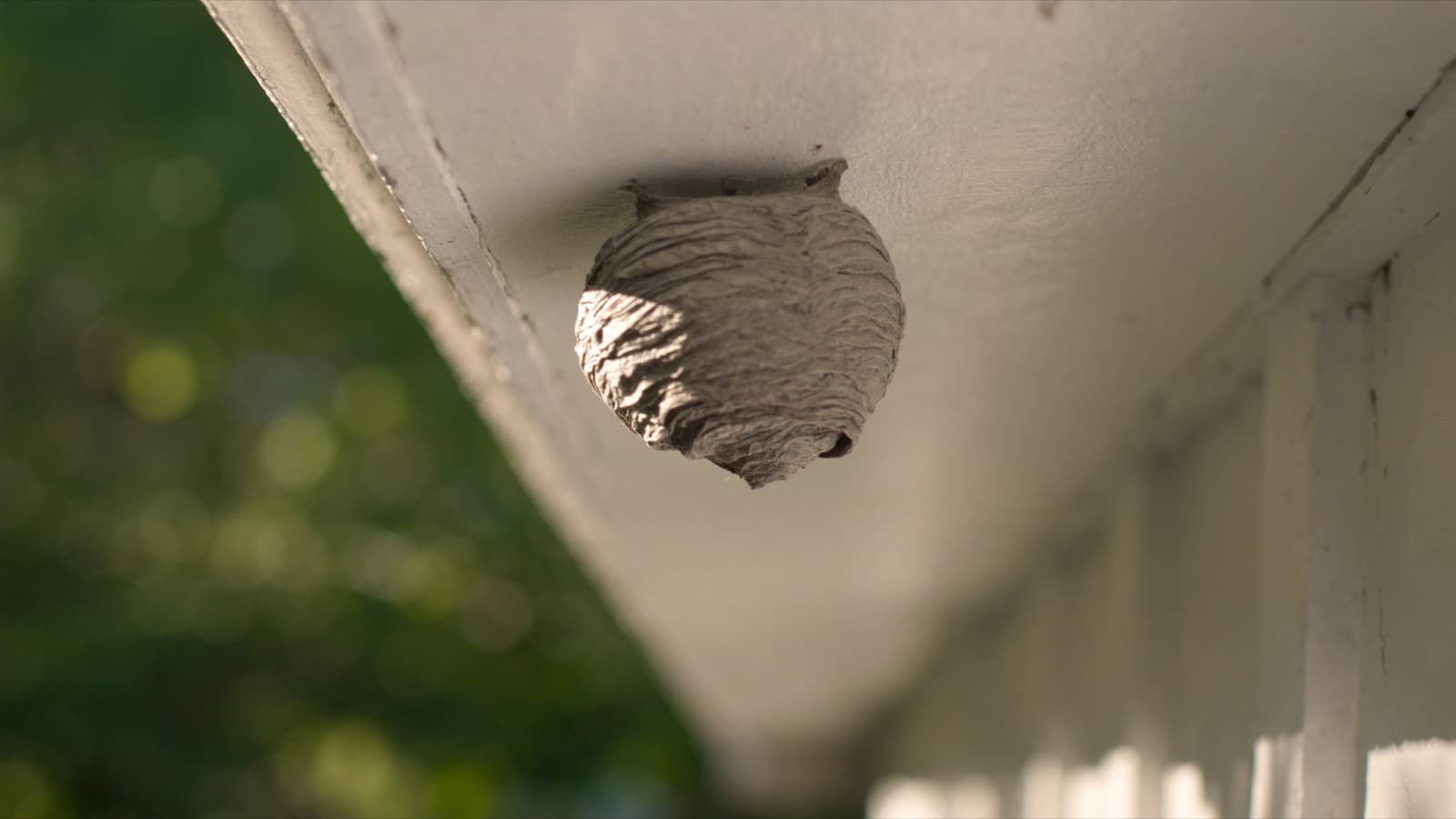
Colony size builds all summer as workers hatch and take over foraging and nest-building, reaching its peak later in the season rather than early on. At the same time, the natural food sources many wasps rely on earlier in the year become scarcer, and UNH Cooperative Extension notes that this food pressure is tied to increased aggression, since workers scavenge more assertively for sugar and protein once the easier sources dry up. A colony at its largest, defending itself most aggressively, and actively seeking out human food sources is simply a harder situation than the same colony at a smaller, calmer stage earlier in the year.
What this means for timing a decision
A nest handled early in the season, while it's still small and the colony hasn't reached peak defensiveness, is a genuinely different — and often more workable — situation than the identical species and location discovered at its late-summer peak. That's part of why /top-diy-methods distinguishes early-season nests from mature ones for species like paper wasps, and why waiting to deal with a known nest often makes the eventual job harder rather than easier.
When the difficulty finally eases
Once the first sustained hard freeze sets in — around Manchester, NH (USDA zone 5b–6a) that typically means the second half of October — the colony's difficulty curve reverses entirely, not because the nest becomes safer to approach carelessly, but because the colony itself is dying off on its own. That transition, and the honest do-nothing answer it often supports, is covered on /winter-pests-shift/wasps rather than here.
The honest line — Colonies are at their largest and most food-stressed at the same time — which is exactly why late summer and early fall are the hardest window to control them.
Key takeaways
- Colonies reach peak size later in the season, not early on.
- Food scarcity later in the season is tied to increased foraging aggression, per UNH Cooperative Extension.
- Maximum size plus peak aggression makes late summer into early fall the hardest window to control a colony.
- A nest addressed early in the season is often a meaningfully more workable situation than the same nest at its peak.
- Difficulty eases once sustained cold weather arrives and the colony begins dying off on its own.
Where to go next
Identification, sting treatment, per-species DIY viability, and nest-reuse facts each live on the hub that owns them. We route, we don't rebuild.
DIY viability by species
The router's source of truth — which nests are DIY-able.
Go thereIdentify the species
Tell the wasps, hornets, and lookalikes apart.
Go thereSting & allergy treatment
What to do about a sting or a reaction.
Go thereNest reuse & winter
The colony dies at frost; the nest is never reused.
Go there
Found a nest heading into the hardest part of the season?
Anchor can assess it now rather than letting the colony grow into a harder problem.
Frequently asked questions
Sources(2)
- [1]UNH Cooperative Extension — Controlling Wasps, Bees and Hornets Around Your Home
Increased aggression tied to peak colony size and late-season food scarcity
extensionverified 2026-07-17 - [2]NC State Extension — Yellowjackets in the Landscape
Colony growth pattern through the season and peak population timing
extensionverified 2026-07-17
Written & reviewed by
VerifiedDaniel Brady
NH-Licensed Pesticide Applicator · License #782664 (NHDAMF, RSA 430)
Daniel Brady is the New Hampshire–licensed applicator behind Anchor Pest Services, a family-owned pest control company serving the Manchester area since 2017.
Last updated 2026-07-17
Timing changes the difficulty
The same nest gets harder the longer it waits
A licensed technician can assess a known nest before it reaches its most aggressive, most defended stage.
- Family-owned since 2017
- NH License #782664, category F1 (RSA 430, NHDAMF)
- Member, NEPMA