
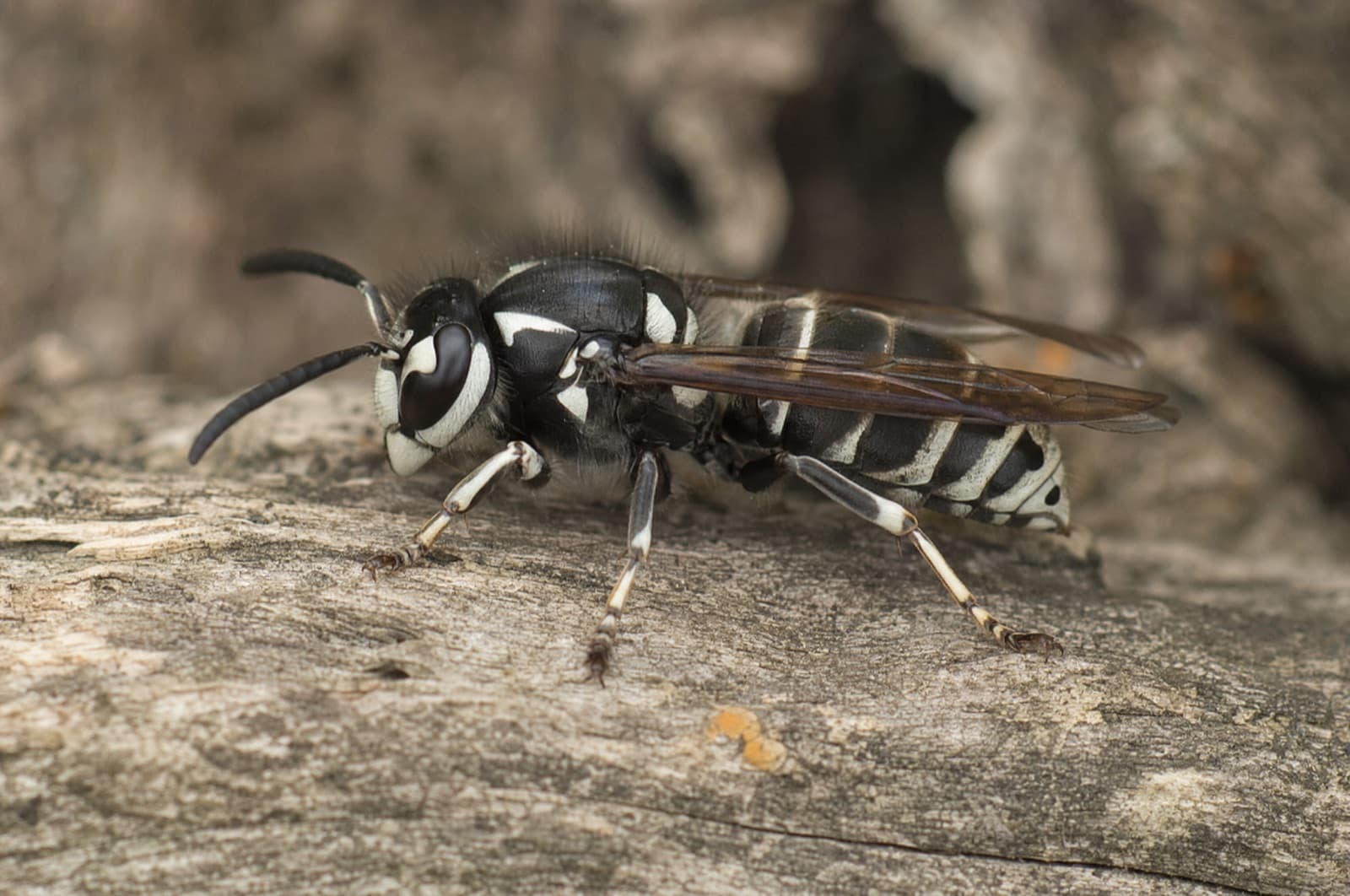
What Attracts Bald-faced Hornets to Your House?
At a glance
- Short answer: Bald-faced hornets want a safe nest site and insects to hunt — nothing more specific than that.
- The verdict: The usual four
The attractant verdict
Four possible answers to why this species turned up. Three stay unlit — and that's the argument: the honest answer could have been any of them, and for this species it wasn't.
This is the most common answer in this hub — an answer, not a shortfall.
Bald-faced hornets want a safe nest site and insects to hunt — nothing more specific than that.
Our own previous page said the main draws are ‘food sources and shelter,’ naming sweet foods, protein sources, and safe places to nest — which holds up; we're keeping it, just tightened.
A branch, eave, or side of a structure that offers a stable anchor point for a large aerial paper nest, combined with a supply of prey insects and some nectar or sugar sources nearby. Bald-faced hornets are active predators of other insects, which is their main food source during the season.
“Nothing about a bald-faced hornet is special. It wants a safe place to hang a nest and insects to hunt — and your eave or tree branch offered both.”
Why it's here, in full
Why a safe nest site and food are the whole story
Bald-faced hornets are social wasps that build a single, enclosed paper nest each year, usually well above ground in a tree, shrub, or attached to a building, and defend it aggressively. What decides where a nest goes is a stable, somewhat sheltered anchor point plus a nearby supply of insect prey and some nectar or sugar sources — nothing about a house itself is a specific lure beyond offering that anchor point. Colonies do not reuse an old nest the next year, so a nest found now started fresh this season.
How to tell it's actually this species
Real signs only — a species with four honest tells gets four, and stops. Where a sign is weak on its own, we say so.
A large, grey, football-shaped paper nest hanging from a tree branch, eave, or side of a structure
Hornets flying a repeated path in and out of one specific spot at head height or higher
Aggressive defensive activity when something approaches within about 10 feet of a nest
Want bald-faced hornets gone?
This page only answers why it's here. Every removal step for this exact species — what to seal, what to set, what actually works — lives on its own dedicated guide.
Two questions, two pages
Here: why it turned up at all — the honest answer, blame removed.
There: the step-by-step removal guide for this exact species.
Already dealing with bald faced hornet?
This page is about why it's there. Getting rid of it is covered at /top-diy-methods/bald-faced-hornet.
Frequently asked
Sources(2)
- [1]Penn State Extension — Baldfaced Hornet
Bald-faced hornet nest location, size, and annual colony cycle
extensionverified 2026-07-17 - [2]NC State Extension — Baldfaced Hornets in Landscapes
Nest-site selection and predatory feeding behavior
extensionverified 2026-07-17
Written & reviewed by
VerifiedDaniel Brady
NH-Licensed Pesticide Applicator · License #782664 (NHDAMF, RSA 430)
Daniel Brady is the New Hampshire–licensed applicator behind Anchor Pest Services, a family-owned pest control company serving the Manchester area since 2017.
Last updated Jul 2026
Food, water, warmth, shelter — the usual four
If it's already inside, we handle the rest
Same-day inspections across southern and central New Hampshire.
- Family-owned in Manchester since 2017
- NH commercial applicator #782664, category F1
- We will tell you when the answer is do nothing
NH License #782664 · No obligation · We answer in person