
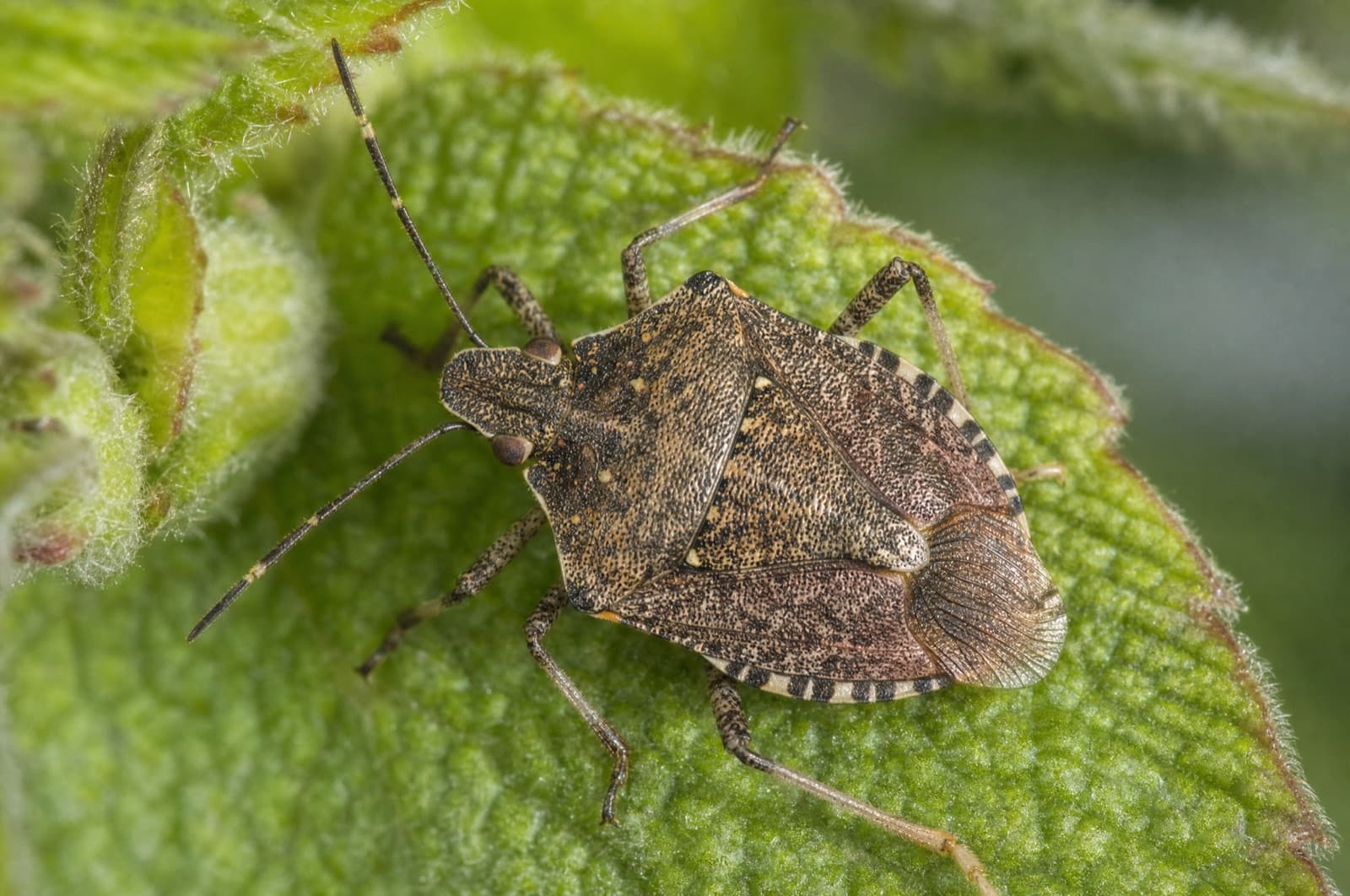
What Attracts Brown Marmorated Stink Bugs to Your House?
At a glance
- Short answer: Brown marmorated stink bugs aren't coming in for food or your furnace. They want a dry, tight space to overwinter — the same thing dead tree bark gives them outdoors.
- The verdict: The belief is wrong
The attractant verdict
Four possible answers to why this species turned up. Three stay unlit — and that's the argument: the honest answer could have been any of them, and for this species it wasn't.
Brown marmorated stink bugs aren't coming in for food or your furnace. They want a dry, tight space to overwinter — the same thing dead tree bark gives them outdoors.
Our own previous page said this species is "attracted to homes primarily for shelter and warmth, especially during colder months," and added that they "look for places to hibernate" — both the food-adjacent framing common to other overwintering pests and an imprecise word for what the bug actually does once inside.
A structure offering dry, tight crevices similar to the natural overwintering sites this species uses in the wild — dry cracks in standing dead trees with thick bark. A warm, sunny fall afternoon triggers the search; the house's cracks and voids are simply a substitute for a tree that isn't there.
“It isn't your furnace. This bug just wants a dry, tight crack to wait out the winter — your house works as well as a dead tree would.”
A dry, tightly confined overwintering space. In natural landscapes, this species has been documented overwintering specifically in dry crevices in dead, standing trees with thick bark — an ecological niche that houses and other buildings closely substitute for once a bug finds one.
It means the folk belief that they enter for food, or are simply chasing warmth from the house, misses the actual driver: a specific physical microhabitat (dry and confined) that this species can't easily find outdoors in a wet climate like New Hampshire's, making a house an unusually good substitute.
Calibrated from: Virginia Tech Cooperative Extension — Stink Bugs, https://www.pubs.ext.vt.edu/444/444-621/444-621.html
Why it's here, in full
A house substitutes for a dead tree, not a kitchen
Brown marmorated stink bugs overwinter in the wild in dry, tightly confined spaces — field research on natural landscapes found them recovered specifically from dry crevices in dead, standing trees with thick bark, particularly oak and locust. That's the ecological template the species is built around: a dry, tight, insulated void. A house offers the same physical qualities in its siding gaps, attic voids, and wall cavities, and Virginia Tech Cooperative Extension notes this species seeks out barns, storage buildings, vehicles, and homes for exactly that reason during fall.
Our old page's "shelter and warmth" framing gets the shelter half right, but it also claimed they look for a place to sleep through winter using a word reserved for mammals — insects do not hibernate; the correct term is dormancy, and warmth wasn't the accurate draw either (dryness and confinement are). See the FAQ below for more on that word choice.
No feeding, no breeding indoors — and it's not hibernation
This species does not feed or reproduce indoors; once inside a dry wall void or attic, it's dormant, waiting out the winter the same way it would in a dead tree outdoors — and it does not hibernate there, technically speaking: hibernation is a term reserved for mammals undergoing a controlled, physiological reduction in body temperature, while insects instead enter dormancy or diapause, a different biological process. Warm midwinter days can rouse individual bugs into moving around inside the house, which is often mistaken for a new infestation when it's really the same dormant population waking up briefly.
How to tell it's actually this species
Real signs only — a species with four honest tells gets four, and stops. Where a sign is weak on its own, we say so.
Large numbers of mottled brown, shield-shaped bugs gathering on a sunny exterior wall on warm fall afternoons
A distinctive, sharp odor when a bug is disturbed or crushed
Could be something else: Several other stink bug species produce a similar odor; confirming the species is covered at /pests/brown-marmorated-stink-bug.
Bugs found in attics, wall voids, or around window and door trim during winter, especially after the heat comes on
Could be something else: This reflects an already-established overwintering population being roused by heat, not a fresh entry or feeding activity.
Bugs re-appearing in the same rooms or windows each winter, consistent with a persistent void population rather than new arrivals
Want brown marmorated stink bugs gone?
This page only answers why it's here. Every removal step for this exact species — what to seal, what to set, what actually works — lives on its own dedicated guide.
Two questions, two pages
Here: why it turned up at all — the honest answer, blame removed.
There: the step-by-step removal guide for this exact species.
Key takeaways
- It isn't your furnace. This bug just wants a dry, tight crack to wait out the winter — your house works as well as a dead tree would.
- It doesn't feed or breed indoors — it's only there for winter shelter.
- What actually matters: shelter, the outdoors nearby.
- If it's already inside, removal is a different question — see /top-diy-methods/brown-marmorated-stink-bug.
Getting large stink bug clusters on your walls each fall?
This page is about why they showed up. Exclusion and removal options are covered at /top-diy-methods/brown-marmorated-stink-bug.
Frequently asked
Sources(2)
- [1]Virginia Tech Cooperative Extension — Stink Bugs
Brown marmorated stink bug overwintering in dry, tightly confined spaces, and seeking out buildings for the same reason
extensionverified 2026-07-17 - [2]Penn State Extension — Brown Marmorated Stink Bug
Fall aggregation on sun-exposed exterior walls before entering structures to overwinter
extensionverified 2026-07-17
Written & reviewed by
VerifiedDaniel Brady
NH-Licensed Pesticide Applicator · License #782664 (NHDAMF, RSA 430)
Daniel Brady is the New Hampshire–licensed applicator behind Anchor Pest Services, a family-owned pest control company serving the Manchester area since 2017.
Last updated Jul 2026
A dry crack works as well as a dead tree
Dealing with stink bugs every fall?
Same-day inspections across southern and central New Hampshire — we'll help identify entry points, honestly.
- Family-owned in Manchester since 2017
- NH commercial applicator #782664, category F1
- We will tell you when the answer is do nothing
NH License #782664 · No obligation · We answer in person