
What Attracts Camel Crickets to Your House?
At a glance
- Short answer: Camel crickets want cool, damp, dark harborage — nothing else about them is unusual.
- The verdict: The usual four
The attractant verdict
Four possible answers to why this species turned up. Three stay unlit — and that's the argument: the honest answer could have been any of them, and for this species it wasn't.
This is the most common answer in this hub — an answer, not a shortfall.
Camel crickets want cool, damp, dark harborage — nothing else about them is unusual.
Our own previous page said camel crickets are ‘commonly attracted to areas that provide moisture, warmth, and shelter’ — accurate, and we're keeping the substance while tightening it.
Cool, dark, consistently damp spaces — basements, crawlspaces, damp garages, woodpiles close to the foundation — matching the humid microclimate camel crickets already prefer outdoors under logs and stones. Warmth is a minor factor at most; moisture and darkness are what matter.
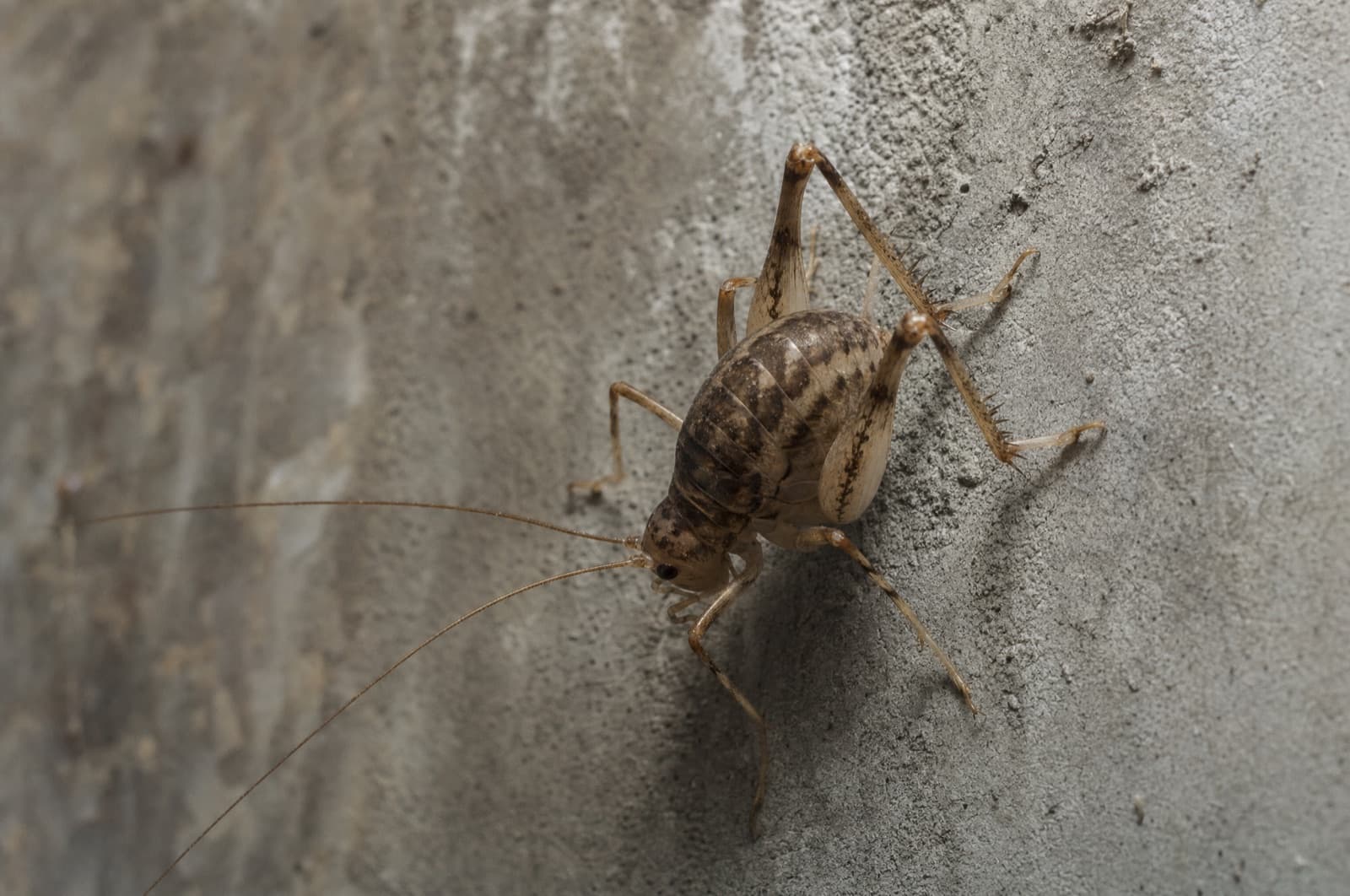
“A camel cricket is wingless, so it never chirps, and it jumps toward whatever startles it rather than away — a harmless reflex that reads as aggression. What it's actually after is one thing: the cool, damp dark of a basement or crawlspace.”
Why it's here, in full
Why moisture and darkness are the whole story
Camel crickets are an ordinary ‘accidental invader’ — a species that lives outdoors under logs, stones, and leaf litter and wanders into a structure through a foundation gap or open door without ever intending to stay. What decides whether they linger indoors is simply whether the space matches the cool, dark, humid microclimate they already prefer: an unfinished basement, a damp crawlspace, or a cluttered garage corner qualifies; a dry, well-lit room does not. They don't need much food to survive for weeks at a time, so their presence tracks moisture and darkness far more closely than anything else in the house. In New Hampshire this makes them a year-round basement and crawlspace fixture rather than a seasonal one: the region's older housing stock — fieldstone and rubble foundations, dirt-floored crawlspaces, and the perimeter dampness that comes with a high water table in low-lying southern New Hampshire lots — holds exactly the steady humidity camel crickets need, and the University of Maine Cooperative Extension notes they are among the most common accidental invaders of cool, moist Northern New England cellars.
How to tell it's actually this species
Real signs only — a species with four honest tells gets four, and stops. Where a sign is weak on its own, we say so.
Large, humpbacked, wingless crickets discovered in damp basements, crawlspaces, or garages, especially during the day when they're normally hiding
Sudden, startling jumps when disturbed, without any chirping sound
Could be something else: Silence during a jump just rules out true house crickets and field crickets, which do chirp; it doesn't confirm species on its own.
Occasional feeding damage on stored cardboard, fabric, or other organic material in a humid storage area
Could be something else: Similar fabric or cardboard damage can come from other insects or general moisture degradation.
Want camel crickets gone?
This page only answers why it's here. Every removal step for this exact species — what to seal, what to set, what actually works — lives on its own dedicated guide.
Two questions, two pages
Here: why it turned up at all — the honest answer, blame removed.
There: the step-by-step removal guide for this exact species.
Already dealing with camel cricket?
This page is about why it's there. Getting rid of it is covered at /top-diy-methods/camel-cricket.
Frequently asked
Sources(2)
- [1]NC State Extension — Camel Crickets
Camel crickets as moisture-driven accidental invaders in basements and crawlspaces
extensionverified 2026-07-17 - [2]University of Maine Cooperative Extension — Camel Cricket
Camel cricket attraction to cool, moist, humid areas in and around homes
extensionverified 2026-07-17
Written & reviewed by
VerifiedDaniel Brady
NH-Licensed Pesticide Applicator · License #782664 (NHDAMF, RSA 430)
Daniel Brady is the New Hampshire–licensed applicator behind Anchor Pest Services, a family-owned pest control company serving the Manchester area since 2017.
Last updated Jul 2026
Food, water, warmth, shelter — the usual four
If it's already inside, we handle the rest
Same-day inspections across southern and central New Hampshire.
- Family-owned in Manchester since 2017
- NH commercial applicator #782664, category F1
- We will tell you when the answer is do nothing
NH License #782664 · No obligation · We answer in person