
What Attracts House Crickets to Your House?
At a glance
- Short answer: House crickets want warmth, moisture, and food — nothing else about them is unusual.
- The verdict: The usual four
The attractant verdict
Four possible answers to why this species turned up. Three stay unlit — and that's the argument: the honest answer could have been any of them, and for this species it wasn't.
This is the most common answer in this hub — an answer, not a shortfall.
House crickets want warmth, moisture, and food — nothing else about them is unusual.
Our own previous page said house crickets are drawn ‘primarily seeking warmth, moisture, and food sources’ — accurate, and we're keeping it.
Cooling outdoor temperatures pushing crickets to seek warmth indoors, combined with dark, humid harborage near heating equipment, basements, or kitchens, and any nearby organic food, including fabric soiled by food or perspiration.
“Nothing about a house cricket is special. It wants warmth, moisture, and something to eat — and a warm basement near a heating duct gives it all three.”
Why it's here, in full
Why warmth, moisture, and food explain the whole story
House crickets are driven indoors primarily by cooling outdoor temperatures rather than any specific feature of a house, and once inside they favor warm, dark, humid spots — basements, kitchens, areas near heating ducts or ovens — where they can remain active and reproduce year-round if conditions stay favorable. They'll feed on a wide range of organic material, including fabric soiled by food residue or perspiration, which is why cotton, wool, or silk items stored in a warm, humid area can show grazing damage. Warmth and moisture are the strongest single predictors of where they concentrate; food is opportunistic rather than a specific draw.
How to tell it's actually this species
Real signs only — a species with four honest tells gets four, and stops. Where a sign is weak on its own, we say so.
Loud, repetitive chirping at night, usually from a warm, dark spot like a basement or behind an appliance
Small, irregular holes or snagged spots on stored fabric, especially anything soiled by food or perspiration
Could be something else: Similar fabric damage can come from clothes moths or carpet beetles; the presence of chirping crickets nearby is the stronger confirming clue.
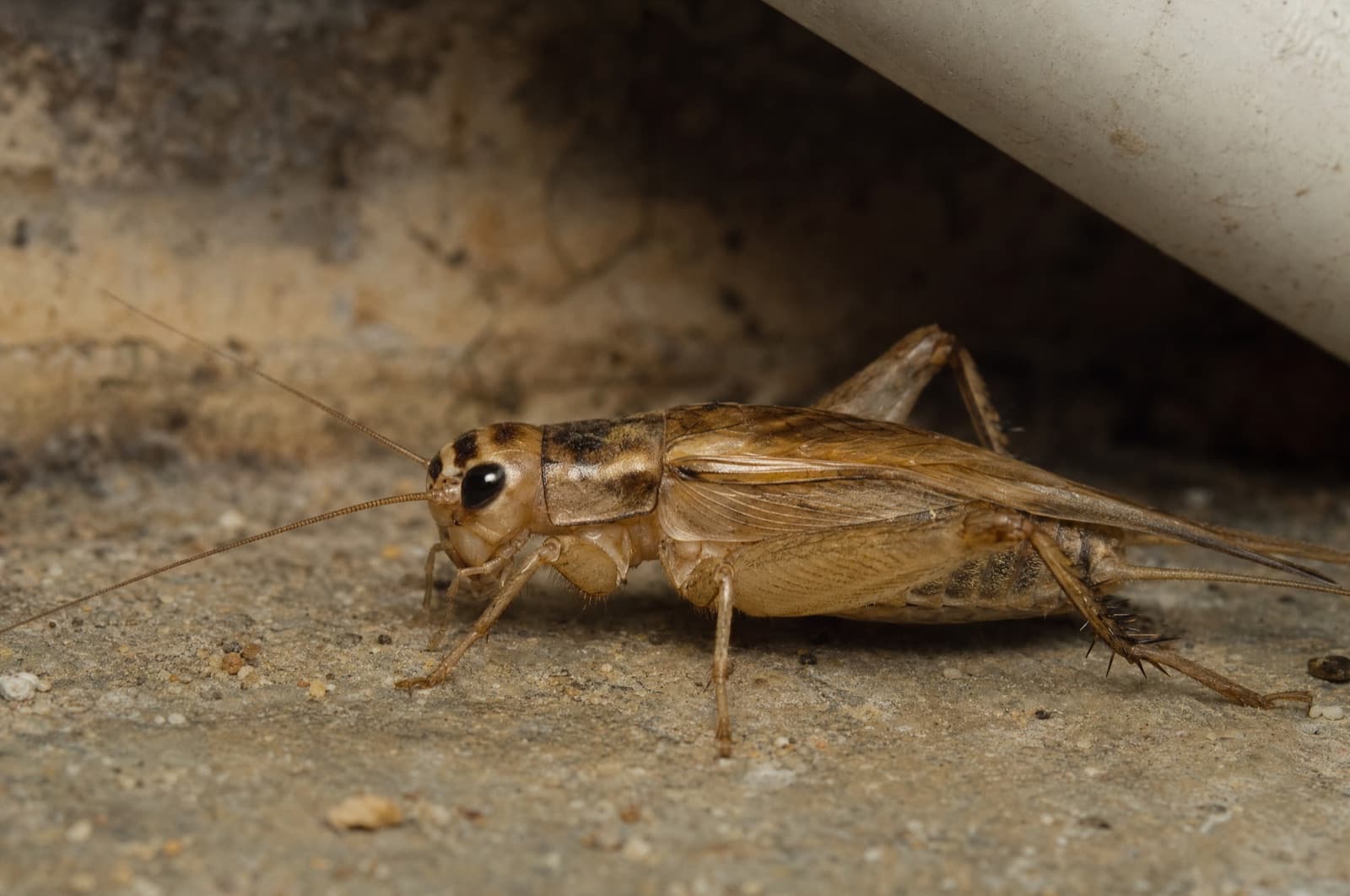
Light yellowish-brown crickets found in warm, dark areas near heating equipment or kitchens
Want house crickets gone?
This page only answers why it's here. Every removal step for this exact species — what to seal, what to set, what actually works — lives on its own dedicated guide.
Two questions, two pages
Here: why it turned up at all — the honest answer, blame removed.
There: the step-by-step removal guide for this exact species.
Already dealing with house cricket?
This page is about why it's there. Getting rid of it is covered at /top-diy-methods/house-cricket.
Frequently asked
Sources(2)
- [1]University of Maryland Extension — Crickets
House cricket movement indoors with falling temperatures and warmth/moisture preferences
extensionverified 2026-07-17 - [2]University of Missouri Extension — House-Invading Crickets (G7366)
House cricket indoor habitat and fabric-feeding behavior
extensionverified 2026-07-17
Written & reviewed by
VerifiedDaniel Brady
NH-Licensed Pesticide Applicator · License #782664 (NHDAMF, RSA 430)
Daniel Brady is the New Hampshire–licensed applicator behind Anchor Pest Services, a family-owned pest control company serving the Manchester area since 2017.
Last updated Jul 2026
Food, water, warmth, shelter — the usual four
If it's already inside, we handle the rest
Same-day inspections across southern and central New Hampshire.
- Family-owned in Manchester since 2017
- NH commercial applicator #782664, category F1
- We will tell you when the answer is do nothing
NH License #782664 · No obligation · We answer in person