
Skip to content
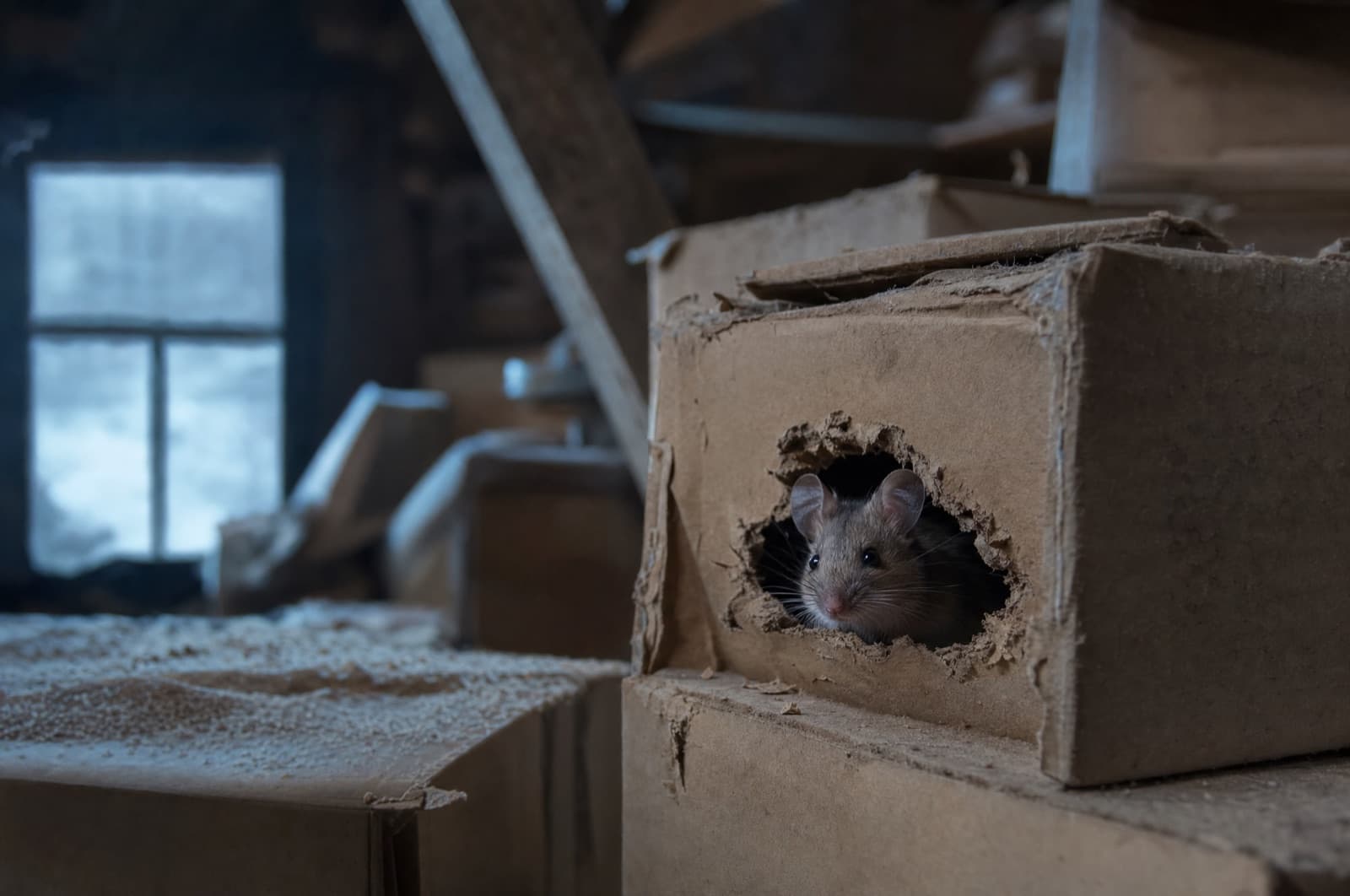
A house mouse in a gnawed cardboard storage box in a cold New Hampshire attic
Daniel Brady · NH-Licensed Pesticide Applicator · License #782664
Reviewed by Daniel Brady

Are rodents more likely to breed indoors during winter?

Yes — indoors, winter's breeding pause doesn't apply
Yes. Outdoors, mice mostly breed in spring and fall and slow down in harsh cold, but indoors that limit disappears. A heated structure with steady food access and no seasonal cold removes the conditions that pause breeding outside, so a mouse population that gets into your house can keep reproducing right through winter — which is a meaningfully different, more specific finding than the general "winter is peak indoor season" pattern, and it's why a couple of fall intruders can turn into a real infestation by January.

At a glance

  • The verdict: Yes — indoors, winter's breeding pause doesn't apply
The honest answer

The short of it

The verdict
Yes — indoors, winter's breeding pause doesn't apply

A heated home with steady food removes the outdoor winter breeding slowdown, so mice can breed straight through a New Hampshire winter.

What actually happens

The busted assumption

Yes

What people assume

"Winter cold naturally slows rodent reproduction, so a mouse or two I noticed in November won't have turned into much by spring." That's true for mice living outdoors, where cold and scarce food do slow breeding. It's false for mice that have gotten inside — a heated structure removes the exact conditions (cold, food scarcity) that cause the outdoor pause.

What actually happens

The Internet Center for Wildlife Damage Management and Purdue Extension both describe the same pattern: "Mice may breed year-round, but when living outdoors they mostly breed in spring and fall. A female may have 5 to 10 litters annually." Outdoors, the wording is precise — mostly spring and fall, not all winter. Gestation runs roughly 19 to 21 days, and young mice mature within a matter of weeks, which means an indoor population that keeps breeding through winter, rather than pausing the way an outdoor one would, can grow considerably before spring.

What it means for you
Don't treat a small indoor rodent presence as something winter will naturally shrink. Act on the first signs — droppings, gnaw marks, a scratching sound in a wall — rather than waiting to see if the problem gets worse, because indoors there's no seasonal mechanism working in your favor the way there would be outdoors. This reinforces why winter rodent exclusion is one of the few things in this hub that genuinely earns a do-it-first grade; the full biology of where mice nest and how they move through a structure belongs to /winter-pests-shift and /mice-and-rats-faq.
In depth

The full picture

01

Why cold usually slows rodent breeding — and why your house is the exception

Outdoors, mouse reproduction really does follow a seasonal rhythm. Extension sources describe outdoor mice as breeding "mostly in spring and fall," with harsh winter cold and thinner food supplies acting as a natural brake on how much breeding happens in the coldest months. That's the pattern most people have in the back of their mind when they assume winter is a quiet season for rodents generally.

The problem is that the brake only works outdoors, where cold and food scarcity are both real constraints. A heated New Hampshire home removes both at once: steady indoor temperature regardless of the weather outside, and — if there's any accessible food source, from pet food to stored grain to crumbs — no seasonal food shortage either. Once a mouse population is established inside a structure, the conditions that pause outdoor breeding simply don't exist anymore.

02

What the numbers actually look like

It's worth being specific rather than vague here, since the mechanism is well documented. A female mouse can have five to ten litters a year under favorable conditions, and gestation takes roughly 19 to 21 days, with young mice reaching sexual maturity within weeks of being born (Internet Center for Wildlife Damage Management; Purdue Extension). Outdoors, that reproductive capacity is throttled by a winter that mice don't get much benefit from. Indoors, in a heated structure with consistent food, there's comparatively little throttling anything at all through the coldest months.

That compounding is the practical reason a small fall population — a couple of mice that got in before the first hard frost — can become a noticeably larger indoor presence within a single winter, without anything unusual happening beyond simply not being addressed.

03

What this means for timing

This finding sharpens, rather than repeats, the hub's broader point that winter is peak indoor rodent season. It isn't just that more rodents move indoors as it gets cold outside — it's that the ones already inside keep reproducing at a rate their outdoor counterparts don't. That combination is why acting on the first signs of rodent activity, rather than waiting to see how the winter plays out, is simply the right call, not an oversell. Exclusion — sealing the gaps rodents use to get in — and trapping any that are already inside are both covered in depth elsewhere in this hub and at /mice-and-rats-faq; the biology of where mice actually nest and travel through a structure is owned by /winter-pests-shift.

Key takeaways
5 points
  • Outdoor mice mostly breed in spring and fall and slow down in harsh winter cold — a real seasonal pattern.
  • Indoors, steady warmth and food access remove that seasonal brake entirely, so breeding can continue through winter.
  • A female mouse can produce 5 to 10 litters a year, with ~19-21 day gestation and young maturing within weeks.
  • A small fall population left unaddressed can grow substantially over a single winter — this is a compounding-population finding, not a scare tactic.
  • Act on first signs of indoor rodent activity rather than waiting; winter offers no natural slowdown once mice are inside.
New Hampshire context

Timing this against a New Hampshire winter

Manchester's first hard frost lands around October 19 to 29 in a typical year (NOAA) — right around when outdoor mouse populations would naturally begin their seasonal slowdown, and exactly when any mice that got indoors before frost stop experiencing that slowdown at all. From that point through spring, an unaddressed indoor population has roughly five uninterrupted months to keep reproducing. That window is the practical argument for sealing entry points and addressing any rodent signs before the frost, rather than after.

  • NH-licensed #782664

    Southern New Hampshire

  • Family-owned

    Since 2017

  • Honest routing

    Even when it isn’t us

We serve these communities

ManchesterNashuaConcordDerryBedfordSalemHudsonAmherst

A small mouse problem in November doesn't stay small.

Winter removes the natural brake on indoor breeding. Sealing is DIY; if a population is already established, exclusion and trapping are the genuine winter job for us.

Follow-up questions

Frequently asked

Sources & citations(3)
  1. Internet Center for Wildlife Damage Management — House Mouse Biology

    Outdoor mice breed mostly spring/fall; 5-10 litters annually; gestation and maturation timeline

    academicverified 2026-07-16
  2. Purdue Extension — The House Mouse

    Year-round breeding capability indoors; nesting behavior and rapid population growth

    extensionverified 2026-07-16
  3. NOAA — Manchester, NH freeze climatology

    Manchester first hard frost typically ~Oct 19-29 — the seasonal anchor for indoor rodent timing

    govverified 2026-07-16

Written & reviewed by

Verified

Daniel Brady

NH-Licensed Pesticide Applicator · License #782664 (NHDAMF, RSA 430)

Daniel Brady is the New Hampshire–licensed applicator behind Anchor Pest Services, a family-owned pest control company serving the Manchester area since 2017.

Verify license

Last updated Jul 2026

Honest pest help for New Hampshire homes

Winter Doesn't Slow Rodents Down Indoors. We Do.

A heated home removes the seasonal breeding pause mice get outdoors — which is exactly why winter is Anchor Pest Services' busiest season for rodent exclusion and trapping. Family-owned since 2017, NH license #782664, serving Manchester, Nashua, Concord and nearby towns.

  • Honest advice — act on first signs, don't wait out the winter
  • NH-licensed applicators (#782664) — free inspection, same-day service
  • Rodent exclusion and trapping across southern and central New Hampshire

NH License #782664 · No obligation · We answer in person