
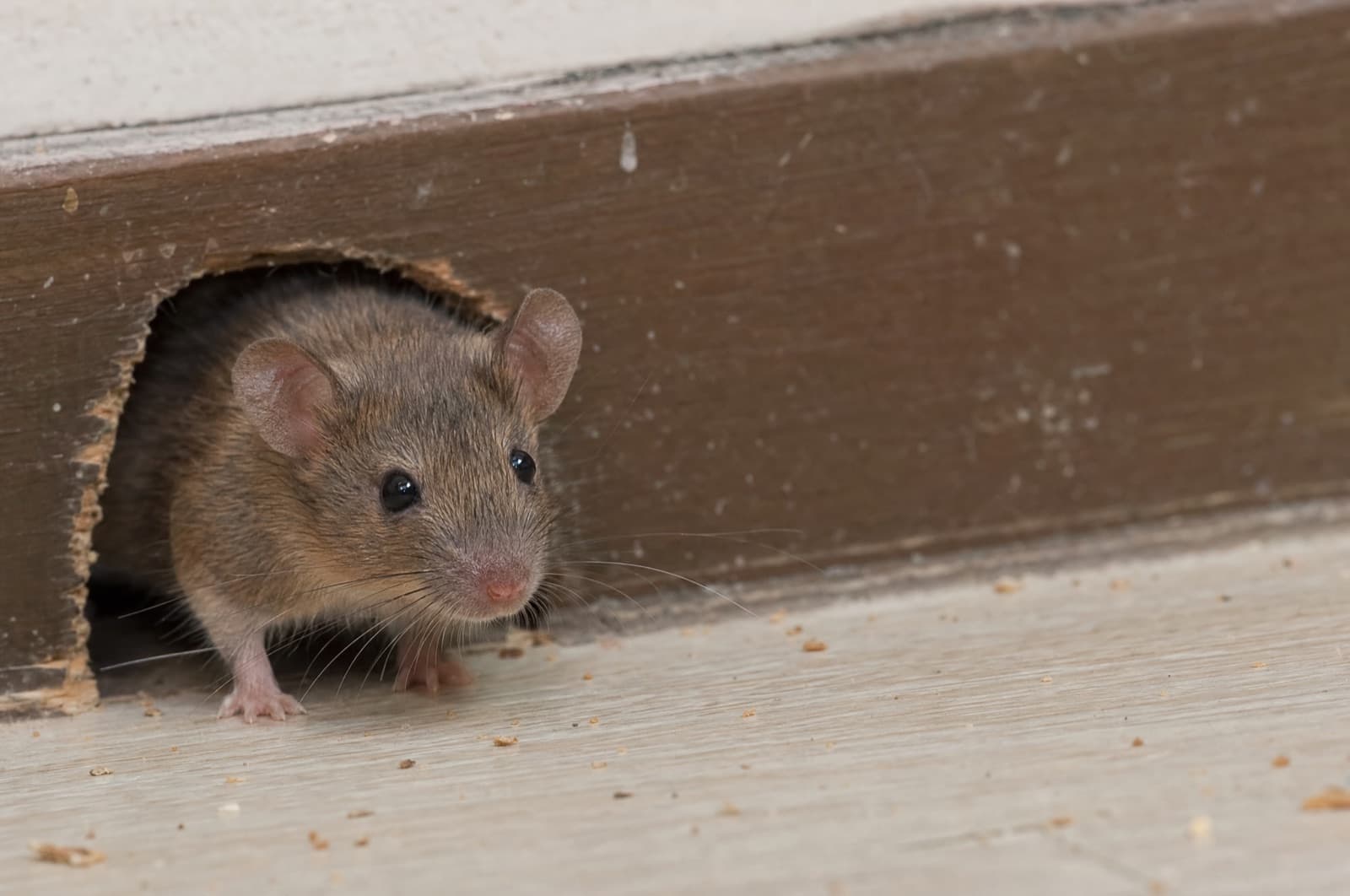
Where Do Mice Go in the Winter? NH Mouse Timing Guide
At a glance
- Activity pattern: Nocturnal/crepuscularPeaks shortly after dark and again before dawn; rests ~12 hrs/day — UNH Extension
- Winter behavior: No hibernationHouse mice breed indoors all winter; deer mice move in seasonally — UNH Extension
- Peak home-entry: Sept–NovFall entry as outdoor food vanishes ahead of first frost (~Oct 19, Manchester — NOAA)
- Entry gap size: ≥¼ inch ("if a pencil fits")Seal to ¼-inch to exclude mice — UNH Extension
Activity pattern
Nocturnal/crepuscular
Peaks shortly after dark and again before dawn; rests ~12 hrs/day — UNH Extension
Winter behavior
No hibernation
House mice breed indoors all winter; deer mice move in seasonally — UNH Extension
Peak home-entry
Sept–Nov
Fall entry as outdoor food vanishes ahead of first frost (~Oct 19, Manchester — NOAA)
Entry gap size
≥¼ inch ("if a pencil fits")
Seal to ¼-inch to exclude mice — UNH Extension
The short of it
Mice don't go anywhere for winter — they move into heated New Hampshire homes in fall and stay active and breeding indoors all season, foraging at night.
When are they active — the whole year at a glance
Mice are active in New Hampshire year-round, but the pattern splits in two: an outdoor population boom in summer and a separate, higher-risk surge of mice moving into homes each fall as temperatures drop toward the first frost.
Best window to act · Seal entry points (any gap ≥¼ inch) before mid-October, ahead of the frost-driven indoor migration.
Peak months = highest risk of mice entering NH homes, anchored to Manchester's first-frost date (Oct 19, 50% probability — NOAA 1991–2020).
What time of day are they active?
Mice have poor eyesight but keen smell and hearing; they travel along walls and edges in dim light, which is why you hear them before you see them.
Mice are nocturnal, so a mouse seen repeatedly in daylight can signal a large population or scarce outdoor food — though house mice are somewhat more flexible than rats. Nighttime scratching, scurrying, and squeaking in walls or ceilings after dark is the classic early sign of activity.
A day in their clock
- Dusk / after dark (first hours after lights-out)peak
- Late nightactive
- Pre-dawn (hours before sunrise)peak
- Daytimelow
Winter behavior
"Where do mice go in the winter?" is the #1 question for this page — the honest answer is that they come to you.
Active all winter
Neither house mice nor deer mice hibernate. House mice stay indoors year-round and breed continuously in heated space, while deer mice migrate in from fields, woodpiles, and sheds into garages, crawlspaces, attics, and wall voids, caching seeds to survive. Nests cluster in wall voids, attics, basements, and stored boxes, usually within about 30 feet of a food source.
Move in
Late September through November, as outdoor food disappears and temperatures fall toward and past the ~Oct 19 Manchester frost.
Active all winter
Neither house mice nor deer mice hibernate. House mice stay indoors year-round and breed continuously in heated space, while deer mice migrate in from fields, woodpiles, and sheds into garages, crawlspaces, attics, and wall voids, caching seeds to survive. Nests cluster in wall voids, attics, basements, and stored boxes, usually within about 30 feet of a food source.
Spring exit
Some deer mice head back outdoors as it warms in spring (March–April); house mice with an established indoor food source typically stay year-round.
A year in the life
Mouse behavior in New Hampshire follows two overlapping cycles — an outdoor summer population boom and an indoor fall-winter surge — but neither species ever truly goes dormant.
- 01
Spring
House mice keep breeding indoors through early spring while deer mice head back outdoors as temperatures rise. This is the best window to seal entry points before outdoor populations expand for summer.
- 02
Summer
Outdoor field and deer-mouse populations peak in June and July. House mice persist indoors year-round, but home-entry pressure is comparatively low, making summer a good time to finish exclusion work before fall.
- 03
Fall
The highest-risk season for homeowners. Falling temperatures and vanishing outdoor food drive the indoor entry surge, peaking around the mid-to-late-October frost. Seal any gap of a ¼ inch or larger now.
- 04
Winter
Mice are concentrated indoors and active every night. Because house mice keep breeding in heated space, a small fall intrusion often becomes a visible infestation by midwinter — the season homeowners most often first notice mice.
Mice in southern New Hampshire
House mice are the dominant indoor mouse in Manchester, Nashua, and Concord, while deer and white-footed mice dominate rural and wooded properties and are the ones that surge indoors each fall. New Hampshire's long, cold winters make heated homes essential to survival, which is why indoor mouse activity peaks exactly when the weather turns.
Key local data
First hard frost in Manchester averages October 19 (50% probability), the tipping point for fall mouse migration indoors — NOAA 1991–2020.
We serve these communities
- NH-licensed applicator · #782664
- Same-day service
- Family-owned since 2017
Service Area Map
Southern New Hampshire
Timing your treatment
Because house mice breed year-round indoors and can squeeze through a gap as small as a quarter inch, the cheapest fix is sealing up before the fall surge — but any active sign warrants prompt action.
Rodent Control
Free inspection and same-day rodent service across southern New Hampshire. NH-licensed #782664.
Learn more about this pestFrequently asked
Sources & references
- CDC — Hantavirus
deer-mouse hantavirus, dried-dropping aerosol risk, safe cleanup
- UNH Cooperative Extension — How Can I Get Rid of the Mice in My House?
mice nocturnal, fall entry, seal ¼-inch gaps, no winter dormancy
- University of California IPM — House Mouse
home range ~30 ft, trap spacing ~10 ft, nocturnal activity, year-round breeding
- CDC — Rodents
nocturnal behavior, daytime-sighting indicates larger population
- NOAA NCEI — Freeze/Frost data (NH 1991–2020)
Manchester first hard frost ~Oct 19
- NOAA/NWS Gray, ME — Experimental Frost/Freeze Program
Merrimack Valley growing-season end Oct 11, corroborates frost window
- PestWorld — Deer Mice
deer mouse identification, seasonal indoor movement, seed caching
Editorial disclaimer: This content is provided for informational purposes only and does not constitute pest control advice. Every property is unique — consult a licensed professional for guidance specific to your situation. Anchor Pest Services is licensed in New Hampshire (#782664).
Written & reviewed by
VerifiedDaniel Brady
NH-Licensed Pesticide Applicator · License #782664 (NHDAMF, RSA 430)
Daniel Brady is the New Hampshire–licensed applicator behind Anchor Pest Services, a family-owned pest control company serving the Manchester area since 2017.
Last updated Jul 2026
Anchor Pest Services
Whatever the season — we handle the timing for you.
Same-day service across Southern New Hampshire. NH-licensed #782664, family-owned since 2017. We track the local calendar so you don't have to guess the right window.
- NH-licensed applicator
- Same-day service
- Pet & family-conscious
NH License #782664 · No obligation · We answer in person
Your next step
- Next step
How to Use the Jawz Plastic Mouse Trap by JT Eaton
Read the answer - What to do next
House Mouse in New Hampshire — ID, Signs & Control
Read the answer - Related guide
When Are Rats Most Active? NH Rat Timing Guide
Read the answer - Related guide
Where Do Squirrels Go in the Winter? NH Timing Guide
Read the answer - Also relevant
House Mouse in New Hampshire — ID, Signs & Control
Read the answer - Also relevant
Deer Mouse in New Hampshire — Hantavirus & Safe Cleanup
Read the answer