
Skip to content
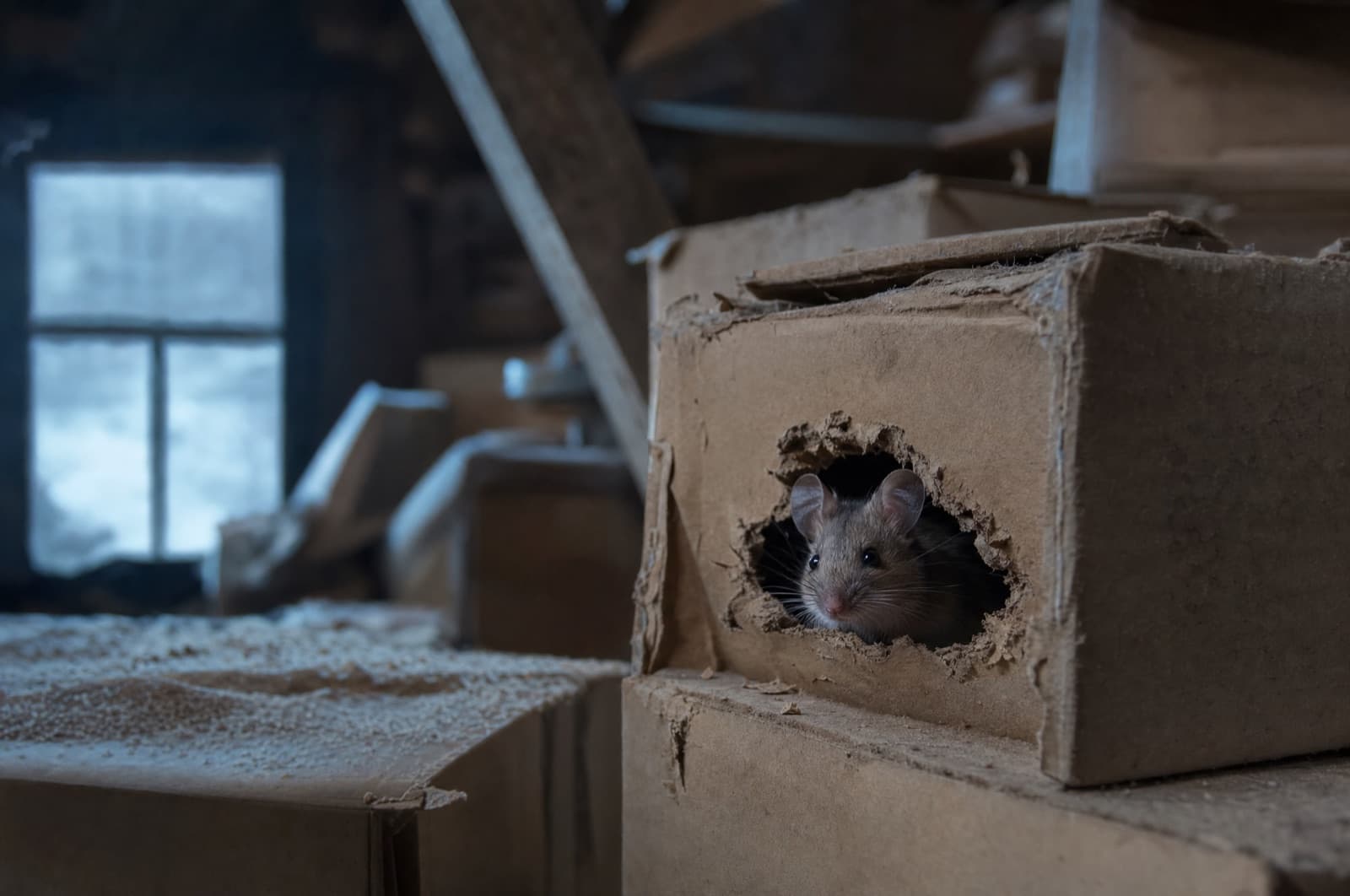
A house mouse in a gnawed cardboard storage box in a cold New Hampshire attic
Daniel Brady · NH-Licensed Pesticide Applicator · License #782664
Reviewed by Daniel Brady

Can rodents chew through plastic or rubber in winter storage?

Do this first — but not the way you think
Yes, and easily. Rodent incisors rate about 5.5 on the Mohs hardness scale — harder than human teeth and harder than iron — and they never stop growing, so gnawing is obligate wear rather than hunger. A plastic tote hands them every edge they need at the rim, the latch tabs and the lid seam. Metal and glass are the only container classes a rodent truly cannot defeat; heavier plastic only buys time. So this is worth doing first, but the fix is the material, not a tougher tub.

At a glance

  • Verdict: Do this first
  • Who does it: You
  • Effort: An afternoon
  • Payoff: High
The honest answer

The short of it

The verdict
Do this first — but not the way you think

Yes, easily. The honest move isn't a better bin — it's a different material, and it's an afternoon's work you can do yourself.

The one question under all of them

Is this actually worth doing?

Every winter job lands somewhere on one honest scale — from what genuinely matters to what our own industry is selling you. Here is where this one lands.

The job being graded
Do this first

Storing winter attractants in metal or glass instead of plastic totes — and denying harborage in the garage or attic

The scale
Who does it
You
Effort
An afternoon
Payoff
High
What it actually does

It removes the two things drawing rodents to stored goods in the first place: chewable access and food scent. Extension guidance is unanimous that glass and metal exclude gnawing rodents while paper, cardboard and thin plastic do not. Nothing about a latch or a gasket changes that — an airtight seal reduces odor escaping, but odor is only half the draw, and a sealed rim is still an edge to start on.

Why it feels productive
The "buy a tougher bin" version of this job feels productive for a good reason. A thick, latching, airtight tub looks and feels like a vault, and stacking everything into matching bins is visibly tidy — you get a real before-and-after. It's satisfying, it's photographable, and it looks exactly like solving the problem. It just isn't one: airtight cuts odor, not gnawing, and every latch tab and rim is an edge.
Do this instead
Spend the same afternoon, and the same money, once: metal cans or bins and glass jars for anything edible, fabric or soft, and leave the truly inert stuff in the ordinary bins you already own. Then take the food out of the unheated garage entirely if you can.
The line

The tote isn't rodent-proof — it's rodent-flavored packaging. If it matters, put it in metal or glass, or don't store it in the garage.

Our honest lane

Anchor honestly helps with the rodent source — exclusion and trapping — not with selling you containers. If a company's winter pitch is a storage-bin upsell, that's our own industry monetizing advice you could execute yourself with a trip to the hardware store. Where we're actually worth calling is if the rodents are already getting into the structure, because winter is the peak season for exactly that.

In depth

The full picture

01

Why a plastic bin was never going to work

The reason isn't that rodents are determined. It's that their teeth are, in a fairly literal sense, tools.

Rodent incisors are rootless and grow continuously, so gnawing is obligate maintenance rather than appetite — an animal that stops wearing them down develops malocclusion and eventually starves. And the material is formidable: incisor enamel rates around 5.5 on the Mohs scale, which puts it above human enamel and above iron, thanks to an iron-rich outer layer.

Against that, a polyethylene tote is not a barrier. It's a slightly inconvenient wall with a handle. The rim, the latch tabs and the lid seam all give exactly what a rodent needs to begin: an edge. Once there's a purchase point, the rest is just time — and in an unheated garage over a New Hampshire winter, time is the one thing they have.

02

The airtight-lid misunderstanding

This is the part worth being precise about, because it's where good intentions go wrong.

An airtight or gasketed lid does something real: it reduces the food odor escaping the container. That matters, because scent is what draws a rodent to a specific box out of forty in a garage. So an airtight bin is meaningfully better than an open cardboard one.

But odor is only half the draw, and the seal does nothing at all about the other half. A rodent that finds the bin anyway — because it's exploring, because something else in the garage smelled interesting, because it lives there now — encounters the same soft plastic and the same edges. "Airtight" is a claim about air. It has never been a claim about teeth, and the packaging that says it is is selling you the wrong idea.

03

What actually holds

The honest list is short and boring, which is why nobody writes an article about it.

Metal and glass. A metal can with a tight lid, or a glass jar, is not a container a rodent can defeat by gnawing. That's the whole answer for anything edible — pet food, birdseed, grass seed, the bag of flour someone put in the garage in October.

Removing the attractant. The cheapest version of this job costs nothing: don't store food in an unheated garage or attic at all. A rodent that finds nothing worth chewing to reach mostly moves on.

Hard-sided containers for the soft stuff. Cushions, fabric, holiday decorations with fabric or paper elements — these are nesting material as much as they are your belongings. Metal or a hard-sided bin beats a soft one, and indoors beats the garage.

What doesn't hold: cardboard, paper, thin or flexible plastic, and "heavy-duty" plastic, which buys time rather than protection. That's not a product problem. It's a materials problem, and no tote is going to solve it.

04

Why this is worth doing first anyway

It would be easy to read all of this as "nothing works," and that's not the finding. This is one of the truly high-payoff jobs on the winter list, and it's one you can do yourself in an afternoon.

The reason is timing. Winter is the peak season for rodents indoors in a northern climate — cold pushes them toward the warmest, best-fed structure available, and an attached garage full of food-scented boxes is an unusually generous version of that. What you store, and what you store it in, is one of the few variables you fully control, and you control it before anything has gone wrong.

So: do it first. Just do the version that works. Metal, glass, or out of the garage — not a better tub.

Key takeaways
6 points
  • Yes — rodent incisors rate ~5.5 Mohs (harder than iron) and never stop growing. Gnawing is obligate wear, not hunger.
  • A plastic tote isn't a barrier; the rim, latch tabs and lid seam are all edges to start on.
  • "Airtight" cuts odor, not gnawing. It's a claim about air, never about teeth.
  • Metal and glass are the only container classes a rodent can't defeat. Heavy plastic only buys time.
  • The cheapest fix is free: don't store food in an unheated garage at all.
  • This is a do-it-yourself afternoon — if a winter pitch is a storage-bin upsell, that's our industry selling you advice you can execute yourself.
New Hampshire context

What this looks like in a New Hampshire garage

Manchester's first hard frost lands around October 19 to 29 in a typical year (NOAA), and that's roughly when the calculation changes for every mouse within range of your house. An attached, unheated garage in a New Hampshire winter is warmer than outside, undisturbed for weeks at a stretch, and — if there's pet food, birdseed or grass seed in a tote — smells like a pantry.

The seasonal pattern is what makes this worth doing in September rather than January. By the time you find chewed bins in February, the animal has been living in the structure for months and the storage question has become a rodent question.

If you're reading this in the middle of winter with a gnawed tote in front of you: move the contents to metal or glass now, and treat the chewed bin as information. Something is living close enough to have found it.

  • NH-licensed #782664

    Southern New Hampshire

  • Family-owned

    Since 2017

  • Honest routing

    Even when it isn’t us

We serve these communities

ManchesterNashuaConcordDerryBedfordSalemHudsonAmherst
The other half of this question

Want the materials answer rather than the storage answer?

This page is about the winter-storage scenario — your bins, decorations and stored food in an unheated New Hampshire garage or attic, and what actually holds. The damage guide answers the other half: what pests can and cannot chew across the whole house, what genuinely isn’t at risk, and what a repair actually involves.

Read the materials answer

Chewed bins mean something is living close by.

The storage fix is yours — metal, glass, or out of the garage. If they're getting into the structure, that part is squarely ours, and winter is peak season for it.

Follow-up questions

Frequently asked

Sources & citations(7)
  1. Nature Lab Animal — rodent incisor growth and malocclusion

    Rodent incisors grow continuously; unworn incisors cause malocclusion — gnawing is obligate wear, not hunger

    academicverified 2026-07-16
  2. McGill University Bioengineering — rodent adaptations to ever-growing teeth

    Rodent incisor enamel hardness (~5.5 Mohs) and the iron-rich outer enamel layer

    academicverified 2026-07-16
  3. University of Nebraska–Lincoln Extension — house mice

    Mice readily gnaw plastic and soft materials; containers and harborage in stored goods

    extensionverified 2026-07-16
  4. CDC — Seal Up! Rodent control and exclusion

    Store food in thick plastic, metal or glass containers with tight lids; deny harborage

    govverified 2026-07-16
  5. University of Minnesota Extension — pantry pests and stored food

    Glass and metal containers exclude pests from stored food; paper and cardboard do not

    extensionverified 2026-07-16
  6. NPIC — Mice

    House mouse behaviour, gnawing and exclusion-first control

    npicverified 2026-07-16
  7. NOAA — Manchester, NH freeze climatology

    Manchester first hard frost typically ~Oct 19-29 — the seasonal anchor for winter storage

    govverified 2026-07-16

Written & reviewed by

Verified

Daniel Brady

NH-Licensed Pesticide Applicator · License #782664 (NHDAMF, RSA 430)

Daniel Brady is the New Hampshire–licensed applicator behind Anchor Pest Services, a family-owned pest control company serving the Manchester area since 2017.

Verify license

Last updated Jul 2026

Honest pest help for New Hampshire homes

We Don't Sell Bins. We Stop the Rodents.

The storage answer is a trip to the hardware store, and we'd rather tell you that than sell you a winter package around it. Where Anchor Pest Services is genuinely worth calling is the source — exclusion and removal — and winter is the peak season for rodents getting into New Hampshire homes. Family-owned since 2017, NH license #782664, serving Manchester, Nashua, Concord and nearby towns.

  • Honest advice — we'll tell you when a hardware-store fix beats a service call
  • NH-licensed applicators (#782664) — free inspection, same-day service
  • Rodent exclusion and winter pest control across southern and central New Hampshire

NH License #782664 · No obligation · We answer in person