
Skip to content
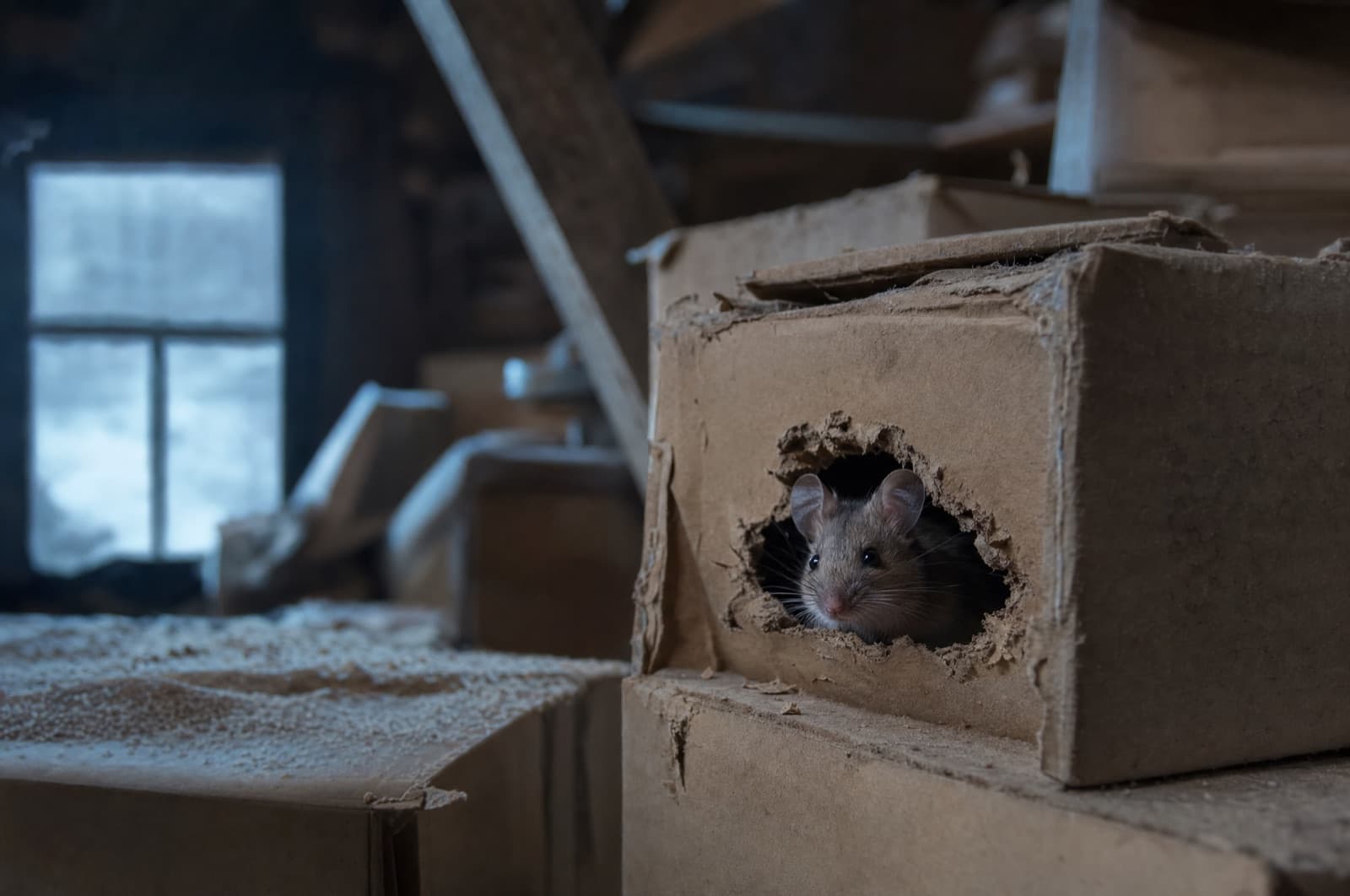
A house mouse in a gnawed cardboard storage box in a cold New Hampshire attic
Daniel Brady · NH-Licensed Pesticide Applicator · License #782664
Reviewed by Daniel Brady

Do stink bugs enter homes before winter?

Yes — and every one indoors walked in through a fall gap
Yes. The brown marmorated stink bug, an invasive species now established across the northeastern United States, aggregates on sunny exterior walls in fall and works its way inside through cracks and gaps to overwinter in a dormant state called diapause. Every stink bug found indoors during winter entered through a fall opening — they don't breed or reproduce inside, they don't bite, and they don't damage the structure. This page confirms the winter-relevant fact; the fall entry timing and sealing window belong to our fall-invaders guide.

At a glance

  • The verdict: Yes — and every one indoors walked in through a fall gap
The honest answer

The short of it

The verdict
Yes — and every one indoors walked in through a fall gap

Yes. Brown marmorated stink bugs enter in fall specifically to overwinter, then sit dormant through the cold months without feeding, breeding, or damaging anything indoors.

What actually happens

The busted assumption

Yes

What people assume

"They came inside for the heat and are going to multiply all winter." Neither part holds up. They aren't drawn in by warmth-seeking behavior in the way that assumption implies, and once inside they shelter passively through diapause rather than reproducing — they leave again in spring, having done nothing but sit dormant and occasionally wander indoors on a mild day.

What actually happens

Extension research describes brown marmorated stink bug entry directly: they enter buildings in fall when seeking sheltered locations, and "they are not seeking warmth, and they cannot predict colder temperatures" — the behavior is triggered by seasonal cues, not a deliberate search for indoor heat. Entry typically happens in late September through October, through gaps around windows, siding, soffits, and chimneys. Mechanical exclusion — sealing those gaps — rather than insecticide is the extension-recommended response, because once inside, the bugs settle into diapause and simply wait out the winter in wall voids and other undisturbed cavities, occasionally becoming active on warm days.

What it means for you
For a stink bug found indoors in winter, vacuum it rather than squashing it — squashing releases their characteristic defensive odor, which vacuuming largely avoids. There's no treatment that addresses stink bugs already sheltering out of sight in a wall void; the winter verdict is simply removal of the ones you encounter. The actual exclusion work that prevents this cycle belongs to the fall entry window and is covered in the depth it deserves in our fall-invaders guide.

Established from: Iowa State University Extension; University of Maryland Extension

In depth

The full picture

01

Why stink bugs enter homes in fall, briefly

The brown marmorated stink bug (Halyomorpha halys) is an invasive species that has become well established across much of the northeastern United States, including New Hampshire, and its fall behavior is genuinely well studied. As fall arrives, adults seek out sheltered locations to spend the winter, and buildings — with their gaps around windows, siding, soffits, and chimneys — offer exactly the kind of protected cavity they're oriented to find. Extension research is specific that this isn't a search for indoor warmth; it's a general shelter-seeking response to seasonal cues, and a home simply happens to provide that shelter.

Entry typically occurs from late September through October in the northern range that includes New Hampshire, which places it squarely within this hub's fall-invasion window. The detailed mechanics of that timing and the sealing calendar around it are owned by our fall-invaders guide; this page's job is confirming what happens for the rest of the winter once entry has already occurred.

02

What actually happens once they're inside for winter

Once a stink bug has made it into a wall void, attic space, or other undisturbed cavity, it settles into diapause — a dormant state, not sleep or hibernation in the mammalian sense, but a genuine physiological pause. It doesn't feed, doesn't reproduce, and doesn't grow during this period. What you occasionally see indoors during winter are individuals that have been roused from that dormancy, usually by warmth from sunlight on an exterior wall or heat escaping around a light fixture, wandering into living space rather than staying in the void.

This means the population you're seeing in January isn't a growing infestation — it's the same fall arrivals becoming intermittently visible, the same pattern seen with cluster flies and Asian lady beetles elsewhere in this hub. None of these overwintering insects reproduce indoors during winter; they're all waiting, not multiplying.

03

What to actually do about a stink bug found indoors

The practical winter response is straightforward: vacuum stink bugs you find rather than squashing them. Squashing releases their well-known defensive odor, which can linger and is unpleasant enough that it's worth the small extra effort of vacuuming instead, ideally into a bag or canister that can be emptied outside promptly.

Beyond removal of the individuals you encounter, there's realistically nothing more to do for a stink bug population that's already sheltering in a wall void for the winter — no treatment reaches them there without more disruption than it's worth, and none is necessary since they aren't reproducing or causing damage. The higher-value work is sealing the gaps that let them in during the next fall's entry window, which is exclusion timing this hub's sealing cluster covers, and which our fall-invaders guide covers in full phase-by-phase depth.

Key takeaways
5 points
  • Yes — brown marmorated stink bugs enter homes in fall specifically to overwinter, typically late September through October.
  • They are not seeking indoor warmth specifically; entry is a general shelter-seeking response to seasonal cues.
  • Once inside, they enter diapause: no feeding, no breeding, no growth until spring.
  • Winter sightings are the same fall population becoming intermittently visible, not a growing infestation.
  • Vacuum, don't squash — squashing releases their defensive odor. Sealing before next fall is the real prevention.
New Hampshire context

What this means for a Manchester-area home

Manchester's first hard frost typically arrives October 19 to 29 (NOAA), which sits at the tail end of the late-September-to-October window when brown marmorated stink bugs are actively seeking overwintering shelter across the northeastern range. A home with unsealed gaps around windows, siding, or soffits during that stretch is a plausible entry point regardless of how warm or cold the house itself is inside.

Once winter has set in and stink bugs are already sheltering indoors, the local remedy is the same as anywhere else: vacuum what you find, and use the coming months to plan an exterior gap-sealing pass before next fall's entry window opens again. There's no mid-winter fix that reaches bugs already established in a wall void.

  • NH-licensed #782664

    Southern New Hampshire

  • Family-owned

    Since 2017

  • Honest routing

    Even when it isn’t us

We serve these communities

ManchesterNashuaConcordDerryBedfordSalemHudsonAmherst

A stink bug indoors in winter is a fall gap, found late.

Vacuuming the ones you see is yours to do. Sealing before next fall's entry window is where we actually help.

Follow-up questions

Frequently asked

Sources & citations(2)
  1. Iowa State University Extension — Brown Marmorated Stink Bug

    Fall entry to seek shelter, not warmth-seeking; entry timing late September to October

    extensionverified 2026-07-16
  2. University of Maryland Extension — Tips for Dealing with Brown Marmorated Stink Bugs

    Mechanical exclusion preferred over insecticide; vacuum rather than crush

    extensionverified 2026-07-16

Written & reviewed by

Verified

Daniel Brady

NH-Licensed Pesticide Applicator · License #782664 (NHDAMF, RSA 430)

Daniel Brady is the New Hampshire–licensed applicator behind Anchor Pest Services, a family-owned pest control company serving the Manchester area since 2017.

Verify license

Last updated Jul 2026

Honest pest help for New Hampshire homes

There's Nothing to Treat in a Dormant Wall Void. So We Won't Sell You That.

Stink bugs sheltering in your walls this winter aren't breeding and aren't reachable by any treatment worth doing. Where we help is sealing the exterior gaps before next fall's entry window opens again. Family-owned since 2017, NH license #782664, serving Manchester, Nashua, Concord and nearby towns.

  • Honest advice — no treatment reaches a dormant wall void, and none is needed
  • NH-licensed applicators (#782664) — free inspection, same-day service
  • Exterior gap sealing across southern and central New Hampshire

NH License #782664 · No obligation · We answer in person