
Skip to content
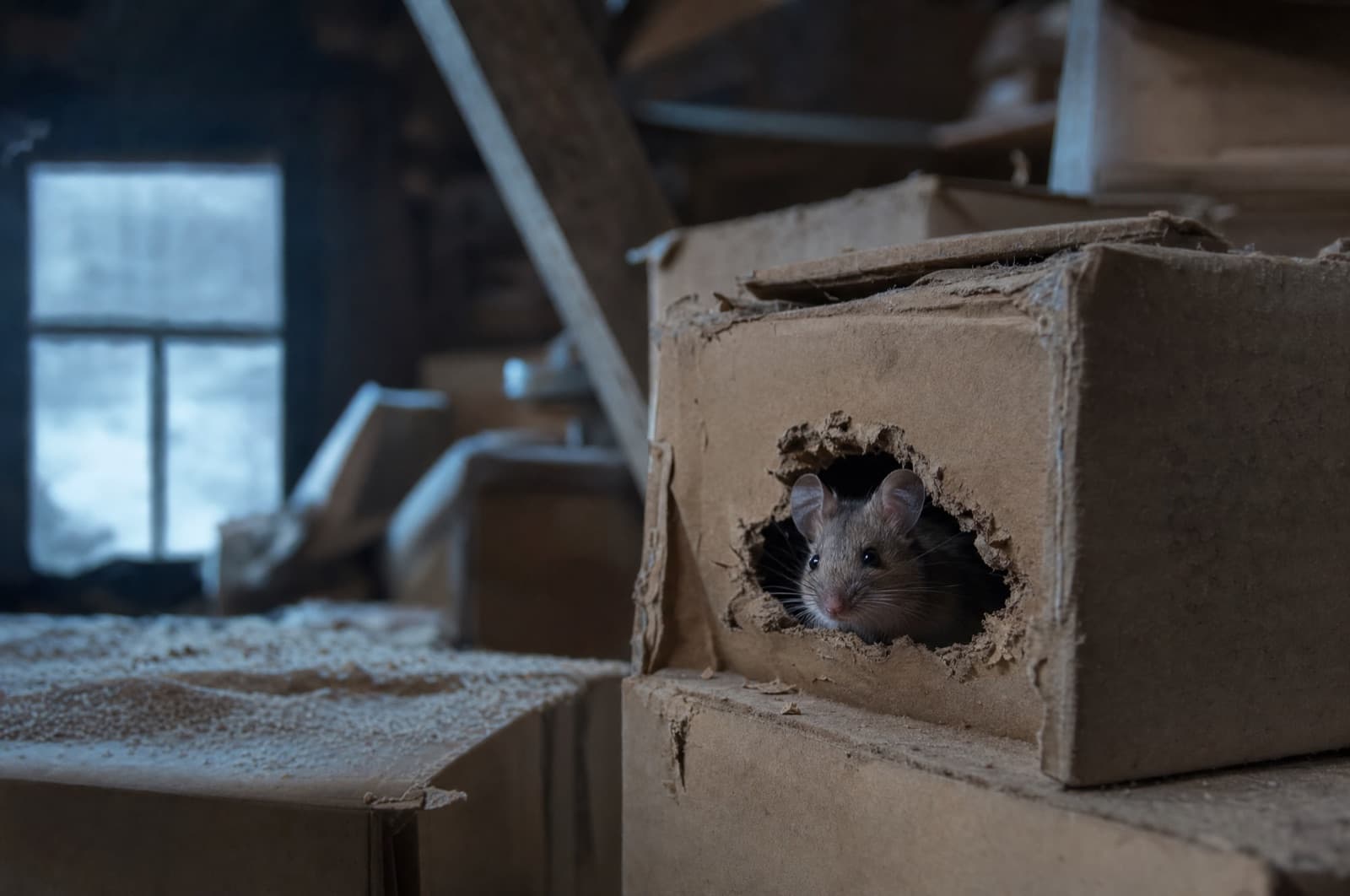
A house mouse in a gnawed cardboard storage box in a cold New Hampshire attic
Daniel Brady · NH-Licensed Pesticide Applicator · License #782664
Reviewed by Daniel Brady

How can I keep pests out of holiday decorations and storage boxes?

Worth doing
Worth doing. Cardboard holiday storage boxes are close to ideal rodent nesting material and, if anything organic is packed alongside the ornaments, pantry-insect habitat too. The fix is cheap and physical: move decorations into hard-sided bins with tight-fitting lids, keep them off the floor, and don't store food-based decorations — popcorn garlands, dried orange slices, pinecone ornaments with exposed seed heads, gingerbread — with the rest for months at a time. This is an afternoon of your own time, not a service call.

At a glance

  • Verdict: Worth doing
  • Who does it: You
  • Effort: An afternoon
  • Payoff: Moderate
The honest answer

The short of it

The verdict
Worth doing

The ornaments were never the target. The cardboard box they've sat in for eleven months is — swap it for a hard-sided bin and this is mostly solved.

The one question under all of them

Is this actually worth doing?

Every winter job lands somewhere on one honest scale — from what genuinely matters to what our own industry is selling you. Here is where this one lands.

The job being graded
Worth doing

Moving holiday decorations from cardboard into hard-sided, sealed bins, off the floor, and separating anything food-based from long-term storage

The scale
Who does it
You
Effort
An afternoon
Payoff
Moderate
What it actually does

It removes the nesting substrate and the food source at the same time. NPIC names cardboard specifically as material to remove for rodent control because it shreds easily into nest bedding, and stored-product insects live and breed inside the dry, organic goods packed near it — the same pantry-pest biology that governs stored food generally.

What's being sold

A seasonally branded 'holiday' or 'winter' pest package, timed to when people are digging decorations out of the attic.

Why it doesn't hold up

There is no holiday-specific pest science and no seasonal pest-control certification — NH pesticide licensing is state-issued and category-based year-round (RSA 430, category F1). The actual work behind a 'holiday special' is the same exclusion and monitoring sold every other month.

Ask instead — word for word, on the phone

What's your NH applicator license number and category, and what specifically is different about this holiday service versus your regular plan?

The line

The ornaments are fine. The cardboard box they've lived in for eleven months is the problem.

Our honest lane

This is entirely DIY — a bin swap and an afternoon, nothing here needs a pest professional. Where we implicate our own industry: a calendar-branded 'holiday pest special' sold around this time of year is usually the same exclusion and trapping work sold at any other time, just wrapped in seasonal marketing. Anchor's honest lane is the structure itself, if rodents are already getting in — not selling you storage advice you can execute with a trip to the hardware store.

In depth

The full picture

01

The box is the risk, not the box's contents

Holiday decorations spend roughly eleven months a year sitting undisturbed in a garage or attic, which is exactly the profile rodents look for: dark, quiet, and untouched for long stretches. A plain cardboard box shreds easily and readily becomes bedding, which is why extension guidance on rodent control names cardboard specifically as material to physically remove, not just seal (NPIC).

Swap the box, not the decorations. A hard-sided bin with a tight lid removes the nesting material in one move, and it's the same fix the flagship storage question on this hub already establishes for anything you want protected over a New Hampshire winter: metal and glass are the only container classes a gnawing rodent can't defeat, and heavy plastic buys time rather than certainty. For decorations specifically — mostly inert plastic, glass ornaments, string lights — a good hard-sided plastic tote with a tight lid is a reasonable trade-off; for anything genuinely valuable or food-adjacent, go harder.

02

The part people miss: food-based decorations

Popcorn garlands, dried citrus slices, pinecone ornaments rolled in seed and peanut butter, gingerbread — these aren't decorations to a mouse or a pantry moth, they're food, and storing them boxed up with everything else for a winter is functionally the same as storing birdseed in a garage. The pantry-pest biology is identical: stored-product insects live, eat, and grow inside dry organic goods, and infestations often start before the item is even packed away (University of Minnesota Extension; NC State Extension).

The fix costs nothing: don't put food-based decorations into long-term storage at all. Compost them or throw them out at the end of the season instead.

03

Off the floor, and don't stack against the wall

Rodents travel along walls and floor edges, not open floor space — it's the same logic behind why boxes stacked directly on a garage floor, against the wall, are found chewed more often than boxes on a shelf. Elevating storage a few inches with a simple shelf unit, and leaving a gap between boxes and the wall, denies the quiet travel route as much as it denies the box itself.

Key takeaways
5 points
  • The ornaments aren't the draw — the cardboard box is nesting material, and that's what NPIC flags for removal.
  • Swap cardboard for hard-sided bins with tight lids; this is the same container logic as the flagship storage page.
  • Don't put food-based decorations (popcorn garlands, dried fruit, seeded pinecones) into long-term storage at all.
  • Elevate storage off the floor and away from the wall — rodents travel edges, not open floor.
  • This is a DIY afternoon. A 'holiday pest special' timed to this task is usually the same year-round exclusion work, rebranded.
New Hampshire context

Why this matters specifically in a New Hampshire attic or garage

Manchester's first hard frost typically lands October 19–29 (NOAA), which is right around when most households are packing decorations away for the year — and right around when outdoor rodents are actively looking for exactly the kind of warm, undisturbed harborage an attic or garage provides. A cardboard box of decorations put into storage in October sits through the entire five-month pressure window before it comes back out in late November or December.

If you're unpacking decorations this winter and find chew marks or nesting material in the box, treat it as information: something has been living close enough to the box to work on it for weeks. Move the contents to a hard-sided container going forward, and consider whether that's a sign to check the garage or attic for a broader entry point.

  • NH-licensed #782664

    Southern New Hampshire

  • Family-owned

    Since 2017

  • Honest routing

    Even when it isn’t us

We serve these communities

ManchesterNashuaConcordDerryBedfordSalemHudsonAmherst
The other half of this question

Want the materials answer rather than the storage answer?

This page is about the winter-storage scenario — your bins, decorations and stored food in an unheated New Hampshire garage or attic, and what actually holds. The damage guide answers the other half: what pests can and cannot chew across the whole house, what genuinely isn’t at risk, and what a repair actually involves.

Read the materials answer

Swapping the box is yours. If something's already living nearby, that's ours.

A hard-sided bin fixes the decorations. If you're finding chewed boxes or droppings in the garage, that's a structural exclusion question — and winter is peak season for it.

Follow-up questions

Frequently asked

Sources & citations(4)
  1. NPIC — Mice

    Cardboard named specifically as nesting material to remove for rodent control

    npicverified 2026-07-16
  2. University of Minnesota Extension — Pantry pests: Insects found in stored food

    Stored-product insects live and breed inside dry organic goods; glass/metal/heavy-plastic storage

    extensionverified 2026-07-16
  3. NC State Extension — Common Pantry Pests and their Management

    Pantry-pest infestations frequently begin before an item is packed into storage

    extensionverified 2026-07-16
  4. NOAA — Manchester, NH freeze climatology

    Manchester first hard frost typically ~Oct 19-29 — seasonal anchor for winter storage

    govverified 2026-07-16

Written & reviewed by

Verified

Daniel Brady

NH-Licensed Pesticide Applicator · License #782664 (NHDAMF, RSA 430)

Daniel Brady is the New Hampshire–licensed applicator behind Anchor Pest Services, a family-owned pest control company serving the Manchester area since 2017.

Verify license

Last updated Jul 2026

Honest pest help for New Hampshire homes

We Won't Sell You a Holiday Package for a Bin Problem.

The decoration fix is a trip to the hardware store, and we'd rather say so than wrap it in seasonal branding. Anchor Pest Services is worth calling when rodents are actually getting into the structure — family-owned since 2017, NH license #782664, serving Manchester, Nashua, Concord and nearby towns.

  • Honest advice — we'll tell you when a hardware-store fix beats a service call
  • NH-licensed applicators (#782664) — free inspection, same-day service
  • Rodent exclusion and winter pest control across southern and central New Hampshire

NH License #782664 · No obligation · We answer in person