
Skip to content
beetles — where they go in a New Hampshire winter
Winter: ON
Daniel Brady · NH-Licensed Pesticide Applicator · License #782664
Reviewed by Daniel Brady

Where Do Beetles Go In The Winter?

Winter moves the dominant home-invader beetle indoors
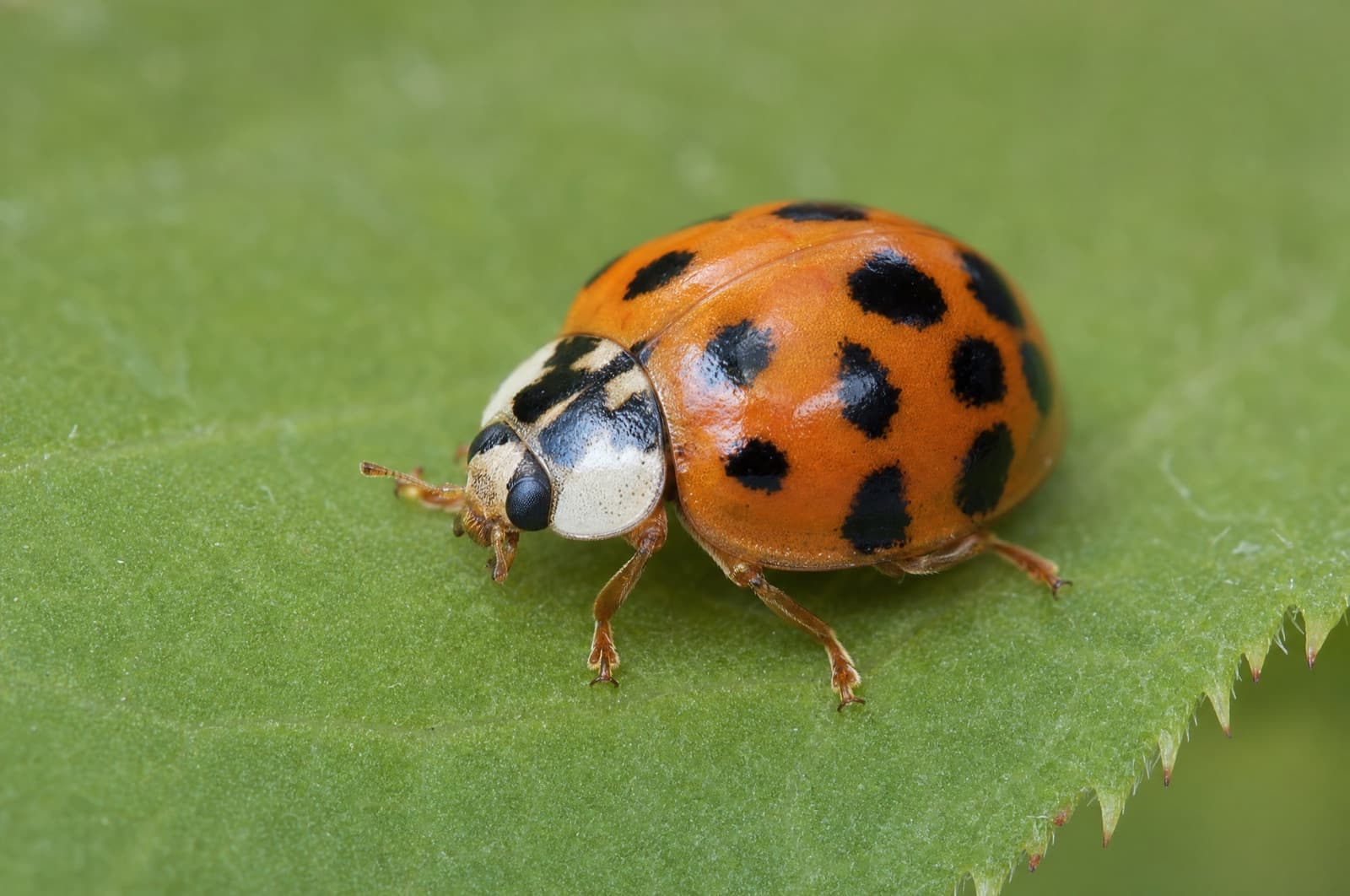
It depends which beetle. The multicolored Asian lady beetle — the orange, black-spotted "ladybug" most homeowners actually mean when they ask this question in winter — aggregated on your sun-warmed walls last fall and moved into the wall voids and attic, where it sits in a fat-fueled dormancy and re-emerges on warm days; winter moved it into your house. Carpet and pantry beetles are a separate, unchanged problem: they breed year-round in the heated home on wool, lint, and stored dry goods, indifferent to season. Outdoor soil- and bark-dwelling beetles are the one group winter genuinely suppresses, locked below the frost line or under bark using cold-hardiness chemistry until spring.

At a glance

  • Winter’s effect: Winter moves the dominant home-invader beetle indoors
  • Where they go: Your walls and attic
  • How far: Inside your house
The honest answer

The short of it

The verdict
Winter moves the dominant home-invader beetle indoors

The orange "ladybugs" clustering at your upstairs window in January flew into your walls last October — they're not breeding in there, they're just waiting you out.

The one question nobody else answers

Does winter actually help you?

Every reader assumes the answer is yes — that winter is a break. For the pests that matter most in a New Hampshire home, it is the opposite. Here is where this one lands.

The winter switch
Winter moves the dominant home-invader beetle indoors

The orange "ladybugs" clustering at your upstairs window in January flew into your walls last October — they're not breeding in there, they're just waiting you out.

Does winter help you?

For Beetles, the winter switch is ONwinter makes it worse.

Most people assume

That beetles die off or hibernate in the ground somewhere outside and are simply gone until warm weather returns.

What actually happens

That's true for outdoor soil- and bark-dwelling beetles, but it is not the beetle most homeowners are actually finding in January. The multicolored Asian lady beetle (Harmonia axyridis) aggregates on sun-warmed south- and west-facing walls in fall and works its way into wall voids and attics, where it overwinters in genuine numbers. Per University of Minnesota Extension, "once lady beetles move into wall voids in the fall, there is no way to prevent them from emerging later in winter or spring," and "spraying pesticides indoors is not effective." Separately, carpet beetles (Anthrenus, Attagenus) and stored-product beetles are already established indoors and breed on wool, lint, dead insects and dry goods all year — no season touches them at all. Neither of these two indoor populations is what most people picture when they imagine a beetle riding out winter in the woods.

Not one animal — not one answer
  • ON

    Multicolored Asian lady beetle (Harmonia axyridis)

    In your wall voids and attic right now, dormant since fall. Per MSU Extension, accumulated dead-beetle dust "may trigger allergies or asthma," and crushed beetles stain. Vacuum, don't crush; seal next fall.

  • UNCHANGED

    Carpet beetles (Anthrenus, Attagenus)

    Breed year-round in heated homes; larvae damage wool, fur, feathers and stored items (UC IPM; Colorado State Extension). A sanitation and inspection problem, not a seasonal one.

  • UNCHANGED

    Stored-product beetles (e.g., Tribolium, Lasioderma, Stegobium, Trogoderma)

    Breed in pantry dry goods year-round. Check flour, grains and pet food regardless of month.

  • PARTIAL

    Outdoor soil & bark beetles (e.g., Japanese-beetle grubs, freeze-tolerant species)

    Grubs move below the frost line; some species use antifreeze proteins to survive extreme cold in bark and litter. Genuinely gone from view until spring.

The line

The 'ladybugs' clustering at your upstairs window in January flew into your walls last October — they're not breeding, they're just waiting you out.

So — does winter help you?
No, for the Asian lady beetle — your heated house is the overwintering site itself. No, for carpet and pantry beetles — a heated home runs their life cycle all year. Yes, for genuinely outdoor beetles, which are locked away in soil or bark until spring.
What to do in January
For Asian lady beetles: vacuum what emerges at windows (don't crush them — they reflex-bleed a staining fluid); do not spray inside the wall void. Exclusion sealing is a late-summer job, and this is the honest bridge to `/fall-invaders-faq` for the phase-by-phase timing. For carpet and pantry beetles: inspect and clean woolens, furs and dry goods, and vacuum thoroughly — winter changes nothing about this problem, so there's no reason to wait. For outdoor beetles: nothing.
The literal question

Where they actually go

Your walls and attic

the south- and west-facing wall voids, attic, and soffits of your house

How far from you
  1. Inside your house
  2. On your structure
  3. In your yard
  4. Nearby outdoors
  5. Gone

They are inside your house.

What the place actually is

Multicolored Asian lady beetles seek out sun-warmed exterior walls on mild fall afternoons, following the same aggregation cue their native rock-crevice habitat would provide, then work through gaps around siding, trim, and soffits into the void behind. Ohio State's Ohioline describes them finding "sheltered locations where they will remain cool," so metabolism slows and stored fat reserves aren't burned too quickly through the winter.

Can you see them?
Rarely, and only in small numbers. Most of the aggregation stays deep in the void all winter; what you see at a window on a mild day is a handful that woke and moved toward light, not the size of the population behind the wall.
Where the myths die

How they actually survive it

The survival mechanism

Diapause — not sleep

Fat-fueled overwintering dormancy — not hibernation, and not feeding or reproducing

Is it hibernation? No — diapause
"Hibernate" overstates and misdescribes all three groups. Asian lady beetles overwinter in a fat-fueled dormancy/diapause, not a mammal-style metabolic shutdown — and importantly, they are not breeding in your wall the way the myth implies. Carpet and pantry beetles aren't dormant at all. Outdoor beetles rely on cold-hardiness biochemistry — supercooling, antifreeze proteins, and in some cases literal vitrification — which is a wholly different physiological category from hibernation.
How it works

Per Ohio State's Ohioline, lady beetles find sheltered, cool locations where "cool temperatures slow their metabolism so they will not 'burn up' their stored fat reserves," and they do not feed or reproduce while overwintering. Carpet and pantry beetles have no comparable mechanism to trigger, because a heated home never signals winter to them at all — they simply keep developing. Genuinely outdoor beetles use freeze avoidance or freeze tolerance: Duman's research on Dendroides canadensis documents survival to about −28°C using glycerol, sorbitol, and thermal-hysteresis (antifreeze) proteins, and larvae of Cucujus clavipes in Alaska have been shown to vitrify and survive toward −100°C.

Established from: Ohio State Ohioline (Multicolored Asian Lady Beetle, ENT-44); University of Minnesota Extension; Duman, J. Comp. Physiol. B (Dendroides canadensis); Journal of Experimental Biology (Cucujus clavipes)

The winter myth

What everyone gets wrong

The myth

"Beetles die or hibernate outside somewhere and are gone until spring."

Why people believe it

Reasonable, because most outdoor beetles genuinely do disappear from view — they're in soil or under bark, exactly where you'd expect a dormant insect to be. The trouble is generalizing that to the orange beetle clustering at your window, which is doing something entirely different.

The correction

The Asian lady beetle didn't stay outside — it overwintered inside your wall void, and University of Minnesota Extension is explicit that once that's happened "there is no way to prevent them from emerging later in winter or spring." Carpet and pantry beetles never left at all; they breed indoors continuously, all year.

Why it matters
Believing lady beetles are "outside hibernating" leads people to spray the interior wall void where the cluster actually is — a treatment University of Minnesota Extension calls ineffective — while a live carpet-beetle infestation eating wool or pantry goods gets ignored because "it's winter, bugs are dormant."
Actually — this one holds
Yes, for genuinely outdoor soil- and bark-dwelling beetles — those really are locked away until spring. It's false for the two populations a homeowner is most likely to actually encounter indoors.

Corrected from: University of Minnesota Extension (Multicolored Asian Lady Beetles); Ohio State Ohioline (ENT-44); UC IPM (Carpet Beetles)

What you would actually see

The signs in January

What you would actually see
5
  • Orange-to-red beetles with black spots and a pale "M" or "W" mark on the pronotum, clustering at sunny upstairs windows on mild winter days — Asian lady beetles waking from the void
  • A faint, musty odor and dust accumulation in an attic or upper wall from a heavy lady-beetle aggregation
  • Small beetles or shed larval skins near closets, rugs, or stored woolens — carpet beetle activity
  • Small beetles inside flour, cereal, pet food, or spice containers — stored-product beetles
  • Nothing visible outdoors at all — genuinely dormant soil and bark beetles
What it means
Beetles at a sunny window in winter mean a wall-void aggregation from last fall, not a new infestation. Beetles near fabric or dry goods mean an active indoor breeder that doesn't pause for winter.
Easily confused with
Native lady beetle species can be mistaken for the Asian lady beetle; the pronotal "M"/"W" marking and more oval body shape help distinguish Harmonia axyridis. Carpet beetle larvae are sometimes mistaken for bed bug evidence — check for the characteristic bristly larval "skins" rather than blood spotting.
What to do about it

The honest winter action

What genuinely works right now, and — at equal weight — what does not. This is where we decline the work there is no honest reason to do in January.

The honest verdict
Do nothing
What works now

For Asian lady beetles: vacuum what emerges at windows and dispose of the bag outside; that's genuinely the right tool for this phase. For carpet and pantry beetles: inspect closets and pantry shelves, launder or freeze infested woolens, discard infested dry goods, and vacuum thoroughly — this works in any month. For outdoor beetles: nothing is needed.

What does not work now

Spraying inside a wall void for overwintering lady beetles — University of Minnesota Extension is explicit that once beetles are in the void, indoor spraying is not effective, and it does nothing to stop next fall's aggregation. Waiting for winter to end a carpet-beetle or pantry-beetle infestation — it won't, because the heated home never gave it a reason to stop.

Do not
  • Don't spray a wall void for Asian lady beetles in January — it doesn't reach them and won't stop the pattern
  • Don't crush the beetles that do emerge — they reflex-bleed a fluid that can stain surfaces
  • Don't assume a carpet-beetle sighting in winter is a fluke that will resolve on its own
Our honest lane

Anchor honestly cannot fix an Asian lady beetle aggregation inside a wall void in January, and neither can anyone else with an interior treatment — that work is exterior sealing done in late summer, before they cluster on the walls. If you're dealing with lady beetles, boxelder bugs, or other fall invaders on your walls right now, the phase-by-phase what-to-do decision lives on `/fall-invaders-faq`, not here. Where we're genuinely useful on this animal is the late-summer exclusion timing, plus real, any-season sanitation help for a carpet- or pantry-beetle problem.

In depth

The full picture

01

"Beetles" is really three stories wearing one name

The honest answer to where beetles go in winter depends entirely on which beetle prompted the question. If it's the orange, spotted insect clustering at a sunny window, the answer is: it's already inside your house, and has been since fall. If it's a small beetle near a wool sweater or a bag of flour, the answer is: it never left, because it lives there year-round. If it's a beetle you haven't seen at all, the classic assumption is correct — it's genuinely dormant outdoors.

A single flat answer flattens three very different situations into one, which is exactly the kind of vague "they hibernate" response that leaves a searcher no better informed than before.

02

The Asian lady beetle: winter moved it indoors, and it's not coming out to breed

The multicolored Asian lady beetle is the beetle most homeowners are actually asking about in a New Hampshire winter, and its story is the one the popular assumption gets most wrong. In fall, it aggregates in large numbers on sun-warmed south- and west-facing walls, then works through gaps around siding, trim and soffits into the void behind — sometimes in the thousands, per multiple land-grant extension sources describing the same behavior seen with cluster flies.

Once inside, per Ohio State's Ohioline, it finds a sheltered, cool spot where reduced metabolism conserves its stored fat through winter. It is not feeding, not breeding, and not multiplying in your wall — it's simply waiting, and on a mild day a portion of the aggregation wakes and heads toward a lit window, which is the only part of this process a homeowner ever actually sees.

03

Carpet and pantry beetles: the ones that never had a winter to begin with

A second group of beetles shares none of the lady beetle's outdoor-to-indoor migration story, because they were never outdoors in the first place. Carpet beetles (Anthrenus and Attagenus species) breed continuously in heated homes, with larvae feeding on wool, fur, feathers, lint, and other keratin-based material tucked in closets and under rugs (UC IPM; Colorado State Extension). Stored-product beetles do the same in pantry dry goods.

Neither group cares what the calendar says. A wool rug edge or a bag of birdseed in a pantry is exactly as vulnerable in January as in July, which makes this the one beetle story on this page where checking now genuinely prevents damage rather than just confirming what already happened.

04

Outdoor beetles: the honest exception where the popular answer is right

Not every beetle on this page contradicts the common assumption. Beetles that actually live outdoors — soil-dwelling grubs, bark-associated species — genuinely do disappear for the winter, using real cold-hardiness biochemistry rather than anything resembling sleep. Research on Dendroides canadensis documents survival to roughly −28°C using glycerol, sorbitol, and antifreeze-like proteins, and larvae of Cucujus clavipes in Alaska have been measured surviving toward −100°C through deep supercooling and vitrification.

This is a legitimately reassuring answer, and it's worth stating plainly: for these species, winter really does end the problem until spring, no exclusion or sanitation needed.

Key takeaways
5 points
  • Three different beetle stories share this question: an overwintering wall-void invader, two year-round indoor breeders, and genuinely dormant outdoor species.
  • The Asian lady beetle at your window is inside your wall void right now, not breeding — a sealing job, not a spray job.
  • Carpet and pantry beetles never had a winter dormancy; they breed continuously in a heated home.
  • Nothing here hibernates. Lady beetles use a fat-fueled dormancy, outdoor species use cold-hardiness chemistry, and indoor breeders never pause.
  • Spraying a wall void for lady beetles in January is genuinely ineffective; exclusion in late summer is the only fix that works.
New Hampshire context

What this looks like in a New Hampshire house

Manchester's first hard frost lands around October 19 to 29 in a typical year (NOAA), and Asian lady beetles are usually well inside by then — they move on the last warm, sunny afternoons of September and early October, concentrating on south- and west-facing walls that hold the day's heat, the same behavior pattern documented for cluster flies elsewhere in this hub.

An older New Hampshire home with unsealed soffits, a sunny southern exposure, and an unconditioned attic space is close to ideal habitat, which is why the same upstairs window often produces beetles every winter.

If you're reading this in January with beetles at the window, the honest plan is a vacuum now and a calendar note for late summer sealing. If it's a wool sweater or a pantry item showing small holes or beetle activity, that's worth checking regardless of the month.

  • NH-licensed #782664

    Southern New Hampshire

  • Family-owned

    Since 2017

  • Honest routing

    Even when it isn’t us

We serve these communities

ManchesterNashuaConcordDerryBedfordSalemHudsonAmherst
The other half of this question

Want the full 12-month picture for beetles?

This page answers where they go in winter, and whether winter helps you at all. The timing guide answers the other question — when they are active, month by month, across the whole New Hampshire year.

See the 12-month timing guide

We can't fix lady beetles in a wall void in January. Nobody can.

That work is exterior sealing in late summer, before they cluster on the walls. If it's carpet or pantry beetles, that's a sanitation fix you can start today.

Follow-up questions

Frequently asked

Sources & citations(8)
  1. Ohio State University Extension (Ohioline) — Multicolored Asian Lady Beetle (ENT-44)

    Sheltered overwintering, fat-reserve conservation, no indoor feeding or reproduction

    extensionverified 2026-07-16
  2. University of Minnesota Extension — Multicolored Asian Lady Beetles

    Wall-void overwintering; indoor spraying is not effective once beetles are inside

    extensionverified 2026-07-16
  3. University of Maryland Extension — Multicolored Asian Lady Beetle

    Attic and wall overwintering; warm-day activity; allergen dust

    extensionverified 2026-07-16
  4. MSU Extension — Multicolored Asian Lady beetle

    Dead-beetle dust as an allergy/asthma trigger; no indoor breeding

    extensionverified 2026-07-16
  5. UC IPM — Carpet Beetles

    Year-round indoor breeding on fabrics and stored products

    extensionverified 2026-07-16
  6. Colorado State University Extension — Dermestid Beetles (Carpet Beetles)

    Anthrenus and Attagenus biology as indoor scavengers

    extensionverified 2026-07-16
  7. Journal of Experimental Biology — Duman, comparative overwintering physiology of Cucujus clavipes

    Antifreeze proteins, glycerol, supercooling points in overwintering beetles

    academicverified 2026-07-16
  8. MSU Extension — Why are all these bugs appearing on the side or inside of my home?

    Boxelder bugs and stink bugs are true bugs (Hemiptera), not beetles

    extensionverified 2026-07-16

Written & reviewed by

Verified

Daniel Brady

NH-Licensed Pesticide Applicator · License #782664 (NHDAMF, RSA 430)

Daniel Brady is the New Hampshire–licensed applicator behind Anchor Pest Services, a family-owned pest control company serving the Manchester area since 2017.

Verify license

Last updated Jul 2026

Honest pest help for New Hampshire homes

Call Us in August About Lady Beetles — Not February

Asian lady beetles are a timing problem, and we'd rather say that than sell a winter wall treatment that can't reach them. What Anchor Pest Services genuinely does is timed exterior sealing in late summer and early fall, before they aggregate, plus honest sanitation guidance if what you actually have is a carpet- or pantry-beetle infestation. Family-owned since 2017, NH license #782664, serving Manchester, Nashua, Concord and nearby towns.

  • Honest advice — we'll tell you when there's nothing worth doing until late summer
  • NH-licensed applicators (#782664) — free inspection, same-day service
  • Timed exclusion and any-season sanitation guidance across southern and central New Hampshire

NH License #782664 · No obligation · We answer in person