
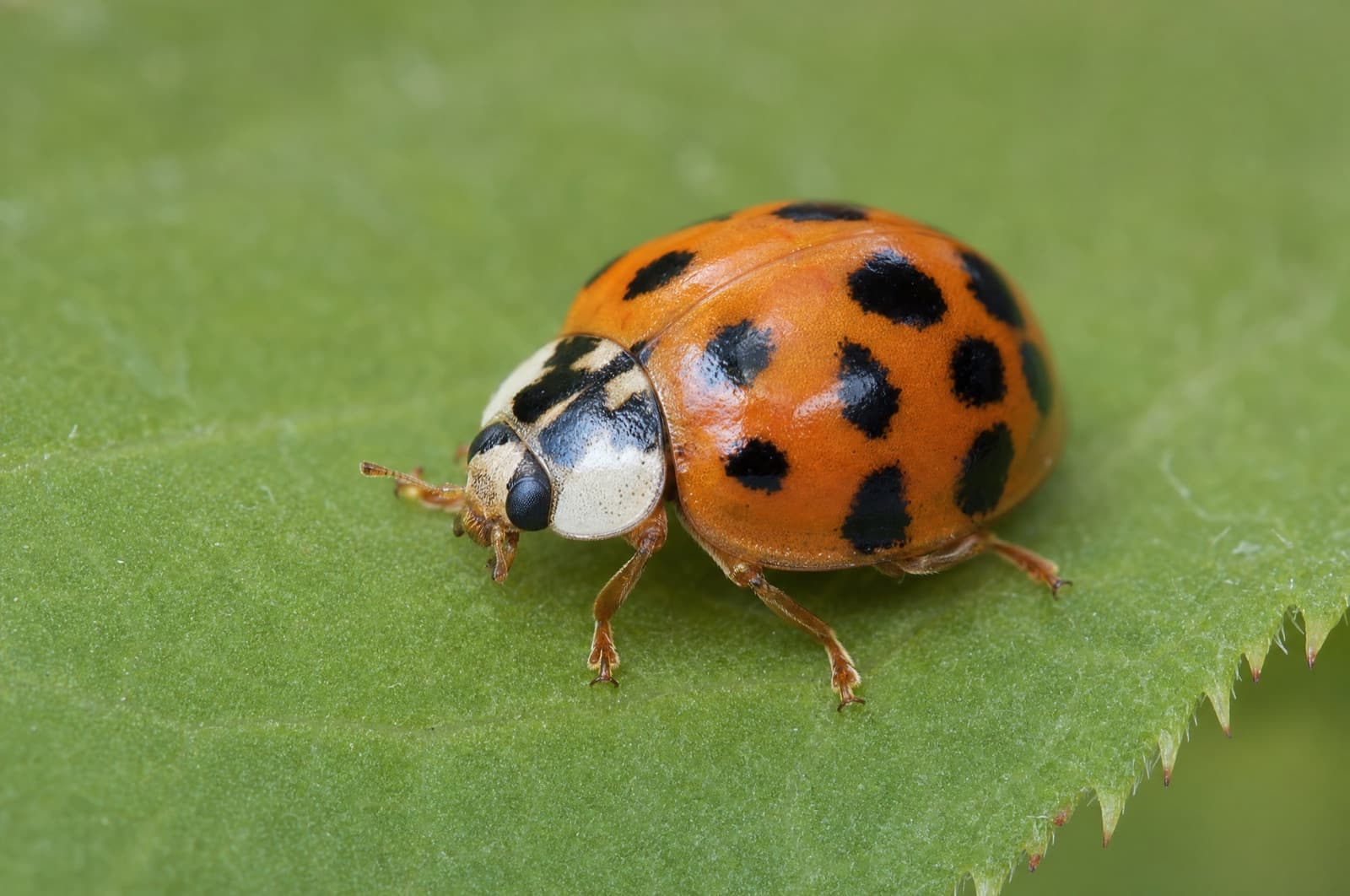
When Are Asian Lady Beetles Active? NH Ladybug Timing
At a glance
- Peak aggregation: Late Sept–late OctBeetles fly to buildings on days above roughly 65°F before freezing weather sets in.
- Winter location: Wall voids & attics, south/west sideBeetles favor sun-warmed walls as overwintering sites.
- Breeds indoors?: NoSpring beetles are the same fall individuals; no reproduction or structural damage occurs indoors.
- Outdoor benefit: Eats up to 65 aphids/day (adult)Larvae can consume up to 370 aphids over their development.
Peak aggregation
Late Sept–late Oct
Beetles fly to buildings on days above roughly 65°F before freezing weather sets in.
Winter location
Wall voids & attics, south/west side
Beetles favor sun-warmed walls as overwintering sites.
Breeds indoors?
No
Spring beetles are the same fall individuals; no reproduction or structural damage occurs indoors.
Outdoor benefit
Eats up to 65 aphids/day (adult)
Larvae can consume up to 370 aphids over their development.
The short of it
Asian lady beetles are active on warm fall days (Sept–Oct) as they mass on sunny walls to overwinter, then reappear on warm winter days.
When are they active — the whole year at a glance
Asian lady beetles are beneficial and entirely outdoors for most of the year in New Hampshire; the nuisance season is a sharp fall aggregation on building walls.
Best window to act · Late summer through mid-September — caulk cracks, screen vents, seal gaps on south- and west-facing walls, and remove window AC units before beetles begin aggregating.
Peak reflects the warm-October wall-aggregation window, anchored to Manchester's first frost (~Oct 19, 50% probability — NOAA 1991–2020 Climate Normals).
Winter behavior
Homeowners often ask where ladybugs go in winter — for Asian lady beetles, the honest answer is that many of them go into the house itself.
Hides indoors
Beetles squeeze through gaps on sun-warmed south- and west-facing walls into wall voids and attics — sometimes in masses of tens of thousands — where they sit dormant. In their native Asia they overwinter on sunny rock cliffs; New Hampshire houses serve as the substitute.
Move in
Warm days above roughly 65°F, from late September through late October, before freezing temperatures arrive.
Hides indoors
Beetles squeeze through gaps on sun-warmed south- and west-facing walls into wall voids and attics — sometimes in masses of tens of thousands — where they sit dormant. In their native Asia they overwinter on sunny rock cliffs; New Hampshire houses serve as the substitute.
Spring exit
Beetles follow warmth and light out from behind baseboards, trim, and ceiling fixtures on mild days. Those that reach heated interiors often burn through fat reserves and die, while beetles staying in cooler voids survive to spring.
A year in the life
Asian lady beetles shift from a beneficial garden predator in summer to the nuisance fall wall-swarmer most New Hampshire homeowners know them as.
- 01
Spring
Overwintered adults leave the walls, mate outdoors, and lay eggs near aphid colonies on host plants. Warm-day indoor wandering — beetles emerging near windows — tapers off by late April as the last stragglers head outside.
- 02
Summer
Entirely beneficial and outdoors, consuming large numbers of aphids and other soft-bodied insects on crops and ornamental plants. This is the season with no nuisance activity indoors at all.
- 03
Fall
The nuisance season. Warm October afternoons — typically above 65°F — drive beetles to aggregate in large numbers on sunny walls and squeeze into voids. Disturbed beetles release a defensive secretion that can stain light-colored surfaces and smell unpleasant.
- 04
Winter
Dormant indoors in wall voids and attics. Warm spells or furnace heat periodically rouse beetles, causing the same individuals to reappear at windows on mild days throughout January and February.
Asian lady beetles in southern New Hampshire
Multicolored Asian lady beetles are one of the highest-volume fall nuisance calls in Manchester, Nashua, and Concord because sun-exposed south and west walls on typical NH homes closely mimic the sunny cliff faces the species uses for shelter in its native range. Once a building is used successfully, beetles tend to return to the same structure in subsequent falls, which is why some homes see recurring, heavy swarms while similar houses nearby see very few.
Key local data
Manchester's first hard frost averages October 19 (50% probability), the point by which most fall wall-aggregation and entry activity has wound down (NOAA 1991–2020 Climate Normals).
We serve these communities
- NH-licensed applicator · #782664
- Same-day service
- Family-owned since 2017
Service Area Map
Southern New Hampshire
Timing your treatment
Because beetles are already sealed indoors by the time most homeowners notice a swarm, the payoff is in preventing next fall's aggregation rather than treating this year's.
General Pest Control
Free inspection and same-day service across southern New Hampshire. NH-licensed #782664.
Learn more about this pestFrequently asked
Sources & references
- UNH Extension — How Can I Get Rid of Asian Ladybugs in My House?
NH nuisance framing, pinching behavior
- University of Minnesota Extension — Multicolored Asian Lady Beetles
>65°F aggregation timing, aphid consumption counts, reflex-bleeding stain
- Penn State Extension — Multicolored Asian Lady Beetle
south/west wall aggregation behavior, identification
- University of Kentucky Entomology — EF416
no indoor reproduction
- University of Florida IFAS — IN361
sunny-wall attraction, native cliff overwintering behavior
- University of Illinois Extension — Ladybugs Everywhere
prevention guidance, beneficial-insect framing
- Garden.org — Manchester, NH Frost Dates
~Oct 19 Manchester first-frost anchor (NOAA 1991–2020)
Editorial disclaimer: This content is provided for informational purposes only and does not constitute pest control advice. Every property is unique — consult a licensed professional for guidance specific to your situation. Anchor Pest Services is licensed in New Hampshire (#782664).
Written & reviewed by
VerifiedDaniel Brady
NH-Licensed Pesticide Applicator · License #782664 (NHDAMF, RSA 430)
Daniel Brady is the New Hampshire–licensed applicator behind Anchor Pest Services, a family-owned pest control company serving the Manchester area since 2017.
Last updated Jul 2026
Anchor Pest Services
Whatever the season — we handle the timing for you.
Same-day service across Southern New Hampshire. NH-licensed #782664, family-owned since 2017. We track the local calendar so you don't have to guess the right window.
- NH-licensed applicator
- Same-day service
- Pet & family-conscious
NH License #782664 · No obligation · We answer in person
Your next step
- What to do next
Asian Lady Beetle in New Hampshire: Honest ID & What to Do
Read the answer - Related guide
Where Do Flies Go in the Winter? NH Cluster Fly Timing
Read the answer - Related guide
Box Elder Bugs in the House in Winter — NH Timing Guide
Read the answer - Related guide
When Are Spiders Most Active in the House? NH Spider Guide
Read the answer - Also relevant
Asian Lady Beetle in New Hampshire: Honest ID & What to Do
Read the answer - Also relevant
Carpet Beetles in New Hampshire: Damage, the 'Bite' Myth & Control
Read the answer