
Skip to content
APS
Anchor Pest Services Field Team · NH-Licensed Pest Control Operators (License #782664)
Reviewed by Tim Boyle

Carpenter ant frass: what it looks like, why it matters, and how to tell it from termite or beetle frass

Yes — carpenter ant frass is uniquely identifiable

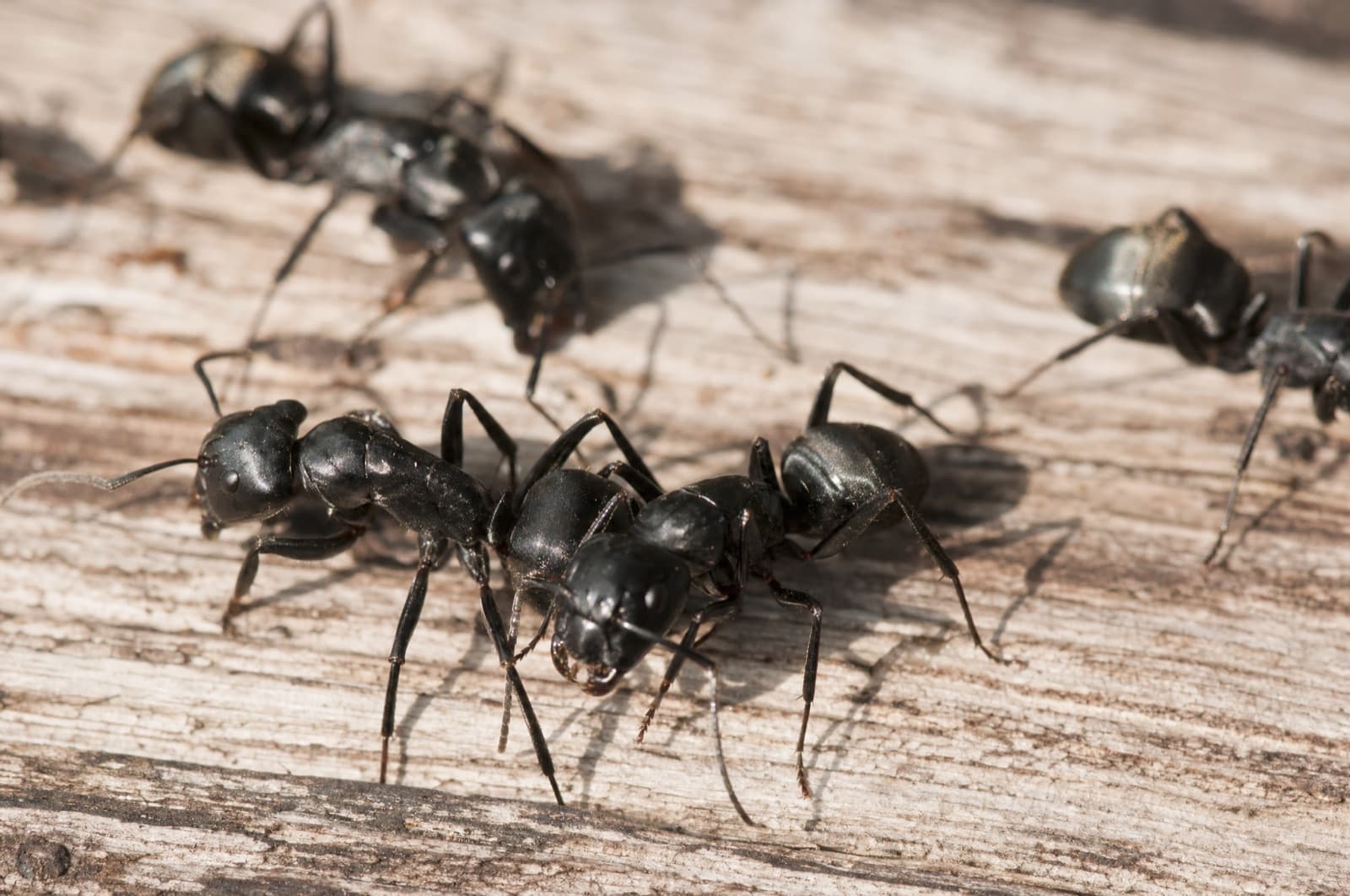
Carpenter ant frass looks like coarse, fibrous sawdust — similar to pencil-sharpener shavings — but with a critical difference: it contains visible insect body parts (legs, head capsules, antennal segments) mixed in with the wood shavings. This combination is unique to carpenter ants. Drywood termite frass consists of uniform hexagonal pellets with no insect parts; powderpost beetle frass is fine talc-flour with no animal material. The frass emerges from slit-like 2–3 mm kickout holes, not round holes. In New Hampshire, frass piles at the sill plate and rim-joist interface of unfinished basements are the highest-yield inspection location given the state's high prevalence of full-basement, older-construction homes.

At a Glance

  • Short Answer: Coarse fibrous wood shavings + visible insect parts at 10× magnification = confirmed carpenter ant frass; no other NH wood-destroyer produces this combination
  • Key Fact: A frass pile that re-forms within 72 hours of being swept confirms an active interior nest — the single most reliable field test available without a borescope
  • NH Relevance: NH's 22% pre-1950 housing stock and basement-dominant construction make sill-plate frass piles the most common carpenter ant presentation from Manchester to Concord
  • Action Needed: Collect a teaspoon of debris on white paper and check with a 10× lens — visible insect parts confirm carpenter ants; sweep the pile and return at 72 hours to determine if the nest is active
Key Statistics

Carpenter ant frass: what it looks like, why it matters, and how to tell it from termite or beetle frass — The Numbers

2–3 mm

Kickout hole width (slit-like)

72 hrs

Active-nest confirmation window

10×

Magnification needed to confirm insect parts

1–3 in

Typical fresh frass pile diameter

Side-by-Side Comparison

Carpenter Ant Frass vs. Drywood Termite Pellets

Correctly identifying frass type determines the entire treatment strategy. Carpenter ant frass, drywood termite pellets, powderpost beetle dust, old-house borer shavings, and construction sawdust each require a different response — and misidentification delays treatment of the actual problem.

Subject A

Carpenter Ant Frass

Camponotus pennsylvanicus and related NH species

Composition
Coarse fibrous wood shavings + insect body parts (legs, head capsules, antennae) + pupal cocoon fragments; sometimes insulation fibers
Texture under finger
Fibrous and irregular — does NOT crumble to powder; shavings hold their shape
Shape at 10× magnification
Mixed irregular shapes: wood slivers, insect legs, papery cocoon scraps — no two pieces alike
Animal material present
YES — insect parts clearly visible under 10× hand lens; the single definitive confirmation test
Associated hole shape
Slit-like, irregular oval 2–3 mm — NOT round; sized for major workers (~3 mm head capsule)
Presence in NH
Common throughout NH — 5 Camponotus species documented; primary wood-destroying insect statewide
Treatment urgency
Tier 2 (TREAT SOON) if pile reforms in 72 hours; Tier 3 (EMERGENCY) if found in multiple rooms — structural wood at risk

Bottom line — The 10-second field test: place debris on white paper and press with your fingertip. Fibrous shavings that hold shape + visible insect parts = carpenter ant. Uniform granules that roll like sand + no animal material = drywood termite (rare in NH) or beetle. Fine powder = powderpost beetle.

Deep Dive

The Full Picture

Carpenter ant frass is the most reliable single diagnostic for carpenter ant structural activity — more specific than seeing a live ant, and more actionable than hearing sounds in the wall. Read correctly, a frass pile tells you the organism (carpenter ant vs termite vs beetle), whether the colony is active, roughly where the nest is, and how urgently to respond 12. The key insight is that carpenter ants do NOT digest wood — they have no cellulose-digesting enzymes 13. Every bit of frass is pure excavation waste: mechanical wood shavings pushed out of the gallery network, mixed with the biological debris of colony life. That biological contamination — legs, head capsules, antennal segments, papery pupal cocoon fragments — is what makes carpenter ant frass uniquely identifiable 24.
01

What carpenter ant frass is made of

Frass consists of coarse, fibrous wood shavings ejected from gallery excavation, mixed with insect body parts (legs, head capsules, antennal segments, and gaster fragments from both prey remains and dead nestmates), pupal cocoon fragments (tan, papery), occasional soil grains, and sometimes insulation fibers where the colony has tunneled through wall cavities 24.
Read moreNC State Extension (Crawley & Hayes 2023) describes it as 'a coarse fiber-like frass and debris that usually includes insect body parts' 4. The University of Nebraska Department of Entomology confirms that visible insect parts under a 10× hand lens are the definitive confirmation cue 4. Importantly, carpenter ants lack cellulose-digesting enzymes, so there is no fecal component — the debris is purely mechanical shavings plus colony housekeeping waste 13.
01
02

Color, texture, and the pencil-sharpener test

Fresh carpenter ant frass is pale tan to medium brown, matching the substrate wood — frass from moisture-damaged, fungus-affected wood is darker brown 2.
Read moreThe texture is coarse, dry, and fibrous: the pencil-sharpener shavings descriptor is the most accurate field reference because it captures both the fibrous structure and the slight curl or irregularity of the particles 2. This is the texture test: press a pinch of the debris between your fingers. Carpenter ant frass holds its fibrous shape and does not crumble to powder. If it collapses to fine dust, you have powderpost beetle frass or fine sawdust, not carpenter ant debris 24.
02
03

The 10× hand-lens test — the gold standard confirmation

Collect a teaspoon of fresh debris on a white paper plate and examine with a 10× hand lens or your phone in macro mode with good lighting 2.
Read moreLook for legs (thin, jointed), head capsules (small rounded dark shapes), antennal segments (tiny bead-like segments), and papery tan fragments (pupal cocoon pieces). Any visible animal material confirms carpenter ant origin — no other common NH wood-destroying organism produces frass containing exoskeleton fragments 24. Construction sawdust is uniformly clean. Termite frass contains no animal parts because termites digest the wood. Beetle frass (both lyctid and anobiid) contains no animal parts for the same reason 256.
03
04

Where frass accumulates in NH homes

In New Hampshire wood-frame homes, the highest-yield inspection locations are: under sill plates in unfinished basements and crawl spaces (most common, given NH's prevalence of full basements and older foundations); on windowsills, especially south- and west-facing windows with historic leak history; below baseboard trim where studs meet the sill plate; on attic floors below roof-leak rafters and around chimney flashings; inside soffits and behind kick boards on porch columns; inside cabinets below kitchen and bathroom plumbing; and on top of fiberglass batt insulation in basement rim-joist bays 2.
Read moreNH's median home build year is 1982, with approximately 22% of the housing stock built before 1950 — older framing, more moisture history, more opportunity for frass accumulation in hidden locations 37.
04
05

Kickout holes: the frass delivery system

Frass does not appear spontaneously — workers actively eject it through openings called kickout holes or 'windows' in the gallery wall 12.
Read moreThese openings are slit-like and irregular, approximately 2–3 mm wide (about 1/8 inch), sized just large enough for major workers to pass their heads through 2. This shape is a primary diagnostic: all beetle exit holes are perfectly round, ranging from 0.8–1.6 mm (lyctid powderpost beetle), to 1.6–3.2 mm (anobiid beetle), to 6–10 mm oval with ragged edges (old-house borer) 256. Drywood termite kickout holes are round and under 2 mm 5. If the hole adjacent to your frass pile is slit-like rather than round, the evidence points overwhelmingly to carpenter ants. The frass pile typically sits directly below the kickout slit, within 6 feet horizontally 2.
05
06

The 72-hour sweep test: is the nest active?

Sweep the frass pile completely clean and mark the date on the baseboard or adjacent surface 2.
Read moreReturn at 72 hours (three days). If new frass has appeared, the colony is actively excavating within the structure — this is a Tier 2 minimum urgency situation per the NH field assessment framework, meaning professional treatment is warranted within 2–4 weeks 2. If the pile has not re-formed after 72 hours, the nest may be inactive, dormant (winter), or the parent colony may be outdoors rather than inside the structure — monitor monthly and address moisture defects 2. Note that carpenter ants are seasonally active: frass production peaks from late April through September in NH when the colony is foraging and expanding galleries 3.
06
07

Frass does not appear in Year 1

Year 1 incipient colonies (10–20 workers) produce negligible excavation — essentially a single quarter-sized chamber with no detectable frass output 21.
Read moreFirst frass piles appear in Year 2 (30–200 workers), typically behind trim or inside wall voids where they go unnoticed 2. The first actively visible frass piles typically arrive in Year 3, when the colony has 500–2,000 workers and has established satellite nests in studs, sills, and window casings 12. This means any frass pile you can see without removing finish materials represents at minimum a Year 2–3 colony — not a new or trivial infestation 2.
07
08

Multiple frass piles = multiple satellite nests

If frass appears in more than one room or on more than one floor, multiple satellite nests are established — a Tier 3 emergency situation 2.
Read moreMultiple satellites correlate with a mature 5+ year colony of 2,000–6,000+ workers that has been present long enough to require structural assessment of load-bearing members 12. NC State Extension (Crawley & Hayes 2023) notes that mature carpenter ant colonies 'contain 2-3,000 workers that can live many years, and produce 200 to 400 winged forms or swarmers every year' 4. A colony at this stage cannot be effectively treated with DIY approaches because the nest network spans multiple inaccessible wall-void locations 28.
08
09

Frass and moisture: the upstream indicator

Every carpenter ant gallery is downstream of a moisture defect.
Read morePenn State Extension (Jacobs) states: 'Carpenter ants usually won't infest wood that is sound and has a moisture content of less than 15 percent' 1. When you find frass, examine the surrounding framing within 6 feet for moisture evidence: roof-leak stains, plumbing drips, condensation on cold water pipes, failed window glazing, or ice-dam damage 2. If you have access, a moisture meter reading above 15% wood moisture content confirms conducive conditions. Frass pile location reveals the moisture defect location — fix the moisture first, or re-infestation after treatment is almost certain 12.
09
10

What to do when you find frass

Do not vacuum or sweep the entire pile immediately — preserve a sample.
Read moreTake 2–3 macro photographs in raking light (flashlight held parallel to the surface) to capture texture and visible insect parts 2. Collect a teaspoon of debris on white paper and perform the 10× lens test 24. Locate the kickout slit by tracing upward from the pile; tap surrounding wood with a screwdriver handle to find hollow gallery zones 2. Sweep the pile clean, mark the date, and return at 72 hours 2. Check for moisture sources within 6 feet 12. If the pile reforms and you've confirmed insect parts in the debris, schedule professional inspection within 2 weeks. If frass appears in multiple locations, call for same-day or next-day assessment 2.
10

Bottom line — Carpenter ant frass is positively identifiable: coarse fibrous shavings + visible insect parts under 10× magnification + slit-like (not round) kickout hole above = confirmed carpenter ant. A pile that re-forms within 72 hours confirms an active nest. Find the moisture source, fix it, and treat the colony — in that order.

Self-Assessment Tool

How urgent is your situation?

Answer three questions about the debris you found to determine what organism produced it and how urgently to act.

1

What does the debris pile look like and feel like?

2

Is there a hole nearby that you can see? What shape is it?

3

Did the pile re-form after you swept it clean?

Visual Identification

What carpenter ant frass looks like — and how to tell it from look-alikes

Each image below highlights the single diagnostic feature that distinguishes carpenter ant frass from termite pellets, beetle dust, and construction sawdust. Examine your debris against these reference points before deciding on a treatment path.

Sign 1

Active carpenter ant frass pile

A fresh active pile is typically 1–3 inches across, conical to teardrop-shaped, gravity-fed from a vertical kickout slit above. Under raking light (a flashlight held parallel to the surface), the texture shows lighter wood shavings and darker insect-part specks mixed unevenly throughout. The pile is dry and fibrous — it does not collapse into powder when pressed with a finger. This texture alone rules out powderpost beetle dust.

Sign 2

Insect parts at 10× magnification

The definitive confirmation: place a teaspoon of debris on a white paper plate and examine with a 10× hand lens or phone macro mode. Visible legs, head capsules, antennal segments, and papery tan pupal cocoon fragments confirm carpenter ant origin. These components come from dead nestmates, prey remains, and pupal cocoons ejected during gallery housekeeping. No other wood-destroying organism in NH produces frass with animal material.

Sign 3

Kickout hole above the frass pile

The slit-like kickout opening is approximately 2–3 mm wide — about 1/8 inch — and irregular in shape, not round. Workers cut these openings to eject excavation debris from interior galleries. The frass pile sits directly below the slit, within 6 feet horizontally. If the hole is perfectly round, you are looking at a beetle emergence hole, not a carpenter ant kickout. Trace the pile upward to find the slit; tap surrounding wood with a screwdriver handle to detect hollow gallery zones.

Sign 4

Gallery behind the kickout — smooth, cross-grain

When destructive inspection opens the wood, carpenter ant galleries are smooth and 'sandpapered' with clean walls — no mud, no packed debris. As the UNH Extension Pest Fact Sheet 62 (Eaton & Maccini 2016) states verbatim: 'Unlike termite galleries that are packed with a mud-like deposit, carpenter ant galleries are clean with smooth walls.' Galleries cross the wood grain, following moisture-softened springwood. Termite galleries run with the grain and are mud-packed.

Sign 5

Drywood termite pellets — the most-confused look-alike

Drywood termite frass consists of uniform hexagonal six-sided pellets approximately 1 mm long with rounded ends and a characteristic six-concave-sided cross-section. Piles resemble coarse sand or coffee grounds. There are no insect parts because termites digest the wood. In New Hampshire, drywood termites have no established wild populations — hexagonal pellets found in NH almost always trace to shipped furniture or wood imported from the southern United States.

Sign 6

Powderpost beetle talc dust — the other common look-alike

Lyctid powderpost beetle frass is fine, flour-like powder — so fine it feels like talc between the fingers. Exit holes are perfectly round, 0.8–1.6 mm in diameter. There are no insect parts in the dust. Anobiid (deathwatch) beetle frass is slightly coarser and more gritty, with round 1.6–3.2 mm holes. Neither beetle produces the fibrous, irregular shavings characteristic of carpenter ant excavation. If your debris crumbles to powder under finger pressure, it is beetle frass, not carpenter ant.

Decision Tree

Should you call a pro?

Not sure what made that pile of sawdust? Work through this tree to identify the organism and determine your next step.

What does the debris look and feel like?

Prevention Playbook

How to stop carpenter ants from coming back

1

Eliminate moisture above 15% wood MC: repair roof leaks, extend downspouts, improve attic ventilation, and fix plumbing drips — every carpenter ant gallery is downstream of a moisture defect and the colony cannot persist in dry wood.

2

Seal all wood-to-soil contact and maintain a minimum 6-inch gap between soil and sill plates; wood in ground contact stays chronically above 15% MC and is the highest-risk nest initiation site in NH basements.

3

Trim tree branches and shrubs to maintain 18 inches of clearance from the structure — carpenter ants use branches as bridges from outdoor parent colonies in trees and stumps to indoor satellite sites.

4

Remove wood debris within 100 feet of the house: woodpiles, dead stumps, rotting logs, and lumber scraps are primary parent-colony sites from which indoor satellites are founded (Rutgers NJAES FS1101).

5

Inspect basement rim-joist bays annually for early frass: this is the #1 frass accumulation point in NH older homes — a flashlight and 10× lens in November takes 15 minutes and detects Year 2 colonies before they reach Year 3 structural impact.

6

Conduct a spring perimeter walk each April before colony peak activity — examine all window casings, door thresholds, porch columns, and sill plates for 2–3 mm slit-like kickout holes; Year 2 discovery saves $1,000–$10,000 in eventual repair costs.

Local Context

Why NH homeowners find frass in basements more than anywhere else

New Hampshire's full-basement construction norm, combined with 22% of the housing stock built before 1950, makes unfinished basement rim-joist bays the highest-yield frass location in the state. Sill plates in contact with older concrete foundations absorb moisture from below while ice-damming and roof-leak history adds moisture from above — creating the moisture gradient that drives carpenter ant galleries precisely into the structural wood that holds the house. NH's humid continental climate adds seasonal freeze-thaw cycling that perpetuates moisture infiltration that homeowners often don't see as a pest risk until frass appears.

Key Local Data

Southern NH's five primary service counties include Hillsborough and Rockingham — rated extreme carpenter ant pressure by county — where Camponotus pennsylvanicus activity peaks from mid-April through September; NH housing stock averages a median build year of 1982, with Cheshire County's 27.3% pre-1940 stock representing the oldest, highest-moisture-risk framing in the service area [7].

Common Questions

Frequently Asked

NH-Licensed Pest Control

Stop guessing — get a confirmed diagnosis

Frass identification takes under 10 minutes on-site with the right tools. Our licensed inspectors serve Manchester, Nashua, Concord, Bedford, Derry, and all of southern NH.

NH Pest Control License #782664 Family-owned in Manchester since 2017 Free on-site frass and nest assessment 30-day follow-up included with every treatment