
Skip to content
APS
Anchor Pest Services Field Team · NH-Licensed Pest Control Operators (License #782664)
Reviewed by Tim Boyle

Why Are There Ants in My Bathroom? The 5-Species NH Guide

Water-driven — species determines whether it's an emergency

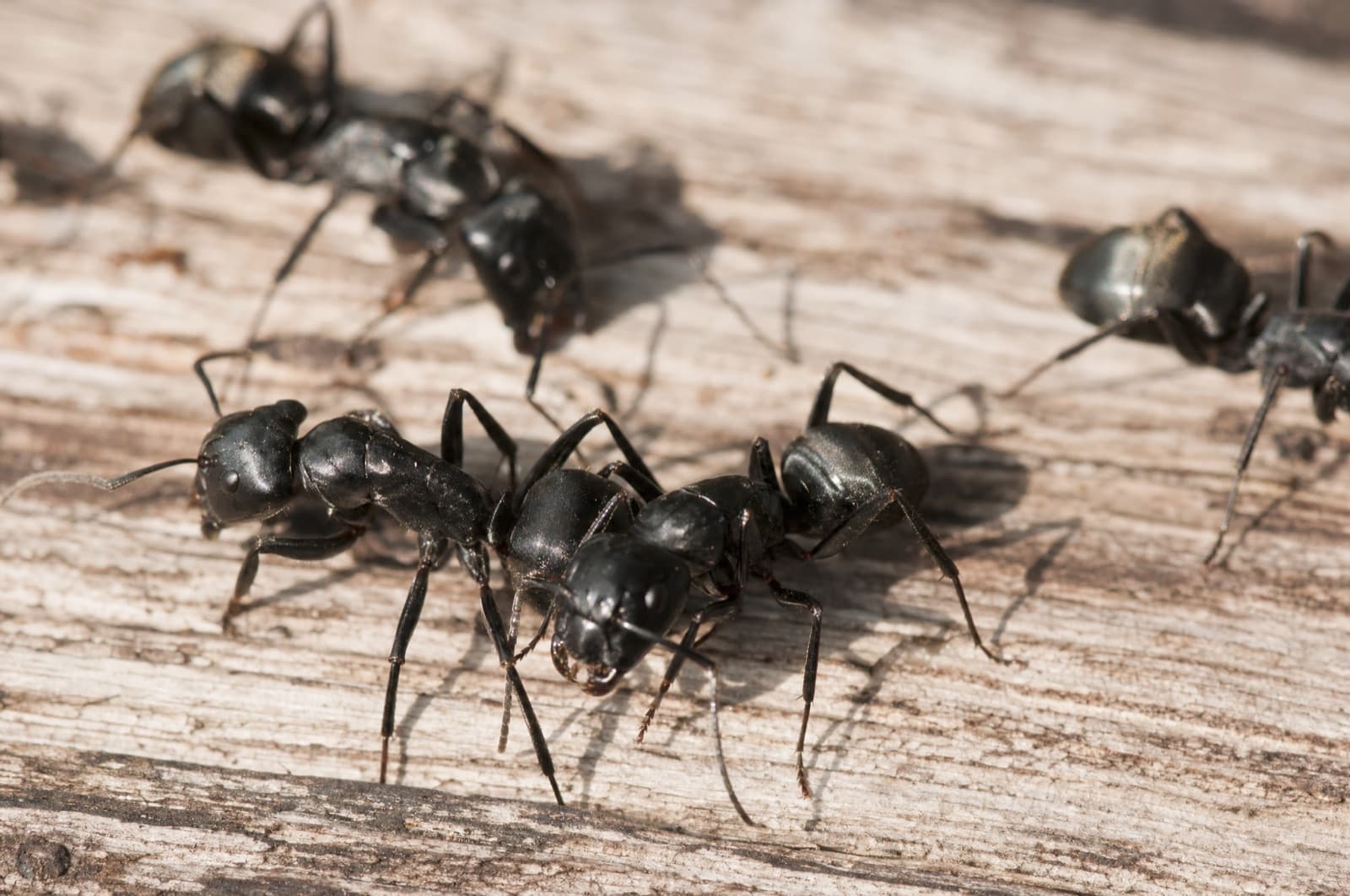
Ants enter bathrooms for water and humidity, not food. Workers seek free-standing water — toilet condensate, tub overflow drips, sink splash — to balance the colony's water budget, especially in late-summer dry spells when outdoor sources contract. In New Hampshire, five species appear in bathrooms. Carpenter ants (>6 mm, black) are the most serious: UNH Extension lists bathrooms among the top indoor satellite-nest sites in NH. Odorous house ants (3 mm, dark, coconut smell) and pavement ants (3 mm, dark, rugose head) are DIY-appropriate with non-repellent bait. Pharaoh ants (1.5–2 mm, pale yellow) require professional treatment only — DIY sprays cause colony budding that multiplies the problem [5].

At a Glance

  • Short Answer: Water and humidity — not food — drive bathroom ant activity; the species tells you whether it is benign foraging or a structural moisture emergency
  • Key Fact: 5 NH ant species are ranked for bathrooms; carpenter ants over 6 mm are the highest-urgency find and signal a potential satellite nest behind tile or subfloor
  • NH Relevance: UNH Extension Fact Sheet 62 explicitly lists 'behind bathroom tiles, around tubs, sinks, showers, and dishwashers' as a primary carpenter ant nest site in New Hampshire
  • Action Needed: Measure the ant first — >6 mm or pale yellow = call a pro this week; <3 mm dark = fix the drip and deploy non-repellent bait
Key Statistics

Why Are There Ants in My Bathroom? The 5-Species NH Guide — The Numbers

5

NH species ranked for bathrooms

>6 mm

Size threshold — call a pro

6

Common bathroom entry points

>20%

Subfloor moisture = action level

Deep Dive

The Full Picture

Ants appear in bathrooms for water and humidity — not food — making them fundamentally different from kitchen ant problems. Workers seek free-standing water (toilet condensate, tub drips, sink splash) and high-relative-humidity air to balance the colony's water budget, a need that intensifies during late-summer dry spells when outdoor moisture sources contract 12. The species determines your urgency: carpenter ants in a bathroom often indicate a structural satellite nest in moisture-damaged framing that will worsen every season; pharaoh ants require professional treatment and must not be sprayed; small dark ants following a single drip are benign foraging that resolves when you fix the leak.
01

Why Water — Not Food — Drives Bathroom Ant Activity

Ant colonies maintain a precise water budget.
Read moreWorkers act as mobile water carriers, returning to the nest with water absorbed through their mouthparts from any available source. During dry periods — particularly late July through September in New Hampshire — outdoor puddles, dew, and plant surfaces dry faster than the colony can replenish 12. Bathrooms become the most reliable indoor water source: toilet tanks condense moisture on their exterior surface, tub overflows drip after bathing, and sink hardware accumulates splash. High relative humidity in a bathroom also allows workers to absorb atmospheric moisture, reducing the round-trip foraging cost. This water-driven behavior is distinct from kitchen activity, which is food-driven; understanding it explains why cleaning the bathroom thoroughly does not eliminate ant activity — the attractant is not grease or crumbs but moisture 3.
01
02

The 5-Species Bathroom Ranking for New Hampshire

Five ant species are consistently documented in NH bathrooms, ranked by prevalence 134.
Read moreFirst: carpenter ants (Camponotus pennsylvanicus, C. novaeboracensis) — the highest-urgency find; UNH Extension explicitly lists 'behind bathroom tiles, around tubs, sinks, showers, and dishwashers' as primary NH nest sites 1. Second: odorous house ants (Tapinoma sessile) — documented to nest in toilet-tank lids and damp wall voids behind bathroom plumbing; supercolonial structure means hundreds of workers can appear overnight 67. Third: pharaoh ants (Monomorium pharaonis) — strictly indoor in NH's climate, preferring warm humid niches above 18°C; a classic bathroom appearance is trails between hot-water pipes and electrical outlets 34. Fourth: acrobat ants (Crematogaster cerasi) — follow the same moisture-damaged-wood pathway as carpenter ants, particularly behind window frames in bathrooms with failed exhaust ventilation 3. Fifth: pavement ants (Tetramorium immigrans) — the least moisture-driven of the group; typically a foundation foraging trail that surfaces at the bathroom toe-kick or tub overflow rather than a structural nest 9.
02
03

6 Common Bathroom Entry Points in NH Homes

New Hampshire's older housing stock creates multiple vulnerable penetrations in bathroom assemblies 13.
Read moreThe six most common entry points are: (1) plumbing penetrations through the subfloor — the tub waste line, toilet flange wax-ring gap, and sink drain rough-in all create direct pathways from the crawlspace or slab to the bathroom floor level; (2) tub overflow and tub spout escutcheon gaps — small gaps where the overflow tube and spout pipe pass through the tub surround; (3) caulk failures at tile-to-tub and tile-to-floor joints — the single most common entry point for small dark ants following a moisture gradient from a dripping faucet; (4) behind or below vanity cabinets where the cabinet base contacts the floor — a gap often left during installation; (5) sill plate cracks at exterior wall corners where the bathroom is on an exterior wall — deteriorating sill plates in homes built before 1980 provide both entry and nesting habitat; (6) electrical outlets and switch boxes on exterior bathroom walls — ants exploit the warm air pocket at the junction box and the cable penetration through the top plate 3. Second-floor bathrooms in NH sometimes have a seventh: HVAC supply registers, which carpenter ants follow along the duct chase from a basement parent colony.
03
04

Structural Moisture Problem vs Benign Foraging — How to Tell the Difference

The most critical triage decision is separating a benign foraging trail from a structural moisture problem requiring professional intervention 13.
Read moreStrong indicators of an underlying moisture or wood-rot problem — any one of which warrants a professional call — are: multiple large (>6 mm) black or bicolored ants in the bathroom (high probability of carpenter ant satellite nest; use a moisture meter on the subfloor — readings above 20% wood moisture content are the action threshold); sawdust-like frass piles below baseboard, vanity, or toe-kick (clean, fibrous material containing tiny insect parts — active carpenter ant excavation); soft or springy floor near toilet or tub (chronic moisture saturation of the subfloor); discolored grout or tile movement around tub flanges; audible rustling or papery sound when ear is pressed to the wall after dusk (carpenter ant colony disturbance signature) 123. Benign-foraging indicators — DIY-appropriate — are: a trail of small (<3 mm) dark ants leading from a foundation crack along the baseboard to a single water source; the trail disappears within 24 hours of fixing the drip; no frass, no sounds, no winged ants visible 3.
04
05

The Pharaoh Ant Warning: STOP Spraying

Pale yellow tiny ants (1.5–2 mm) in the bathroom represent the highest-consequence bathroom ant misidentification in NH.
Read morePharaoh ants (Monomorium pharaonis) are thermophilic and hygrophilic — exactly the conditions bathrooms provide — and their colonies reproduce by budding rather than swarmer flights: a queen and workers split off to form a new satellite nest without leaving the structure 34. Critically, DIY aerosol sprays — including both pyrethroid-based and essential-oil-based products — trigger this budding response. Feng, Choe, and Lee (2025, Journal of Economic Entomology) experimentally demonstrated that pyrethroid aerosols at low application rates significantly increase the probability of sociotomy in M. pharaonis colonies of all sizes 5. A homeowner who sprays a pharaoh ant trail can convert a single-room infestation into a structure-wide multi-nest problem in 2–4 weeks. The only effective treatment is slow-acting IGR bait (methoprene, pyriproxyfen, or boric acid) deployed professionally across all satellite locations simultaneously 45. In NH, pharaoh ant infestations cluster in hospitals, nursing homes, multi-unit apartments, and food service buildings (Wetterer 2010 published the first confirmed NH record); residential pharaoh infestation in a single-family home often indicates proximity to a heated multi-unit building.
05
06

When to DIY vs When to Call a Professional

The DIY-appropriate scenario is narrow: small ants (<3 mm), single trail to a single identified water source, no frass, no audible sounds, no winged ants, and no recurrence in additional rooms 3.
Read moreFix the moisture source first — this is non-negotiable. Then deploy a non-repellent sweet gel bait (borate/sugar matrix) directly on the active trail and monitor for 14 days. Do not use repellent pyrethroid sprays — they trigger budding in OHA (Buczkowski & Bennett 2008) and colony scattering in acrobat ants 67. Call a professional immediately when: large ants (>6 mm) appear in the bathroom; any frass pile is found, regardless of size; audible sounds are present in the wall; the trail re-establishes within a week after caulking and baiting; pale yellow tiny ants are present anywhere in the structure; or the trail appears in a second room after treatment 13. Seal entry points only after 7–10 days of bait uptake — sealing too early blocks bait transfer to the colony.
06
07

Treatment Options by Species

Treatment is species-dependent and must address the underlying moisture defect simultaneously 13.
Read moreFor small dark ant foragers (OHA, pavement ants): non-repellent borate/sugar bait gel on the active trail; fix moisture source; caulk entry point after 7–10 days of bait activity. For carpenter ants: professional drill-and-dust with deltamethrin 0.05% or silica aerogel into the wall void, combined with exterior non-repellent fipronil (0.06%) as a continuous perimeter band targeting plumbing penetrations and weep holes — the 2026 NH market rate for a moderate single-bathroom satellite treatment is $250–$500 123. For acrobat ants: drill-and-dust plus moisture remediation of the affected framing; the underlying water damage source must be corrected or re-infestation is certain. For pharaoh ants: professional IGR bait program only; no sprays; multi-room simultaneous placement; coordinated treatment for any adjacent units in multi-unit settings 45. For chronic moisture properties with recurrent bathroom infestations: a quarterly service plan ($480–$840 per year in southern NH) provides free re-service between visits and includes a moisture audit at each visit.
07
08

NH Housing Stock and Bathroom Vulnerability

New Hampshire's median owner-occupied home was built in 1982, and approximately 22% of the state's housing stock predates 1950 18.
Read moreThese older homes have bathroom assemblies that predate modern waterproofing standards: original wax-ring seals that have never been replaced, missing vapor barriers behind tile, balloon-framed walls with long open stud cavities providing vertical ant highways from the sill plate to second-floor bathrooms, and ice-dam-driven roof leaks above exterior bathroom walls that create persistent wet-wood pockets 18. The NH climate — humid continental Dfb — produces warm, humid summers that keep bathroom wall voids above the 15% wood moisture threshold that carpenter ants require for nesting throughout the active season (approximately May through September in southern NH counties) 12. UNH Extension Fact Sheet 62 identifies bathrooms explicitly as among the top indoor carpenter ant satellite-nest sites in the state, a distinction no comparable extension publication in the northeast makes with the same specificity.
08

Bottom line — Bathroom ants are a moisture problem, not a hygiene problem. The 30-second triage: measure the ant size and note the color. Large >6 mm or small pale yellow = call a pro this week. Small dark ants in a single trail to a fixed water source = fix the drip and bait the trail — most resolve in under 14 days.

NH Carpenter Ant Species

Carpenter ants aren't one species — they're four

The 5 ant species most commonly found in NH bathrooms, ranked by prevalence. Size is the fastest field triage — capture one ant in a clear jar and compare it to a grain of rice (approximately 6 mm). Species identity determines whether you DIY or call a professional.

Species 1

Carpenter Ant

Camponotus pennsylvanicus / C. novaeboracensis

Size
6–13 mm
Color
Matte black; C. novaeboracensis has a reddish-brown thorax with black head and gaster
Nest
Moisture-damaged wood — behind bathroom tile, around tubs, subfloor beside toilet; UNH Extension lists bathrooms among the top NH satellite-nest sites
Aggression
NH Prevalence

Distinguishing feature

Largest ant you will see indoors in NH; single-node petiole; evenly rounded thorax in profile. Finding these in a bathroom is a structural moisture warning — inspect for frass, soft floor, and audible wall sounds at dusk

Species 2

Odorous House Ant (OHA)

Tapinoma sessile

Size
2.4–3.3 mm
Color
Dark brown to nearly black, slightly shiny
Nest
Damp wall voids behind bathroom plumbing, toilet-tank lids, and under-sink insulation; moves nests seasonally in response to moisture shifts (Buczkowski & Bennett 2008)
Aggression
NH Prevalence

Distinguishing feature

Crush-and-smell test: strong rotten coconut or blue-cheese odor. Petiole concealed beneath first gaster segment — abdomen appears to sit directly on thorax with no visible node bump. DIY-appropriate with non-repellent borate/sugar gel bait; avoid repellent sprays (trigger budding)

Species 3

Pharaoh Ant

Monomorium pharaonis

Size
1.5–2 mm
Color
Pale yellow to light amber with a slightly darker gaster tip; appears almost translucent
Nest
Strictly indoors in NH — wall voids near hot-water pipes, electrical conduit, behind baseboards in warm humid areas above 18°C; bathrooms are classic pharaoh habitat (Klotz et al. 2008)
Aggression
NH Prevalence

Distinguishing feature

STOP: do not spray. Any DIY aerosol or pyrethroid triggers colony budding, converting one nest into 5–10+ satellite nests (Feng, Choe & Lee 2025). Pale yellow color + trails between heat sources + appearance in multiple rooms = likely pharaoh — call a pro immediately. In NH, pharaoh infestations cluster near hospitals, apartments, and multi-unit buildings (Wetterer 2010)

Species 4

Acrobat Ant

Crematogaster cerasi

Size
2.5–3.5 mm
Color
Bicolored — dark brown to black gaster, reddish-brown mesosoma
Nest
Moisture-damaged wood framing and foam insulation; appears in bathrooms with failed exhaust ventilation or ice-dam-driven roof leaks above 2nd-floor bathrooms (Klotz et al. 2008)
Aggression
NH Prevalence

Distinguishing feature

Heart-shaped (cordate) gaster raised vertically over thorax when disturbed — the 'acrobat' alarm posture. Finding acrobat ants in a bathroom signals moisture-damaged framing behind tile or window frames. Drill-and-dust treatment plus moisture remediation required

Species 5

Pavement Ant

Tetramorium immigrans

Size
2.5–4 mm
Color
Uniform dark brown to nearly black; legs and antennae slightly paler
Nest
Foundation soil, slab edges, and under concrete; surfaces in bathroom via toe-kick or tub overflow from a foundation foraging trail (not a moisture-damaged-wood species)
Aggression
NH Prevalence

Distinguishing feature

Parallel longitudinal grooves (rugae) on head capsule and thorax; two petiolar nodes; small propodeal spines. Least moisture-driven of the 5 bathroom species — usually a trail from outdoors that found its way through a foundation crack. Responds well to perimeter non-repellent treatment plus caulking the entry crack

NH Risk Heat Map

Carpenter ant pressure by NH county

Bathroom ant pressure in NH tracks with housing age, canopy cover, and proximity to wetland-adjacent neighborhoods — all factors that drive the chronic moisture conditions carpenter and acrobat ants require.

RockinghamExtreme riskHillsboroughExtreme riskMerrimackHigh riskStraffordModerate riskCheshireHigh riskManchester HQ
Low
Moderate
High
Extreme

Rockingham County

Extreme

Highest carpenter ant treatment volume in southern NH per regional pest-control composite data. Coastal humidity combined with dense wooded suburbs in Derry, Salem, and Auburn drives year-round satellite-nest moisture conditions in bathroom walls.

Hillsborough County

Extreme

Manchester and Nashua's urban core has NH's highest concentration of pre-1960 multi-family and single-family housing — older wax rings, failed grout, and original plumbing seals create persistent bathroom moisture entry points for carpenter ants and OHA.

Merrimack County

High

Concord and Hooksett properties with mature red maple and white pine within 100 m of the structure sustain parent carpenter ant colonies that establish bathroom-wall satellites during wet spring and summer seasons.

Strafford County

Moderate

Dover and Rochester show moderate bathroom ant pressure; primarily OHA and pavement ant trails from foundation-level entry, rather than structural carpenter ant satellite nesting. Pharaoh ant risk elevated near Durham's multi-unit housing stock.

Cheshire County

High

Keene and surrounding towns have the oldest housing stock of the five service counties — 27.3% of units built before 1940 — meaning original balloon framing, aged caulk, and no vapor barriers in bathroom assemblies. Acrobat ant bathroom infestations are disproportionately documented here.

Bottom line — All five southern NH counties carry high-to-extreme bathroom ant pressure driven by a combination of older housing stock, humid continental climate, and abundant tree canopy providing parent-colony habitat within foraging range of foundations.

Visual Identification

What to Look For: Bathroom Ant Signs

These six visual signs help distinguish benign foraging from a structural moisture emergency. Document what you see before any treatment — photos help a professional identify the species and entry point.

Sign 1

Small ant trail at tub-tile caulk failure

A tight line of small dark ants (2.4–3 mm) traveling along a cracked or missing caulk joint where tile meets the tub. The trail leads from a gap in the caulk to the tub edge where water pools during showers. This is the most common benign-foraging presentation: OHA or pavement ants following a moisture gradient. Fix the caulk and the moisture source; the trail typically disappears within 24 hours if no nest is established inside the wall.

Sign 2

Carpenter ant frass behind vanity

A small pile of coarse, fibrous material resembling sawdust mixed with tiny dark insect parts — found at the baseboard behind or below a bathroom vanity cabinet. Unlike true sawdust, carpenter ant frass contains insect body segments and is slightly irregular. Even a tablespoon-sized pile indicates active excavation. This is a severity-5 signal: a satellite colony is nesting in moisture-damaged framing within the wall void behind the vanity.

Sign 3

Ants emerging at toilet flange gap

Workers appearing from the gap between the toilet base and the floor tile, often near the wax-ring seal of the toilet flange. The toilet flange wax-ring gap is one of the six primary bathroom entry points in NH homes: moisture from a slow wax-ring leak saturates the subfloor, attracting carpenter ants seeking wood above 15% moisture content, and OHA or pavement ants seeking free-standing water. Look for moisture staining on the subfloor and soft or discolored tile grout as co-indicators.

Sign 4

Pharaoh ant trail between pipe and outlet

A dense, fast-moving trail of pale yellow ants (1.5–2 mm, almost translucent) running from behind a hot-water supply pipe to an electrical outlet on the exterior bathroom wall. Pharaoh ants prefer warm, humid niches above 18°C — exactly what bathroom walls with hot-water plumbing and electrical conduit provide. This is a STOP-spraying signal: any aerosol treatment causes colony budding. Photograph the trail for identification before contacting a professional.

Sign 5

Tub overflow entry point

The gap around the tub overflow cover plate — the chrome or plastic disc on the front of the tub above the drain — is one of the six common NH bathroom entry points. The overflow tube penetrates the subfloor and often has a small gap between the tube and the surrounding framing that ants exploit. In older NH homes, the tube seating can corrode, creating a chronically damp wood pocket behind the tub wall that both carpenter ants and acrobat ants will colonize.

Sign 6

Soft or damaged subfloor near toilet

Subfloor wood that yields noticeably when you press on it near the toilet or tub base — a sign of chronic moisture saturation. Wood at or above 15% moisture content is suitable carpenter ant nesting habitat; readings above 20% are the action threshold confirmed by NH pest control practice. A springy or spongy floor is a severity-5 signal: the moisture damage that ants are exploiting is already structural and will require remediation regardless of ant treatment. Moisture-meter readings above 20% in this zone warrant an immediate professional inspection.

Decision Tree

Should you call a pro?

Three questions to triage your bathroom ant situation. Start with ant size — that one answer rules out the two species (carpenter ants and pharaoh ants) that immediately require a professional.

How large are the ants you see in the bathroom?

Treatment Effectiveness

How long does each method actually last?

Fix the moisture source (drip, caulk, wax ring)

$0–$150 (DIY repair materials or plumber call) · DIY

Permanent — eliminates attractant

Primary control measure for all bathroom ant species. Removing free-standing water eliminates the foraging reason for small dark ants; restoring wood to <15% MC eliminates carpenter ant nesting habitat (UNH Extension FS 62)

Non-repellent borate/sugar gel bait on trail

$10–$30 · DIY

14–21 days to colony effect

Effective for OHA and pavement ants in bathroom foraging trails. Bait is trophallactically shared with queens inside the wall void. Do NOT use repellent pyrethroids — they trigger budding in OHA (Buczkowski & Bennett 2008) and colony fragmentation in pharaoh ants (Feng, Choe & Lee 2025). Hansen (2008 ICUP) documents 55% field colony-elimination success with bait vs. >95% in lab conditions

Professional one-time treatment (carpenter ant or acrobat)

$250–$500 (moderate; single bathroom satellite) · Professional

3–6 months residual with follow-up

Drill-and-dust (deltamethrin 0.05% or silica aerogel) into the wall void plus exterior non-repellent band (fipronil 0.06%). Structural moisture remediation must accompany treatment or re-infestation will occur. 2026 NH market rate

Professional pharaoh ant IGR bait program

$250–$500+ (scale depends on infestation extent) · Professional

8–16 weeks; coordinated multi-room placement

Slow-acting IGR bait (methoprene or pyriproxyfen) placed at all nest satellite locations simultaneously. DIY sprays explicitly contraindicated — Feng, Choe & Lee (2025) demonstrated pyrethroid aerosols significantly increase probability of sociotomy (budding) in M. pharaonis at low application rates

Prevention Playbook

How to stop carpenter ants from coming back

1

Fix all drips, leaks, and slow-seeping wax-ring seals within 7 days of discovery — free-standing water is the primary bathroom ant attractant for all 5 NH species

2

Run the bathroom exhaust fan during and for at least 20 minutes after every shower to reduce relative humidity below the threshold that makes bathroom air preferable to outdoor air for ant workers

3

Re-caulk tile-to-tub and tile-to-floor joints annually with a mold-resistant silicone caulk — failed caulk is one of the six primary bathroom entry points and creates moisture-saturated grout that can exceed the 15% wood-moisture threshold in the underlying subfloor

4

Seal all plumbing penetrations through the subfloor — tub waste line, toilet flange, sink drain rough-in — with hydraulic cement or expanding foam rated for pest exclusion; these gaps are direct pathways from the foundation to the bathroom floor level

5

Inspect and replace the toilet wax-ring seal if there is any soft tile, discolored grout, or dampness near the toilet base; a slow wax-ring leak saturates the subfloor and can sustain carpenter ant satellite colonies for years before visible damage appears

6

Replace any soft or springy subfloor near the toilet or tub within 30 days of detection — wood at or above 20% moisture content is active carpenter ant nesting habitat, and structural repair is required regardless of whether ants are currently visible

Local Context

Why NH Bathrooms Are a High-Risk Zone for Ant Infestations

New Hampshire's older housing stock creates compounding moisture risks in bathrooms. Balloon-framed pre-1950 homes — roughly 22% of the state's housing — have long open stud cavities that allow carpenter ants to travel from a sill-plate moisture entry point directly up to second-floor bathroom walls without obstruction. Ice dams on NH roofs drive meltwater under shingles and into exterior bathroom walls, creating chronic wet-wood pockets that remain above 15% moisture content well into summer. UNH Extension Fact Sheet 62 (Eaton & Maccini 2016) explicitly lists bathrooms — 'behind bathroom tiles, around tubs, sinks, showers, and dishwashers' — as primary carpenter ant nest sites in New Hampshire.

Key Local Data

Approximately 22% of NH homes were built before 1950, and Cheshire County has the oldest housing stock of the five southern service counties, with 27.3% of units built before 1940 — all predating modern waterproof subfloor standards and bathroom ventilation requirements.

Common Questions

Frequently Asked

Sources & References

Where this data comes from

  1. [1]
  2. [2]
  3. [3]
  4. [4]
  5. [5]
  6. [6]
  7. [7]
  8. [8]
  9. [9]
  10. [10]
NH-Licensed Pest Control

Bathroom ants are a moisture problem. We solve both.

Large ants = call pro this week. Pale yellow tiny ants = STOP spraying, call pro. Small dark ants with a single trail = we can help you confirm species and treat correctly. Free assessment, no obligation.

NH Licensed Pest Control Operator #782664 Family-owned, Manchester-based since 2017 Free inspection — no service charge to diagnose 30-day follow-up included with every treatment