
Skip to content
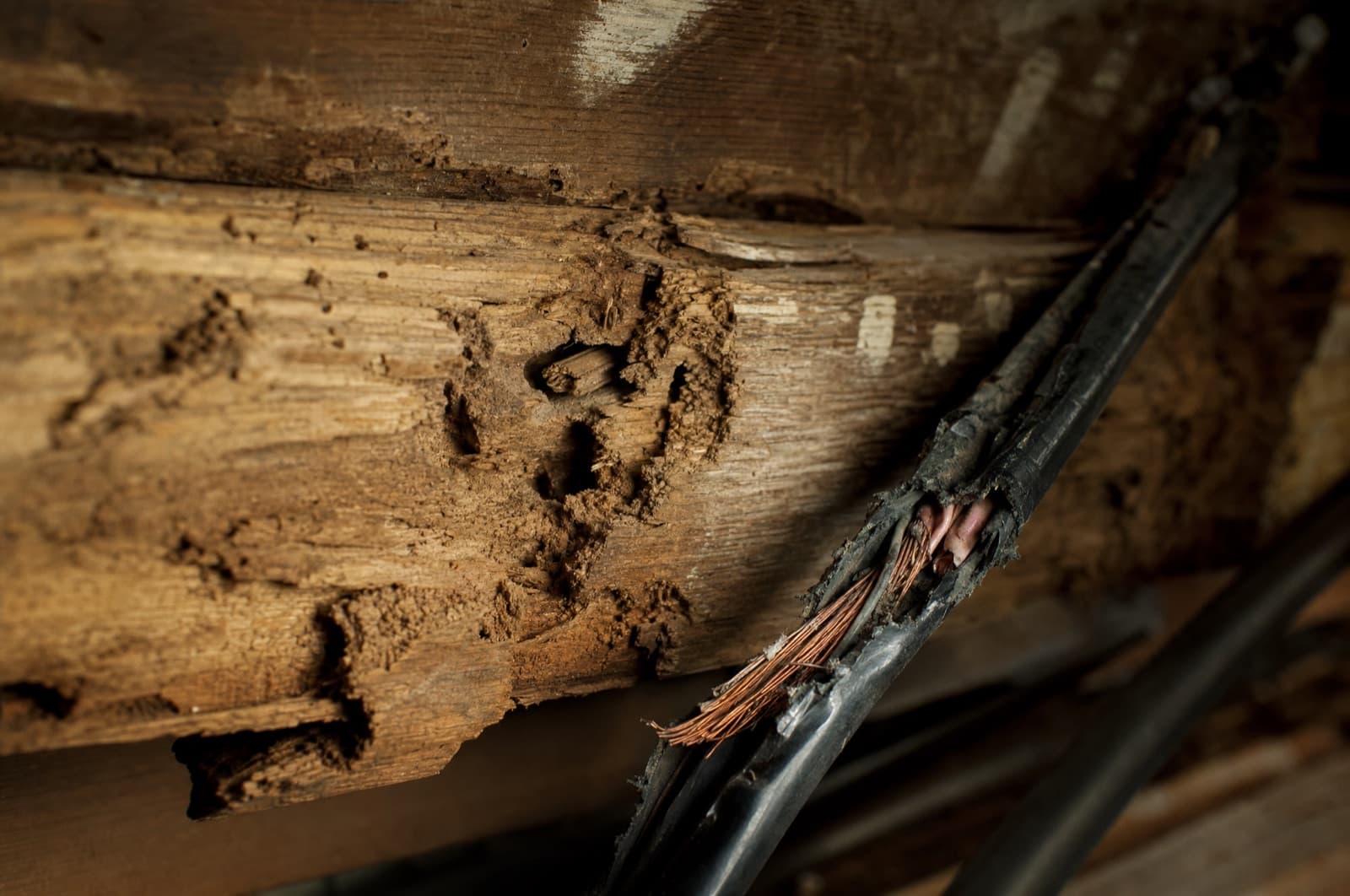
Pest damage evidence — a gnawed structural beam and a chewed electrical wire
Daniel Brady · NH-Licensed Pesticide Applicator · License #782664
Reviewed by Daniel Brady

Can pests spread contamination in food storage?

Functional contamination — real, but bounded
Yes. Cockroaches carry and transmit roughly 40 species of bacteria, including at least 25 from the Enterobacteriaceae group that cause gastroenteritis, and German cockroaches can mechanically and biologically vector Salmonella. Mice contaminate far more food than they eat — a single house mouse deposits an estimated 50 to 75 droppings a day. That said, the FDA's own Food Defect Levels Handbook acknowledges that trace insect fragments and filth are an unavoidable, tolerated, non-hazardous baseline in commercial food. Discard visibly infested or rodent-soiled food and route any suspected illness to a doctor — but don't treat every fragment as a poisoning event.

At a glance

  • Can it?: Yes
  • How common: Routine
  • Hype: Overstated
  • Evidence: Well documented
  • about 40 species

    Bacteria cockroaches carry and can transmit, including 25+ from the gastroenteritis-causing Enterobacteriaceae group

    Peer-reviewed cockroach-bacteria review (PMID 2529868)

  • 50 to 75 per day

    Droppings a single house mouse deposits daily — far more contamination than the food it eats

    University of Nebraska–Lincoln Extension G1105 — Controlling House Mice

The honest answer

The short of it

The verdict
Functional contamination — real, but bounded

Yes — cockroaches and rodents genuinely contaminate and spoil stored food. But the FDA's own standard treats trace insect fragments as an unavoidable, tolerated baseline, not a health emergency.

The correction

What they claim vs. what the evidence supports

One shared severity track, two markers. The span between them is the hype delta — named out loud.

The claim — pests contaminating stored food and making a family sick

That any pest or dropping found near stored food means the whole pantry is now a poisoning risk, and everything nearby should be treated as contaminated.

Where the claim comes from: Pest-marketing content that frames every insect fragment or rodent sighting as an imminent health emergency.

Severity, 0–100
Hype says75
55Evidence says
Hype delta20point gapWell documented
The evidence

Mechanical contamination and vectoring are genuine and documented — cockroaches carry roughly 40 bacterial species and can vector Salmonella; mice deposit large volumes of droppings directly into food storage. But conclusive attribution of cockroaches to specific human enteric outbreaks remains limited, and the FDA's own Food Defect Levels Handbook treats trace fragments in commercial food as a tolerated, non-hazardous baseline rather than a hazard.

The gap

The risk is genuinely earned for rodent-soiled food and heavy roach infestations — but the FDA's own standard tolerates trace insect fragments as a non-hazardous baseline, so "any bug means poisoning" overshoots what the evidence actually supports.

Damage assessment

What is actually harmed

Damage verdict
Functional contamination — real, but bounded
FunctionalCan it?Yes
The specimen
Pest
Cockroaches and rodents (mice and rats) in food storage areas
What is in question
Open and thin-packaged dry goods, and the food-contact surfaces pests cross
How common
Routine
Evidence
Well documented
Mechanism

Cockroaches transfer microbes on their cuticle and legs as they forage across surfaces and food, and additionally via feces and regurgitation while feeding — a peer-reviewed review documents roughly 40 bacterial species carried this way, including at least 25 from the Enterobacteriaceae group that cause gastroenteritis, and more recent work shows German cockroaches can act as both mechanical and biological vectors of Salmonella enterica. Mice and rats work differently but just as directly: they deposit urine and droppings (an estimated 50 to 75 pellets per day per mouse) straight into and around whatever they access.

Actually at risk3
  • Open dry goods and thin or paper packaging pests can penetrate
  • Pantry shelves, countertops, and other food-contact surfaces pests travel across
  • Indoor air quality, via cockroach and rodent allergens that build up alongside an infestation
Not at risk — despite the myth3
  • Canned and glass-sealed food — pests cannot penetrate a sealed can or jar
  • The structure of the home
  • Commercial food in general, at the trace level — the FDA's own Food Defect Levels Handbook treats incidental insect fragments as a tolerated, non-hazardous baseline
Worst realistic case
A rodent-soiled pantry requiring discard of all open food and a full surface sanitizing — a real cleanup task, not a citywide outbreak.

Assessed from: FDA Food Defect Levels Handbook; peer-reviewed cockroach-bacteria review (PMID 2529868); Mond & Pietri 2023 (Ecology and Evolution); University of Nebraska–Lincoln Extension G1105

The compounding clock

Does it get worse if you ignore it?

Over time
Compounds

It compounds the longer the infested product and the pest both stay in place.

The timeline
3 stages
  1. DaysReversible

    Contamination is limited to whatever open or thin packaging the pest has already reached — still cleanable and containable.

  2. WeeksReversible

    Rodents or roaches range further across the pantry, expanding contact to additional packages and surfaces and increasing the risk of cross-contamination.

  3. One seasonReversible

    An unaddressed infestation can spread contamination across an entire pantry section, and the odds of an unnoticed exposure — not just a visible one — rise accordingly.

What stops the clock
Discarding the affected source product, sealing remaining dry goods in glass or hard plastic, and eliminating the pest driving the contamination.
Repair scope

Who actually fixes this

Scope, not dollars — the honest answer to “how expensive is it,” routed to the right trade.

Who fixes it
You — wipe it up
Effort
An afternoon

Contaminated food storage is solved by finding and discarding the affected product and sanitizing the space — there is no structure to repair, only a pantry to clean out.

The right order
  1. 1
    Locate and discard visibly infested or rodent-soiled food
  2. 2
    Sanitize shelves, containers, and food-contact surfaces
  3. 3
    Re-store remaining dry goods in sealed glass or hard plastic
  4. 4
    Resolve the pest driving the contamination
Route by symptom
  • Pest pro firstCockroaches or rodents are actively present — treating them is what actually stops new contamination, not repeated cleanups
Do not
  • Don't rinse or cook food that shows signs of rodent contamination — discard it
  • Don't ignore a musty or ammonia-like odor near stored food; it can indicate rodent activity nearby
  • Don't assume a sealed-looking box or bag is safe if it has visible chew marks or holes
Where we help — and where we don't

Anchor treats the roaches or rodents driving the contamination — that's genuinely our work. The food discard and kitchen sanitizing afterward is a homeowner task, and we'll tell you that plainly rather than quote you for cleaning.

Health risk

The health angle

Mechanical and biological Salmonella vectoring by cockroaches, direct rodent contamination via droppings and urine, and cockroach/rodent allergens as a documented asthma trigger

Caution
Who is at risk
  • Households with an active roach or rodent infestation reaching open food storage
  • Children and asthmatics exposed to accumulating cockroach or rodent allergen
  • Anyone who has eaten food visibly contaminated by rodent droppings or urine
Precautions
  • Discard any food showing signs of rodent contamination or heavy insect activity, rather than attempting to clean or salvage it
  • Store dry goods in sealed glass or hard plastic rather than the original paper or thin-plastic packaging
  • Sanitize shelves and food-contact surfaces after removing contaminated items
  • Address the underlying infestation so contamination doesn't recur
Do not
  • Don't eat food that shows visible rodent droppings, urine staining, or heavy insect contamination
  • Don't dismiss persistent asthma or allergy symptoms in a home with an unresolved infestation
When to seek care

See a doctor if you suspect foodborne illness after eating exposed food, or if a household member has ongoing respiratory or allergy symptoms in a home with a known infestation. For general exposure questions, the Northern New England Poison Center (1-800-222-1222) can route you appropriately.

Health guidance from: Peer-reviewed cockroach-bacteria review (PMID 2529868); Mond & Pietri 2023; University of Nebraska-Lincoln Extension G1105

In depth

The full picture

01

How pests actually contaminate stored food

Cockroaches and rodents contaminate food through genuinely different mechanisms, and both are documented rather than speculative. Cockroaches pick up microbes on their cuticle and legs as they forage across drains, garbage, and food surfaces, then deposit them wherever they walk next; a peer-reviewed review found they harbor and transmit roughly 40 bacterial species, including at least 25 from the Enterobacteriaceae group responsible for gastroenteritis. More recent research (Mond & Pietri, *Ecology and Evolution*, 2023) shows German cockroaches can act as both mechanical carriers and biological hosts for Salmonella enterica serovar Typhimurium.

Rodents work more directly. A house mouse deposits an estimated 50 to 75 droppings a day — far more contamination than the food it actually eats — and both mice and rats leave urine wherever they travel through a pantry. That volume, delivered directly into or beside stored food, is why rodent-soiled goods get discarded outright rather than cleaned.

02

The tolerated-baseline nuance nobody mentions

Here's the part pest-marketing copy consistently leaves out: the FDA's own Food Defect Levels Handbook explicitly acknowledges that trace insect fragments and incidental filth are an unavoidable, tolerated, non-hazardous baseline in commercial food production. That's not an admission that pests are harmless — it's an acknowledgment that a fragment here or there in a box of cereal is not, by itself, evidence of a health emergency.

That distinction matters for calibration. Mechanical vectoring by cockroaches and contamination by rodents are real and well documented as mechanisms. What's less well established is conclusive attribution of cockroaches to specific human illness outbreaks — the evidence is strongest for the mechanism, thinner for exact case counts. Treating every insect sighting as proof of imminent poisoning skips past that nuance entirely.

03

The health risk, named plainly

Beyond the acute contamination risk, both pests carry a chronic health angle worth naming specifically. Cockroach allergen (Bla g 1 and Bla g 2) is a well-documented asthma trigger, especially in children, and rodent allergens carry similar respiratory concerns in heavily infested homes. Neither of these requires a dramatic exposure — they build up in dust and debris over time in a home with an ongoing infestation.

If you suspect foodborne illness after eating exposed food, see a doctor. For general exposure questions, the Northern New England Poison Center (1-800-222-1222) can route you appropriately — this is guidance to seek care, not a substitute for it, and there's no dosage or treatment advice to give here.

04

What actually stops it

The fix is straightforward and doesn't require replacing anything structural. Find the contaminated source and discard it, sanitize the surfaces it touched, and re-store what's left in sealed glass or hard plastic — pests can't get into what they can't reach. None of that solves the underlying problem if roaches or rodents are still active in the home, though, which is why resolving the pest itself comes first or alongside the cleanup, not after it.

Key takeaways
5 points
  • Yes — cockroaches mechanically and biologically vector bacteria, and rodents contaminate food directly with droppings and urine.
  • The FDA's own standard treats trace insect fragments in commercial food as a tolerated, non-hazardous baseline — not every sighting is an emergency.
  • Canned and glass-sealed food is untouched; the risk is confined to open and thin-packaged dry goods.
  • The fix is discard, sanitize, and seal — there is no structural repair involved.
  • Cockroach and rodent allergens are a documented, separate health concern worth naming on their own.

Roaches or rodents in the pantry? Stop the source.

Anchor treats the pest driving the contamination. Cleaning out the pantry afterward is a homeowner task we're happy to walk you through.

Follow-up questions

Frequently asked

Sources & citations(4)
  1. FDA — Food Defect Levels Handbook

    Trace insect fragments and filth as a tolerated, non-hazardous baseline in commercial food

    govverified 2026-07-16
  2. Peer-reviewed cockroach-bacteria review (PMID 2529868)

    Cockroaches harbor and transmit approximately 40 bacterial species, including 25 Enterobacteriaceae

    academicverified 2026-07-16
  3. Mond & Pietri — Salmonella Typhimurium in German cockroaches, Ecology and Evolution (2023)

    German cockroaches as mechanical and biological vectors of Salmonella enterica

    academicverified 2026-07-16
  4. University of Nebraska–Lincoln Extension G1105 — Controlling House Mice

    Approximately 50-75 droppings per day per house mouse

    extensionverified 2026-07-16

Written & reviewed by

Verified

Daniel Brady

NH-Licensed Pesticide Applicator · License #782664 (NHDAMF, RSA 430)

Daniel Brady is the New Hampshire–licensed applicator behind Anchor Pest Services, a family-owned pest control company serving the Manchester area since 2017.

Verify license

Last updated Jul 2026

Honest pest help for New Hampshire homes

We Stop the Pest. You Clean Out the Pantry.

Cockroach and rodent contamination in food storage is real, but it's bounded — discard the affected goods, seal the rest, and resolve the pest. Anchor Pest Services handles the roaches or rodents; the pantry cleanup is a straightforward homeowner task. Family-owned since 2017, NH license #782664, serving Manchester, Nashua, Concord and nearby towns.

  • Honest advice — we tell you what's a tolerated baseline versus a real risk
  • NH-licensed applicators (#782664) — free inspection, same-day service
  • Roach and rodent control across southern and central New Hampshire

NH License #782664 · No obligation · We answer in person