
Skip to content
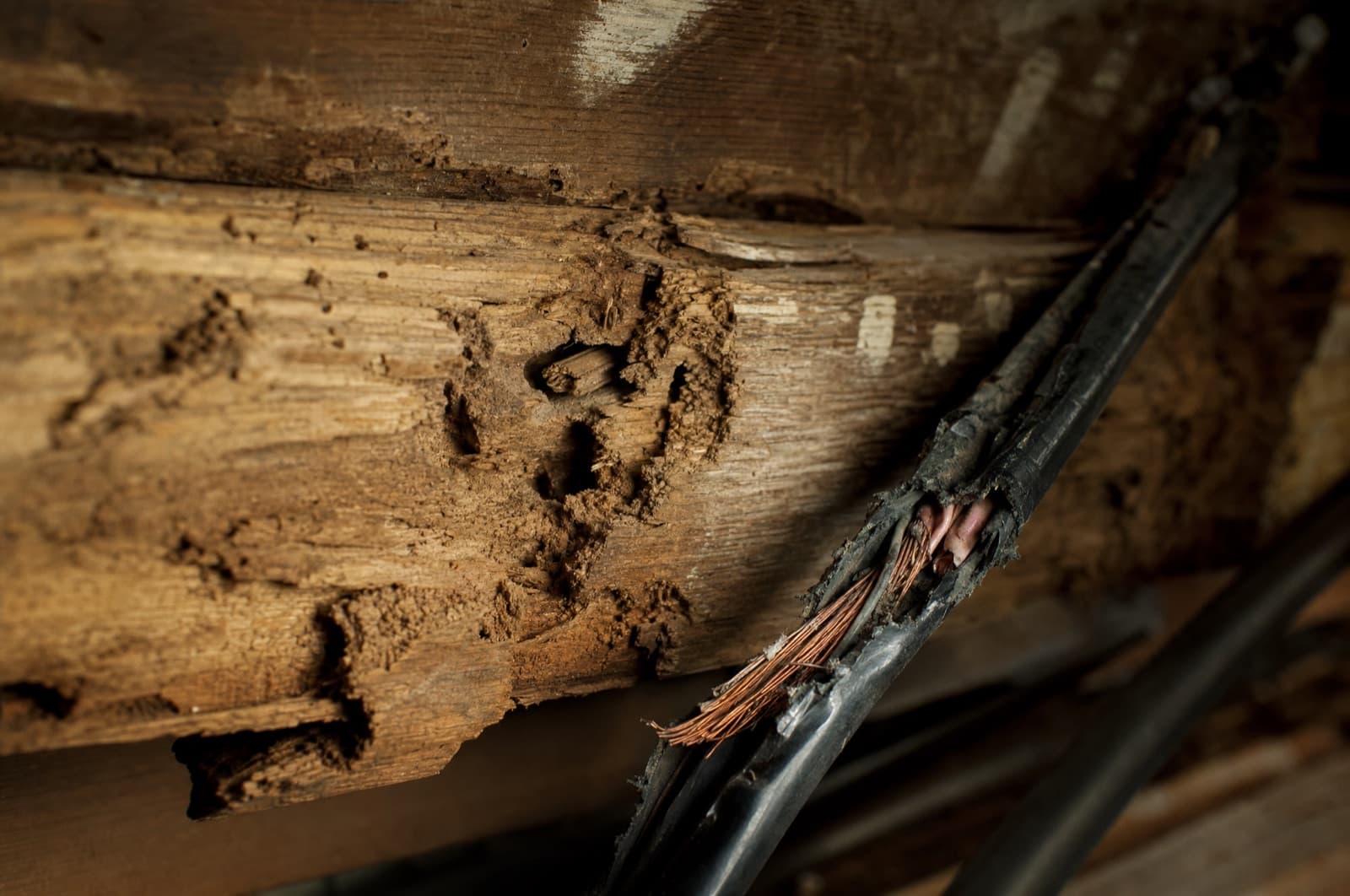
Pest damage evidence — a gnawed structural beam and a chewed electrical wire
Daniel Brady · NH-Licensed Pesticide Applicator · License #782664
Reviewed by Daniel Brady

Do cockroaches damage anything besides food?

Cosmetic — real staining and grazing, invented fire risk
Beyond food, cockroaches stain surfaces with their droppings, produce musty odors, and feed on paper, book bindings, fabric, and starchy sizing — UC IPM states plainly that they "destroy fabric and paper products, and impart stains and unpleasant odors to surfaces they contact." In heavy, long-ignored infestations, their conductive droppings and debris can foul electronics. But cockroaches do not meaningfully chew wiring, and the popular claim that roaches cause house fires is not supported by any fire authority's data. The genuinely well-documented risk beyond food is cockroach allergen, a leading asthma trigger.

At a glance

  • Can it?: Yes, but
  • How common: Occasional
  • Hype: Wildly overstated
  • Evidence: Debunked
The honest answer

The short of it

The verdict
Cosmetic — real staining and grazing, invented fire risk

Yes, cockroaches stain surfaces and feed on paper and starched fabric — but the widely repeated claim that they chew wiring and cause house fires is not supported by any fire authority.

The correction

What they claim vs. what the evidence supports

One shared severity track, two markers. The span between them is the hype delta — named out loud.

The claim — cockroaches chewing wiring, ruining electronics, and starting house fires

That cockroaches chew through wiring, ruin electronics, and cause electrical fires by living inside walls and appliances.

Where the claim comes from: Pest-control and electrician blog posts that pair roach infestations with dramatic fire-risk warnings.

Severity, 0–100
Hype says70
30Evidence says
Hype delta40point gapDebunked
The evidence

Cockroaches genuinely stain surfaces with droppings, produce musty odors, and feed on paper, book bindings, and starched fabric — UC IPM states this directly. In heavy infestations, conductive droppings and debris can foul electronics. But cockroaches have no reason to chew wiring insulation, which offers them no nutritional value, and the U.S. Fire Administration attributes residential electrical fires to wiring and distribution faults, not to any pest.

The gap

The staining and paper/fabric feeding are real and well documented. The fire narrative is invented — no fire authority has ever named cockroaches as an ignition source.

Correction
The claim
Cockroaches chew through wiring and cause electrical fires.
Why it is wrong
Cockroaches are not wire-eaters — insulation offers them no nutritional value, unlike a rodent whose incisors require constant wear. The U.S. Fire Administration attributes residential electrical fires to wiring and electrical-distribution faults, not to any pest, and no fire authority names cockroaches as an ignition cause.
What is true instead
Damaged or faulty wiring is a leading residential-fire ignition source per the U.S. Fire Administration, and rodent gnawing is the recognized pest-related cause of wire damage — that is a rodent issue, not a cockroach one. What cockroaches genuinely do is stain surfaces, feed on paper and starched fabric, and, in heavy infestations, foul electronics with debris and droppings.
Source
U.S. Fire Administration, "Residential Building Electrical Fires"
Damage assessment

What is actually harmed

Damage verdict
Cosmetic — real staining and grazing, invented fire risk
CosmeticCan it?Yes, but
The specimen
Pest
Cockroaches, primarily German cockroaches
What is in question
Paper, book bindings, starched fabric, surfaces, and electronics under heavy infestation
How common
Occasional
Evidence
Well documented
Mechanism

Cockroaches graze paper sizing, glue, and starched fabric in much the same way silverfish do, and their droppings and regurgitation stain surfaces and produce musty odor over time. In heavy, long-ignored infestations, accumulated droppings and debris can bridge or corrode electronic contacts and contribute to malfunctions — a mechanism distinct from, and far less consequential than, the wiring-chewing and fire claims commonly attached to roaches.

Actually at risk4
  • Paper and book bindings
  • Starched or sized fabric
  • Surfaces exposed to droppings, which stain and develop musty odor
  • Electronics under a heavy, sustained infestation
Not at risk — despite the myth3
  • Building structure, at any infestation level
  • Wiring insulation integrity — cockroaches have no nutritional reason to chew it, unlike rodents
  • Fire safety in any documented sense — no fire authority attributes ignition to cockroaches
Worst realistic case
A severe, long-neglected infestation fouling a device board and heavily staining porous surfaces — a real cleanup and possibly a device repair, but never a fire, and still recoverable with cleaning or appliance service.

Assessed from: UC IPM Cockroaches; U.S. Fire Administration Residential Building Electrical Fires; NEJM Inner-City Asthma Study; CDC cockroach allergen guidance

The compounding clock

Does it get worse if you ignore it?

Over time
Compounds

It compounds with the population, not with time alone — more roaches means more staining, more debris, and, rarely, more fouled electronics.

The timeline
3 stages
  1. WeeksReversible

    Droppings and light staining appear on surfaces the population crosses regularly — still just a wipe-clean issue.

  2. MonthsReversible

    A growing population increases paper and fabric grazing and debris accumulation in appliance voids and behind outlets and fixtures.

  3. One seasonReversible

    A severe, long-ignored infestation can foul an electronic device's contacts or heavily stain porous surfaces — the honest ceiling case, not the typical outcome.

What stops the clock
Eliminating the roach population through targeted baiting and harborage treatment — never fogging, which scatters roaches rather than reaching them.
Repair scope

Who actually fixes this

Scope, not dollars — the honest answer to “how expensive is it,” routed to the right trade.

Who fixes it
Pest pro first
Effort
A trade visit

Nothing stays clean while the population is active — treating the roaches is the real fix, and cleaning or stain removal afterward is a followup, not a substitute.

The right order
  1. 1
    Treat the roach population with targeted baiting and harborage treatment
  2. 2
    Clean and sanitize stained surfaces and affected paper or fabric items
  3. 3
    Have an electrician or appliance technician evaluate any device with an actual malfunction — never assume a fire risk from roaches alone
Route by symptom
  • Licensed electricianWiring is behaving oddly for reasons unrelated to roaches — have it checked regardless, since a coincidental fault is possible
Do not
  • Don't attribute a fire risk to cockroaches — no fire authority does
  • Don't use bug bombs or foggers, which scatter roaches rather than reaching their harborage
Where we help — and where we don't

Cockroach control is squarely Anchor's lane. Any electrical evaluation is an electrician's job, not ours — and we won't imply a fire risk that the evidence doesn't support.

Health risk

The health angle

Cockroach allergen (Bla g 1 and Bla g 2), a well-documented asthma trigger, especially in children

Caution
Who is at risk
  • Children living in homes with an active cockroach population
  • Individuals with asthma or allergic respiratory sensitivity
Precautions
  • Reduce clutter and food debris that sustain a roach population
  • Clean surfaces roaches regularly contact
  • Resolve the infestation itself, not just the visible mess it leaves behind
  • Ventilate and dust-control the home while treatment is underway
Do not
  • Don't assume respiratory symptoms are unrelated to a known infestation
  • Don't rely on foggers as a substitute for actual treatment
When to seek care

See a doctor if a household member, particularly a child, has ongoing or worsening asthma or allergy symptoms in a home with a known cockroach population — allergen exposure is a recognized, treatable contributor.

Health guidance from: NEJM Inner-City Asthma Study (1997); CDC cockroach allergen guidance

In depth

The full picture

01

What cockroaches genuinely damage beyond food

UC IPM, a leading university extension source, states directly that cockroaches "destroy fabric and paper products, and impart stains and unpleasant odors to surfaces they contact." That's a real and well-documented mechanism: cockroaches graze the starchy sizing and glue in book bindings, starched fabric, and wallpaper paste in much the same way silverfish do, and their droppings and regurgitation leave dark staining and musty odor wherever they travel repeatedly.

That staining and grazing is genuine cosmetic damage — annoying, sometimes stubborn, but never structural. It's the honest, sourced part of this question, and it deserves to be said plainly without either inflating it or dismissing it.

02

The fire claim, debunked directly

The specific claim that cockroaches chew through wiring and cause electrical fires does not hold up. Cockroaches have no chewing adaptation aimed at insulation, and more fundamentally, wire insulation has no nutritional value to a roach the way it does — through obligate incisor wear — to a rodent. The U.S. Fire Administration's residential electrical-fire data attributes ignition to wiring and electrical-distribution faults, and no fire authority names cockroaches as a contributing factor anywhere in that data.

This is worth being direct about because it's the biggest gap on this page: a claimed severity around 70 against an evidence-supported severity closer to 30 is a wildly overstated hype delta, and the fire framing specifically is what's driving that gap, not the staining and paper-feeding facts, which are genuinely well documented.

03

What heavy infestations can do to electronics

There is a real, if narrower, electronics angle worth naming honestly. In a severe, long-ignored infestation, accumulated droppings, shed skins, and body debris can bridge or foul electrical contacts, occasionally contributing to a device malfunction. That's a mechanism grounded in fouling and debris buildup, not gnawing, and it requires a genuinely heavy population sustained over time — it is the exception, not something that happens with an ordinary kitchen roach sighting.

04

The better-documented risk: allergen, not fire

The genuinely well-documented health risk hiding behind this question isn't fire — it's allergen. Cockroach allergen, specifically Bla g 1 and Bla g 2, is rigorously documented in the medical literature as a leading asthma trigger, with a landmark New England Journal of Medicine study linking exposure to asthma morbidity in inner-city children specifically. That risk accumulates in household dust wherever a cockroach population is active, and it's the health concern worth acting on — not a fire risk the evidence doesn't support.

Key takeaways
5 points
  • Yes — cockroaches stain surfaces and feed on paper, book bindings, and starched fabric.
  • No fire authority attributes residential fires to cockroaches — the fire-risk claim is debunked, not merely overstated.
  • Cockroaches have no reason to chew wiring insulation; that's a rodent behavior, not a roach one.
  • Heavy, long-ignored infestations can foul electronics through debris accumulation, not gnawing.
  • The better-documented health risk beyond food is cockroach allergen, a leading asthma trigger.

Roaches beyond the pantry? We'll tell you what's real and what isn't.

Anchor treats the population directly — no fear-based upsell about wiring or fires that the evidence doesn't support.

Follow-up questions

Frequently asked

Sources & citations(4)
  1. UC IPM — Cockroaches

    Cockroaches destroy fabric/paper products and stain surfaces they contact; allergen risk

    extensionverified 2026-07-16
  2. U.S. Fire Administration — Residential Building Electrical Fires

    Residential electrical fires attributed to wiring/distribution faults; no pest, including cockroaches, is a recognized ignition factor

    fireverified 2026-07-16
  3. CDC Stacks — Inner-City Environments and Mitigation of Cockroach Allergen

    Cockroach allergen exposure findings in inner-city homes

    govverified 2026-07-16

Written & reviewed by

Verified

Daniel Brady

NH-Licensed Pesticide Applicator · License #782664 (NHDAMF, RSA 430)

Daniel Brady is the New Hampshire–licensed applicator behind Anchor Pest Services, a family-owned pest control company serving the Manchester area since 2017.

Verify license

Last updated Jul 2026

Honest pest help for New Hampshire homes

We Correct the Fire Myth. We Still Treat the Roaches.

Cockroaches stain surfaces and feed on paper and fabric — real, documented damage. What they don't do is chew wiring or start fires, no matter what you've read. Anchor Pest Services treats the actual infestation with targeted baiting, not fear. Family-owned since 2017, NH license #782664, serving Manchester, Nashua, Concord and nearby towns.

  • Honest advice — we debunk the fire myth instead of using it to sell
  • NH-licensed applicators (#782664) — free inspection, same-day service
  • Cockroach control across southern and central New Hampshire

NH License #782664 · No obligation · We answer in person