
Skip to content
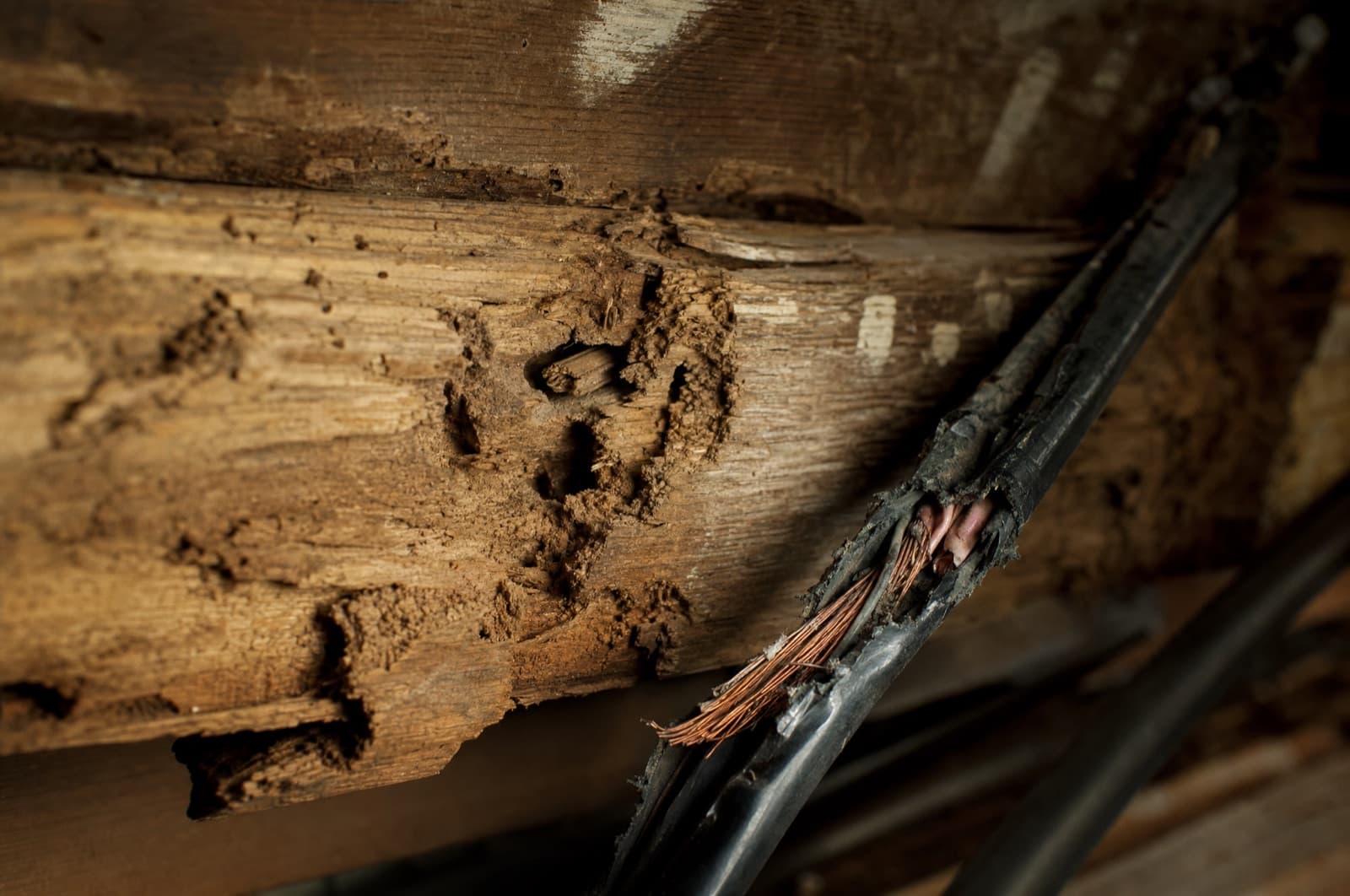
Pest damage evidence — a gnawed structural beam and a chewed electrical wire
Daniel Brady · NH-Licensed Pesticide Applicator · License #782664
Reviewed by Daniel Brady

Can rodent nests cause bad odors or mold growth?

Functional damage — the odor and insulation loss are earned; mold is real but indirect
Yes. Rodent nests genuinely cause bad odors — concentrated urine dries to a sharp ammonia smell that soaks into insulation, cardboard, and unfinished wood and lingers after the rodents are gone. Nesting also shreds and compresses insulation, cutting its R-value, which is a real functional loss. Mold is the more indirect claim: urine adds moisture to nesting material, and moisture is what mold actually needs, so a heavily soiled nest can support mold nearby — but that's a secondary effect, not rodents directly causing mold. The bigger, specific health concern with deer mice is hantavirus, not mold.

At a glance

  • Can it?: Yes, but
  • How common: Routine
  • Hype: About right
  • Evidence: Well documented
  • 890 cases

    Lab-confirmed U.S. hantavirus cases 1993-2023 — serious but rare

    CDC — About Hantavirus

  • about 94 percent

    Share of U.S. hantavirus cases occurring west of the Mississippi River

    CDC — About Hantavirus

  • about 38 percent

    Case-fatality rate of hantavirus pulmonary syndrome

    CDC — About Hantavirus

The honest answer

The short of it

The verdict
Functional damage — the odor and insulation loss are earned; mold is real but indirect

Yes — rodent nests reek and wreck insulation; the mold angle is real but indirect: their urine adds moisture, and moisture is what actually grows mold.

The correction

What they claim vs. what the evidence supports

One shared severity track, two markers. The span between them is the hype delta — named out loud.

The claim — rodent nests causing mold and 'toxic air' throughout a home

That rodent nests cause mold and contaminate the air throughout the whole house — often framed as an urgent, whole-home air-quality emergency.

Where the claim comes from: Wildlife-removal and attic-insulation-replacement vendor marketing.

Severity, 0–100
Hype says60
48Evidence says
The hype is fairWell documented
The evidence

The odor — concentrated ammonia from dried urine — and the insulation degradation from shredding and compressing are both genuinely well documented. Mold is a real but secondary possibility: urine adds moisture to insulation and nesting material, and moisture is what mold actually needs, so heavily soiled, damp nesting material can become a localized mold site. The bigger, specific health concern with deer mice is hantavirus, which is rare in New Hampshire but genuinely serious where it occurs.

The gap

The smell and the ruined insulation are earned, real problems — the 'mold' part is really just 'urine is wet,' and the health headline here should be hantavirus, not mold.

Damage assessment

What is actually harmed

Damage verdict
Functional damage — the odor and insulation loss are earned; mold is real but indirect
FunctionalCan it?Yes, but
The specimen
Pest
House mice, Norway rats, and roof rats nesting in walls, attics, or crawl spaces (deer mice specifically for the hantavirus note)
What is in question
Insulation, indoor air, and nearby framing or sheathing where nesting material traps moisture
How common
Routine
Evidence
Well documented
Mechanism

Rodents shred insulation, cardboard, and soft material to build nests, physically compressing and displacing the fill that gives insulation its R-value. Urine and feces deposited in and around the nest dry to a sharp ammonia odor that soaks into porous material and lingers well after the rodents are gone. That urine also adds moisture to the nest and surrounding insulation — and moisture, not the rodent itself, is what mold needs to establish, so a heavily soiled, damp nest can become a secondary mold-supporting site nearby.

Actually at risk4
  • Insulation R-value and fill integrity — shredded, compressed insulation stops insulating as designed
  • Indoor air and lingering odor from dried urine soaked into insulation, wood, and cardboard
  • A localized mold risk in heavily soiled, moisture-laden nesting material and adjacent insulation
  • Deer-mouse droppings, urine, and nesting material specifically — a hantavirus exposure risk when disturbed or aerosolized
Not at risk — despite the myth3
  • Framing, studs, and joists are not structurally weakened by a nest itself
  • A dry, undisturbed nest with no urine moisture does not independently grow mold
  • The building's structural soundness in any nest-only scenario
Worst realistic case
Heavy attic or wall contamination requiring insulation removal and professional decontamination — a real, sizable cleanup and insulation project, but not a structural one. Hantavirus precautions matter most during that cleanup when deer mice are the species involved.

Assessed from: CDC About Hantavirus; CDC Clinician Brief HPS; NH DHHS Hantavirus; EPA A Brief Guide to Mold, Moisture and Your Home

The compounding clock

Does it get worse if you ignore it?

Over time
Compounds

It compounds while the rodents keep nesting — a dead, dried-out nest's odor fades, but the contamination stays until it's cleaned out.

The timeline
3 stages
  1. WeeksReversible

    Fresh nesting and urine deposits build an ammonia odor and begin compressing insulation in active areas.

  2. MonthsReversible

    Continued nesting activity spreads contamination across more insulation, deepens the odor, and raises the chance that moisture-laden material starts supporting localized mold.

  3. One seasonReversible

    An abandoned nest's odor fades as it dries out, but the insulation stays compressed, contaminated, and reduced in R-value until it's actually removed.

What stops the clock
Exclude and remove the rodents, then remove and replace the contaminated insulation. Odor and mold risk both trace back to the same urine-soaked material — it has to come out, not just dry out.
Repair scope

Who actually fixes this

Scope, not dollars — the honest answer to “how expensive is it,” routed to the right trade.

Who fixes it
Pest pro first
Effort
A trade visit

Nothing about the contamination resolves while rodents are still actively nesting — the animals have to be excluded first, and only then does cleanup or insulation replacement hold.

The right order
  1. 1
    Anchor: exclude and remove the rodents, sealing entry points
  2. 2
    Qualified remediation or an insulation contractor: remove and replace contaminated insulation, following hantavirus-safe wet-cleanup practice at any deer-mouse site
  3. 3
    Homeowner: ventilate and monitor the space once cleanup is complete
Route by symptom
  • Qualified remediationcontamination is heavy, moisture-laden, or the nest is a deer-mouse site — wet-cleanup methods and professional handling reduce hantavirus exposure risk
  • Licensed contractorinsulation removal requires opening a finished wall or ceiling cavity
Do not
  • Never dry-sweep or vacuum rodent droppings or nesting material — this can aerosolize hantavirus; use wet-cleanup methods and route heavy contamination to remediation
  • Don't just deodorize over a soiled nest without removing the contaminated material — the odor and moisture will come back
Where we help — and where we don't

Anchor genuinely does the rodent exclusion and removal — that's squarely our lane. We do not do large-scale urine decontamination or insulation replacement; those route to a qualified remediation firm or insulation contractor.

Health risk

The health angle

Hantavirus — a rare but serious respiratory illness linked to deer-mouse droppings, urine, and nesting material

Caution
Who is at risk
  • Anyone disturbing deer-mouse nesting material, droppings, or urine without care, especially in enclosed cabins, sheds, or storage areas
  • People cleaning up heavy rodent contamination without wet-cleanup precautions
Precautions
  • Do not dry-sweep or vacuum rodent droppings or nesting material
  • Ventilate the area before cleanup and use wet-cleaning methods rather than dry methods
  • Treat heavy contamination as a job for professional cleanup rather than a DIY weekend project
Do not
  • Don't dry-sweep or vacuum droppings or nesting material
  • Don't assume hantavirus can't happen in New Hampshire — it's rare here, but the precaution costs nothing
When to seek care

See a doctor promptly if flu-like symptoms develop within a few weeks of exposure to rodent droppings, urine, or nesting material, particularly after cleaning an attic, shed, or storage area without precautions.

Health guidance from: CDC — About Hantavirus; NH DHHS — Hantavirus

In depth

The full picture

01

What a rodent nest actually does to insulation and air

Rodents shred fiberglass batts, blown-in cellulose, cardboard, and any soft material they can reach to build a nest, physically compressing and displacing the fill that gives insulation its insulating value. That's a genuine functional loss — the insulation is still there, but it no longer performs the way it was installed to. Urine and droppings deposited in and around the nest add to the problem, soaking into the surrounding material.

02

The odor is real, and it lingers

Concentrated rodent urine dries to a sharp, unmistakable ammonia smell that soaks into porous material — insulation, cardboard, unfinished wood — and can persist well after the rodents themselves are gone. This is one of the most consistently reported effects of an established nest, and it's genuinely earned; it doesn't need exaggeration to be worth taking seriously.

03

Where mold actually fits — moisture, not the rodent

The mold claim is where the story gets overstated if left unexamined. Urine is fundamentally a liquid, and adding liquid to insulation and nesting material introduces moisture — the one ingredient mold actually needs. So a heavily soiled, urine-saturated nest can become a localized site where mold takes hold, but the mechanism runs through moisture, not through anything the rodent is doing that directly seeds fungal growth. Call this what it is: plausible and secondary, not a direct, well-established cause.

04

The bigger health story: hantavirus, not mold

The health headline that deserves attention here is hantavirus, tied specifically to deer mice. Nationally, the CDC reports 890 laboratory-confirmed hantavirus cases in the United States from 1993 through 2023, with roughly 94 percent occurring west of the Mississippi River and a case-fatality rate of around 38 percent — a serious illness, even though it's rare overall. New Hampshire's own health department reports that, to date, there has not been a confirmed hantavirus pulmonary syndrome case acquired in the state. That combination — genuinely serious disease, genuinely rare locally, but not zero — is exactly why wet-cleanup precautions around rodent nests are worth following even here, without needing to inflate the risk.

Key takeaways
5 points
  • Yes — rodent urine causes a real, lingering ammonia odor, and nesting genuinely damages insulation R-value.
  • The mold connection is real but indirect: urine adds moisture, and moisture is what mold needs — it's not rodents directly causing mold.
  • The bigger, specific health concern with deer mice is hantavirus, which is rare in New Hampshire but serious where it occurs.
  • Resolve the rodents first — nothing you clean stays clean while they're still active.
  • Heavy contamination and insulation replacement route to remediation or an insulation contractor, not DIY cleanup.
New Hampshire context

What this looks like in New Hampshire attics and walls

As overnight temperatures fall toward Manchester's first hard frost — historically around October 19 to 29, per NOAA — mice and rats push into attics, wall voids, and crawl spaces across southern and central New Hampshire looking for exactly the insulation and quiet they need to nest. Deer mice, the primary U.S. hantavirus vector, are a real New Hampshire species, which is why wet-cleanup precautions matter here even though NH DHHS reports no confirmed case acquired in the state to date.

  • NH-licensed #782664

    Southern New Hampshire

  • Family-owned

    Since 2017

  • Honest routing

    Even when it isn’t us

We serve these communities

ManchesterNashuaConcordDerryBedfordSalemHudsonAmherstAuburnGoffstownHooksettLitchfieldLoudonMilfordBristol

Service Area Map

Southern New Hampshire

BristolPop. 3,200LoudonPop. 5,500ConcordPop. 43,900HooksettPop. 14,800GoffstownPop. 18,000AuburnPop. 5,700ManchesterPop. 115,600BedfordPop. 23,300LitchfieldPop. 8,500AmherstPop. 11,300DerryPop. 34,500MilfordPop. 15,700HudsonPop. 25,600NashuaPop. 91,100SalemPop. 30,000HQCityHover for info

Rodent nest smell in your attic or walls? Resolve the rodents first.

Anchor excludes and removes the animals — the step that makes cleanup and insulation replacement stick.

Follow-up questions

Frequently asked

Sources & citations(4)
  1. CDC — About Hantavirus

    National hantavirus case counts (890 cases 1993-2023) and case-fatality context

    govverified 2026-07-16
  2. CDC — Clinician Brief: Hantavirus Pulmonary Syndrome

    Deer mouse as the primary U.S. hantavirus vector

    govverified 2026-07-16
  3. NH DHHS — Hantavirus

    No confirmed hantavirus pulmonary syndrome case acquired in New Hampshire to date

    govverified 2026-07-16
  4. EPA — A Brief Guide to Mold, Moisture and Your Home

    Mold requires moisture on an organic surface to establish

    govverified 2026-07-16

Written & reviewed by

Verified

Daniel Brady

NH-Licensed Pesticide Applicator · License #782664 (NHDAMF, RSA 430)

Daniel Brady is the New Hampshire–licensed applicator behind Anchor Pest Services, a family-owned pest control company serving the Manchester area since 2017.

Verify license

Last updated Jul 2026

Honest pest help for New Hampshire homes

We Remove the Rodents. Remediation Handles the Rest.

The ammonia smell and ruined insulation from a rodent nest are real, and the mold risk is a real but secondary effect of the moisture involved. Anchor Pest Services excludes and removes the rodents — genuinely our lane — while heavy decontamination and insulation replacement route to a qualified remediation firm or insulation contractor, and we'll say so plainly. Family-owned since 2017, NH license #782664, serving Manchester, Nashua, Concord and nearby towns.

  • Honest advice — we route large-scale cleanup to the right specialist
  • NH-licensed applicators (#782664) — free inspection, same-day service
  • Rodent exclusion and removal across southern and central New Hampshire

NH License #782664 · No obligation · We answer in person