
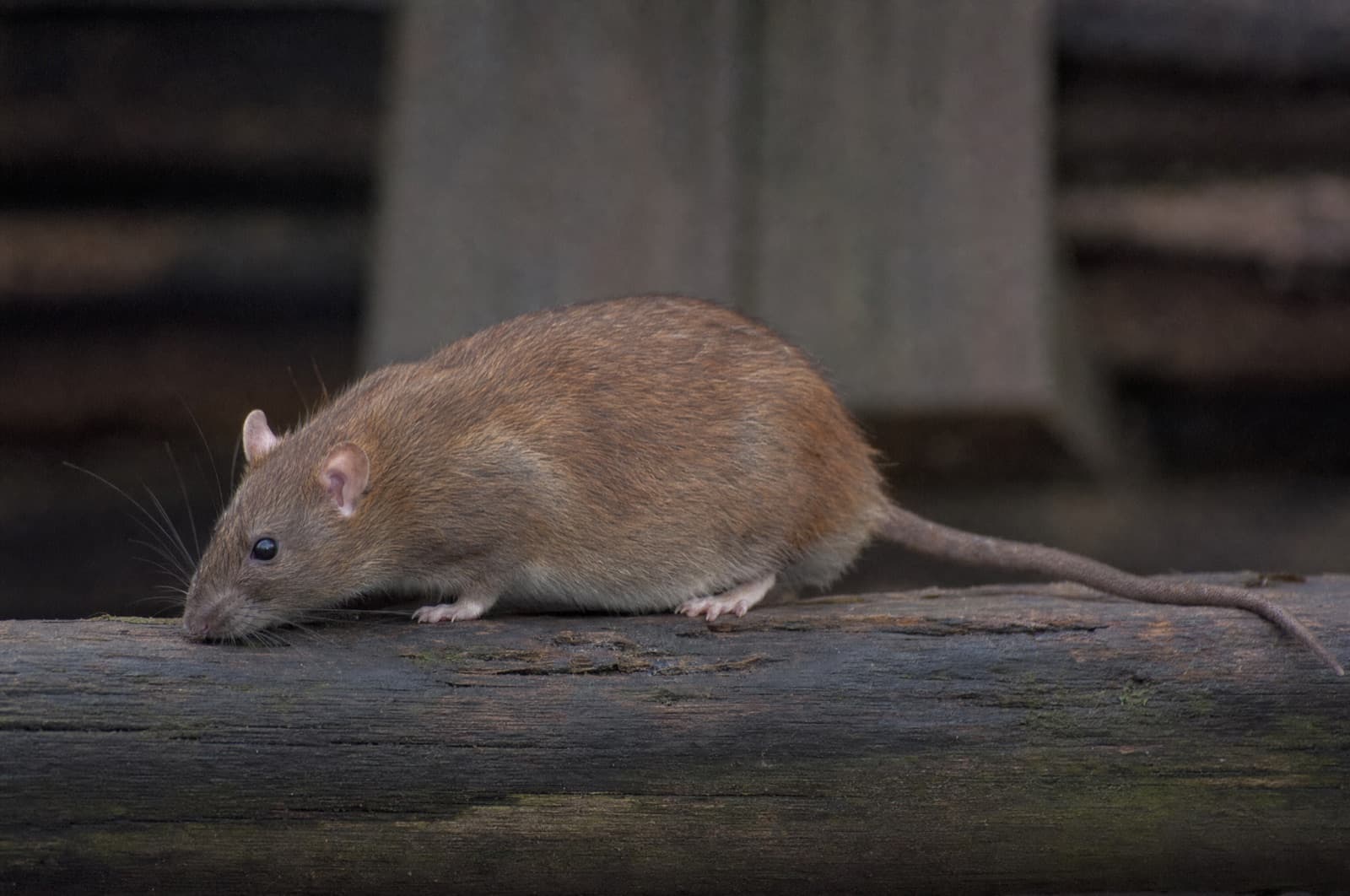
When Are Rats Most Active? NH Rat Timing Guide
At a glance
- Activity pattern: NocturnalTwo peaks: ~30–60 min after dusk and before dawn — CDC
- Winter behavior: No hibernationShelter indoors year-round in NH — UNH Extension
- Peak home-entry: Sept–NovFall cold-drive indoors ahead of first frost (~Oct 19, Manchester)
- Daytime sightings: Sign of heavy infestationRats seen by day usually mean crowding — CDC
Activity pattern
Nocturnal
Two peaks: ~30–60 min after dusk and before dawn — CDC
Winter behavior
No hibernation
Shelter indoors year-round in NH — UNH Extension
Peak home-entry
Sept–Nov
Fall cold-drive indoors ahead of first frost (~Oct 19, Manchester)
Daytime sightings
Sign of heavy infestation
Rats seen by day usually mean crowding — CDC
The short of it
Rats are nocturnal and peak 30–60 minutes after dusk and again just before dawn — every month of the year in New Hampshire.
When are they active — the whole year at a glance
Norway rats are active every month in New Hampshire, but the risk of a rat moving into your home spikes in fall as outdoor food disappears and temperatures fall toward the first frost.
Best window to act · Late summer to early fall (August–September) — seal entry points and set a control plan before the October–November indoor surge.
Peak months reflect the highest risk of rats entering NH homes, anchored to the Manchester first-frost date (Oct 19, 50% probability — NOAA 1991–2020).
What time of day are they active?
Rats have poor eyesight and rely on smell and touch, so they use darkness and quiet to move safely along walls. Their night is bracketed by two clear activity peaks.
If you hear scratching in walls or ceilings shortly after lights-out and again near sunrise, that timing is a strong rat signal. Rats seen moving in daylight usually indicate a large, crowded colony.
A day in their clock
- Dusk (first 1–3 hrs after dark)peak
- Late nightactive
- Pre-dawn (last hour before sunrise)peak
- Daytimelow
Winter behavior
A common question in New Hampshire is where rats go in the winter. The answer is rarely 'away.'
Active all winter
Rats do not hibernate. As outdoor temperatures fall, Norway rats move into heated structures — basements, wall voids, crawlspaces, garages, and beneath porches — and stay active there all winter, foraging indoors at night.
Move in
Late September through November, ahead of and just after the first hard frost.
Active all winter
Rats do not hibernate. As outdoor temperatures fall, Norway rats move into heated structures — basements, wall voids, crawlspaces, garages, and beneath porches — and stay active there all winter, foraging indoors at night.
Spring exit
Some rats return to outdoor burrows in spring, but any that have established a food source indoors often stay year-round.
A year in the life
Rat behavior shifts with the New Hampshire seasons even though the animals never fully go dormant.
- 01
Spring
Breeding accelerates as daylight increases. Rats that overwintered indoors expand foraging, and outdoor burrows become active again. Early spring is the best time to seal entry points before populations grow.
- 02
Summer
Peak outdoor population. Abundant food and cover mean rats often stay outside, but they remain nocturnal and can exploit gardens, compost, and trash.
- 03
Fall
The highest-risk season for homeowners. Falling temperatures and shrinking outdoor food drive rats toward warm buildings, peaking around the first frost in mid-to-late October.
- 04
Winter
Rats are sheltered indoors and active all night. Scratching noises, droppings, and gnaw marks are most commonly reported now because the animals are concentrated inside heated spaces.
Rats in southern New Hampshire
Norway rats are the dominant rat in New Hampshire, common in Manchester, Nashua, and Concord wherever food and shelter meet — near restaurants, older housing, waterfronts, and outbuildings. Because NH winters are long and cold, rats depend heavily on heated buildings to survive, which is why indoor activity peaks exactly when the weather turns.
Key local data
First hard frost in Manchester averages October 19 (50% probability), the tipping point for fall rat migration indoors — NOAA 1991–2020.
We serve these communities
- NH-licensed applicator · #782664
- Same-day service
- Family-owned since 2017
Service Area Map
Southern New Hampshire
Timing your treatment
Because rats reproduce quickly and stay active year-round, timing your response matters. The cheapest, most effective window is before fall migration — but any active sign warrants immediate action.
Rodent Control
Free inspection and same-day rodent service across southern New Hampshire. NH-licensed #782664.
Learn more about this pestFrequently asked
Sources & references
- CDC — Rodents
nocturnal activity, daytime sightings indicate large infestations
- UNH Cooperative Extension — Rodent management
Norway rats shelter in NH structures in winter
- NOAA NCEI — Freeze/Frost data (NH 1991–2020)
Manchester first hard frost ~Oct 19
- University of California IPM — Rats
reproduction rate, activity patterns
Editorial disclaimer: This content is provided for informational purposes only and does not constitute pest control advice. Every property is unique — consult a licensed professional for guidance specific to your situation. Anchor Pest Services is licensed in New Hampshire (#782664).
Written & reviewed by
VerifiedDaniel Brady
NH-Licensed Pesticide Applicator · License #782664 (NHDAMF, RSA 430)
Daniel Brady is the New Hampshire–licensed applicator behind Anchor Pest Services, a family-owned pest control company serving the Manchester area since 2017.
Last updated Jul 2026
Anchor Pest Services
Whatever the season — we handle the timing for you.
Same-day service across Southern New Hampshire. NH-licensed #782664, family-owned since 2017. We track the local calendar so you don't have to guess the right window.
- NH-licensed applicator
- Same-day service
- Pet & family-conscious
NH License #782664 · No obligation · We answer in person
Your next step
- Book a NH pro
Rodent Control in New Hampshire
Mice and rats move indoors every fall. We trap, seal entry points and keep them out.
Book now - Next step
How to Use the Victor Electronic Mouse Trap
Read the answer - Related guide
Where Do Mice Go in the Winter? NH Mouse Timing Guide
Read the answer - Related guide
Where Do Squirrels Go in the Winter? NH Timing Guide
Read the answer - Also relevant
Norway Rat in New Hampshire — ID, Signs & Control
Read the answer - Also relevant
Roof Rat in New Hampshire — Or Is It a Squirrel?
Read the answer