
Skip to content
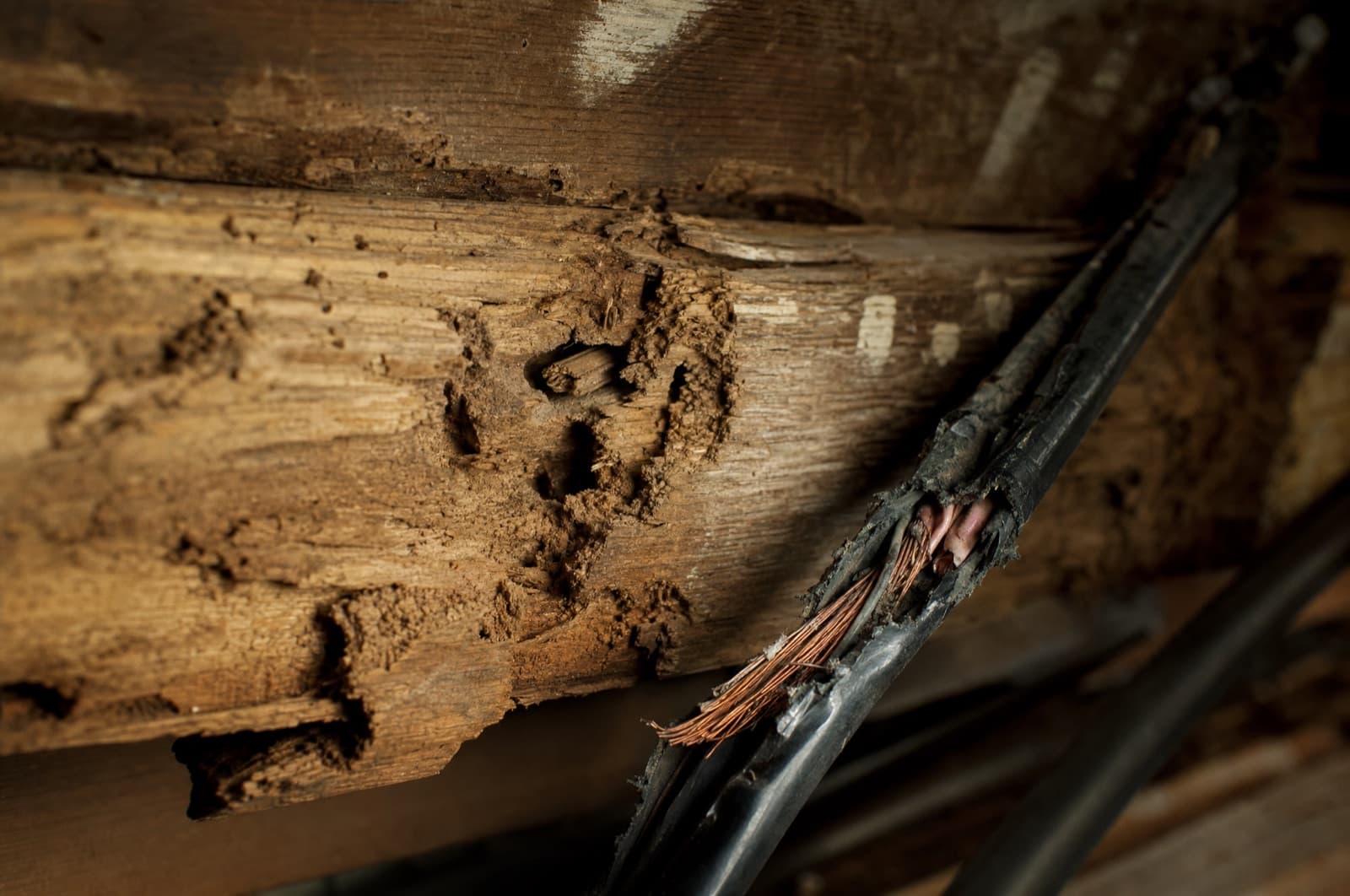
Pest damage evidence — a gnawed structural beam and a chewed electrical wire
Daniel Brady · NH-Licensed Pesticide Applicator · License #782664
Reviewed by Daniel Brady

Do insects cause mold or mildew problems?

No causal link — the bugs are a symptom, not the cause
No. Insects do not cause mold or mildew. Mold needs one thing above all — moisture on an organic surface — and it doesn't require any insect to be present. Moisture-loving insects like silverfish, springtails, camel crickets, sowbugs, and centipedes show up in the same damp basements and bathrooms mold does because they're independently chasing the same humidity, not because they're seeding fungal growth. Some, like springtails, actually feed on mold rather than causing it. Finding these insects is a genuinely useful early signal of a moisture problem — it just isn't evidence the bugs made the mold.

At a glance

  • Can it?: No
  • How common: Routine
  • Hype: Wildly overstated
  • Evidence: Well documented
The honest answer

The short of it

The verdict
No causal link — the bugs are a symptom, not the cause

No — insects don't cause mold. Mold needs moisture, not insects, and both independently follow the same dampness; fix the water and both problems go away.

The correction

What they claim vs. what the evidence supports

One shared severity track, two markers. The span between them is the hype delta — named out loud.

The claim — insects causing or bringing mold and mildew into a home

'Pests cause mold' or 'insects bring mold into your home' — the idea that finding moisture-loving bugs like silverfish or springtails is itself the source of a mold problem, rather than a symptom of one.

Where the claim comes from: Pest-marketing blog posts that frame an insect sighting as the origin of a mold or air-quality problem.

Severity, 0–100
Hype says70
10Evidence says
Hype delta60point gapWell documented
The evidence

Mold grows wherever spores — already present nearly everywhere, indoors and out — land on a wet, organic surface. No insect is required for that to happen, and none of the commonly blamed insects have any biological mechanism to seed or cause fungal growth. Silverfish, springtails, camel crickets, sowbugs, and centipedes are found in the same damp places mold is because they independently require high humidity to survive; springtails specifically feed on mold and fungi rather than producing it.

The gap

It's correlation dressed up as causation. The moisture defect is the actual problem; the insects are witnesses at the scene, not the cause.

Damage assessment

What is actually harmed

Damage verdict
No causal link — the bugs are a symptom, not the cause
No property damageCan it?No
The specimen
Pest
Silverfish, springtails, camel crickets, sowbugs/pillbugs, and centipedes — the arthropods most often blamed for mold
What is in question
Damp basements, bathrooms, crawl spaces, and other moisture-affected surfaces
How common
Routine
Evidence
Well documented
Mechanism

Mold requires moisture and an organic surface to establish, and mold spores are already ubiquitous in both outdoor and indoor air — no insect vector is needed or biologically possible. These insects independently seek the same high-humidity conditions mold favors, which is why the two are so often found together; springtails go a step further and directly consume mold and fungi rather than causing it. The apparent link is two separate populations responding to one shared root cause: moisture.

Actually at risk3
  • The moisture problem itself, which independently damages drywall, wood, and finishes and is what actually lets mold establish
  • Materials already exposed to standing water or chronic dampness — the substance mold actually consumes and degrades
  • Indoor comfort and air quality wherever mold IS already established, which is a moisture problem, not an insect one
Not at risk — despite the myth3
  • Nothing is being 'caused' to mold by these insects — the causal claim itself does not hold up under the evidence
  • A dry space with silverfish or springtails present but no moisture problem will not develop mold from their presence
  • Spraying or removing the insects does nothing on its own to address an existing moisture or mold problem
Worst realistic case
A homeowner treats the bugs, assumes the problem is solved, and ignores the genuine water intrusion or condensation issue underneath — letting an actual mold and material-degradation problem keep progressing because the real cause was never addressed.

Assessed from: EPA A Brief Guide to Mold, Moisture and Your Home; UMN Extension Springtails; University of Maryland Extension Springtails; Texas A&M AgriLife Extension Springtails

The compounding clock

Does it get worse if you ignore it?

Over time
Compounds

The insects aren't the clock — the moisture is. Left alone, a damp space keeps degrading regardless of what bugs are living in it.

The timeline
3 stages
  1. DaysReversible

    A fresh damp spot or leak that isn't dried out promptly begins to create the conditions mold needs, while moisture-loving insects start showing up in the same area.

  2. WeeksReversible

    Persistent dampness lets mold establish on drywall, wood, or fabric in the affected area, while the insect population that follows the humidity continues to build.

  3. MonthsReversible

    An unaddressed moisture source — a leak, poor grading, or a condensation problem — lets mold spread across a wider area and degrade more material, independent of anything the insects are doing.

What stops the clock
Find and correct the moisture source — a leak, poor grading, condensation, or inadequate ventilation. The insects disappear on their own once the space is dry; treating them without fixing the water accomplishes nothing lasting.
Repair scope

Who actually fixes this

Scope, not dollars — the honest answer to “how expensive is it,” routed to the right trade.

Who fixes it
Plumber
Effort
A trade visit

The insects vanish once the space is dry, but the actual damage-causing problem is the moisture source itself — a plumbing, grading, or building-science defect, not a pest issue.

The right order
  1. 1
    Identify and correct the moisture source — a leak, poor grading, condensation, or a ventilation problem
  2. 2
    Clean any mold that has already established, matching the effort to the size of the affected area
  3. 3
    Let the moisture-indicator insects resolve on their own once the space stays dry
Route by symptom
  • Licensed contractorthe moisture source is structural — poor grading, a foundation crack, or inadequate drainage around the foundation
  • Qualified remediationmold has already established over a large or long-standing area and needs professional cleanup rather than routine homeowner cleaning
Do not
  • Don't treat the insects and consider the mold problem solved — it isn't, until the moisture source is fixed
  • Don't ignore recurring silverfish, springtails, or camel crickets in the same spot — they're a free, honest signal pointing at a moisture defect worth investigating
Where we help — and where we don't

This is genuinely not primarily an Anchor job. The fix is moisture and building science, and any established mold routes to qualified remediation. Anchor can address the moisture-indicator insects and the perimeter, but we'll say plainly that treating the bugs doesn't solve a mold problem — only fixing the water does.

In depth

The full picture

01

The arrow points the other way

Mold needs moisture landing on an organic surface, and spores capable of starting that growth are already present almost everywhere, indoors and out. No insect is a required ingredient. The EPA is direct about this: the key to mold control is moisture control, full stop — not pest control. When people notice bugs and mold together and assume one caused the other, they've mistaken two effects of the same cause for a cause-and-effect relationship between the two effects themselves.

02

Meet the messengers, not the cause

Silverfish, springtails, camel crickets, sowbugs, and centipedes are the insects most often blamed for 'bringing' mold indoors, and every one of them is there for the same reason mold is: high humidity. Many of these arthropods lack the physiology to conserve water the way drier-adapted insects can, so they're restricted to damp basements, bathrooms, and crawl spaces almost by biological necessity. Springtails take this a step further — extension entomologists note they actively feed on mold and fungi, meaning at least one of the usual suspects is a mold predator, not a mold cause.

03

What actually damages your home here

The genuine risk in a 'bugs and mold' scenario is the moisture itself. Standing water, a slow leak, or chronic condensation degrades drywall, wood, and finishes on its own timeline, entirely independent of any insect activity nearby. That's the damage worth naming and fixing — not the presence of a harmless silverfish or a beneficial mold-eating springtail sharing the same damp corner.

04

Why 'get rid of the bugs' never fixes it

Spraying or vacuuming up the insects addresses the symptom you can see, not the underlying condition that produced both the insects and the mold. Until the actual water source is identified and corrected, a damp basement stays a damp basement, and both mold and moisture-seeking insects keep returning. The honest, useful takeaway is to treat a recurring population of these insects as a free early warning about a moisture problem, and go find the water — not the bug spray.

Key takeaways
5 points
  • No — insects do not cause mold. Mold needs moisture on an organic surface, nothing else.
  • Silverfish, springtails, camel crickets, sowbugs, and centipedes follow the same moisture mold does — that's correlation, not causation.
  • Springtails actually feed on mold and fungi rather than producing it.
  • The real damage-causing agent is the moisture source itself, which needs a plumber, contractor, or remediation firm — not a pest treatment.
  • Treat a recurring population of these insects as a useful, free signal that a moisture problem exists nearby.
New Hampshire context

Damp New Hampshire basements are the classic setting

Older southern and central New Hampshire basements and crawl spaces, especially fieldstone-foundation homes, are exactly the kind of chronically humid space where silverfish, springtails, and camel crickets turn up alongside mold and mildew — not because the bugs caused it, but because both are responding to the same groundwater, grading, or condensation issue common in older construction. Correcting the moisture source resolves both problems at once.

  • NH-licensed #782664

    Southern New Hampshire

  • Family-owned

    Since 2017

  • Honest routing

    Even when it isn’t us

We serve these communities

ManchesterNashuaConcordDerryBedfordSalemHudsonAmherstAuburnGoffstownHooksettLitchfieldLoudonMilfordBristol

Service Area Map

Southern New Hampshire

BristolPop. 3,200LoudonPop. 5,500ConcordPop. 43,900HooksettPop. 14,800GoffstownPop. 18,000AuburnPop. 5,700ManchesterPop. 115,600BedfordPop. 23,300LitchfieldPop. 8,500AmherstPop. 11,300DerryPop. 34,500MilfordPop. 15,700HudsonPop. 25,600NashuaPop. 91,100SalemPop. 30,000HQCityHover for info

Seeing silverfish or springtails? Find the moisture, not just the bugs.

Anchor can address the insects and the perimeter — but we'll tell you plainly that fixing the moisture source is what actually solves this.

Follow-up questions

Frequently asked

Sources & citations(5)
  1. EPA — A Brief Guide to Mold, Moisture and Your Home

    Mold control is moisture control; mold requires moisture and will not grow without it

    govverified 2026-07-16
  2. EPA — Mold (main)

    General mold and moisture-control guidance

    govverified 2026-07-16
  3. UMN Extension — Springtails

    Springtails are harmless, moisture-driven, and feed on fungi and decaying matter

    extensionverified 2026-07-16
  4. University of Maryland Extension — Springtails

    Springtail infestations are associated with dampness and organic matter — a moisture indicator

    extensionverified 2026-07-16
  5. Texas A&M AgriLife Extension — Springtails

    Moisture and fungal growth sustain springtail populations; harmless to structures

    extensionverified 2026-07-16

Written & reviewed by

Verified

Daniel Brady

NH-Licensed Pesticide Applicator · License #782664 (NHDAMF, RSA 430)

Daniel Brady is the New Hampshire–licensed applicator behind Anchor Pest Services, a family-owned pest control company serving the Manchester area since 2017.

Verify license

Last updated Jul 2026

Honest pest help for New Hampshire homes

We'll Tell You It's the Moisture, Not the Bugs.

Insects don't cause mold — both are chasing the same dampness. Anchor Pest Services can treat the moisture-indicator insects and the perimeter, but the genuine fix is a plumber, contractor, or remediation professional addressing the water itself, and we'll route you there honestly rather than sell you a repeat treatment. Family-owned since 2017, NH license #782664, serving Manchester, Nashua, Concord and nearby towns.

  • Honest advice — we tell you when the real fix isn't a pest treatment at all
  • NH-licensed applicators (#782664) — free inspection, same-day service
  • Moisture-indicator pest control across southern and central New Hampshire

NH License #782664 · No obligation · We answer in person