
Skip to content
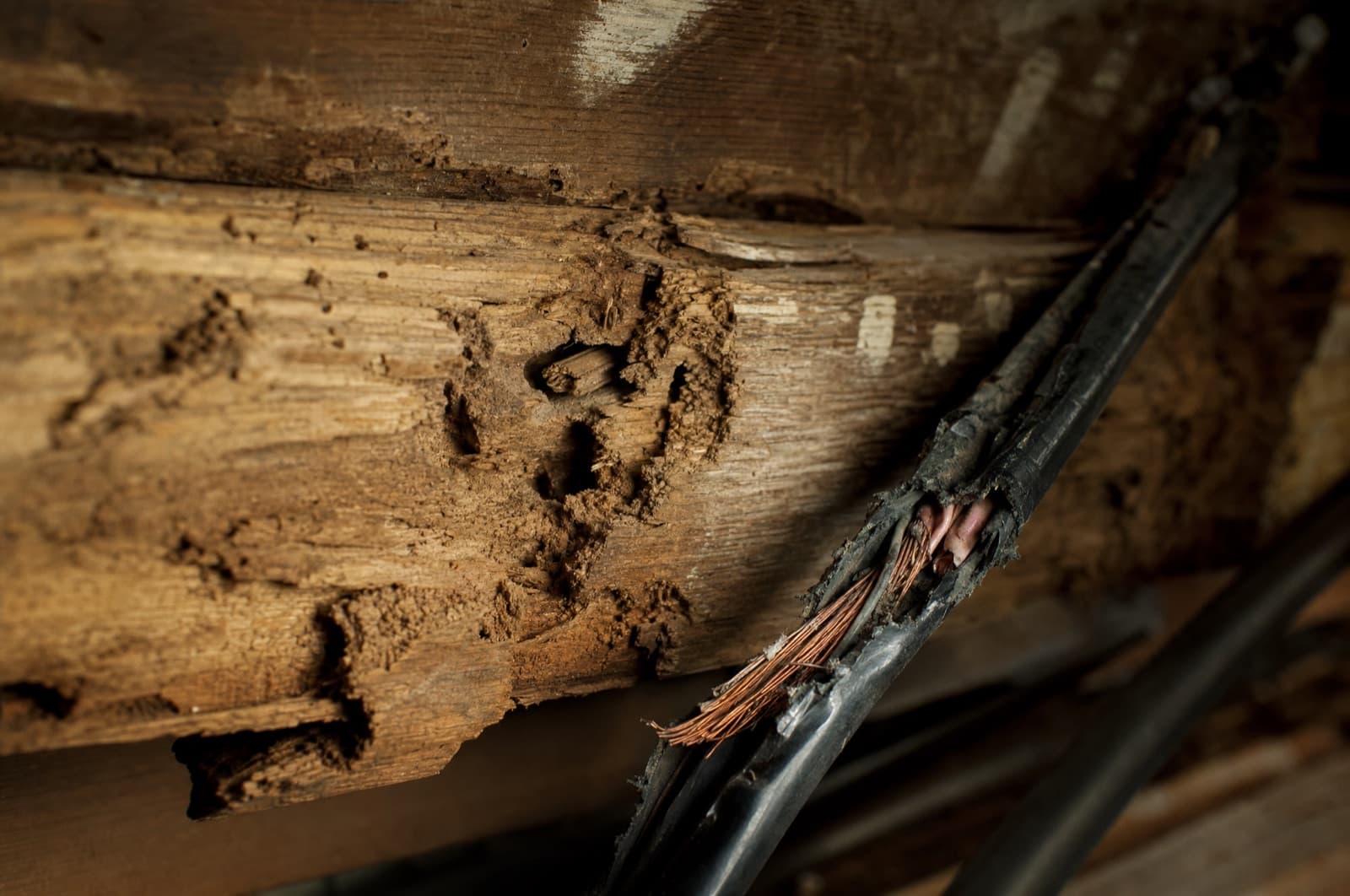
Pest damage evidence — a gnawed structural beam and a chewed electrical wire
Daniel Brady · NH-Licensed Pesticide Applicator · License #782664
Reviewed by Daniel Brady

Do bed bugs cause permanent damage to fabrics?

Negligible — no material is destroyed
No. Bed bugs have piercing-sucking mouthparts built only for feeding on blood — they have no mechanism to chew, claw, or bore through cloth, even thin fabric or paper. They leave fecal spots (digested blood, dried dark brown to black) and occasional smears near where they hide, and these largely wash out of launderable fabric, especially with hot water and heat drying. The real cost of a bed bug infestation is the treatment itself and the stigma around it, not ruined textiles — you do not need to throw out an infested mattress on the assumption it's destroyed.

At a glance

  • Can it?: No
  • How common: Routine
  • Hype: Wildly overstated
  • Evidence: Well documented
The honest answer

The short of it

The verdict
Negligible — no material is destroyed

No. Bed bugs cannot chew, claw, or bore through fabric — they only feed on blood. What looks like permanent damage is fecal staining, and most of it launders out.

The correction

What they claim vs. what the evidence supports

One shared severity track, two markers. The span between them is the hype delta — named out loud.

The claim — bed bugs permanently ruining mattresses, bedding, and upholstery

That bed bugs "ruin" mattresses, bedding, and upholstery and that replacement is the only real option once an infestation takes hold — often paired with advice to discard furniture as a precaution.

Where the claim comes from: Pest-marketing content and disposal-driven cleanup advice that assumes visible staining means the fabric itself is destroyed.

Severity, 0–100
Hype says65
15Evidence says
Hype delta50point gapWell documented
The evidence

Bed bugs cause no material destruction to fabric. Their only physical effect is fecal staining from digested blood, and that staining is largely launderable — heat treatment and standard laundering salvage the overwhelming majority of infested items. The EPA, CDC, and USDA jointly classify bed bugs as a public health pest, but bed bugs are not known to transmit disease, and nothing about their biology involves consuming or degrading fiber.

The gap

The stain is real. The 'permanent damage' framing is invented — nothing is being eaten, and most staining comes out in the wash. Extension and public-health sources are consistent that mattresses and furniture usually do not need to be discarded.

Damage assessment

What is actually harmed

Damage verdict
Negligible — no material is destroyed
NegligibleCan it?No
The specimen
Pest
Bed bugs (Cimex lectularius)
What is in question
Mattresses, bedding, upholstery, and furniture seams and joints
How common
Routine
Evidence
Well documented
Mechanism

Bed bugs feed exclusively on blood through piercing-sucking mouthparts, which have no chewing, boring, or claw structure capable of damaging fiber. Feeding produces feces made of digested blood, which dries to dark brown or black spots and occasional smears in the fabric or wood where bugs aggregate. The mechanism is entirely cosmetic deposit, not mechanical or chemical fiber damage.

Actually at risk2
  • Appearance only — fecal spotting on sheets, mattress seams, box-spring corners, and upholstery
  • Raw or unfinished wood furniture frames, which can hold stain marks more visibly than finished wood or fabric
Not at risk — despite the myth4
  • Fiber integrity of any fabric — nothing is chewed, torn, or structurally weakened
  • Mattress core or internal structure
  • The home's structure in any sense
  • Your health from the fabric itself — bed bugs are not known to transmit disease, per the EPA
Worst realistic case
Heavy cosmetic staining on a light-colored mattress or headboard that remains visible even after cleaning. Occasionally, a heavily infested, hard-to-treat item is discarded by choice because treating it is more effort than replacing it — not because the fabric has been destroyed.

Assessed from: EPA Introduction to Bed Bugs and Bed Bug Myths; AFPMB Technical Guide 44; Purdue Extension bed bug treatment guidance

The compounding clock

Does it get worse if you ignore it?

Over time
Static — never worsens

Static for the fabric — staining accumulates with an active infestation, but fibers never degrade.

Now
Ever

The fabric itself is not undergoing any progressive damage — bed bugs cannot chew or weaken fiber at any stage of infestation. What changes over time is the amount of fecal spotting, which is a cosmetic accumulation tied to the infestation's size and duration, not a structural clock ticking against the material. Once the bugs are gone, the fabric is exactly as strong as it always was.

What stops the clock
Eliminating the bed bugs. Laundering and drying on high heat, or professional heat treatment, kills all life stages and lifts most of the existing staining at the same time.
Repair scope

Who actually fixes this

Scope, not dollars — the honest answer to “how expensive is it,” routed to the right trade.

Who fixes it
You — wipe it up
Effort
An afternoon

Fabric staining from bed bugs is a laundering and cleaning task, not a repair or replacement — the material itself was never damaged.

The right order
  1. 1
    Eliminate the infestation first — professional heat or chemical treatment for an active infestation
  2. 2
    Launder washable items on hot water and dry on high heat, which kills any remaining bugs and lifts most staining
  3. 3
    Wipe or spot-clean hard surfaces and non-washable upholstery once the infestation is resolved
Route by symptom
  • Pest pro firstThe infestation is active — cleaning or laundering before resolving the bed bugs just means re-staining continues, and heat treatment for the home is the more efficient fix
Do not
  • Don't discard a mattress or furniture reflexively on the assumption staining means it's ruined — it almost never is
  • Don't use hot water directly on a stain before confirming the fabric is colorfast and washable
  • Don't skip treating the infestation and go straight to cleaning — the same spot will stain again
Where we help — and where we don't

Bed bug treatment is genuinely Anchor's lane — that's the infestation, and it's the actual job worth paying for. Textile stain removal afterward is a laundry or DIY task, not something we do or need to.

In depth

The full picture

01

What bed bugs physically can and cannot do to fabric

Bed bugs feed exclusively on blood, and their mouthparts are built for exactly one function: piercing skin and drawing blood through a specialized proboscis. There is no chewing, clawing, or boring structure anywhere in their anatomy, and no digestive pathway that involves consuming fiber. That's not a matter of degree — it's a categorical difference from a pest like a clothes moth or a silverfish, which genuinely do have chewing mouthparts adapted to eat material.

What bed bugs leave behind is entirely a byproduct of feeding: fecal spots made of digested blood, which dry to a dark reddish-brown or black color, plus occasional shed skins and, rarely, smears from a crushed bug. None of that is mechanical damage to the fabric itself.

02

Why the staining looks worse than it is

Fecal spotting concentrates in the seams, folds, and tufts where bed bugs aggregate close to a sleeping or sitting host — driven by aggregation pheromone and the bugs' preference for tight, body-contacting hiding spots. That concentration is exactly why a mattress seam or headboard joint can look alarmingly stained even from what is, numerically, a moderate infestation: the spotting is dense in a small area rather than spread thin across the whole item.

On porous, unfinished wood, those marks can look genuinely permanent to the eye. But on washable fabric, the same staining is almost always launderable, especially with hot water and a full heat-drying cycle, which is also the standard method for killing any remaining bed bugs in the item.

03

Why 'permanent damage' is the wrong framing entirely

No government or extension source states that bed bugs structurally damage fabric, because there is no mechanism by which they could. The EPA and CDC's public-health-pest classification for bed bugs is about their bite and the nuisance and stigma of an infestation — not about property destruction. Purdue Extension and Rutgers Cooperative Extension both note explicitly that mattresses and furniture usually need not be discarded during bed bug treatment.

The honest story is that the fabric survives the infestation intact. What doesn't survive as easily is the reader's confidence that it's safe to keep sleeping on it, which is a psychological and practical burden, not a material one — and it's worth separating those two things clearly, because a lot of unnecessary furniture ends up at the curb over a stain that would have washed out.

04

So what is the real cost, if not the fabric?

The genuine cost of a bed bug infestation is the treatment itself — heat treatment or a multi-visit chemical program — and, separately, the disclosure and resale stigma some homeowners worry about when selling a property that had bed bugs. Neither of those is a fabric-damage story, and neither belongs on this page; the value and disclosure angle is covered where it actually applies, in the hub's economics section.

What belongs here is the plain fact: eliminate the infestation, launder what's washable, and you will very likely keep your mattress, sheets, and upholstery. Replacement is a choice some people make for peace of mind on a hard-to-treat item, not a requirement dictated by the fabric's condition.

Key takeaways
5 points
  • No — bed bugs have no chewing or boring mouthparts and cannot mechanically damage fabric in any way.
  • Fecal spotting from digested blood is the only fabric effect, and it's largely launderable, especially with hot water and heat drying.
  • The fabric's fiber integrity never degrades — the compounding clock here is static, not progressive.
  • You do not need to discard a mattress or furniture on the basis of staining alone.
  • The real cost of an infestation is treatment and the stigma around it, not ruined property — resolve the bugs first, then clean.

Bed bugs are the job — not your mattress.

Anchor resolves the actual infestation. Your bedding and furniture almost certainly don't need to be replaced.

Follow-up questions

Frequently asked

Sources & citations(5)
  1. EPA — Introduction to Bed Bugs

    EPA/CDC/USDA joint public-health-pest classification; bed bugs not known to transmit disease

    govverified 2026-07-16
  2. EPA — Bed Bug Myths

    No studies indicate bed bugs transmit disease

    govverified 2026-07-16
  3. AFPMB Technical Guide 44 — Bed Bugs: Importance, Biology, and Control

    Bed bugs cannot chew or claw through thin cloth or paper

    govverified 2026-07-16
  4. Purdue Extension — Bed Bugs: Treatment

    Mattresses and furniture often need not be discarded during treatment

    extensionverified 2026-07-16
  5. Rutgers NJAES FS1251 — Bed Bugs

    Usually unnecessary to dispose of furniture or belongings during treatment

    extensionverified 2026-07-16

Written & reviewed by

Verified

Daniel Brady

NH-Licensed Pesticide Applicator · License #782664 (NHDAMF, RSA 430)

Daniel Brady is the New Hampshire–licensed applicator behind Anchor Pest Services, a family-owned pest control company serving the Manchester area since 2017.

Verify license

Last updated Jul 2026

Honest pest help for New Hampshire homes

We Treat the Infestation. Your Mattress Survives It.

Bed bugs cause no structural damage to fabric — the staining launders out once the infestation is gone. Anchor Pest Services treats the bed bugs; laundering and cleaning afterward is a homeowner task we're happy to walk you through. Family-owned since 2017, NH license #782664, serving Manchester, Nashua, Concord and nearby towns.

  • Honest advice — we won't tell you to throw out furniture that doesn't need replacing
  • NH-licensed applicators (#782664) — free inspection, same-day service
  • Bed bug treatment across southern and central New Hampshire

NH License #782664 · No obligation · We answer in person