
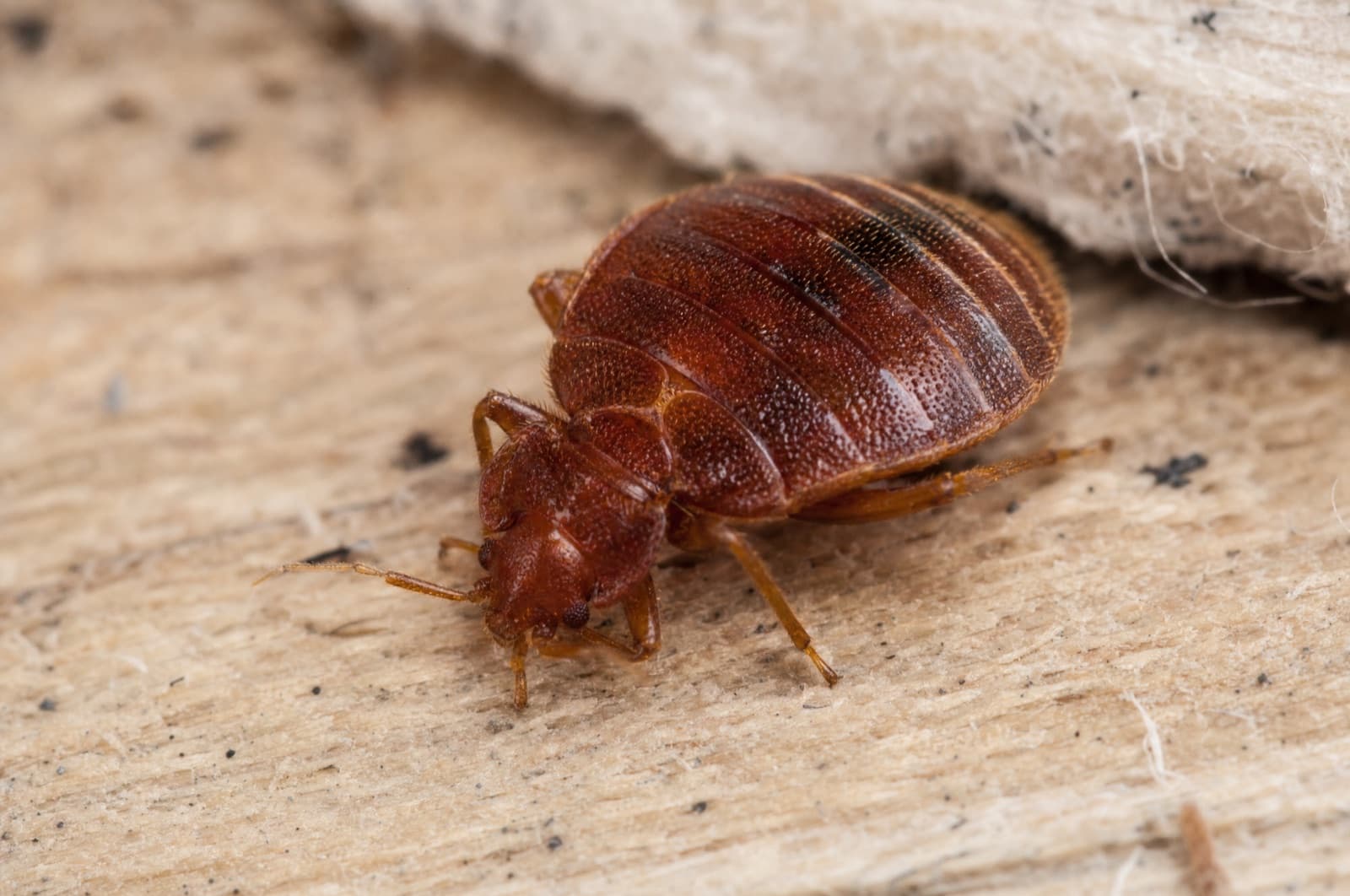
How to Get Rid of Bed Bugs
At a glance
- Difficulty: Pro only
- Time: Ongoing — DIY attempts that fail often extend an infestation by weeks or months
- Cost: Variable — DIY sprays are cheap but frequently ineffective; professional treatment costs more upfront but resolves the problem faster and more reliably
- Success: Low for eliminating an established infestation with over-the-counter products alone; better with early detection and professional treatment
Can you DIY Bed Bug?
The verdict on Bed Bug DIY
DIY commonly fails here for a specific, documented reason: resistance and scatter, not laziness.
Bed bugs (Cimex lectularius) are one of the hub's two genuine pro-recommended species, and it's not a generic caution — it's mechanistic. Many field populations carry documented, dramatic resistance to pyrethroids, the active ingredient in most over-the-counter sprays; one peer-reviewed study found a Virginia field strain's resistance roughly 5,200-fold higher than a lab-susceptible strain. Worse, pyrethroids can act as a repellent before they kill, scattering bed bugs into adjacent rooms or wall voids rather than eliminating them — turning a contained problem into a spread-out one. Early detection and heat-laundering are genuinely DIY-appropriate; eliminating an established infestation reliably is not.
The 5 DIY methods — honestly graded
Every approach graded for this species, in IPM order — prevention first, chemistry late. Pick a method to see how it works, the steps, and what it actually takes.
Prevention / Exclusion
ModerateGenuinely useful for preventing an infestation from starting — much less useful once one is established.
Bed bugs typically arrive via secondhand furniture, luggage after travel, or clutter that offers hiding spots. Reducing those entry routes and using encasements prevents introduction, though it won't cure an active infestation.
Best for: Preventing introduction, and as ongoing protection after professional treatment
Inspect before you bring it home
Check secondhand furniture, mattresses, and upholstered items carefully for bugs, shed skins, or dark spotting before bringing them inside.
TipInspect luggage and clothing after travel, especially after hotel stays.Encase mattresses and box springs
Use bed bug-rated mattress and box-spring encasements, and reduce clutter near sleeping areas to remove hiding spots.
Tools & materials
Why DIY falls short here
Not scare tactics — the specific, proportionate reasons a home attempt can stall for this species.
Insecticide resistance
Most field populations resist pyrethroids, the dominant over-the-counter class — one peer-reviewed study measured resistance roughly 5,200-fold higher than a lab-susceptible strain, meaning standard sprays often simply don't work.
Excito-repellency and cryptic hiding
Repellent sprays can scatter bed bugs into new rooms and wall voids instead of killing them, spreading rather than solving the problem — and their cryptic seam-and-crack hiding means many survive contact entirely.
Every life stage must be hit
Eggs, nymphs, and adults are spread across dozens of hidden harborages; missing any lets the infestation rebound even after an apparently successful treatment.
Detection difficulty
Low-level infestations hide in seams and cracks well before they're visually obvious, so DIY treatment often starts too late and too shallow to catch the full population.
How risky is it, really?
An honest read — most nuisance species are genuinely low risk, and we say so.
The de-fearmongered bottom line: bed bugs are distressing and genuinely hard to eliminate, but per the CDC they are NOT known to spread disease to people. The real risks are itchy bites, sleep disruption, and — for an infestation left to grow — real anxiety and quality-of-life impact, not a health-disease threat.
- Itchy bites and, rarely, an allergic reactionCommon
Bites are the primary physical impact; most people notice itching and minor swelling
CDC
- Secondary skin infection from scratchingOccasional
A risk of scratching bites rather than the bites themselves; keep bites clean and see a healthcare provider if infection signs appear
CDC
- Anxiety, sleep disruption, and psychological impactCommon
A genuine, well-documented quality-of-life burden of a bed bug infestation, separate from any disease risk
EPA — Bed Bugs Are Public Health Pests
- AnaphylaxisRare
For a suspected allergic reaction, consult a healthcare provider; the Northern New England Poison Center (1-800-222-1222) can advise on exposure concerns
CDC
A DIY Spray Can Make Bed Bugs Worse
Documented resistance and scatter risk mean this is one pest where calling early saves you time and stress. Anchor Pest Services offers inspection and treatment across southern and central New Hampshire. Family-owned since 2017, NH license #782664.
Call a pro when…
- Any confirmed live bed bugs or recurring bites, even from a single room
- After any DIY spray attempt that hasn't resolved the problem
- Before symptoms spread to adjacent rooms or shared walls in a multi-unit building
General Pest Control
This is the cluster's clearest case for a professional from the start. Documented pyrethroid resistance and excito-repellent scatter mean a botched DIY spray attempt commonly makes an infestation harder to resolve, not easier — professional treatment uses rotated modes of action, correct formulations, and repeated targeted application that aren't available to homeowners.
Keep them out
- Inspect secondhand furniture and luggage before bringing items home
- Use mattress and box-spring encasements as ongoing protection
- Hot-launder and heat-dry washable items regularly during an active concern
Bed bugs in New Hampshire
Bed bugs aren't seasonal or climate-limited — they spread through travel, secondhand furniture, and shared walls in multi-unit housing year-round across New Hampshire, not through any outdoor entry point tied to frost or weather. That means there's no "sealing season" for this species; early detection and prompt professional treatment matter more than timing.
Peak season
Year-round — not weather-dependent
First-frost anchor
Manchester first hard frost ~Oct 19 (50%) / Oct 29 (80%), NOAA 1991–2020 (not relevant to bed bug control)
Make sure it's a Bed Bug
Two quick detours worth taking — confirm the ID, then learn what drew it in so it doesn't come back.
Frequently asked
Sources & further reading(4)
- [1]CDC — About Bed Bugs
No known disease transmission, bite/itching/sleep-loss/allergic-reaction risk framing
govverified 2026-07-13 - [2]EPA — Bed Bugs Are Public Health Pests
Public-health pest classification, psychological/quality-of-life impact
govverified 2026-07-13 - [3]PLOS ONE (Adelman et al., 2011) — Deltamethrin Resistance in Bed Bugs
Documented ~5,200-fold pyrethroid resistance in a field strain
academicverified 2026-07-13 - [4]Parasites & Vectors — Bed Bug Insecticide Resistance Review
Excito-repellency, resistance mechanisms, DIY treatment failure
academicverified 2026-07-13
Written & reviewed by
VerifiedDaniel Brady
NH-Licensed Pesticide Applicator · License #782664 (NHDAMF, RSA 430)
Daniel Brady is the New Hampshire–licensed applicator behind Anchor Pest Services, a family-owned pest control company serving the Manchester area since 2017.
Last updated July 2026
Other species you can tackle
Same category — the dot shows each one's DIY verdict at a glance (green = friendly, amber = doable with care, red = call a pro).
Professional Pest Control
A DIY Spray Can Make Bed Bugs Worse
Documented resistance and scatter risk mean this is one pest where calling early saves you time and stress. Anchor Pest Services offers inspection and treatment across southern and central New Hampshire. Family-owned since 2017, NH license #782664.
- Inspection before treatment
- NH-licensed applicators (#782664)
- Free inspection — same-day service across southern NH
NH License #782664 · No obligation · We answer in person
Your next step
- What to do next
Bed Bugs in New Hampshire — ID, Signs & Control
Read the answer - What to do next
Do bed bugs cause permanent damage to fabrics?
Read the answer - Also relevant
Mechanical Control for Fall Invaders, Bed Bugs & Fabric Pests
Read the answer - Also relevant
Chemical Control for Occasional Invaders, Fabric Pests & Bed Bugs
Read the answer - Related guide
Can bed bug infestations reduce a home's value?
Read the answer