
Skip to content
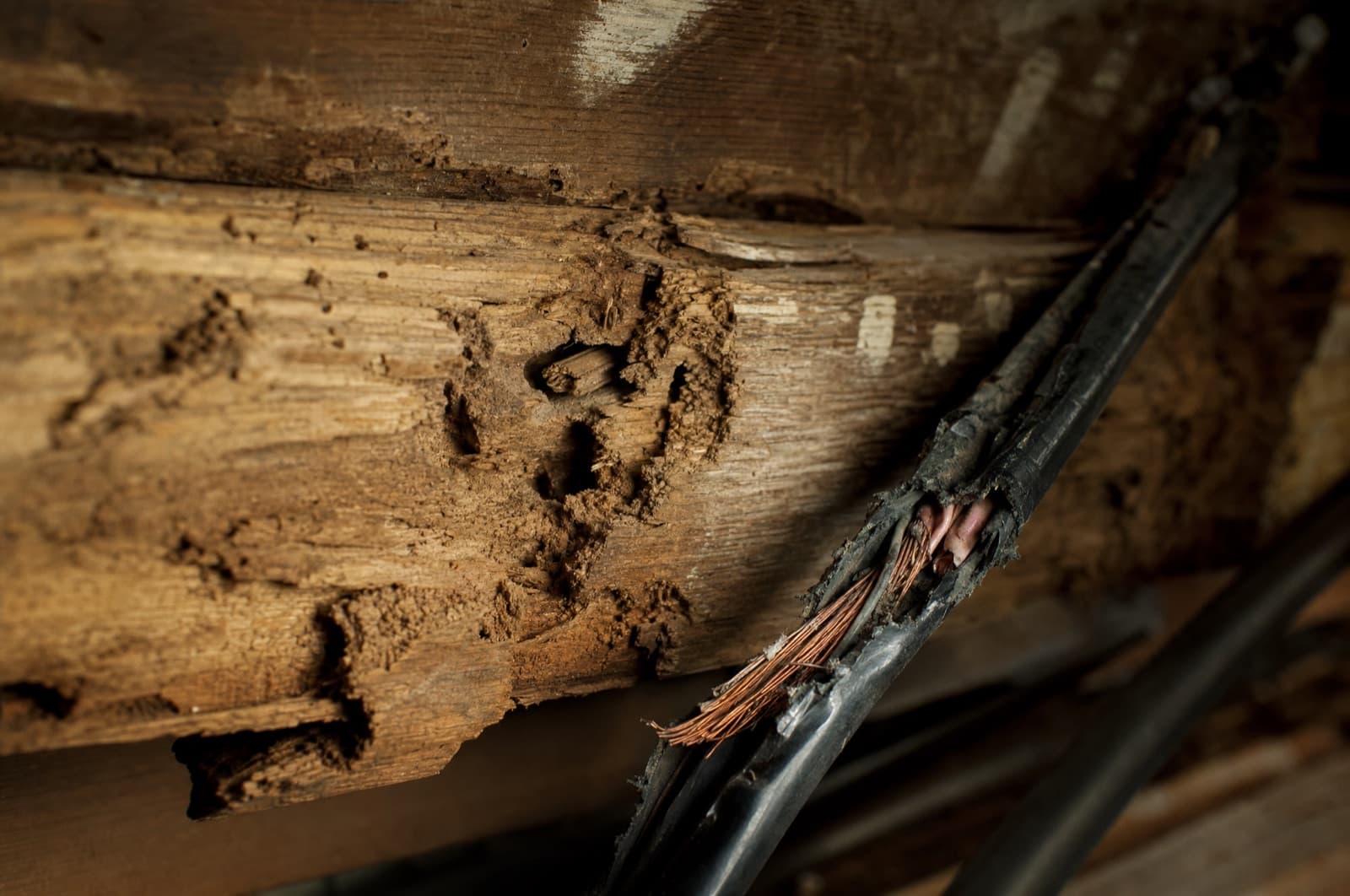
Pest damage evidence — a gnawed structural beam and a chewed electrical wire
Daniel Brady · NH-Licensed Pesticide Applicator · License #782664
Reviewed by Daniel Brady

Do chipmunks cause damage near foundations?

Cosmetic — a landscape issue, not a structural one
Rarely, and not in the way people fear. Chipmunks dig shallow, roughly 2-inch-wide burrows that can undermine patio slabs, concrete steps, sidewalks, and retaining walls, and their tunnels can channel rainwater toward the house. But they cannot chew or dig through poured concrete, and they cannot reach or damage a properly built foundation set below the frost line. Chipmunk populations around a typical yard are also low, so a burrow network large enough to genuinely threaten hardscape takes years to develop, and whole-house structural failure from chipmunks is effectively a myth. The honest risk is to your patio and drainage, not your house.

At a glance

  • Can it?: Rarely
  • How common: Occasional
  • Hype: Overstated
  • Evidence: Plausible, under-documented
  • about 2 inches wide

    Width of chipmunk burrow entrances near patios and foundations

    Internet Center for Wildlife Damage Management — Chipmunks

  • up to about 30 feet

    Length a mature chipmunk burrow system can reach, enough to undermine a slab or retaining wall

    Internet Center for Wildlife Damage Management — Chipmunks

The honest answer

The short of it

The verdict
Cosmetic — a landscape issue, not a structural one

Chipmunk burrows can undermine a patio slab or channel rainwater toward your foundation, but they cannot dig through poured concrete or reach a properly footed foundation set below the frost line. This is a hardscape and drainage problem, not a structural one.

The correction

What they claim vs. what the evidence supports

One shared severity track, two markers. The span between them is the hype delta — named out loud.

The claim — chipmunk burrowing near a home's foundation

That chipmunk burrows undermine foundations, cause cracks, and let water into the house — framing chipmunks as a structural threat requiring prompt professional intervention.

Where the claim comes from: Pest-control and foundation/basement-repair marketing, which links any yard burrow to foundation risk to justify a service call.

Severity, 0–100
Hype says65
30Evidence says
Hype delta35point gapPlausible, under-documented
The evidence

The real, documented risk is limited to hardscape — patio slabs, concrete steps, sidewalks, and retaining walls sitting on shallow soil that a burrow can loosen or remove. A properly built house foundation, set below New Hampshire's frost line, is out of a chipmunk's reach; whole-house structural failure from chipmunk burrowing requires an untreated colony over many years and is rare.

The gap

The mechanism — soil removal under a slab or walkway — is real. The "your foundation will crack or fail" framing is not; a footed foundation sits well beyond a chipmunk's reach.

Damage assessment

What is actually harmed

Damage verdict
Cosmetic — a landscape issue, not a structural one
CosmeticCan it?Rarely
The specimen
Pest
Eastern chipmunks
What is in question
Patio slabs, concrete steps, sidewalks, retaining walls, garden beds, and foundation-adjacent drainage grading
How common
Occasional
Evidence
Plausible, under-documented
Mechanism

Chipmunks dig burrow systems roughly 2 inches wide that can extend, in a mature colony, up to about 30 feet with multiple chambers. Where a burrow runs beneath a shallow slab, step, or retaining wall, it removes or loosens supporting soil, which can eventually let that structure settle or crack. Burrow tunnels can also act as channels that direct rainwater toward the house rather than away from it. None of this involves chewing or excavating through concrete — the burrows follow soft soil, not building material.

Actually at risk5
  • Patio slabs and concrete steps sitting on shallow, ungraded soil
  • Sidewalks and walkways
  • Retaining walls
  • Garden beds and planting areas
  • Drainage grading immediately around the foundation, if tunnels redirect water
Not at risk — despite the myth3
  • Poured concrete itself — chipmunks cannot chew or dig through it
  • A properly built foundation set below the frost line — burrows do not reach that depth or undermine deep footings
  • The lawn generally — unlike moles and voles, chipmunks cause minimal turf damage
Worst realistic case
A settled or cracked patio slab or walkway after years of an unchecked colony, plus some water pooling near the foundation from a redirected tunnel — not foundation failure.

Assessed from: Land-grant extension chipmunk fact sheets; trade sources on burrow dimensions

The compounding clock

Does it get worse if you ignore it?

Over time
Compounds slowly

Slow — a burrow network takes years to reach hardscape-damaging size, and is reversible for most of that time.

The timeline
3 stages
  1. WeeksReversible

    A new burrow entrance appears, usually near a foundation wall, woodpile, or garden bed. No visible hardscape effect yet.

  2. One seasonReversible

    The burrow network extends under adjacent soil; minor settling may appear at the edge of a nearby slab or walkway.

  3. YearsReversible

    An established, unaddressed colony's burrow system (potentially reaching around 30 feet with multiple chambers) can undermine a patio slab, steps, or a retaining wall enough to cause visible settling or cracking.

What stops the clock
Removing the colony and backfilling burrow entrances with soil or gravel, then sealing hardscape edges with hardware-cloth L-footers so new burrows can't restart in the same spot.
Repair scope

Who actually fixes this

Scope, not dollars — the honest answer to “how expensive is it,” routed to the right trade.

Who fixes it
You — a DIY patch
Effort
An afternoon

Filling burrow entrances, backfilling under a settled slab edge, and installing a hardware-cloth barrier are homeowner-scale landscape tasks, not a structural repair or a pest-control service.

Route by symptom
  • Wildlife / exclusion specialistA colony is large, returns repeatedly after backfilling, or burrows are widespread across the property
  • Licensed contractorA patio slab, step, or retaining wall has already visibly cracked or settled and needs re-leveling or replacement
Do not
  • Don't assume every burrow near the house threatens the foundation itself — check what's actually above it (a slab, walkway, or bare soil)
  • Don't fill entrances with expanding foam or loose fill alone without an exclusion barrier — chipmunks simply re-dig the same spot
Where we help — and where we don't

Chipmunk burrowing near a foundation is genuinely a wildlife and landscape issue, not a structural pest problem — it falls outside Anchor's honest lane. We'd rather tell you that plainly and point you to UNH Extension or a landscape contractor than sell you a service that won't fix a settled patio slab.

In depth

The full picture

01

What a chipmunk burrow actually does underground

Eastern chipmunks dig burrow systems that start as a roughly 2-inch-wide entrance and can extend, in an established colony, to networks around 30 feet long with multiple side chambers used for nesting, food storage, and escape routes. Digging removes and loosens soil along that path. Where the burrow happens to run beneath a patio slab, a concrete step, a sidewalk, or a retaining wall footing set in shallow soil, that loss of support can eventually let the surface above it settle or crack.

The same tunnels can also behave like informal drainage channels. If a burrow runs from open yard toward the house, rainwater can follow it and pool closer to the foundation than the yard's natural grading intended — a landscape-drainage problem, not a burrowing-through-concrete problem.

02

Why the foundation itself is a different story

A properly built residential foundation in New Hampshire is a poured-concrete or block wall set below the region's frost line, with footings that extend well beneath where a chipmunk's shallow burrow system operates. Chipmunks cannot chew, dig through, or otherwise breach cured concrete or masonry — there is no mechanism for it. That's the honest negative worth stating plainly: the burrowing that damages a patio or a walkway is a soil-support problem next to the house, not an assault on the house's structural footing.

Genuine, colony-driven structural failure from chipmunk activity would require years of unchecked, extensive burrowing directly beneath load-bearing elements — a scenario extension sources treat as rare given how small and localized typical chipmunk populations around a home are.

03

Why the fear outpaces the evidence here

Basement-repair and pest-control marketing has an incentive to connect any visible yard burrow to foundation risk, because a foundation scare converts better than "you might need to re-level a patio someday." But chipmunk density around a typical suburban or rural New Hampshire lot is low — usually a small handful of animals per acre — which is part of why the hardscape damage that does occur takes years to become visible, and why whole-house structural failure attributed to chipmunks essentially doesn't appear as a documented outcome. The honest read is: real mechanism, overstated ceiling.

Key takeaways
5 points
  • Chipmunk burrows can undermine patio slabs, steps, walkways, and retaining walls over time — that part is real.
  • They cannot chew or dig through poured concrete, and cannot reach a properly footed foundation below the frost line.
  • Whole-house structural failure from chipmunks is effectively a myth — chipmunk populations are low and burrows are shallow.
  • The genuine risk is hardscape settling and water being redirected toward the foundation, not foundation failure itself.
  • This is a landscape and wildlife issue, not a structural pest-control job — fill entrances, add hardware-cloth barriers, and regrade if water pools.
New Hampshire context

Chipmunks in New Hampshire yards

Chipmunk activity around southern and central New Hampshire homes typically peaks in spring and again in early fall as animals cache food ahead of winter dormancy, with burrow entrances commonly appearing near stone walls, woodpiles, foundation plantings, and patio edges. Because the ground freezes solidly through the winter, any hardscape settling from summer burrowing usually becomes most visible after the spring thaw, when homeowners notice a step or slab section has shifted slightly.

  • NH-licensed #782664

    Southern New Hampshire

  • Family-owned

    Since 2017

  • Honest routing

    Even when it isn’t us

We serve these communities

ManchesterNashuaConcordDerryBedfordSalemHudsonAmherstAuburnGoffstownHooksettLitchfieldLoudonMilfordBristol

Service Area Map

Southern New Hampshire

BristolPop. 3,200LoudonPop. 5,500ConcordPop. 43,900HooksettPop. 14,800GoffstownPop. 18,000AuburnPop. 5,700ManchesterPop. 115,600BedfordPop. 23,300LitchfieldPop. 8,500AmherstPop. 11,300DerryPop. 34,500MilfordPop. 15,700HudsonPop. 25,600NashuaPop. 91,100SalemPop. 30,000HQCityHover for info

Chipmunks near your foundation are a landscape issue, not a pest-control one.

We'd rather tell you that honestly and point you to the right fix than sell you a service you don't need.

Follow-up questions

Frequently asked

Sources & citations(2)
  1. UNH Cooperative Extension — Wildlife Damage Management resources

    Chipmunk burrowing behavior and landscape/hardscape damage patterns in New Hampshire

    extensionverified 2026-07-16
  2. Internet Center for Wildlife Damage Management — Chipmunks

    Burrow dimensions, population density, and exclusion practice for chipmunks

    extensionverified 2026-07-16

Written & reviewed by

Verified

Daniel Brady

NH-Licensed Pesticide Applicator · License #782664 (NHDAMF, RSA 430)

Daniel Brady is the New Hampshire–licensed applicator behind Anchor Pest Services, a family-owned pest control company serving the Manchester area since 2017.

Verify license

Last updated Jul 2026

Honest pest help for New Hampshire homes

Not Every Yard Problem Is a Pest-Control Problem.

Chipmunk burrowing near a foundation is a landscape and drainage issue that UNH Extension guidance and simple exclusion (hardware cloth, backfilling) usually resolve — not a job that calls for pest control. Anchor Pest Services would rather route you to the right fix than take a service call that won't solve the actual problem. Family-owned since 2017, NH license #782664, serving Manchester, Nashua, Concord and nearby towns.

  • Honest advice — we tell you when it isn't a pest-control problem
  • NH-licensed applicators (#782664) — free inspection, same-day service
  • Perimeter pest defense across southern and central New Hampshire

NH License #782664 · No obligation · We answer in person