
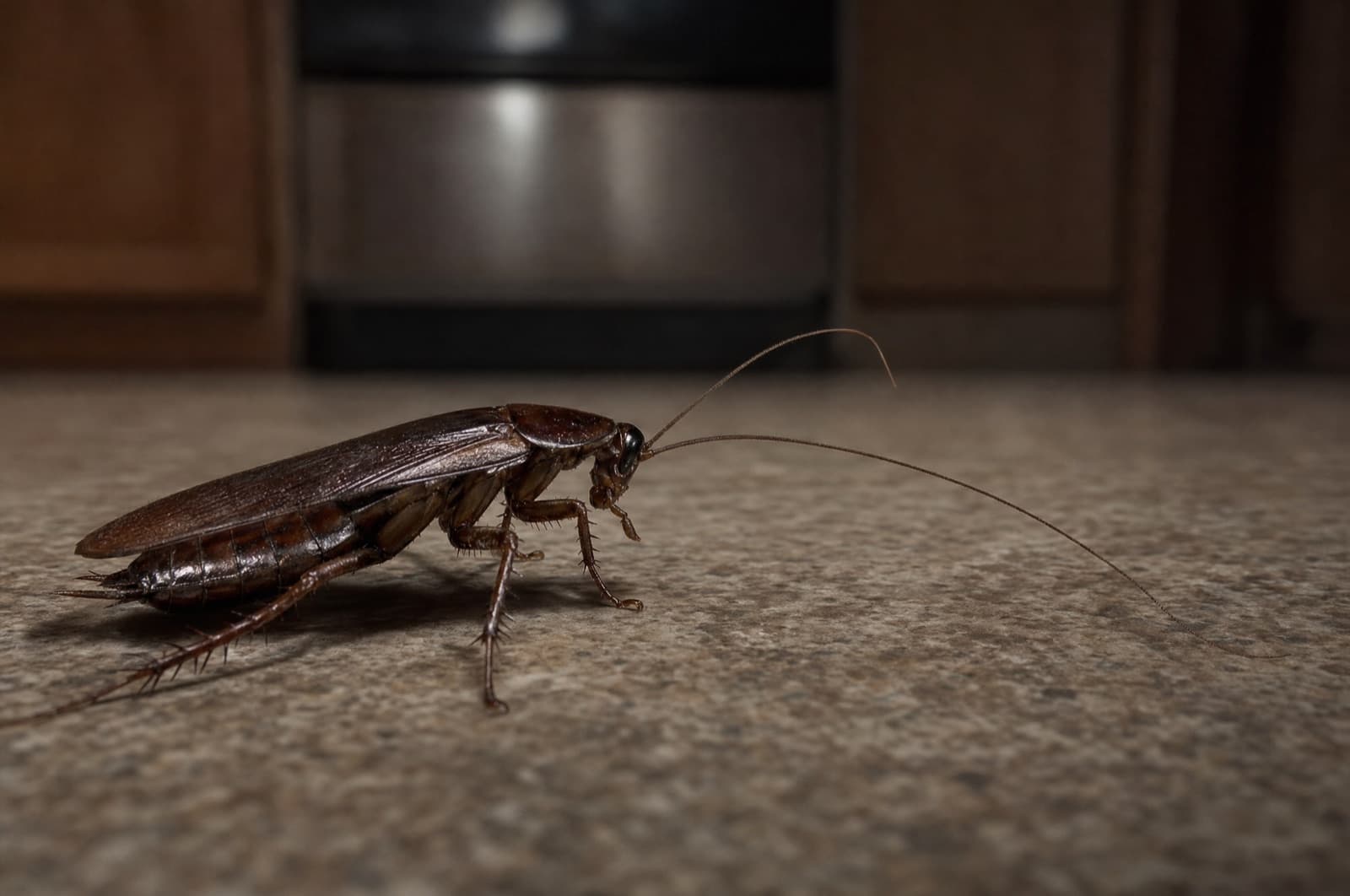
Are Cockroaches Active at Night? NH Roach Timing Guide
At a glance
- Activity pattern: NocturnalNegative phototaxis; peak activity in the first hours after dark (Ehrlich; UC IPM)
- Daytime sighting: Sign of heavy infestationOvercrowding pushes roaches into the open during the day (McCall Service)
- Indoor status: Year-round in heated homesGerman cockroach breeds all year indoors and matures in ~40 days (UNH Extension, Kitchen Pests)
- Preferred conditions: German 85–95°F / 90–95% RH; Oriental 68–84°FBoth thrive indoors; Oriental favors cool, damp basements and drains (Pest Control Technology; university sources)
Activity pattern
Nocturnal
Negative phototaxis; peak activity in the first hours after dark (Ehrlich; UC IPM)
Daytime sighting
Sign of heavy infestation
Overcrowding pushes roaches into the open during the day (McCall Service)
Indoor status
Year-round in heated homes
German cockroach breeds all year indoors and matures in ~40 days (UNH Extension, Kitchen Pests)
Preferred conditions
German 85–95°F / 90–95% RH; Oriental 68–84°F
Both thrive indoors; Oriental favors cool, damp basements and drains (Pest Control Technology; university sources)
The short of it
Cockroaches are nocturnal and stay active year-round inside heated NH homes — a roach seen in daylight usually means a heavy, overcrowded infestation.
When are they active — the whole year at a glance
Because German cockroaches breed year-round inside heated homes, this calendar tracks two things at once: how noticeable roaches are indoors, and when outdoor-associated species like the Oriental cockroach migrate in as the weather turns.
Best window to act · Immediately upon first evidence, any time of year — prioritize sanitation, exclusion (sealing cracks and gaps), and gel baits placed at harborage points; avoid broadcast sprays, which tend to scatter roaches without reaching the nest.
Unlike outdoor-driven pests, German cockroach indoor activity is not seasonal — it stays effectively 'peak' year-round in a heated home. This grid tracks noticeability plus outdoor-species migration, anchored to Manchester's first hard frost (~Oct 19, NOAA 1991–2020).
What time of day are they active?
Cockroaches run on an internal roughly 24-hour clock and are strongly nocturnal, with peak activity concentrated in the first hours after dark.
Cockroaches exhibit negative phototaxis — they actively move away from light — so by day they wedge into warm, humid harborage behind appliances, in wall voids, and under sinks. A daytime sighting usually means the population has grown large enough that competition for food, water, and harborage is forcing roaches into the open. Treat it as a warning sign of a heavier, established infestation and a cue that professional treatment is warranted.
A day in their clock
- Daytimelow
- Dusk / early eveningactive
- Night (first hours after dark)peak
- Pre-dawnactive
A year in the life
Outdoor temperature barely affects an established indoor cockroach population, but it does shift which species you're likely to encounter and where.
- 01
Spring
Outdoor-associated Oriental cockroaches begin to stir as temperatures warm, while indoor German cockroach populations continue breeding without interruption. Spring is not a 'wake-up' season indoors the way it is for ants — German roaches never went dormant.
- 02
Summer
Peak activity overall. Warmth speeds up metabolism, movement, and breeding across species. Oriental cockroach populations tend to peak in late spring and early summer, adding outdoor pressure on top of steady indoor German cockroach activity.
- 03
Fall
American and Oriental cockroaches increasingly move indoors as outdoor temperatures drop toward their activity minimum, seeking the warmth and moisture of basements, drains, and crawlspaces. This is when many NH homeowners first notice roaches that had been living outdoors all summer.
- 04
Winter
Cold doesn't touch an established indoor infestation. Heated homes supply everything German cockroaches need to keep breeding, and German cockroaches can't survive New Hampshire winters outdoors at all — so indoor infestations are the entire story in the cold months, and winter often concentrates sightings.
Cockroaches in southern New Hampshire homes
The German cockroach is the most common home-infesting roach in New Hampshire, thriving indoors regardless of season because it needs nothing from the outdoors once established. Oriental cockroaches, sometimes called 'water bugs,' are a cooler, damp-loving species drawn to basements, drains, and plumbing, and are more likely to enter homes in Manchester, Nashua, and Concord as fall temperatures fall. Because New Hampshire winters are long and cold, an outdoor Oriental or American cockroach population effectively can't survive without moving indoors — which is exactly what drives the fall uptick in sightings.
Key local data
First hard frost in Manchester averages October 19 (50% probability), the point by which outdoor-associated cockroach species have largely pushed indoors for the season — NOAA 1991–2020.
We serve these communities
- NH-licensed applicator · #782664
- Same-day service
- Family-owned since 2017
Service Area Map
Southern New Hampshire
Timing your treatment
Indoor cockroach infestations don't wait for a season, so the right time to act is as soon as you see evidence, any month of the year.
General Pest Control
Free inspection and same-day cockroach service across southern New Hampshire. NH-licensed #782664.
Learn more about this pestFrequently asked
Sources & references
- UNH Extension — Kitchen Pests fact sheet
German cockroach most common indoor species, ~40-day maturation, year-round breeding
- UMaine Extension — Cockroaches (Fact Sheet #5011)
German cockroach most common indoor species in the Northeast
- UC IPM — Cockroaches
nocturnal behavior, harborage, and control methods
- Rutgers NJAES — German Cockroach FS1322
German cockroach biology and control
- Ehrlich — When Are Cockroaches Most Active
nocturnal peak-activity hours after dark
- McCall Service — Do Baby Cockroaches Mean an Infestation?
daytime sighting indicates infestation; EPA allergen note
- Pest Control Technology — German Cockroaches: 10 Key Facts to Remember
85–95°F / 90–95% RH preferred conditions, year-round indoor breeding
Editorial disclaimer: This content is provided for informational purposes only and does not constitute pest control advice. Every property is unique — consult a licensed professional for guidance specific to your situation. Anchor Pest Services is licensed in New Hampshire (#782664).
Written & reviewed by
VerifiedDaniel Brady
NH-Licensed Pesticide Applicator · License #782664 (NHDAMF, RSA 430)
Daniel Brady is the New Hampshire–licensed applicator behind Anchor Pest Services, a family-owned pest control company serving the Manchester area since 2017.
Last updated Jul 2026
Anchor Pest Services
Whatever the season — we handle the timing for you.
Same-day service across Southern New Hampshire. NH-licensed #782664, family-owned since 2017. We track the local calendar so you don't have to guess the right window.
- NH-licensed applicator
- Same-day service
- Pet & family-conscious
NH License #782664 · No obligation · We answer in person
Your next step
- Next step
How to Use Ant & Roach Killer Spray by Black Flag
Read the answer - Related guide
Do Mites Die in the Winter? NH Mite Activity Guide
Read the answer - Related guide
When Are Rats Most Active? NH Rat Timing Guide
Read the answer - Also relevant
German Cockroach in New Hampshire — ID, Signs & Control
Read the answer - Also relevant
American Cockroach in New Hampshire — ID, Signs & Control
Read the answer - Also relevant
Oriental Cockroach in New Hampshire — ID, Signs & Control
Read the answer