
Skip to content
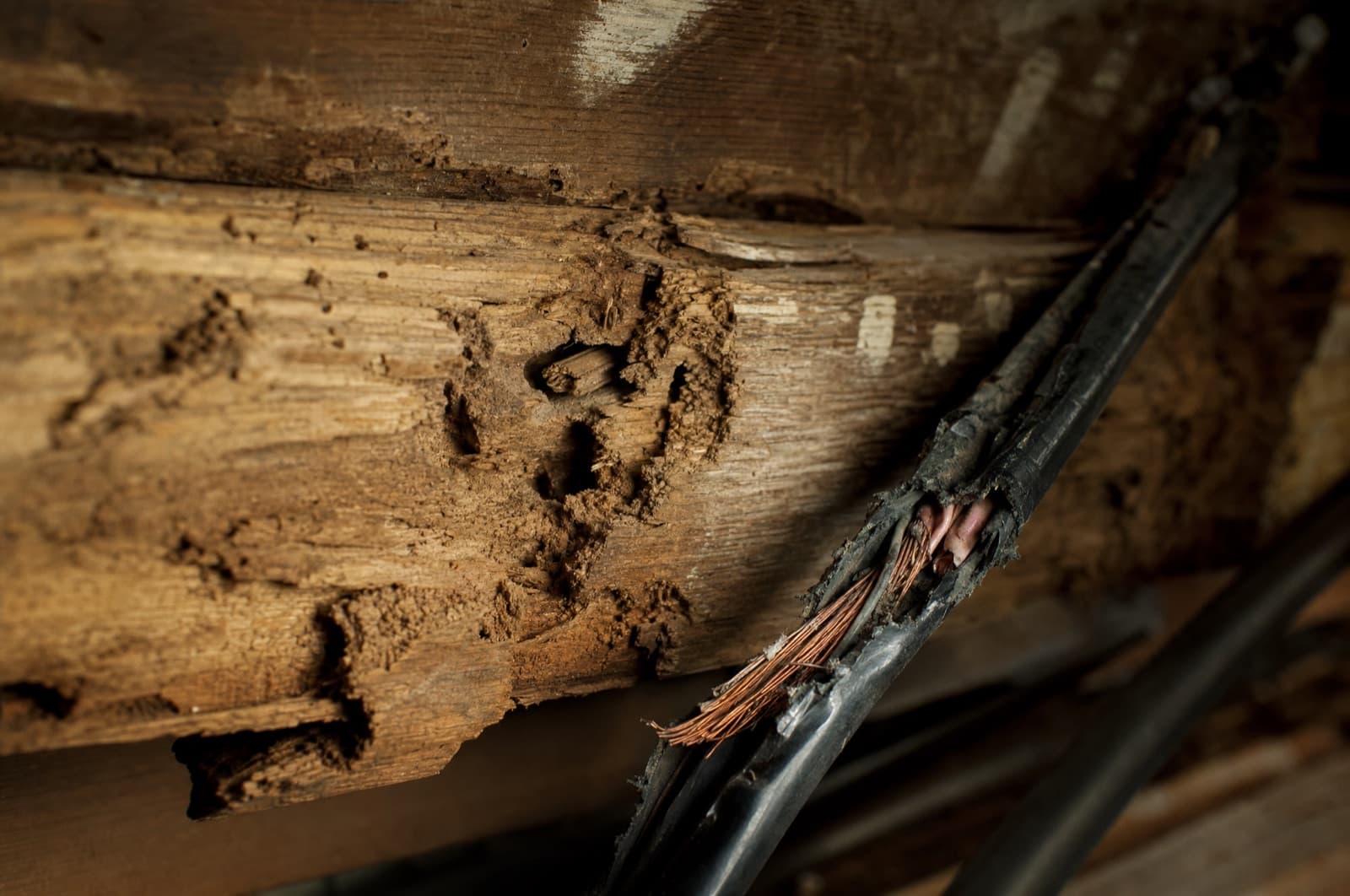
Pest damage evidence — a gnawed structural beam and a chewed electrical wire
Daniel Brady · NH-Licensed Pesticide Applicator · License #782664
Reviewed by Daniel Brady

Do pests cause long-term electrical issues?

Functional damage — real, but it doesn't self-worsen once repaired
Yes, in a specific sense: wiring that a rodent gnawed months or years ago, or a contact a roach fouled, can keep causing intermittent shorts, breaker trips, flickering lights, or a dead outlet until someone repairs it. That's a genuine long-term electrical issue. What's not true is that the damage keeps getting worse on its own once the pests are gone — it's frozen at whatever state it was left in. The wire doesn't heal, and it doesn't decay further from a pest that's no longer there; it just stays a hazard until a licensed electrician inspects and repairs it.

At a glance

  • Can it?: Yes, but
  • How common: Occasional
  • Hype: Overstated
  • Evidence: Plausible, under-documented
The honest answer

The short of it

The verdict
Functional damage — real, but it doesn't self-worsen once repaired

Yes, rodent-gnawed wiring and roach-fouled contacts can cause intermittent faults, nuisance breaker trips, and flickering that persist for a long time. But the damage doesn't keep spreading on its own after the pests are excluded — it sits latent until a licensed electrician finds and fixes it.

The correction

What they claim vs. what the evidence supports

One shared severity track, two markers. The span between them is the hype delta — named out loud.

The claim — pest-damaged wiring causing electrical problems that persist or worsen over time

That pest damage to wiring is a slow-building, self-worsening electrical crisis — implying your electrical system keeps degrading indefinitely wherever rodents or roaches have ever been present, even long after they're gone.

Where the claim comes from: Pest-control and home-maintenance blog copy that frames any historical pest activity as an open-ended, escalating electrical threat to justify an urgent inspection call.

Severity, 0–100
Hype says65
45Evidence says
Hype delta20point gapPlausible, under-documented
The evidence

The underlying mechanism is real and can be genuinely hard to track down: a rodent-gnawed wire or a roach-fouled contact can produce intermittent faults — a breaker that trips for no obvious reason, flickering lights, a dead outlet — that persist for months or years if the damaged section is never located and repaired. NFPA's research identifies arcing as the leading factor in home electrical-failure fires, and a previously gnawed conductor is a plausible contributor to that category. But nothing in the evidence supports the idea that the damage compounds on its own after the animal is gone; an exposed conductor is a static hazard, not a spreading one.

The gap

The damage is real and it can genuinely hide for a long time — but it's frozen once the pests are gone, not a curse that keeps escalating. "Long-term" here means unrepaired, not ongoing sabotage.

Damage assessment

What is actually harmed

Damage verdict
Functional damage — real, but it doesn't self-worsen once repaired
FunctionalCan it?Yes, but
The specimen
Pest
Rodents (the primary cause, via gnawed wire insulation); German cockroaches occasionally (contact fouling)
What is in question
Branch circuit wiring, connections, junctions, and appliance or equipment circuit boards
How common
Occasional
Evidence
Plausible, under-documented
Mechanism

A rodent that gnawed wire insulation at some point leaves behind a section of exposed or thinned conductor. If that section is intermittently making and breaking contact — from vibration, temperature change, or a loose connection at the gnawed point — it can produce nuisance faults that come and go, which is exactly what makes them hard to diagnose. Roaches nesting in warm equipment can leave droppings or shed skins that bridge or corrode a contact, producing a similar intermittent malfunction. In both cases, the damage itself does not spread once the animal is gone; it's the same physical defect until someone repairs it.

Actually at risk4
  • Branch circuit wiring a rodent gnawed at any point in the past, whether or not the rodent is still present
  • Wire nuts, splices, and junction boxes along an old rodent travel route
  • Appliance or equipment circuit boards a roach infestation has fouled or corroded
  • Outlets and switches downstream of a previously damaged section
Not at risk — despite the myth3
  • Circuits and wiring the pests never had physical access to
  • Wiring properly protected in conduit or behind sealed junction boxes
  • The idea that undamaged wire somehow degrades on its own because pests were once in the building — there is no mechanism for that
Worst realistic case
A latent arc-fault hazard discovered only after years of intermittent nuisance trips, once an electrician finally traces it to an old gnaw point. Serious once found, but it is a discoverable, fixable defect — not an escalating system-wide failure.

Assessed from: NFPA, Home Fires Caused by Electrical Failure or Malfunction (Campbell, 2019); ICWDM rodent damage guidance; general cockroach-corrosion trade observation

The compounding clock

Does it get worse if you ignore it?

Over time
Static — never worsens

Static once the pests are gone and the wire isn't touched again — the damage doesn't heal, but it doesn't spread on its own either.

Now
Ever

There is no physical mechanism by which gnawed insulation continues to degrade after the rodent that gnawed it is gone. The conductor doesn't corrode further, doesn't fray further, and doesn't spread damage to adjacent, undamaged wire on its own. What changes over time is not the wire itself but the odds of triggering an intermittent fault at that fixed point — which is why the same damage can look either quiet for years or persistently annoying, without ever getting structurally worse.

What stops the clock
A licensed electrician locating and repairing the damaged section. Excluding the pests stops any new damage from being added, but it does not resolve wiring that's already exposed — that stays exactly as damaged as it was left until someone fixes it.
Repair scope

Who actually fixes this

Scope, not dollars — the honest answer to “how expensive is it,” routed to the right trade.

Who fixes it
Licensed electrician
Effort
A trade visit

Diagnosing and fixing an intermittent electrical fault, wherever it originated, is licensed-electrician work every time — pest exclusion stops new damage but cannot itself resolve wiring that's already compromised.

The right order
  1. 1
    Anchor: confirm and exclude any current rodent or roach activity so no new damage is added
  2. 2
    Licensed electrician: trace the intermittent fault, inspect wiring the pests had access to, and repair or replace the damaged section
  3. 3
    Homeowner: keep a written note of when the symptom occurs (which breaker, which outlet, under what conditions) — it genuinely speeds up an electrician's diagnosis
Route by symptom
  • Licensed electricianA breaker trips repeatedly, an outlet or switch feels warm, lights flicker without an obvious cause, or an appliance behaves erratically near known pest activity
Do not
  • Don't assume an intermittent electrical symptom will resolve itself once pests are excluded — the damaged wire stays damaged until repaired
  • Don't attempt to trace or splice a suspected fault yourself
  • Don't wait years hoping a nuisance trip is unrelated — have it checked while it's still a minor annoyance rather than an undiscovered hazard
Where we help — and where we don't

Anchor resolves the pest activity that caused or could cause this kind of damage — that part is genuinely our lane. We do not trace or repair electrical faults; that determination and fix belongs to a licensed electrician, and we'll say so rather than imply a pest treatment resolves an existing wiring problem.

In depth

The full picture

01

What "long-term" actually means here

The honest answer to this question depends entirely on what "long-term" is doing in the sentence. If it means "can pest-caused electrical damage sit undiscovered and cause problems for a long time," the answer is yes — a gnawed wire from months or years ago can produce an intermittent fault that comes and goes unpredictably, which is exactly the kind of symptom that's hard to trace and easy to live with until it isn't. If "long-term" means "does the damage keep getting worse on its own the longer it's ignored," the answer is no. There's no physical process by which an exposed conductor continues to deteriorate once the animal that exposed it is gone.

02

Why intermittent faults are so persistent and so hard to pin down

A wire that's been gnawed down to bare or thinned conductor doesn't necessarily fail outright — it can sit for a long time only intermittently making unwanted contact, triggered by vibration, a temperature swing, or a loose connection at exactly the gnawed point. That's why symptoms like a breaker that trips "for no reason," flickering lights, or an outlet that periodically stops working can persist for a surprisingly long stretch before anyone connects them to old rodent activity. NFPA's research on home electrical-failure fires names arcing as the leading contributing factor, and a previously damaged conductor sitting in that intermittent state is a plausible, if hard-to-quantify, contributor to that category.

03

The roach angle — a different mechanism, a similar symptom

Cockroaches don't gnaw wire, but German cockroaches sheltering inside warm electronic or electrical equipment can leave droppings, shed skins, and body residue that bridge or corrode a contact over time. The result can look similar from a homeowner's perspective — an appliance or circuit that misbehaves intermittently — but the underlying mechanism is fouling and corrosion rather than insulation loss, and it's generally a slower, less hazardous process than an exposed live conductor.

04

Why this isn't an escalating curse

It's worth being direct about the part of this question that's overstated: nothing in the evidence supports pest-related electrical damage compounding on its own after the pest is gone. The damage is a fixed physical defect at a fixed location. What changes with time is simply the cumulative odds of that defect triggering a visible symptom — not the severity of the defect itself. That distinction matters because it means the fix is straightforward and finite: find the damaged section, repair it, and the "long-term issue" is over, rather than an open-ended problem that keeps needing attention.

Key takeaways
5 points
  • Yes — old, unrepaired pest damage to wiring can cause intermittent faults for months or years until it's found and fixed.
  • No — the damage doesn't compound or worsen on its own once the pest responsible is gone; it's a static defect, not a spreading one.
  • Rodent-gnawed wire is the primary mechanism; roach-fouled contacts are a slower, less common secondary one.
  • Intermittent symptoms (nuisance breaker trips, flickering, a dead outlet) are the tell — and they warrant an electrician regardless of whether pests are currently active.
  • Pest exclusion stops new damage from being added; it does not repair damage that already exists.
New Hampshire context

Why this matters more in older New Hampshire housing stock

Southern and central New Hampshire has a large share of older homes and farmhouses where wiring has been added to and modified over decades, and where rodents have had generations of seasonal access to attics, rim joists, and basements as temperatures fall toward Manchester's first hard frost, historically around October 19 to 29. That combination — older wiring plus long-running seasonal rodent pressure — is exactly the setup where a gnawed section from years ago can still be sitting undiscovered. A periodic electrical inspection, not just a pest inspection, is a reasonable step in a home with a long history of rodent activity.

  • NH-licensed #782664

    Southern New Hampshire

  • Family-owned

    Since 2017

  • Honest routing

    Even when it isn’t us

We serve these communities

ManchesterNashuaConcordDerryBedfordSalemHudsonAmherstAuburnGoffstownHooksettLitchfieldLoudonMilfordBristol

Service Area Map

Southern New Hampshire

BristolPop. 3,200LoudonPop. 5,500ConcordPop. 43,900HooksettPop. 14,800GoffstownPop. 18,000AuburnPop. 5,700ManchesterPop. 115,600BedfordPop. 23,300LitchfieldPop. 8,500AmherstPop. 11,300DerryPop. 34,500MilfordPop. 15,700HudsonPop. 25,600NashuaPop. 91,100SalemPop. 30,000HQCityHover for info

Nuisance breaker trips or flickering lights near known pest activity?

Anchor confirms and excludes any current rodent or roach activity — then a licensed electrician traces and repairs the fault.

Follow-up questions

Frequently asked

Sources & citations(3)
  1. NFPA Research — Home Fires Caused by Electrical Failure or Malfunction (R. Campbell, 2019)

    Arcing as the leading contributing factor in home electrical-failure fires; the plausible link to previously damaged conductors

    fireverified 2026-07-16
  2. Internet Center for Wildlife Damage Management — House Mouse Damage Identification

    Rodent gnawing damage to wiring and appliance cords, including intermittent malfunction

    extensionverified 2026-07-16
  3. UNH Cooperative Extension — Rodent Control

    New Hampshire seasonal rodent pressure and structural exclusion practice

    extensionverified 2026-07-16

Written & reviewed by

Verified

Daniel Brady

NH-Licensed Pesticide Applicator · License #782664 (NHDAMF, RSA 430)

Daniel Brady is the New Hampshire–licensed applicator behind Anchor Pest Services, a family-owned pest control company serving the Manchester area since 2017.

Verify license

Last updated Jul 2026

Honest pest help for New Hampshire homes

We Stop New Damage. An Electrician Fixes What's Already There.

We won't tell you a pest treatment resolves an existing wiring fault — that's a licensed electrician's repair, every time. What Anchor Pest Services does is confirm and exclude any current rodent or roach activity so the problem stops growing while the electrician does their part. Family-owned since 2017, NH license #782664, serving Manchester, Nashua, Concord and nearby towns.

  • Honest advice — we route you to a licensed electrician for anything energized
  • NH-licensed applicators (#782664) — free inspection, same-day service
  • Rodent and roach control across southern and central New Hampshire

NH License #782664 · No obligation · We answer in person