
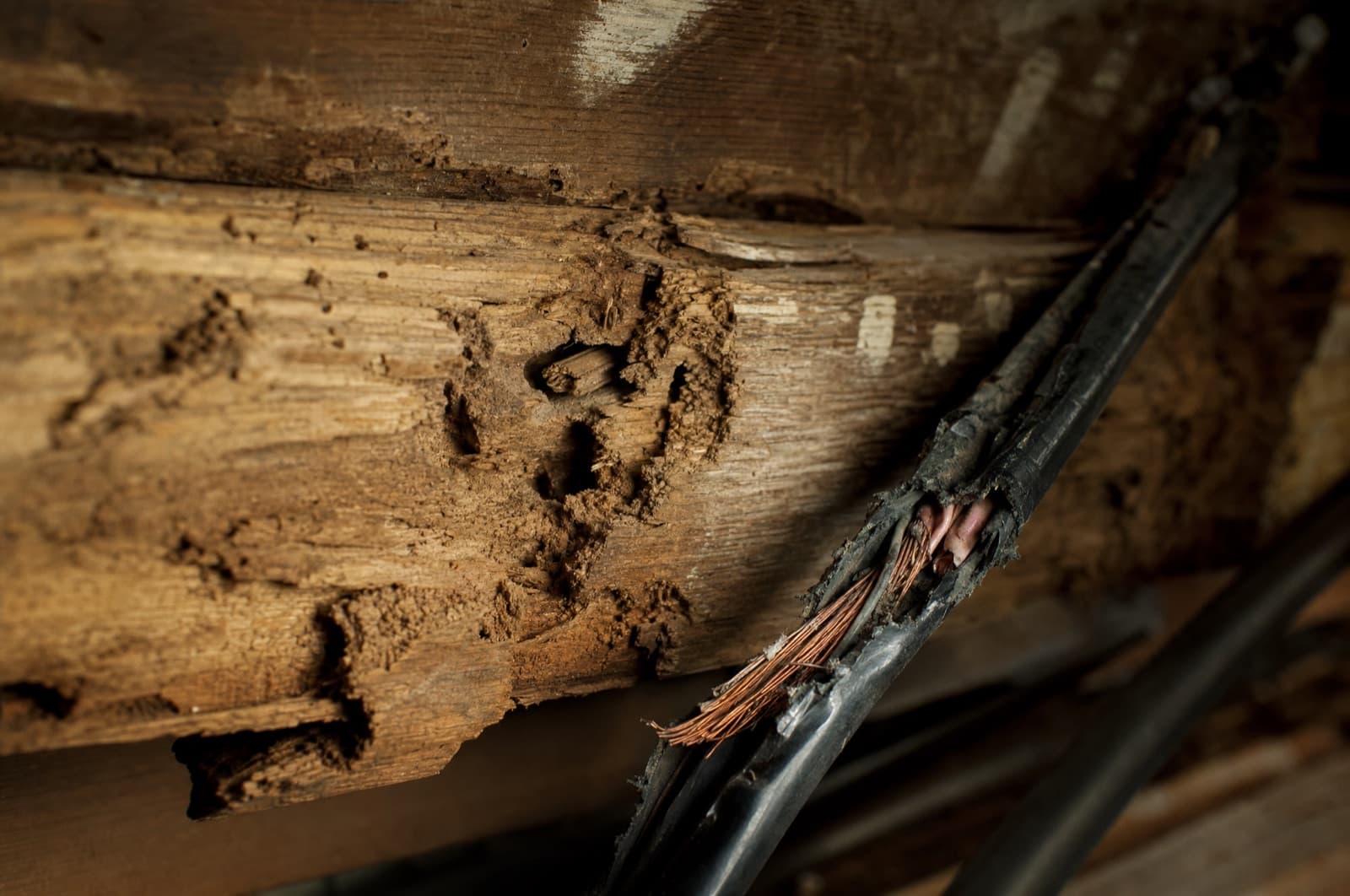
The mechanism, held apart from the myth
Start with what's true. A rat's incisors are rootless and grow continuously through its life — roughly the same biology behind every gnawing page in this hub — and unworn incisors cause malocclusion, so gnawing is obligate maintenance, not hunger or malice. Rat incisor enamel sits around 5.5 on the Mohs scale, harder than iron and copper, which is exactly why wire insulation is such an easy target: it offers no resistance at all next to a rat's teeth.
When a rat strips insulation off an energized wire down to bare conductor, that conductor is capable of arcing. This is not folklore — NFPA's own research on home fires caused by electrical failure identifies arcing as the leading ignition factor, and the U.S. Fire Administration's analysis of electrical residential fires found arcing responsible for the large majority of heat sources in that category, with wire and cable insulation the item most often ignited first. A rat-damaged conductor fits squarely into that documented pathway, and forensic fire investigators use arc-bead and conductor-mapping techniques for exactly this kind of cause-and-origin question.