
Skip to content
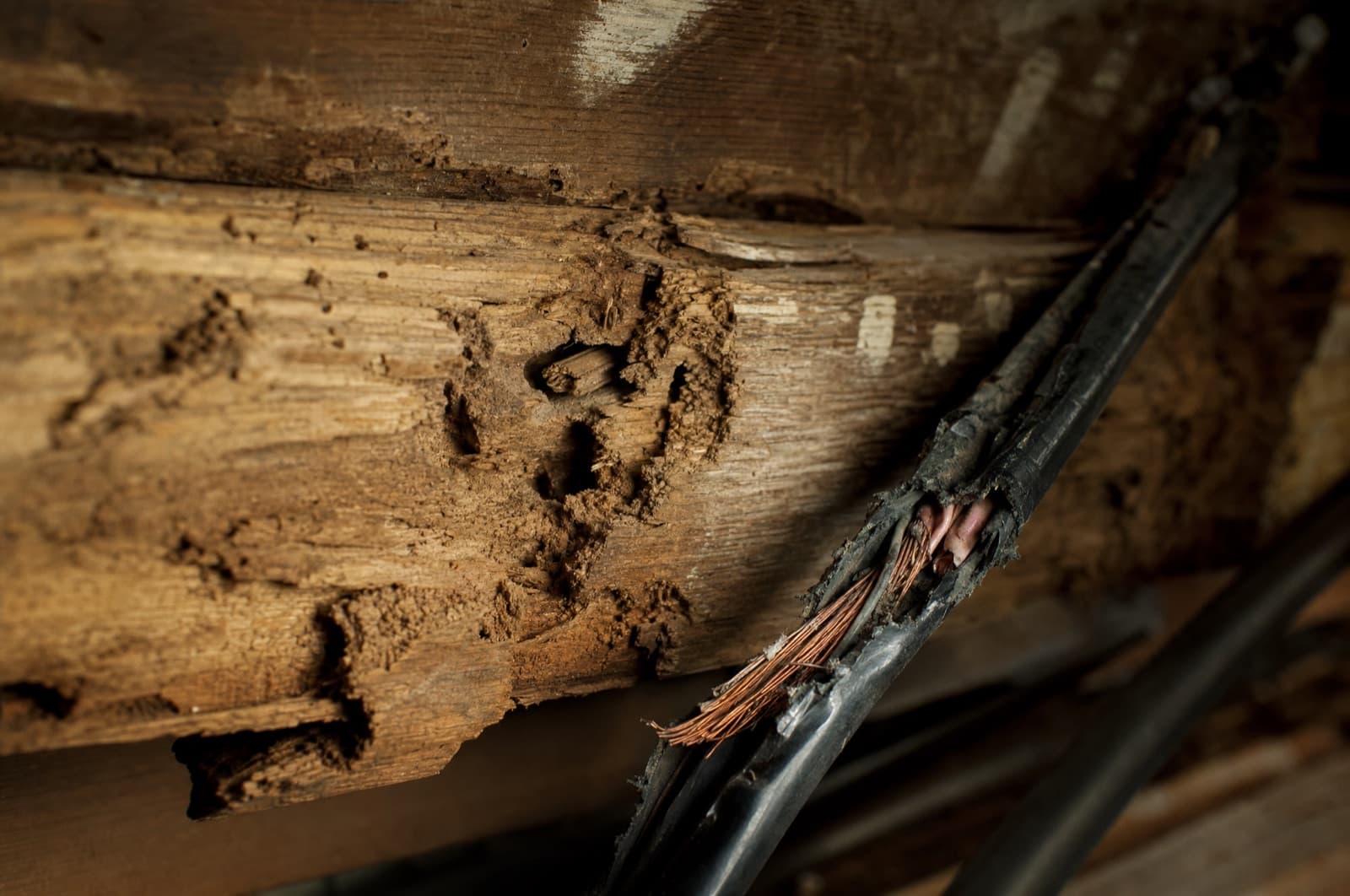
Pest damage evidence — a gnawed structural beam and a chewed electrical wire
Daniel Brady · NH-Licensed Pesticide Applicator · License #782664
Reviewed by Daniel Brady

Do woodpeckers damage siding or trim?

Cosmetic damage — real, and often a symptom of something else
Yes, woodpeckers can damage siding and trim, most often by pecking small foraging holes where insect larvae are active in the wood, drumming on resonant surfaces for territorial display, or excavating a larger nest cavity. On most homes this shows up as cosmetic damage to the finish rather than a threat to the structure behind it, and grooved plywood or stained cedar siding is far more vulnerable than fiber-cement or vinyl. When the damage is more than superficial, it commonly means insects are already established in the siding — the woodpecker is often the messenger, not the root cause. Woodpeckers are native and federally protected, so an active nest generally cannot be disturbed.

At a glance

  • Can it?: Yes, but
  • How common: Occasional
  • Hype: Overstated
  • Evidence: Well documented
  • 33%

    Share of surveyed houses with a woodpecker problem (damage or noise)

    Harding, Vehrencamp & Curtis

  • 1,185 houses

    Homes surveyed around Ithaca, New York in the study

    Harding, Vehrencamp & Curtis

The honest answer

The short of it

The verdict
Cosmetic damage — real, and often a symptom of something else

Yes, woodpeckers do damage siding and trim — but the damage is usually cosmetic to the finish, and when it's serious, it typically signals insects already living in the wood, or simply territorial drumming, not the bird eating your house. Woodpeckers are also federally protected, so an active nest can't legally be disturbed.

The correction

What they claim vs. what the evidence supports

One shared severity track, two markers. The span between them is the hype delta — named out loud.

The claim — woodpeckers pecking holes into house siding and trim

That woodpeckers are structural destroyers who will steadily wreck a home's siding and trim if left unaddressed, framing the bird itself as the core problem to be removed.

Where the claim comes from: Siding-contractor and pest-deterrent marketing, which frames woodpecker activity as an urgent structural threat to sell repair or deterrent services.

Severity, 0–100
Hype says60
30Evidence says
Hype delta30point gapWell documented
The evidence

The damage is largely cosmetic to the finish and concentrated on specific vulnerable materials — grooved plywood and stained cedar siding especially — while fiber-cement and vinyl siding are largely immune. A documented survey of over a thousand houses found real, measurable woodpecker activity, but where damage was serious, it commonly traced to insects, often wood-boring larvae, already established in the siding, rather than random destructive pecking by the bird alone.

The gap

The holes are real, and a wall of them looks alarming. But calling the woodpecker the disease misses what's usually underneath it — either a harmless seasonal mating display, or an insect problem in the wood that needs its own fix, not a bird deterrent.

Damage assessment

What is actually harmed

Damage verdict
Cosmetic damage — real, and often a symptom of something else
CosmeticCan it?Yes, but
The specimen
Pest
Woodpeckers — native North American species; downy, hairy, and pileated woodpeckers and northern flickers are common in New Hampshire
What is in question
Siding face, especially grooved or rough-sawn plywood and stained cedar, plus trim and fascia boards
How common
Occasional
Evidence
Well documented
Mechanism

Three distinct behaviors produce three distinct damage patterns. Territorial drumming targets the most resonant available surface to broadcast the bird's presence and attract a mate, peaking in spring and doing little physical harm. Foraging pecking follows audible insect larvae inside the wood, leaving small, irregular holes concentrated exactly where those insects are. Nest or roost excavation produces a larger, cleanly rounded cavity. A survey of 1,185 houses around Ithaca, New York, found 33 percent had some kind of woodpecker problem, with grooved plywood siding the most damage-prone material and stained wood affected far more often than painted wood.

Actually at risk3
  • Siding face, particularly grooved or rough-sawn plywood and stained cedar
  • Trim and fascia boards
  • The finish, and indirectly moisture protection, if holes go unsealed
Not at risk — despite the myth3
  • Framing and structural elements from drumming behavior — drumming alone does not weaken the building
  • Fiber-cement siding, which is largely immune since it offers no food source and too hard a surface for drumming or foraging
  • Vinyl siding, for the same reasons — no resonance, no food source, and insufficient purchase for the bird
Worst realistic case
Rows of foraging holes across a section of vulnerable siding needing patch or replacement, plus whatever insect problem actually drew the bird there in the first place — not a structurally compromised wall.

Assessed from: Cornell Lab of Ornithology, All About Birds; Iowa State University Extension; Harding, Vehrencamp & Curtis, Human-Wildlife Interactions, 2009

The compounding clock

Does it get worse if you ignore it?

Over time
Compounds slowly

Slow, and usually only if the underlying insect driver isn't resolved — pure drumming doesn't compound at all.

The timeline
3 stages
  1. WeeksReversible

    Territorial drumming appears in spring, loud but leaving minimal physical marks; separately, a few foraging holes may appear where insect larvae are active.

  2. One seasonReversible

    If insects remain in the siding, foraging holes multiply across the same section as the bird keeps returning to an active food source.

  3. YearsReversible

    Repeated seasonal foraging on an unresolved insect problem produces a visibly damaged section of siding needing patch or replacement, with moisture intrusion through unsealed holes as the secondary risk.

What stops the clock
Resolving the insect food source in the siding and sealing existing holes once the birds are no longer actively using them. Pure drumming-only activity typically stops on its own once breeding season passes and needs no intervention.
Repair scope

Who actually fixes this

Scope, not dollars — the honest answer to “how expensive is it,” routed to the right trade.

Who fixes it
Pest pro first
Effort
An afternoon

When woodpecker activity is driven by insects already established in the siding, resolving that infestation is the genuine first step — patching holes while the insects remain simply gives the bird a reason to return to the same spot.

The right order
  1. 1
    Identify whether insects, often wood-boring larvae, are present in the affected siding
  2. 2
    Resolve the insect issue if one is present
  3. 3
    Patch or replace damaged siding once the birds are no longer actively feeding there
Route by symptom
  • You — a DIY patchDamage is limited to a few holes with no active insect issue
  • Licensed contractorDamage is extensive across a section of grooved plywood or cedar siding and needs professional replacement
Do not
  • Don't seal, disturb, or attempt to remove an active woodpecker nest — it's a federally protected species and doing so can be a legal violation
  • Don't patch foraging holes without checking for insects first — you'll likely be repatching the same spot next season
Where we help — and where we don't

Siding repair itself is not an Anchor job — that routes to a contractor. Where the pecking traces back to an insect infestation already in the wood, such as carpenter bees or other wood-boring insects, resolving that pest issue may genuinely be in Anchor's lane, and it's the step that actually stops the bird from coming back.

Legal status

A protected species

Protected speciesU.S. Fish and Wildlife Service (Migratory Bird Treaty Act)
The species & its standing

Woodpeckers (native North American species)

Federally protected under the Migratory Bird Treaty Act

It is illegal to kill, capture, harm, or remove a woodpecker, or to disturb an active nest with eggs or young, without a federal permit. There is no lethal pest-control option. The lawful response is deterrence, plus resolving any insect food source drawing the bird to the siding, rather than removing the bird itself.

Timing constraint
An active nest containing eggs or young generally cannot be disturbed until the young have fledged
In depth

The full picture

01

What's actually happening to your siding

Not every hole in your siding means the same thing. Territorial drumming leaves shallow surface marks at most and is about sound, not damage — the bird wants the loudest, most resonant spot on your house to announce itself. Foraging pecking is different: it means the bird has found audible insect larvae inside the wood and is going after them, leaving small, irregular holes concentrated exactly where those insects are. Nest or roost excavation produces the largest holes, a cleanly rounded cavity the bird intends to occupy. Telling these apart matters, because only one of them — foraging — usually points to a problem you actually need to fix.

02

Which siding actually gets hit — and which doesn't

A year-long survey of 1,185 houses around Ithaca, New York, published in Human-Wildlife Interactions, found that a full third of homes had some kind of woodpecker problem, whether property damage or noise disturbance. Grooved or rough-sawn plywood siding was by far the most damage-prone material, and stained wood siding was affected far more often than painted wood in the same survey. Fiber-cement and vinyl siding, by contrast, are largely immune — they offer no food source for foraging insects and neither the resonance drumming needs nor the softness foraging and excavation require. If your home is sided in one of the immune materials, this is unlikely to be a meaningful concern at all.

03

Why the bird is usually the messenger, not the disease

The single most useful distinction for a homeowner is this: foraging damage means the bird found something to eat in your siding, and that something is almost always insect larvae already established in the wood. Treating the woodpecker as the root problem and simply deterring or patching around it, without addressing the insects underneath, is exactly why the same section of siding often gets damaged again the following season. The bird found a food source; removing its access to your siding without removing the food source just delays the next visit rather than preventing it.

04

Why you can't just remove the bird

Woodpeckers are native to New Hampshire and protected under the federal Migratory Bird Treaty Act, so there is no lethal pest-control option, and an active nest containing eggs or young generally cannot be disturbed at all until the young have fledged. The lawful response is deterrence — reflective streamers or visual scare devices are documented as effective, particularly for drumming behavior — paired with resolving any insect food source drawing foraging activity to your siding. Patching damaged siding is only a lasting fix once whatever's actually driving the activity, whether a seasonal mating display or an active insect infestation, has been addressed first.

Key takeaways
5 points
  • Yes, woodpeckers do damage siding and trim, but most of it is cosmetic to the finish, not structural.
  • Grooved plywood and stained cedar siding are far more vulnerable than fiber-cement or vinyl, which are largely immune.
  • Serious foraging damage usually means insects are already established in the wood — the bird is often the messenger.
  • Drumming is loud but largely harmless; foraging holes are the pattern that actually needs investigating.
  • Woodpeckers are federally protected — no lethal control exists, and an active nest generally cannot be disturbed.
New Hampshire context

Woodpecker activity on New Hampshire siding

Downy woodpeckers, hairy woodpeckers, northern flickers, and pileated woodpeckers are year-round or seasonal residents across southern and central New Hampshire, with drumming concentrated in spring as breeding season begins. Homes bordering wooded lots with cedar or grooved plywood siding see the most activity, since both the resonant surface drumming favors and the insect food sources foraging targets are more available near tree cover. Checking vulnerable siding sections each spring, before drumming season peaks, catches an insect-driven pattern before it repeats across a full season.

  • NH-licensed #782664

    Southern New Hampshire

  • Family-owned

    Since 2017

  • Honest routing

    Even when it isn’t us

We serve these communities

ManchesterNashuaConcordDerryBedfordSalemHudsonAmherstAuburnGoffstownHooksettLitchfieldLoudonMilfordBristol

Service Area Map

Southern New Hampshire

BristolPop. 3,200LoudonPop. 5,500ConcordPop. 43,900HooksettPop. 14,800GoffstownPop. 18,000AuburnPop. 5,700ManchesterPop. 115,600BedfordPop. 23,300LitchfieldPop. 8,500AmherstPop. 11,300DerryPop. 34,500MilfordPop. 15,700HudsonPop. 25,600NashuaPop. 91,100SalemPop. 30,000HQCityHover for info

If insects are drawing woodpeckers to your siding, that's the fix that actually sticks.

Anchor resolves the insect food source — a contractor handles the siding repair itself.

Follow-up questions

Frequently asked

Sources & citations(3)
  1. Cornell Lab of Ornithology, All About Birds — Why Do Woodpeckers Like to Hammer on Houses?

    The documented behaviors behind woodpeckers pecking on houses; effectiveness of reflective deterrents

    academicverified 2026-07-16
  2. Iowa State University Extension and Outreach — Woodpecker Damage to Homes

    Plywood-siding and insect-foraging damage mechanism

    extensionverified 2026-07-16
  3. Harding, Vehrencamp & Curtis (2009), Human-Wildlife Interactions, Vol. 3

    Ithaca, NY survey: 33% of 1,185 houses had woodpecker problems; grooved plywood most damage-prone; stained wood far more affected than painted wood

    academicverified 2026-07-16

Written & reviewed by

Verified

Daniel Brady

NH-Licensed Pesticide Applicator · License #782664 (NHDAMF, RSA 430)

Daniel Brady is the New Hampshire–licensed applicator behind Anchor Pest Services, a family-owned pest control company serving the Manchester area since 2017.

Verify license

Last updated Jul 2026

Honest pest help for New Hampshire homes

We Treat the Insects, Not the Bird.

Woodpeckers are federally protected and Anchor doesn't remove them — but when foraging damage traces back to wood-boring insects already in your siding, resolving that infestation is genuinely our work, and it's the step that stops the pecking from coming back. Siding repair itself routes to a contractor. Family-owned since 2017, NH license #782664, serving Manchester, Nashua, Concord and nearby towns.

  • Honest advice — we treat the insect cause, not the protected bird
  • NH-licensed applicators (#782664) — free inspection, same-day service
  • Wood-boring insect treatment across southern and central New Hampshire

NH License #782664 · No obligation · We answer in person