
Do Pests Live Inside Baseboard Heaters?
Overwintering insects and small pests do shelter in and behind baseboard heater channels, and warmth rouses them — but they generally live behind or beneath the enclosure in the warm wall-floor junction, not literally inside a live heating element.
A nuisance harborage issue, not a device that breeds pests.
At a glance
- The mechanism: Heat wakes them up
- Who fixes it: You
- The rest lives at: What signs show fall pests in walls or ceilings?
Overwintering insects and small pests do shelter in and behind baseboard heater channels, and warmth rouses them — but they generally live behind or beneath the enclosure in the warm wall-floor junction, not literally inside a live heating element.
A nuisance harborage issue, not a device that breeds pests.
Heat doesn't spawn pests — it changes what you notice
The season and the building set the stage before the thermostat ever comes on. Here's the honest chain of events, spelled out.
What's really happening
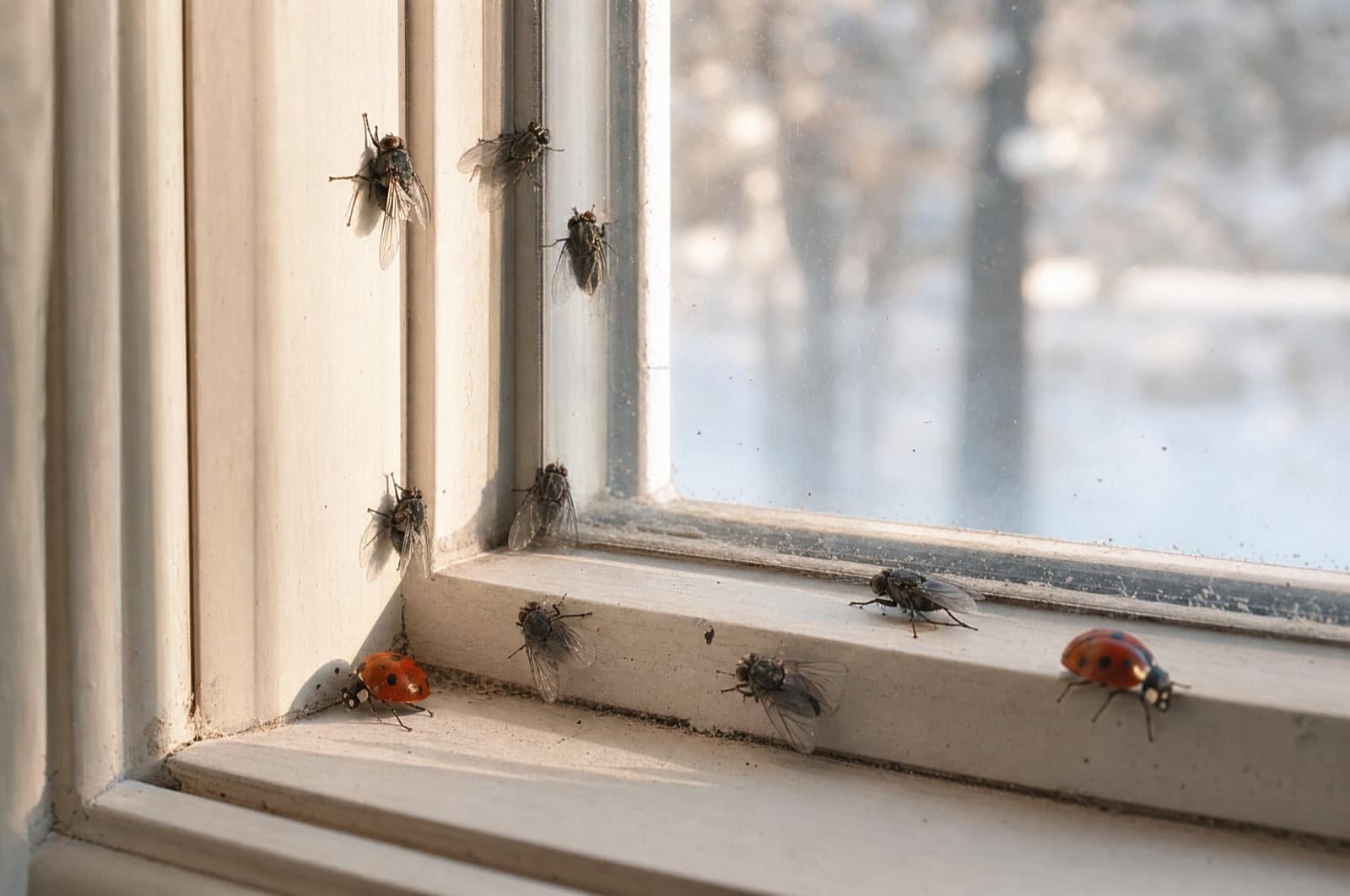
Baseboard heater channels and the wall-floor void behind them offer dark, sheltered space near a heat source, so overwintering insects and accumulated dust and debris settle there during the off-season. Electric baseboard units, very common in New Hampshire, sit cold and dusty for much of the year, making the channel an easy harborage. When the element warms up, dormant insects nearby become active and emerge into the room, and the homeowner sees them 'coming from the heater.' Cluster fly biology and firebrat heat-preference research both fit this pattern.
Source:UNH Cooperative Extension— "Cluster Flies" fact sheet — overwintering insects sheltering in wall/floor voids, roused by warmth
Is this an HVAC problem or a pest problem?
Who actually fixes it
You
Cleaning and vacuuming the channel handles the immediate nuisance, since these insects aren't damaging the unit or breeding inside it.
An electric or hydronic baseboard unit shows damage, or a rodent nest turns up inside the enclosure — that's HVAC technician or electrician territory, and recurring heavy infestations are worth a pest professional for exterior exclusion timing.
This hub owns the heating-system angle
General winter behavior, rodent control, and equipment-damage severity live in siblings that already earn them. Here's exactly where.
This page owns the baseboard-heater-as-harborage mechanism. Broader overwintering-insect behavior belongs to our winter pests and fall invaders hubs.
How this calibrates for NH
Electric baseboard heat is widespread in New Hampshire homes and apartments, and the long off-season from spring through fall leaves those channels as undisturbed harborage that fills up with overwintering insects well before heat returns in the fall.
NH-licensed applicator #782664 (NHDAMF, RSA 430) · NEPMA member · family-owned since 2017.
Frequently asked
Sources(2)
- [1]UNH Cooperative Extension
"Cluster Flies" fact sheet — overwintering behavior, seasonal entry, vacuum-and-discard control
- [2]University of Maryland Extension
"Silverfish and Firebrats" — firebrat heat preference near heating fixtures
Written & reviewed by
VerifiedDaniel Brady
NH-Licensed Pesticide Applicator · License #782664 (NHDAMF, RSA 430)
Daniel Brady is the New Hampshire–licensed applicator behind Anchor Pest Services, a family-owned pest control company serving the Manchester area since 2017.
Anchor Pest Services
Have a different pest question?
This one may be an HVAC call, not a pest job — but if you're facing something that is, we serve Southern New Hampshire with a free inspection and same-day service.
- NH-licensed applicator
- Same-day service
- Pet & family-conscious
NH License #782664 · No obligation · We answer in person