
Skip to content
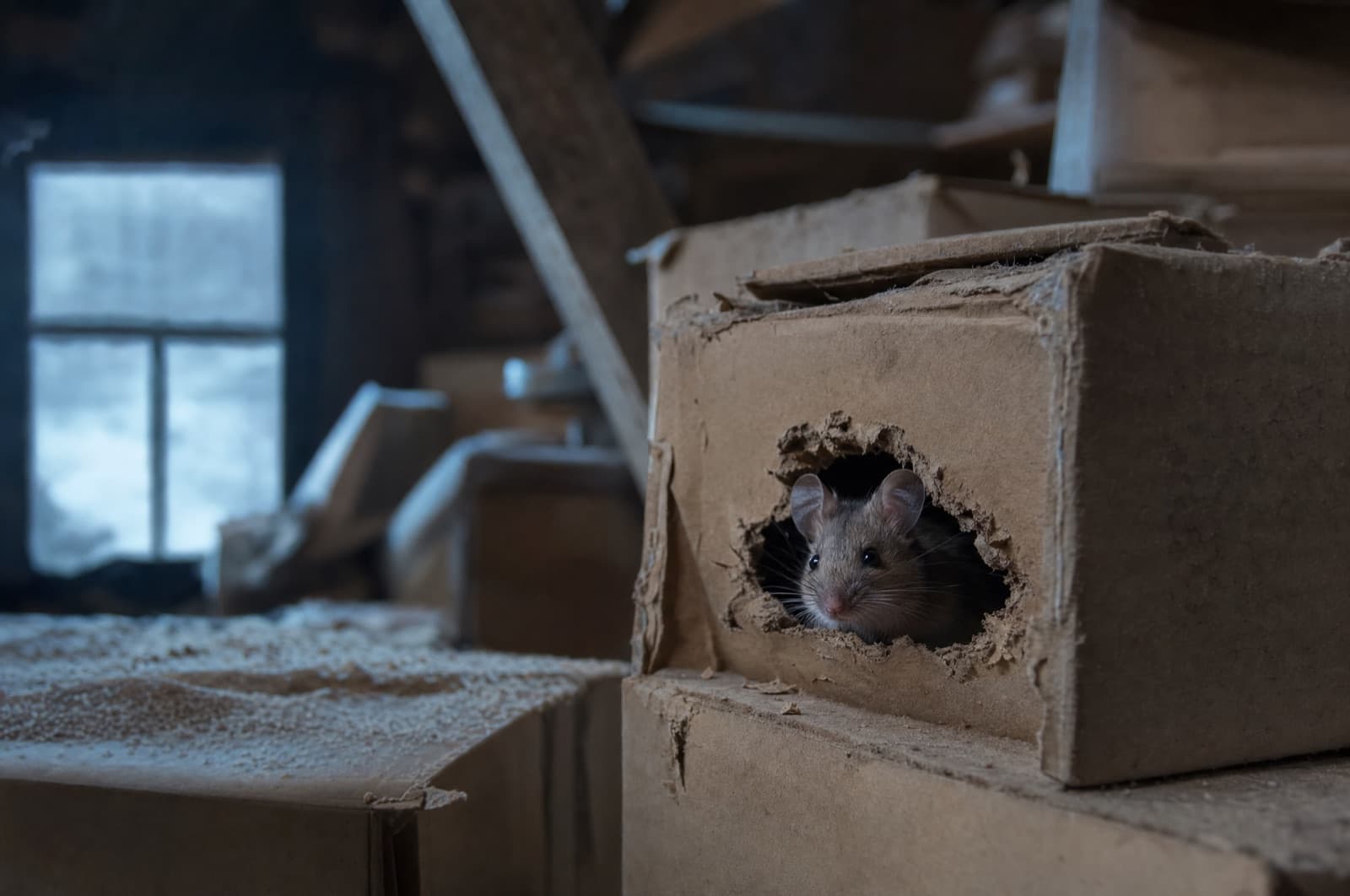
A house mouse in a gnawed cardboard storage box in a cold New Hampshire attic
Daniel Brady · NH-Licensed Pesticide Applicator · License #782664
Reviewed by Daniel Brady

Do insects actually die off in winter or just hide?

It depends — and refusing to flatten the answer is the point
It depends on the species, and this is one question in this hub where the honest answer refuses to be a single word.Most temperate insects don't die when the temperature drops — they survive winter in a dormant state called diapause, using physiological cold-tolerance strategies like supercooling or producing natural antifreeze compounds. A smaller number of outdoor-active insects really do die at hard frost. And household overwintering pests — the ones sheltering in your walls — skip the cold entirely rather than surviving it, because they're indoors. One universal "they hibernate" story doesn't apply to all bugs, and treating it as if it does is the actual mistake worth correcting here.

At a glance

  • The verdict: It depends — and refusing to flatten the answer is the point
The honest answer

The short of it

The verdict
It depends — and refusing to flatten the answer is the point

It depends on the species, and "just hide" is closer to the truth for most of them. Some insects genuinely die at the first hard frost; most survive by going dormant, and some never experience winter at all.

What actually happens

The busted assumption

It depends

What people assume

"A hard freeze wipes the slate clean every winter." Most insects are specifically built to survive exactly that freeze, either through diapause and cold hardiness outdoors, or by avoiding the cold altogether indoors. Treating winter as a natural pest-control event that resolves an insect problem on its own is the single most common misreading of how overwintering actually works.

What actually happens

Cold-hardy insects rely on a documented set of physiological strategies to survive winter rather than simply enduring it passively. Some maintain a supercooled state, remaining unfrozen even well below the water's normal freezing point, by using cryoprotectant compounds that function like biological antifreeze. Research on overwintering insects shows the supercooling point — the temperature at which an insect's body fluids would actually freeze — can shift dramatically from summer to winter; the codling moth, for example, has been documented shifting from roughly negative 15 degrees Celsius in summer to roughly negative 26 degrees Celsius in winter as it prepares for cold. This is genuine seasonal physiological adaptation, not folklore, and it's why so many insects that appear to vanish at first frost are actually alive and dormant rather than dead.

What it means for you
Don't expect winter to solve an insect problem for you, whether that's an outdoor population you're hoping frost kills off or an indoor overwintering species you're hoping will simply die out. Household overwintering pests — cluster flies, Asian lady beetles, stink bugs, boxelder bugs — are alive in wall voids and attics right now, waiting for spring warmth rather than perishing over winter, and the ones that do die at frost were never an indoor concern to begin with. The species-specific detail for where each pest actually goes belongs to our winter-pests-shift guide; the honest general answer here is that dormancy, not death, is the default.

Established from: Iowa State University Extension; PLOS ONE

In depth

The full picture

01

The three distinct outcomes, stated plainly

It's tempting to want one clean answer to this question, and this hub's honest position is that there isn't one. Three fundamentally different things happen to insects as winter arrives, and lumping them together is the mistake. First, some outdoor-active insects truly do die at a hard frost — their life cycle simply ends for the season, and the population that returns in spring comes from eggs or other overwintering stages left behind, not from the same individuals surviving.

Second, and most common among the species that matter for this hub, insects enter diapause: a dormant, physiologically distinct state that lets them survive the cold rather than avoid it. Third, some pests that live indoors year-round — German cockroaches, dust mites, and spiders already established inside a heated home — never experience winter as a seasonal event at all, because indoor conditions don't meaningfully change with the calendar.

02

How diapause actually works, briefly

Diapause isn't simply "the bug goes to sleep." It's a genuine physiological program that cold-hardy insects enter as temperatures and daylight signal the approach of winter, involving real biochemical changes. Cryoprotectant compounds function similarly to antifreeze, lowering the temperature at which an insect's body fluids would actually freeze and allowing the animal to remain in a supercooled, liquid state well below what would otherwise be lethal.

The scale of this adaptation is documented and significant — supercooling points have been shown to shift by roughly ten degrees Celsius or more between summer and winter conditions in some species, which is a substantial physiological adjustment, not a passive response to cold. This is the actual mechanism behind every household overwintering pest covered elsewhere in this hub: cluster flies, Asian lady beetles, and stink bugs sheltering in a wall void are using some version of this cold-hardiness strategy, just doing it indoors where the cold pressure is milder to begin with.

03

Why this page's job is refusing to flatten the answer

The reason this question deserves its own honest treatment, rather than folding into the individual species pages elsewhere in this hub, is that the single biggest misconception isn't about any one insect — it's the assumption that there's one universal winter story that applies to all of them. "They hibernate" gets used loosely to describe everything from genuine mammalian hibernation to insect diapause to simple death, and none of those are interchangeable.

The practical consequence is that homeowners sometimes wait out a winter expecting an insect problem to resolve itself, when the honest answer is that the specific insect in question is either alive and dormant (most household overwintering pests), dead for the season (some outdoor species), or was never affected by winter at all (established indoor pests). Knowing which of the three applies is the difference between reasonable patience and a false sense that the problem has gone away.

Key takeaways
5 points
  • It depends on the species — there is no single "insects hibernate" story that applies universally.
  • Most cold-hardy insects survive winter via diapause, using supercooling and cryoprotectant "antifreeze" compounds.
  • Some outdoor-active insects truly do die at hard frost; that's real, but it's not the default for everything.
  • Established indoor pests (German cockroaches, dust mites, indoor spiders) don't experience winter as a seasonal event at all.
  • Winter won't solve an indoor overwintering-pest problem — they're dormant, not dead, and waiting for spring.
New Hampshire context

Why this matters for a Manchester winter specifically

Manchester's first hard frost typically arrives October 19 to 29 (NOAA), and that date really does end the season for some outdoor insect populations. But for the overwintering pests this hub is built around — cluster flies, Asian lady beetles, stink bugs, boxelder bugs, and rodents — that same frost date is closer to the start of an indoor chapter than an ending.

This is worth being explicit about locally because a New Hampshire winter is long enough (roughly five months of sustained cold) that "waiting it out" feels like a reasonable strategy. For a truly dormant overwintering insect, patience is fine — it isn't reproducing or spreading. For a rodent, which doesn't experience anything like diapause, the same waiting strategy is a mistake, because nothing about its activity is paused by the season.

  • NH-licensed #782664

    Southern New Hampshire

  • Family-owned

    Since 2017

  • Honest routing

    Even when it isn’t us

We serve these communities

ManchesterNashuaConcordDerryBedfordSalemHudsonAmherst

Dormant isn't dead. That distinction is the whole page.

Waiting out a truly dormant insect is fine. If it's a rodent, or you're not sure which you're dealing with, that's worth an honest look.

Follow-up questions

Frequently asked

Sources & citations(3)
  1. Iowa State University Extension — Cold Hardiness of Insects

    Diapause, supercooling, and cryoprotectant compounds as insect cold-survival strategies

    extensionverified 2026-07-16
  2. PLOS ONE — Codling moth overwintering and supercooling point research

    Supercooling point shift between summer and winter conditions in a cold-hardy insect species

    academicverified 2026-07-16
  3. NOAA — Manchester, NH freeze climatology

    Manchester first hard frost typically ~Oct 19-29

    govverified 2026-07-16

Written & reviewed by

Verified

Daniel Brady

NH-Licensed Pesticide Applicator · License #782664 (NHDAMF, RSA 430)

Daniel Brady is the New Hampshire–licensed applicator behind Anchor Pest Services, a family-owned pest control company serving the Manchester area since 2017.

Verify license

Last updated Jul 2026

Honest pest help for New Hampshire homes

We'll Tell You What's Actually Dormant and What Isn't.

Not every winter bug problem needs a treatment plan, and we'd rather tell you honestly which ones are simply waiting out the cold versus which ones — like rodents — never pause at all. Family-owned since 2017, NH license #782664, serving Manchester, Nashua, Concord and nearby towns.

  • Honest advice — dormant pests don't need a winter treatment
  • NH-licensed applicators (#782664) — free inspection, same-day service
  • Winter pest identification across southern and central New Hampshire

NH License #782664 · No obligation · We answer in person