
What Pests Hide in Walls Near Heating Pipes?
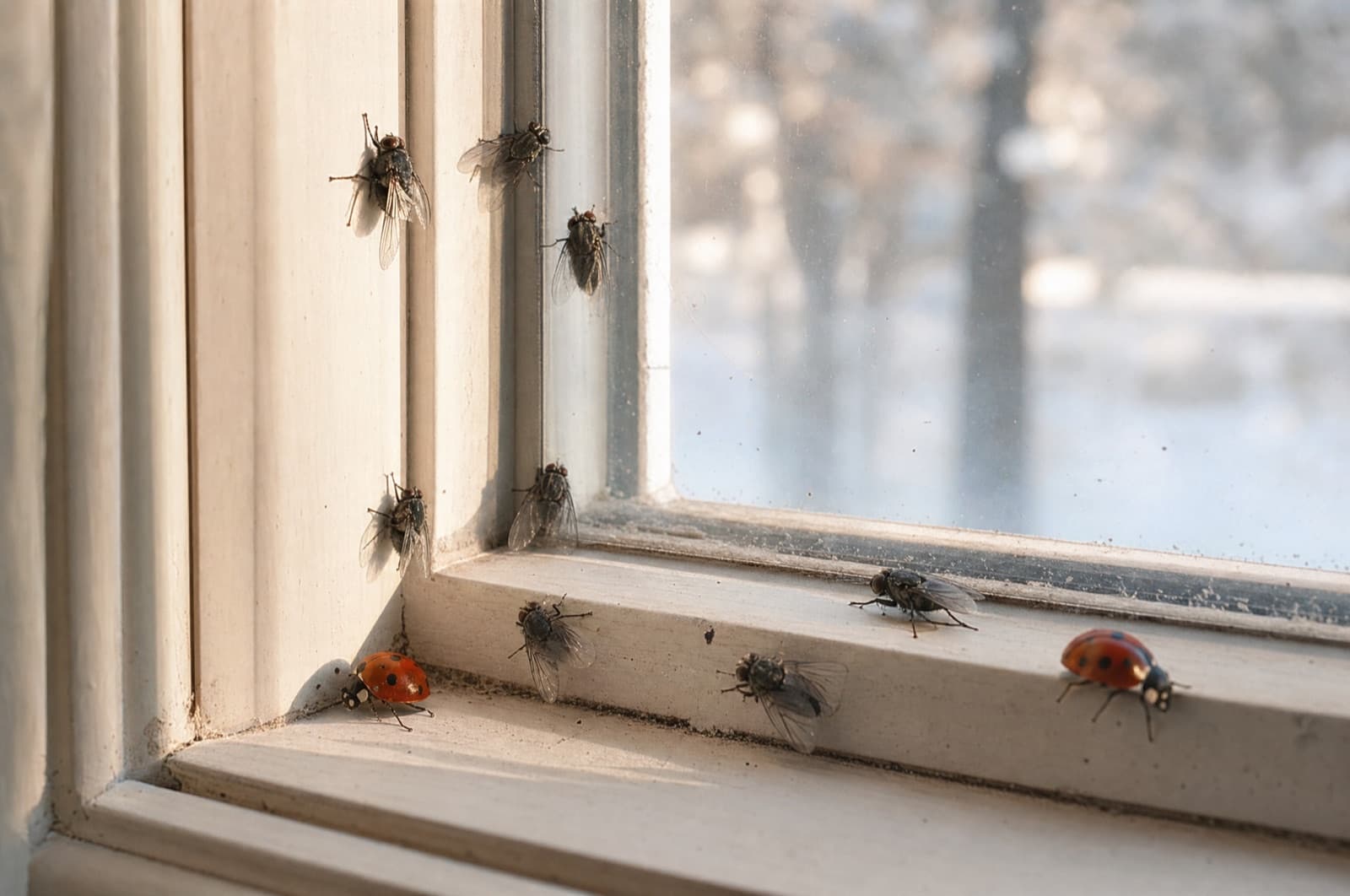
Wall voids warmed by heating pipes are classic overwintering refuges. Cluster flies and other fall invaders that settled in the walls become active when the pipes warm the void, and heat-loving firebrats concentrate near hot pipes specifically.
Mostly nuisance insects becoming active. The pipe warmth reveals and rouses them rather than importing them.
At a glance
- The mechanism: Heat wakes them up
- Who fixes it: You
- The rest lives at: What signs show fall pests in walls or ceilings?
Wall voids warmed by heating pipes are classic overwintering refuges. Cluster flies and other fall invaders that settled in the walls become active when the pipes warm the void, and heat-loving firebrats concentrate near hot pipes specifically.
Mostly nuisance insects becoming active. The pipe warmth reveals and rouses them rather than importing them.
Heat doesn't spawn pests — it changes what you notice
The season and the building set the stage before the thermostat ever comes on. Here's the honest chain of events, spelled out.
What's really happening
Overwintering insects enter and shelter in wall voids in late summer or fall. Heating pipes running through those voids raise the local temperature during heating season, and dormant insects — cluster flies, lady beetles, stink bugs — become active and may emerge into rooms through gaps around fixtures, while heat-loving firebrats settle more permanently near the hottest pipes. The homeowner then finds them along baseboards and outlets near heat lines. UNH's cluster fly fact sheet describes flies congregating between walls and working their way into a room through openings in window frames and electrical fixtures, triggered by warmth.
Source:UNH Cooperative Extension— "Cluster Flies" fact sheet — flies congregate between walls and enter rooms through window frame/electrical fixture gaps, triggered by warmth
Is this an HVAC problem or a pest problem?
Who actually fixes it
You
Vacuuming the nuisance insects as they appear handles the immediate problem, since they aren't breeding indoors or damaging the structure.
Recurring problems warrant a pest professional for exterior exclusion timing before the next fall entry window, and any pipe void that also hides rodent activity or wiring damage needs an HVAC technician.
This hub owns the heating-system angle
General winter behavior, rodent control, and equipment-damage severity live in siblings that already earn them. Here's exactly where.
This page owns warm pipe voids as insect refuges. General overwintering behavior belongs to our winter pests hub; fall-entry specifics belong to our fall invaders hub.
How this calibrates for NH
UNH documents cluster flies as a recurring New Hampshire wall-void winter pest, and the state's long heating season keeps pipe-warmed voids active for months, extending the period during which roused insects appear indoors compared to a shorter heating climate.
NH-licensed applicator #782664 (NHDAMF, RSA 430) · NEPMA member · family-owned since 2017.
Frequently asked
Sources(2)
- [1]UNH Cooperative Extension
"Cluster Flies" fact sheet — congregation between walls, entry through fixture gaps, warmth-triggered activity
- [2]University of Maryland Extension
"Silverfish and Firebrats" — firebrats concentrate near hot pipes
Written & reviewed by
VerifiedDaniel Brady
NH-Licensed Pesticide Applicator · License #782664 (NHDAMF, RSA 430)
Daniel Brady is the New Hampshire–licensed applicator behind Anchor Pest Services, a family-owned pest control company serving the Manchester area since 2017.
Anchor Pest Services
Have a different pest question?
This one may be an HVAC call, not a pest job — but if you're facing something that is, we serve Southern New Hampshire with a free inspection and same-day service.
- NH-licensed applicator
- Same-day service
- Pet & family-conscious
NH License #782664 · No obligation · We answer in person